Here is the Pride and Prejudice plot explained like a story — a complete narrative summary from the first chapter to the last, told in simple chronological order so you can follow every twist and character arc.
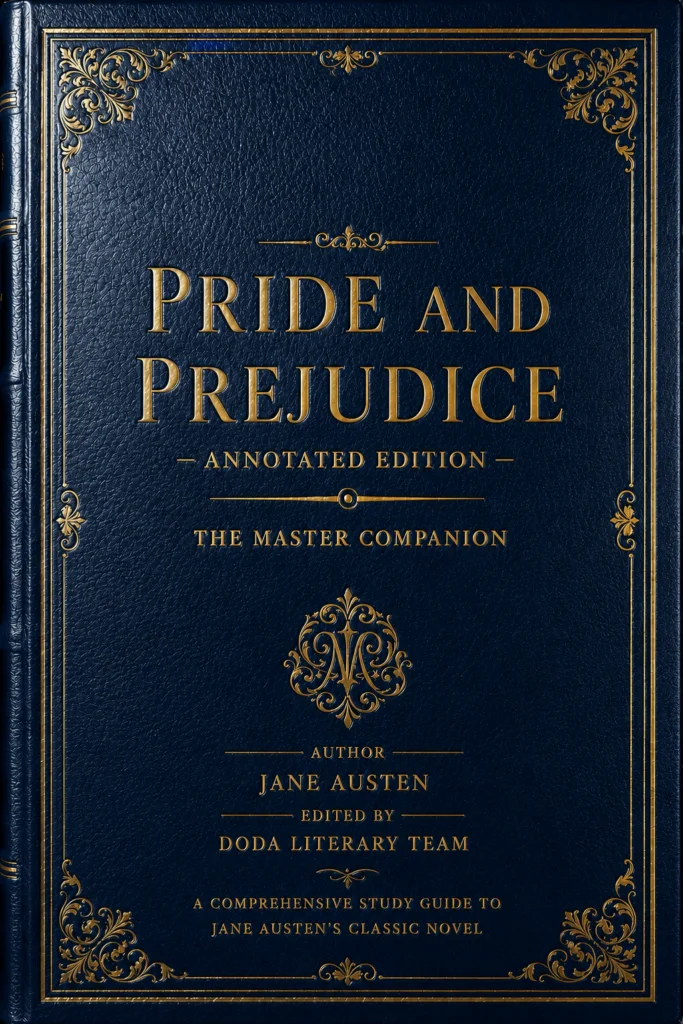
Pride and Prejudice Plot Explained
The full story told simply, from the Bennet family's living room to Darcy's Pemberley estate — every major event in order.
| Act | Chapters | Key Event |
|---|---|---|
| Setup | 1–20 | Meryton ball, first impressions |
| Complications | 21–35 | Darcy’s proposal, Elizabeth’s rejection |
| Conflict | 36–50 | The letter, Elizabeth’s awakening |
| Turning Point | 51–56 | Pemberley visit, Lydia’s elopement |
| Resolution | 57–61 | Double wedding, happy ending |
Act 1: The Setup
A wealthy young man named Mr. Bingley moves to Netherfield Park near the Bennet family. Mrs. Bennet, who has five unmarried daughters, sees Bingley as a husband for one of them. At a village ball, Bingley is charming and dances twice with Jane, the eldest Bennet daughter.
His friend Mr. Darcy is richer, taller, and more handsome — but rude. He refuses to dance with anyone, including Elizabeth Bennet. When encouraged, he says she is “not handsome enough” for him. Elizabeth overhears and decides Darcy is an arrogant snob.
Act 2: Complications
Jane spends time with Bingley and falls in love. But Bingley’s sisters and Darcy convince him to leave town. Jane is heartbroken. Meanwhile, a ridiculous clergyman named Mr. Collins proposes to Elizabeth. She refuses. Her best friend Charlotte then marries Collins not for love but for financial security.
Elizabeth meets a charming soldier named Mr. Wickham, who tells her that Darcy ruined his life. Elizabeth believes every word. Her hatred of Darcy is now justified, she thinks.
Follow every twist with annotations. The annotated edition explains each character's motives and the social rules driving the plot.
Get the Annotated EditionAct 3: The Conflict
Darcy unexpectedly proposes to Elizabeth, telling her he loves her despite her low social status. She refuses, accusing him of ruining Wickham’s life and destroying Jane’s happiness. The next day, Darcy gives Elizabeth a letter explaining everything: Wickham is a liar who tried to elope with Darcy’s sister for money. Bingley left because everyone believed Jane did not love him.
Elizabeth reads the letter three times. She realizes she has been completely wrong. “Till this moment, I never knew myself,” she says.
Act 4: The Turning Point
Elizabeth visits Darcy’s estate, Pemberley, while travelling with her aunt and uncle. Darcy is unexpectedly there, now polite, warm, and generous. His housekeeper calls him the kindest man alive. Elizabeth starts to see the real Darcy. Then disaster: Elizabeth learns her youngest sister Lydia has run away with Wickham. Darcy finds them, pays off Wickham’s debts, and forces the marriage — all in secret.
Act 5: The Resolution
Lady Catherine de Bourgh arrives and demands Elizabeth promise never to marry Darcy. Elizabeth refuses. Darcy hears about this and proposes again, properly this time, without insults. Elizabeth accepts. Jane and Bingley also reunite and marry. The novel ends with Elizabeth and Darcy in a happy, playful marriage — both changed enough to deserve each other.
Elizabeth Bennet
Intelligent, spirited heroine who misjudges Darcy.
Mr. Darcy
Proud, wealthy hero who must learn humility.
Jane Bennet
Kind eldest sister who loves Bingley.
Mr. Wickham
Charming villain who deceives everyone.
Mr. Collins
Ridiculous clergyman who proposes to Elizabeth.
Lady Catherine
Arrogant aunt who tries to control Darcy.
🏛️ Historical & Cultural Context
To follow the plot properly, it helps to know the world Austen was writing about. Pride and Prejudice was published in 1813, during the Regency era, when marriage was less a matter of romance and more a matter of economics and survival. For the Bennet daughters, the stakes could hardly be higher: their family home is entailed to a distant male cousin, Mr. Collins, which means that when their father dies, the estate — and everything that supports them — passes out of the family. This is the engine under almost every plot development, from Mrs. Bennet’s matchmaking to Charlotte Lucas’s pragmatic marriage to Charlotte’s willingness to accept Collins when Elizabeth refuses him.
The social rules of the time shape every encounter. A young woman could not travel alone with a man unchaperoned without damaging her reputation. A dance was a courtship ritual with precise etiquette, and refusing a partner — or declining to dance at all, as Darcy does — was a loud social statement. Class, income, and connections governed who could marry whom, and the “accomplishments” a lady was expected to possess (music, drawing, needlework) were part of a marriage market that Austen satirises throughout. Understanding these codes is what makes so many of the novel’s moments land — which is one reason an annotated edition can transform a first reading.
🔥 Themes That Drive the Story
The title names the two forces that nearly keep Elizabeth and Darcy apart. Pride and prejudice are not one-sided: both characters are guilty of both. Darcy is proud of his rank and dismissive of those beneath him socially; Elizabeth prides herself on her judgment, and yet her prejudice against Darcy — fed by Wickham’s lies and her own wounded vanity — blinds her to the evidence. Austen’s genius is that she makes both characters wrong, and both of them right, in a way that feels true rather than contrived.
Money threads through every subplot. Charlotte marries Collins for security, and Austen treats her decision with sympathy rather than scorn. Wickham chases fortune and elopes with Lydia for her money and her youth. Darcy’s wealth, far from making him happy, makes him a target and hands him a suspicion of fortune-hunting. Even the marriage of Jane and Bingley, the sweetest in the book, is founded on the fact that Jane is beautiful and good-natured — and protected by a comfortable income on Bingley’s side. For a fuller look at these ideas, our guide to the themes of Pride and Prejudice walks through each one in more depth.
💡 What to Pay Attention To
The plot is easier to follow if you keep a few threads in view. Watch Wickham closely from his first appearance — he is charming precisely because he is dishonest, and his account of Darcy’s supposed crimes plants the seed of every later misunderstanding. Watch letters, too: Austen uses them to deliver crucial information, and the letter Darcy writes Elizabeth after her refusal is the hinge on which the whole story turns. And pay attention to who is present during each key scene, because this is a novel built on private conversations overheard and misread — Elizabeth overhears Darcy’s insult at the ball, and the whole course of the story follows from it.
If you are coming to the novel for the first time, consider pairing the free audio with the text. Our listen-first approach explains how hearing the rhythm of Austen’s prose can make the plot much easier to absorb, and for a quicker refresher of the full story in order, our 15-minute summary lays out every major beat.
📖 Why It Still Matters
Pride and Prejudice remains the most adapted and beloved of Austen’s novels because its central idea is timeless: we are all prone to first impressions, and first impressions are frequently wrong. The delight of the book is watching two clever people learn to doubt the stories they have told themselves about each other — and about themselves. That arc, from stubborn misjudgment to hard-won understanding, is why a reader in any century can recognise herself in Elizabeth or the man who seems impossible to like.
Because so much of that payoff depends on irony, social nuance, and vocabulary that has shifted in two centuries, the story rewards a reading with help. Our complete guide to Pride and Prejudice is a good next step for the big picture, and if you are deciding which version to read first, the comparison of annotated vs simplified editions will help you choose.
❓ Frequently Asked Questions
What is Pride and Prejudice about?
At its core, the novel is about how two people — Elizabeth Bennet and Mr. Darcy — overcome their own pride and prejudice to find love. It is also a sharp social critique of marriage, class, and gender in Regency England.
Does the novel have a happy ending?
Yes. Elizabeth marries Darcy, Jane marries Bingley, and both couples are well-matched. But the happiness is earned through growth and self-awareness.
Why is Darcy so rude at the beginning?
Darcy is socially awkward, proud of his status, and uncomfortable with new people. His rudeness at the Meryton ball is a combination of shyness and arrogance — a mix he must unlearn.
What role does money play in the plot?
Money drives nearly every decision. The Bennet estate is entailed away from the daughters. Charlotte marries Collins for security. Darcy's wealth makes him a target. Wickham chases any woman with money.
How long does it take to read the full novel?
The original text runs about 120,000 words. A typical reader takes 10–12 hours, though the annotated edition adds time for the notes.
Why does Jane Bennett's name keep coming up?
Jane is Elizabeth's eldest and kindest sister, and her failed romance with Mr. Bingley is a parallel plot to Elizabeth and Darcy's. Bingley leaves because he is persuaded Jane does not love him — an early example of how appearances mislead everyone.
What is the entail, and why does it matter?
The Bennet family estate is entailed to the male line, so it passes to Mr. Collins after Mr. Bennet dies. Because the Bennets have no sons, their daughters will inherit nothing. This financial pressure explains Mrs. Bennet's desperation and Charlotte's decision to marry Collins.
Is there a big twist in the plot?
The closest thing to a twist is the revelation in Darcy's letter that Wickham is a liar who tried to elope with Darcy's sister for her fortune. It reframes everything Elizabeth believed and is the turning point of the entire novel.
📚 Related Articles
Master the Full Story
- Chapter-by-chapter plot summaries included
- Character relationship maps and timelines
- Historical context for every social custom