Teaching Pride and Prejudice at home is different from teaching it in a classroom. You have more flexibility but less peer discussion, and you carry the full responsibility for lesson planning and assessment. Here is a complete homeschool approach using a ready-made unit study.
Homeschool Pride and Prejudice Unit Study
A complete guide for homeschool parents teaching Pride and Prejudice — 8-week schedule, printable worksheets, discussion questions, and assessments designed for one-on-one or small-group learning.
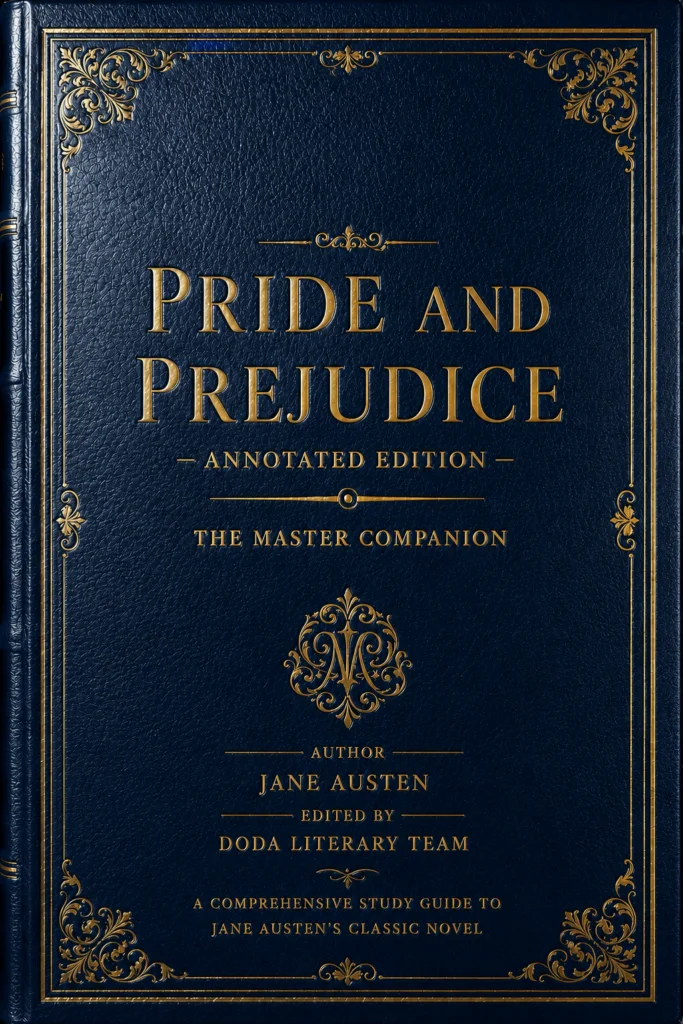
| Duration | 8 weeks (adaptable) |
| Reading | 3-5 chapters per day, 3 days per week |
| Total Hours | 40-50 hours including reading, discussion, and writing |
| Credit | 0.5 credit (semester) |
| Resource | 182-page printable novel study unit |
| Best For | One-on-one or small-group learning |
📅 The 8-Week Schedule
Week 1 — Pre-Reading: Read the author biography and Regency England context together. Complete the anticipation guide — discuss each statement aloud. Watch a short video about life in Regency England to build visual context.
Weeks 2-3 — Volume 1 (Chapters 1-23): Read 3-4 chapters per day, 3 days per week. Use the chapter summary as a preview before each reading session. Discuss the comprehension questions together rather than writing them out.
Weeks 4-5 — Volume 2 (Chapters 24-42): Continue the same rhythm. After Darcy’s proposal (Chapter 34), pause for a longer discussion. This is the emotional turning point — make sure your teen understands why Elizabeth’s reaction changes after she reads Darcy’s letter.
Weeks 6-7 — Volume 3 (Chapters 43-61): Pick up the pace slightly — 4-5 chapters per day. After finishing, have your teen write a one-page response to the ending before discussing it.
Week 8 — Review and Assessment: Use the character matching and quote identification tests as review games. Choose one essay prompt for a formal writing assignment.
🏠 Adapting Classroom Resources for One Student
Socratic seminar questions → Discussion prompts: Instead of a formal seminar, use the 11 Socratic questions as dinner-table conversation starters. Ask one per day and let the discussion flow naturally.
Peer review → Self-review: Use the peer review worksheet as a self-editing checklist. Your teen evaluates their own essay against the rubric criteria before you grade it.
Debates → Mini-arguments: Pick one debate topic per week and have your teen argue one side for 3 minutes. You argue the other side.
Mock trial → Family project: If your teen is interested, run the mock trial as a family activity. Assign roles to siblings or do it as a two-person prosecution vs. defence exercise.
No separate teacher's guide needed. The novel study unit includes a complete answer key with model answers for every question in the same document.
📚 Complete Answer Key
Model answers for every question — no separate teacher's edition required.
📖 Essay Rubric
4-level rubric with clear descriptors for objective homeschool grading.
❓ Sample Essays
Two sample essays with teacher commentary showing different score levels.
📝 Grade Tracker
Spreadsheet-style page to record quiz, test, and essay scores.
✍️ Transcript Support
Learning outcomes documentation for high school transcript credit.
🎯 Discussion Prompts
11 Socratic questions adapted for one-on-one dinner-table conversation.
🎓 Why Pride and Prejudice Earns a Place in Your Home Curriculum
Pride and Prejudice is one of the few novels that works at every level of high school English. It has a pure, irresistible story — Elizabeth judges Darcy on a first impression, Darcy judges the whole Bennet family through class prejudice, and the entire plot turns on both of them being wrong — and that ironic gap between appearance and reality gives you, the teacher, a year’s worth of material: character, irony, structure, narrative voice, social history, and psychology all hang off the same spine.
For homeschoolers specifically, the book carries three advantages. First, it rewards slow, conversational reading, which is exactly what one-on-one teaching does best. Second, its social world is so unfamiliar to modern teens that it generates constant curiosity — every chapter answers a question about Regency marriage, money, estates, or etiquette, and those answers accumulate into genuine historical understanding rather than a memorized date. Third, it is long enough to feel like a real course — 61 chapters across three volumes — without being long enough to defeat a student. That is a narrow band, and Austen sits squarely inside it.
🧭 A Week in the Life: The Daily Rhythm
The 8-week schedule above is the map; here is what a working week actually feels like. Aim for three reading days rather than five. On a reading day, open with the chapter summary as a two-minute preview — “watch for the moment Elizabeth changes her mind about Darcy” sets attention far better than a lecture. Then read together or quietly, depending on your teen’s temperament. Close with two or three comprehension or discussion questions spoken aloud, not written out; writing can come later, but the daily talk is where the novel comes to life.
The non-reading days matter just as much. Use one for enrichment — a film scene comparison, a character-map exercise, a mock-trial preparation — and keep one day genuinely free of Austen so the novel keeps its novelty. The schedule’s built-in adaptability lets you swap reading days around illnesses and field trips without losing the thread. What you are really building is a rhythm: preview, read, discuss, review. Most teens internalize it by week three, and after that the unit mostly runs itself.
If you are new to teaching the novel altogether, our first-year teacher walkthrough moves through the same material from scratch. And if you are juggling children at different levels, the differentiation guide shows how the tiered question system carries readers at every stage.
📝 Grading, Portfolios, and Transcripts
Homeschool parents often worry that without a teacher to “catch” mistakes, writing instruction loses its teeth. The unit answers with a rubric: four clearly defined levels for each essay criterion, so you match a piece of writing to the descriptor that fits best rather than trusting a gut feeling. Grade one assignment in a single sitting, and use the two sample essays as anchors for what a mid-range and a high-scoring answer look like — they are included precisely so you can calibrate your eye the first time.
Keep a portfolio running beside the grade tracker. Scan the best worksheet, one revised essay, and the graded rubric, and store them with the unit’s learning-outcomes page, and you have the evidence-plus-outcomes documentation most transcript reviewers want. Transcript credit is handled cleanly: record the unit as English 9, English 10, or British Literature for 0.5 credit at roughly 40–50 hours of work — exactly what the schedule adds up to. For families who want standards language on the transcript, our Common Core alignment guide maps the unit to specific standards, while the quizzes, essays, and tests guide covers the assessment side in more depth.
🏛️ Context Without a Campus Tour
Taught alone, Pride and Prejudice can feel like it happens in a bubble. The unit fixes this with pre-reading material on Jane Austen and Regency England, plus an anticipation guide that surfaces your teen’s assumptions before the first chapter. Add the 1995 BBC series and the 2005 feature film as visual context, and one well-chosen scene makes the entail, the assembly rooms, or the first sight of Pemberley instantly concrete in a way description alone never will.
Those adaptations pull double duty as assessment material. Compare a single scene across two versions — the Netherfield ball, Darcy’s proposal, Lady Catherine’s call — and you have a ready-made exercise in interpretation: what each adaptation emphasizes tells you what the novel itself works hardest at. Used this way, film is not a reward for finishing the book; it is a lens for reading more carefully.
❓ Frequently Asked Questions
Do I need to buy a separate teacher's guide?
No. The novel study unit includes a complete answer key with model answers for every question in the same document.
How do I grade objectively as a homeschool parent?
The rubric defines four levels for each criterion. You match the essay to the descriptor that best fits — clear and consistent.
Can I get transcript credit for this unit?
Yes. Record it as English 9, English 10, or British Literature for 0.5 credit (approximately 40-50 hours of work).
How do I adapt this for multiple children at different levels?
Use the tiered question system. Younger or struggling students answer comprehension questions; older or advanced students answer analysis questions.
What if my teen finishes the reading faster than scheduled?
Use the enrichment activities — film comparison, mock trial, or creative projects — to extend learning without rushing to the next section.
Can I use this unit with a middle schooler?
Yes, with adjustment. Stick to the comprehension questions, keep the discussion prompts concrete, and skip or simplify the heavier analysis essays. The tiered question system is designed to let you meet a younger reader where they are.
Does this work in a co-op or small group?
Yes. Discussion prompts become seminar questions, the debate topics work with real opposing sides, and the mock trial is an excellent co-op centerpiece. The answer key makes grading straightforward even when you are not the one who taught the lesson.
How is this different from a regular teacher's guide?
It is built for one-on-one teaching: every classroom activity has a single-student adaptation, everything printable needs no internet, and the embedded answer key, rubric, sample essays, and transcript documentation remove the need for a separate teacher's edition.
Teach Pride and Prejudice at Home With Confidence
- Complete answer keys for objective grading
- Essay rubric with clear descriptors
- 8-week schedule that fits your calendar
- Printable — no computer needed during lessons