If your school requires Common Core alignment for every unit, you need to know exactly which standards a Pride and Prejudice novel study addresses. Here is a complete breakdown of the CCSS ELA standards covered by each section of this 182-page teaching unit.
Common Core Standards for Pride and Prejudice Unit
A complete Common Core alignment guide for the Pride and Prejudice novel study unit — reading literature, writing, speaking and listening, and language standards covered by each section.
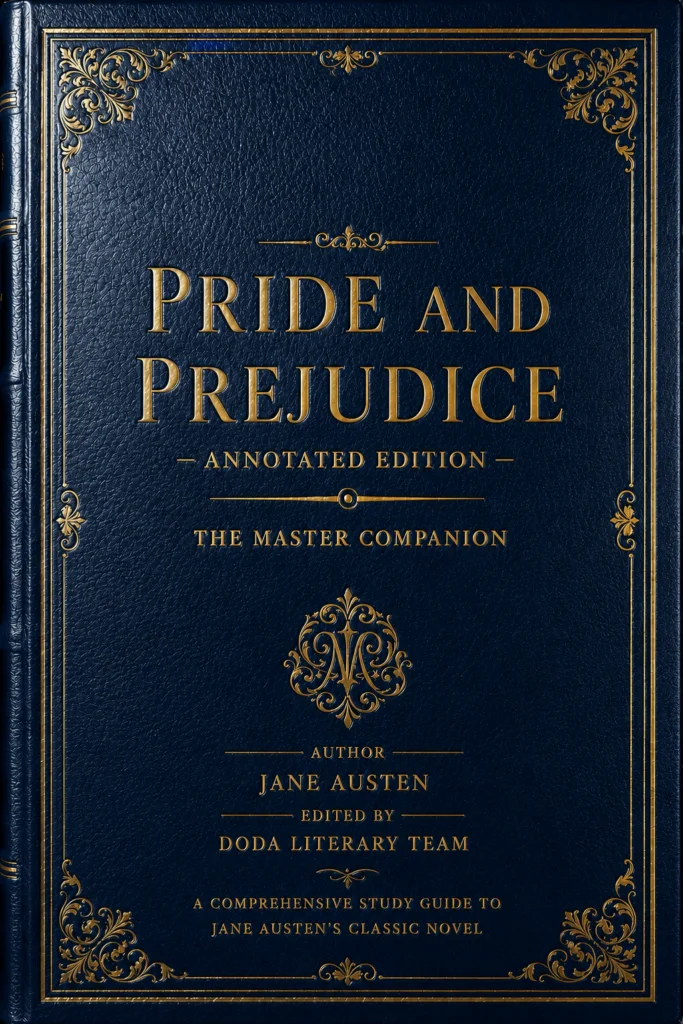
| RL.9-10 | Reading Literature — 8 standards covered |
| W.9-10 | Writing — 7 standards covered |
| SL.9-10 | Speaking & Listening — 6 standards covered |
| L.9-10 | Language — 9 standards covered |
| Total | 30+ CCSS ELA standards |
| Grades | 9-10 (also maps to 11-12) |
📋 What “Common Core Aligned” Actually Means
Before you file this chart away, it helps to see how the standards fit together — because “Common Core-aligned” does not mean the unit teaches to a test. It means every discussion, worksheet, and essay is built around skills the standards actually reward: citing evidence, tracking a theme as it develops, explaining how characters change, and comparing the novel to its adaptations.
The unit is organised around the four CCSS anchor domains for secondary ELA. Reading Literature (RL) covers what students do with the text itself — citing evidence, analysing theme and character, deciphering vocabulary, examining structure. Writing (W) covers what they make of that reading: arguments and explanations backed by textual evidence. Speaking and Listening (SL) covers the live work of the classroom — seminars, debates, structured discussion. Language (L) underlies all of the above — the vocabulary and grammar that let students understand Austen’s sentences.
One more thing worth knowing: the standards describe grade-band skills, not required titles. Nothing in the CCSS says students must read Pride and Prejudice — but RL.9-10 and RL.11-12 demand texts complex enough to require these skills, and Austen’s novel is exactly that. The same unit serves ninth-grade or eleventh-grade classrooms depending on the depth of writing and discussion you require.
If you are planning the unit from scratch, our how-to-teach guide to the full unit offers a pacing calendar, and the first-year teacher walkthrough is written for teachers running the novel for the first time.
📖 Reading Literature Standards (RL.9-10)
| Standard | Description | Where Covered |
|---|---|---|
| RL.9-10.1 | Cite strong textual evidence | Comprehension and analysis questions for every section |
| RL.9-10.2 | Determine a theme; analyse its development | 6 theme worksheets (pride, prejudice, marriage, class, reputation, family) |
| RL.9-10.3 | Analyse complex character development | 10 character profiles; Darcy and Elizabeth arc questions |
| RL.9-10.4 | Determine word meanings in context | 50+ vocabulary words; close reading annotation guides |
| RL.9-10.5 | Analyse author’s structural choices | Literary devices guide; close reading on sentence structure |
| RL.9-10.6 | Analyse point of view or cultural experience | Regency England context; class and gender discussions |
| RL.9-10.7 | Analyse two or more adaptations | Film adaptation comparison guide (1995 BBC + 2005) |
| RL.9-10.10 | Read complex literature independently | Full-chapter reading assignments with comprehension support |
✍️ Writing Standards (W.9-10)
| Standard | Description | Where Covered |
|---|---|---|
| W.9-10.1 | Write arguments with evidence | 10 essay prompts requiring thesis-driven arguments |
| W.9-10.2 | Write informative/explanatory texts | Character profiles, theme worksheets, deeper dive prompts |
| W.9-10.3 | Write narratives | Journal prompts; letter-writing activity |
| W.9-10.4 | Produce clear and coherent writing | Rubric includes organisation and focus criteria |
| W.9-10.5 | Strengthen writing through revision | Peer review worksheet with structured feedback |
| W.9-10.9 | Draw evidence from literary texts | Every analysis question and essay prompt requires textual evidence |
| W.9-10.10 | Write routinely over extended time | Weekly writing, journal entries, formal essays |
🗣️ Speaking and Listening Standards (SL.9-10)
| Standard | Description | Where Covered |
|---|---|---|
| SL.9-10.1 | Participate in collaborative discussions | Socratic seminar questions (11 prompts); debates (5 topics) |
| SL.9-10.1a | Come to discussions prepared | Discussion preparation guide with note-taking prompts |
| SL.9-10.1c | Propel conversations with questions | Socratic seminar question sets with follow-up prompts |
| SL.9-10.1d | Respond thoughtfully to diverse perspectives | Mock trial kit requiring opposing viewpoints |
| SL.9-10.4 | Present information clearly | Debate preparation guide; mock trial statements |
| SL.9-10.6 | Adapt speech to context | Role-playing in debates and mock trial |
📝 Language Standards (L.9-10)
| Standard | Description | Where Covered |
|---|---|---|
| L.9-10.1 | Grammar and usage | Essay rubric includes language mechanics criteria |
| L.9-10.2 | Capitalisation and punctuation | Peer review worksheet includes proofreading checklist |
| L.9-10.3 | Language functions | Literary devices guide; close reading of sentence construction |
| L.9-10.4 | Determine word meanings using context | Vocabulary exercises requiring context usage |
| L.9-10.5 | Figurative language understanding | Literary devices guide with text examples |
| L.9-10.6 | Academic vocabulary | 50+ vocabulary words; vocabulary quizzes; matching exercises |
Need standards documentation for your lesson plans? The Pride and Prejudice Novel Study Unit includes a lesson plan template with a standards-mapping field.
📚 RL Standards
8 Reading Literature standards covered through analysis questions, theme worksheets, and close reading.
📖 W Standards
7 Writing standards covered through essays, journal prompts, and peer review.
❓ SL Standards
6 Speaking & Listening standards covered through Socratic seminar, debates, and mock trial.
📝 L Standards
9 Language standards covered through vocabulary, grammar, and literary devices.
✍️ Lesson Plan Template
Includes a standards-mapping field for administrator observations.
🎯 Standards-Based Grading
Rubric breaks down each criterion by proficiency level for standards-based scores.
🎯 How to Turn These Standards into Daily Instruction
An alignment chart is only useful if you can act on it. Here is how each cluster translates into something a teacher actually assigns and grades.
Citing textual evidence (RL.9-10.1) is the standard everything else leans on, and the unit builds it in everywhere: comprehension questions, essay prompts, seminar prompts. Make it visible to students with a “quote → explain → connect” frame — every answer quotes the chapter, glosses what Austen is doing, and connects it to the larger argument. When a student says “Elizabeth is prejudiced,” the follow-up is always “where in the text — show me what the words do.” That single habit is RL.9-10.1 in action.
Theme and character (RL.9-10.2 and RL.9-10.3) get their own dedicated tools. Six theme worksheets — pride, prejudice, marriage, class, reputation, family — force students to trace one idea through multiple chapters rather than report it once. The character work on Darcy and Elizabeth, one of the most famous arcs in English fiction, shows change driven by event, reflection, and social pressure. A useful practice: keep a running list of key passages per theme, add to it as the unit progresses, then draw on it when drafting essays.
Comparing the novel to adaptations (RL.9-10.7) is where the unit gets lively. The film comparison guide pairs the 1995 BBC series with the 2005 film, prompting students to notice what each adaptation cuts, moves, and emphasises — and what those choices reveal about the book. Comparing versions of the same material also makes close reading engaging, because students suddenly care what the words are doing.
The standards-based writing and discussion deserve a close look too. The essay prompts require thesis-driven arguments with evidence (W.9-10.1, W.9-10.9) supported by a rubric scored by proficiency level. The Socratic seminars and debates (SL.9-10.1) ask students to cite the text to one another, and the mock trial kit turns the class into a structured argument. A menu of hands-on options lives in our Pride and Prejudice classroom activities, and our guide for struggling and advanced readers maps every activity to a range of learners. For grading, the assessment guide covers quizzes, essays, and tests end to end.
🏛️ Why Pride and Prejudice Is Worth the Standards
Standards alignment proves a text is rigorous; it does not prove the text matters. Pride and Prejudice earns the standards work because it is doing several kinds of heavy lifting at once. Published in 1813, it depicts Regency England’s rigid hierarchy of land, income, and family name — a world in which marriage was the only career open to middle-class women. That context is not decoration but the engine of the plot: every misunderstanding between Elizabeth and Darcy is powered by class, reputation, and economic pressure on the Bennet sisters.
What makes the satire outlive its era is that Austen attacks permanent versions of those errors: prejudice, pride, and confident people misreading each other. The unit’s historical-context material shows both layers — the Regency world the characters inhabit and the human behaviours that have not changed. Students who grasp the material stakes read the romance with far more critical intelligence.
📘 About This Edition and Unit
This alignment guide accompanies the DodaBooks Pride and Prejudice Annotated Edition and Novel Study Unit — a complete teaching resource pairing Austen’s full annotated text with the worksheets, prompts, seminars, debates, mock trial materials, quizzes, essay prompts, and rubrics detailed above. If planning time is short, the save-hours lesson planning guide shows which parts to pull for a single class period.
❓ Frequently Asked Questions
Does the unit cover grades 11-12 standards too?
Most activities exceed 9-10 standards and also map to grades 11-12 RL, W, SL, and L standards — particularly the analysis questions, Socratic seminar, and essay prompts.
How do I document standards in my lesson plans?
The teacher toolkit includes a lesson plan template with a standards-mapping field for listing the CCSS standards addressed.
Can I use this for standards-based grading?
Yes. The rubric breaks down each essay criterion by proficiency level for standards-based scoring.
Which standard covers the film adaptation comparison?
RL.9-10.7 — Analyse two or more adaptations of a work. The film comparison guide covers the 1995 BBC and 2005 film adaptations.
Is a standards alignment document included?
Yes. The unit includes a complete CCSS alignment chart showing which standards each section addresses.
Does Common Core require a specific novel like Pride and Prejudice?
No. The standards describe skills (RL.9-10, W.9-10, etc.), not required titles. Pride and Prejudice works well because it demands exactly the evidence-based, text-dependent reading the standards reward — but the alignment chart applies to whatever text you choose.
How do I assess citing evidence (RL.9-10.1) specifically?
Use questions that require a direct quote plus explanation, score them with the evidence criterion in the rubric, and use seminar prompts that demand textual citation. The unit's comprehension questions and peer review worksheet are built around this standard.
What grade level uses this unit?
The chart is mapped to grades 9-10, but most activities also satisfy grades 11-12 standards. The depth of analysis you require — not the text — decides the grade band.
📚 Related Articles
Get a Standards-Aligned Unit Today
- 30+ CCSS ELA standards covered
- Complete alignment documentation included
- Lesson plan template with standards mapping
- Standards-based grading rubric