Teaching Pride and Prejudice this semester? Here are 10 classroom activities that get students engaging with the text beyond reading comprehension questions — from character hot seat to Regency ball research projects.
Pride and Prejudice Classroom Activities: Engaging Students
10 engaging classroom activities for teaching Pride and Prejudice — from character hot seat to Regency ball research projects. Ready-to-use for grades 9-12 ELA.
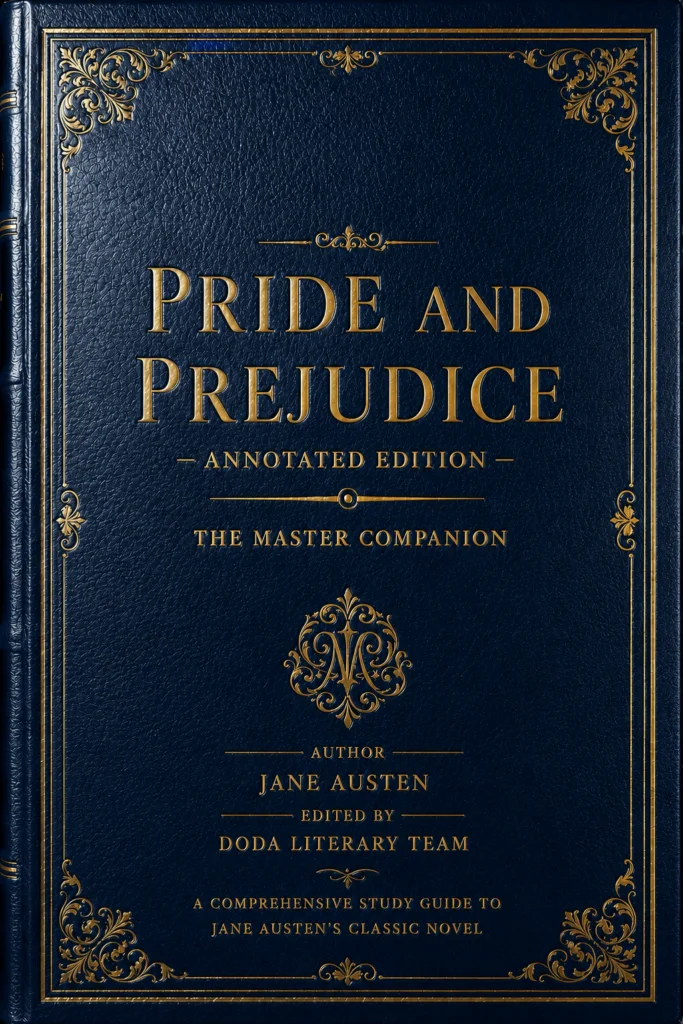
| Activities | 10 ready-to-use lesson ideas |
| Best For | Grades 9-12 ELA |
| Format | In-class, individual, group, and whole-class |
| Prep Time | Minimal — most are print-and-go |
| Pair With | Novel study unit for worksheets and rubrics |
🎭 1. First Impressions Journal
Before reading: Ask students to write about a time they made a snap judgment about someone that turned out to be wrong. After reading the novel, return to the journal entry and discuss how Elizabeth’s first impressions of Darcy and Wickham mirror their own experiences.
🪑 2. Character Hot Seat
Choose a student to play Elizabeth Bennet (or Darcy, or another character). The class asks questions about their motivations, feelings, and decisions. The student must answer in character, drawing on evidence from the text.
Best for: Mid-novel, after character dynamics are established.
💍 3. The Marriage Market Simulation
Divide students into character groups (Bennet family, Bingley, Darcy, Collins, Wickham). Give each group their character’s financial and social situation. Students must negotiate and form marriage alliances based on their constraints.
Debrief question: Was Charlotte Lucas’s decision to marry Collins practical or tragic?
✍️ 4. Rewrite the Proposal
Students rewrite Darcy’s first proposal or Elizabeth’s refusal in modern language. Compare versions to analyse what Austen achieved through formal language — the social stakes, the emotional weight, the class dynamics.
✉️ 5. Letter-Writing Exercise
Austen’s characters write letters constantly. Have students write a letter from one character to another at a key moment — Elizabeth to Jane after Darcy’s proposal, Darcy to his sister about Elizabeth, or Lydia to Kitty about Brighton.
🏛️ 6. Social Class Gallery Walk
Create stations representing different social classes in Regency England (landed gentry, clergy, military, tradespeople). Students visit each station and complete a worksheet identifying the rights, restrictions, and expectations of each class.
Connects to: Why Lady Catherine’s interference matters; why Mr. Collins behaves as he does.
🩰 7. The Ball Scene Analysis
Compare three versions of the Netherfield ball scene: the novel, the 1995 BBC adaptation, and the 2005 film. Students analyse how each medium handles character introduction, social dynamics, and key dialogue.
📱 8. Regency vs. Modern Dating
Students research courtship rituals in Regency England — chaperones, calling cards, the marriage market — and compare them to modern dating. Create a Venn diagram or comparison chart.
💰 9. The Entailment Problem
Students research the legal concept of entailment and calculate what happens to each Bennet family member financially when Mr. Bennet dies. Research primogeniture laws across different cultures and time periods for extension.
⚖️ 10. Final Debate
Resolution: Elizabeth Bennet should not have married Darcy. Students prepare arguments for and against, using textual evidence about Darcy’s character, Elizabeth’s stated values, and the novel’s treatment of marriage.
Every activity pairs with a complete resource pack. The Pride and Prejudice Novel Study Unit includes worksheets, rubrics, and answer keys for all of these activities.
📚 Hot Seat Questions
Ready-made character-specific questions for the hot seat activity.
📖 Marriage Market Kit
Character cards with financial and social profiles for the simulation.
❓ Film Comparison Guide
Structured analysis questions for comparing BBC 1995 and 2005 adaptations.
📝 Gallery Walk Cards
Printable station materials for the social class gallery walk.
✍️ Debate Preparation
5 debate topics with pro/con organisers and evidence trackers.
🎯 Mock Trial Kit
Complete roles, evidence sheets, and rubrics for trying Wickham or Darcy.
🏛️ Why These Activities Work on Pride and Prejudice
Pride and Prejudice is uniquely suited to active teaching because its engine is misunderstanding. Nearly every complication — Darcy’s pride, Elizabeth’s prejudice, Wickham’s charm, Charlotte’s pragmatism — comes from someone believing the wrong thing at the wrong time. That makes the novel a perfect playground for role-play, simulation, and debate: students have to inhabit the wrong belief before they can understand how Austen corrects it. It also helps that the social world of the novel is delightfully rule-bound. The marriage market, the entail, the etiquette of calling cards and balls — these are systems, and systems are exactly what students love to decode when you give them the tools. When a student can explain why Mr. Collins must inherit Longbourn, or why Lady Catherine’s visit is at once absurd and threatening, they have understood the plot at a level no comprehension worksheet can reach.
🎓 Grouping the Activities by Skill
The ten activities divide naturally into four skills, and mixing the types across a unit keeps energy high far better than running them all in the same shape.
Reading and comprehension. The First Impressions Journal, the Letter-Writing Exercise, and the Entailment Problem all push students back into the text. The journal asks them to interrogate their own snap judgments before they meet Elizabeth, which makes Austen’s trick of wrong first impressions land much harder on the return trip. The letter-writing exercise is quietly the hardest activity on the list: to write plausibly as Darcy or Elizabeth, students must absorb the way each character thinks, not just what happens in the plot. The entailment project trains them to read for information, connecting close reading to the real economics of Regency England.
Discussion. Character Hot Seat, the Marriage Market Simulation, and the Final Debate are built for talk. Hot Seat works because it holds one student accountable for a character’s psychology while the rest of the class prepares the questions — so everyone reads with the next interrogation in mind. The marriage market simulation produces its best learning in the debrief, especially the question of whether Charlotte’s marriage to Collins is practical or tragic. You can extend the argument with our ready-to-use free Pride and Prejudice discussion questions, which give chapter-by-chapter prompts that feed directly into the hot seat and debate topics.
Writing and media. The Proposal Rewrite, the Letter-Writing Exercise, and the debate’s evidence trackers cover analytical, creative, and argumentative modes. The proposal rewrite is the most revealing: when students translate Darcy’s formal speech into modern idiom, they discover how much Austen communicates through diction and register — the social stakes of the language itself. The Ball Scene Analysis, meanwhile, is a genuinely transferable media-literacy skill, teaching students that a scene is a director’s interpretation as much as an author’s words.
Drama and movement. The Social Class Gallery Walk, the Marriage Market, and Regency vs. Modern Dating comparison get students out of their chairs and into the world of the novel — ideal for the days after a long reading block when attention is flagging.
🗣️ Making Every Student Talk
A common fear is that discussion activities reward confident talkers and leave quiet readers behind. The fix is to give every speaking task a reading task behind it. In Hot Seat, the questioning students must quote the novel to ask a valid question, which turns the “audience” into active text-hunters. In the Marriage Market, hand each group their character card a day early so quieter students can prepare positions in writing before the negotiation begins. Pairing each activity with guidance on differentiating for struggling and gifted learners keeps the same lesson teachable across a mixed-ability class — the dynamic activities are precisely the ones that accommodate a wide range of reading levels.
📏 A Suggested Unit Sequence
These activities are meant to be sequenced, not cherry-picked. A three-to-four-week plan might run: Week 1, open with the First Impressions Journal and the Social Class Gallery Walk as students begin the novel; Week 2, introduce the Character Hot Seat and the Marriage Market once the Bennet household, Darcy’s disastrous proposal, and Wickham’s story are established; Week 3, run the Letter-Writing Exercise and the Regency vs. Modern Dating comparison; Week 4, close with the Entailment Problem and the Final Debate as a capstone. The arc moves students from comprehension to interpretation to argument. If you want a lesson-by-lesson pacing guide, the complete unit plan for teaching Pride and Prejudice shows exactly where each activity fits around the reading schedule — and the time-saving lesson planning guide explains how to repurpose these resources across multiple class sections without starting over.
📝 Assessing Without Killing the Momentum
These activities generate assessment material almost by accident. The debate preparation sheets double as an argumentative essay scaffold, the letter-writing drafts can be scored on voice and textual grounding, and the proposal rewrite produces a clean analytical comparison. If you want to balance performance-based work with traditional checks, the unit also includes ready-made quizzes, essays, and tests that key directly to the activities described here, so you never have to invent evidence-based questions from scratch. Students who have argued Darcy’s proposal in character will answer an essay on it with far deeper resources than students who only took notes — and that is the real argument for activity-based teaching.
❓ Frequently Asked Questions
How long does each activity take?
Most take 20-30 minutes. The marriage market simulation and mock trial can run 45-60 minutes.
Do I need special materials?
No. Everything uses materials you already have — notebooks, chart paper, or printed worksheets from the unit study.
Can I use these for homework?
Some work as homework (First Impressions Journal, Letter-Writing, Regency vs. Modern Dating), while others require class time (Hot Seat, Marriage Market, Ball Scene Analysis).
Which activity works best for reluctant readers?
The Marriage Market Simulation and Character Hot Seat are particularly effective because they get students moving and talking without requiring them to read aloud.
Are rubrics included for the writing activities?
Yes. The novel study unit includes rubrics for the letter-writing exercise, proposal rewrite, and debate preparation.
Do these activities work with struggling or reluctant readers?
Yes. The Marriage Market, Character Hot Seat, and Gallery Walk get students talking without requiring read-aloud, and each speaking task is paired with a reading task so students can enter through listening and discussion first.
Do the activities align with Common Core standards?
Yes. The writing activities support argumentative and explanatory writing standards, the discussion activities address speaking and listening, and the analysis tasks hit key ideas, craft, and structure. The unit framework maps each activity to specific standards.
Can I use these activities alongside the annotated edition?
Definitely. The historical notes are perfect support for the Entailment Problem and Social Class Gallery Walk, and students can mine the annotations for evidence during the hot seat and debate.
📚 Related Articles
Get Worksheets and Rubrics for Every Activity
- Marriage market character cards
- Film comparison analysis guide
- Debate pro/con organisers
- Rubrics for all writing activities