Free vs paid resources for studying Pride and Prejudice — here is an honest breakdown of what you can get at every price point and where spending money actually makes a difference. Not every paid resource is worth buying, and not every free resource saves you time.
Free vs Paid Resources: Which Do You Need?
An honest comparison of every Pride and Prejudice resource at every budget — from $0 to $30 — with clear recommendations for each scenario.
| Resource | Cost | Best For | Weakness |
|---|---|---|---|
| LibriVox audiobook | $0 | Pass 1 story comprehension | No annotations |
| Project Gutenberg ebook | $0 | Quick reference | No guidance |
| Free study guides | $0 | Exam revision | Shallow analysis |
| Annotated edition | $10–$15 | Deep understanding | None significant |
| Reader’s bundle | $15–$20 | Multi-pass study | Slightly more expensive |
| Commercial audiobook | $15–$30 | Listening pleasure | No annotations |
Free Resources (Cost: $0)
LibriVox Audiobook: The complete text spoken aloud by a volunteer narrator — 12 hours across 61 tracks. Clear and reliable. Does not include any explanation of the text. Best for listening through once to understand plot and characters.
Project Gutenberg Ebook: The plain text in multiple formats (EPUB, Kindle, PDF). Accurate text with no editorial content. Best as a free reference copy for searching specific passages.
Free Online Study Guides (SparkNotes, etc.): Chapter summaries, character analyses, and theme discussions. Written for students needing to pass exams. Best for quick revision, but shallow — analysis could apply to any classic novel.
Paid: Low-Cost ($5–$10)
Chapter summary guides are typically PDF downloads with summaries and discussion questions. Generally not worth it — free resources in this category are almost as good, and the paid annotations below are much better.
Paid: Mid-Range ($10–$20)
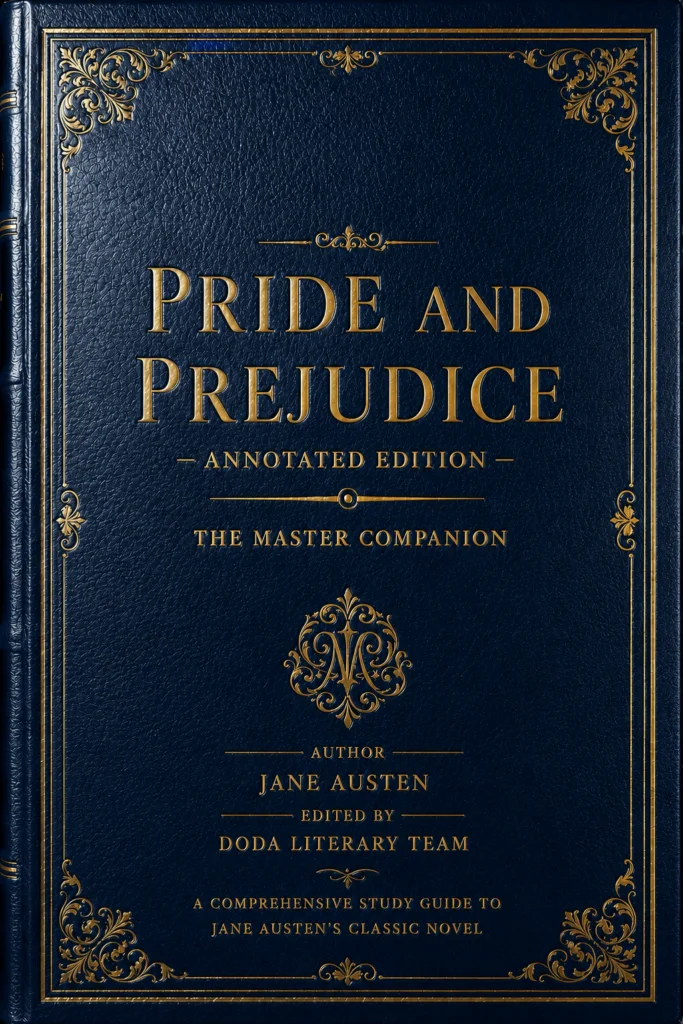
Annotated Edition: The full text with editorial notes placed alongside it — definitions of changed-meaning words, explanations of social customs, historical context, literary analysis, and cross-references. Best for any serious study. The single most valuable resource you can buy.
Reader’s Bundle: Three editions in one package — annotated, simplified, and summary. The simplified edition serves as a fast Pass 1 (2–3 hours), then the annotated edition for depth (8–10 hours), with the summary for revision. The most efficient way to study if serious about understanding.
The smartest $20 you will spend. Skip the commercial audiobook and get the Reader's Bundle plus free LibriVox audio.
Get the Reader's BundlePaid: Premium ($20+)
Commercial Audiobook (Audible): Professional narration by a trained actor with full character voices and studio-grade production. The content is identical to the free version. Worth it only if audiobook production quality matters to you. For study, the free version is equivalent.
Academic Editions (Oxford, Norton, Cambridge): Scholarly editions with extensive footnotes, critical essays, and textual notes. Overkill for most readers — annotations are written for academics and assume literary knowledge general readers do not have.
Three Budget Scenarios
Scenario 1: I Have $0. Download the LibriVox audiobook and Project Gutenberg ebook. Listen through once for the story, then read along with the ebook, pausing to look up unfamiliar references. You gain story comprehension but sacrifice time.
Scenario 2: I Have $15. Buy the annotated edition. Download the free LibriVox audiobook. Listen through once (Pass 1), then read the annotated edition (Pass 2). This is the optimal budget — full comprehension with nothing significant sacrificed.
Scenario 3: I Have $30. Buy the reader’s bundle and download the free LibriVox audiobook. Optionally spend remaining funds on a commercial audiobook if narration style matters to you. The most complete possible study experience.
$0 Budget
LibriVox audio + Gutenberg ebook + free study guides.
$10–$15
Annotated edition + free audio — optimal value.
$15–$20
Reader's bundle + free audio — most complete.
Not Worth It
Paid chapter summaries and commercial audio for study.
Best Free
LibriVox Solo Version 3 — 12 hours of clear narration.
Best Paid
Annotated edition — context changes everything.
🧭 What Actually Matters in a Pride and Prejudice Resource
Before you spend anything — or even commit your time to a free option — it helps to know what separates a genuinely useful resource from one that simply claims to help. Across every budget tier, three things make the real difference: text quality, annotation depth, and navigation.
Text quality sounds trivial until you hit a poorly scanned edition with dropped words, garbled punctuation, or the occasional stray character. Pride and Prejudice is subtle; a single missing “not” can flip the meaning of a sentence entirely, and Austen’s irony lives in exactly the places a careless transcription is most likely to corrupt. The safest route is any edition that comes directly from a clean source, and for a truly reliable reference copy you can still go free with Project Gutenberg — just treat it as a reference text rather than your reading copy.
Annotation depth is where free and paid resources diverge most sharply. A free study guide will summarise a chapter and name a theme; a good annotation will tell you why a specific word was chosen, what a social custom means, and who a passing reference points to. That is the difference between saying “this is about pride and prejudice” and explaining the moment Darcy’s letter reorders Elizabeth’s entire understanding of him.
Navigation rarely gets mentioned, but it matters more than most people expect. A reading edition that lets you jump between chapters, a searchable text for finding a favourite passage, and a table of contents that behaves will quietly save you hours. Poor navigation is the weakness of most free formats.
🏛️ Historical & Cultural Context — Why It Changes Everything
The single biggest reason readers misunderstand Pride and Prejudice is that they read a 21st-century social script onto an 1813 novel. What looks like snobbery, for example, is often a set of very real economic pressures. Entailment meant the Bennet family estate would pass to a male cousin — Mr Collins — on Mr Bennet’s death, which is why Mrs Bennet’s obsession with marrying off her daughters is not mere fussiness but genuine anxiety about the family’s future. Without that context, a large part of the plot reads as silliness; with it, the stakes become urgent.
The social rules of Regency England also explain behaviour that can seem baffling today. Why does Elizabeth walk three miles to Netherfield in muddy boots? Why is Darcy’s proposal so offensive even though he declares his love? Why does Lydia’s elopement threaten the whole family’s reputation? All of these are answered by period conventions that original readers understood instinctively and modern readers rarely do. A resource that provides this context — whether in the form of editorial notes, a historical background section, or both — multiplies the value of the text many times over.
This is where the free-versus-paid decision becomes clearest. Free resources give you the words; a good annotated edition gives you the world those words came from. If you want only the plot, free is genuinely enough. If you want to understand the novel on its own terms, the context is the part worth paying for.
📖 Why It Still Matters
Pride and Prejudice endures not because it is a comfortable romance but because it is a sharp, funny, and surprisingly modern study of how people misjudge one another. Elizabeth and Darcy are both wrong about each other — and about themselves — and the novel’s pleasure comes from watching them be corrected by events. Two centuries on, that remains one of the most satisfying patterns in all of fiction, which is why the book keeps being assigned, adapted, and enjoyed.
Because so much of that pleasure is buried in the details, the version you choose genuinely shapes your first experience. Read a plain text and you may find the book pleasant but underwhelming; read the same novel with the annotations and the social cues spelled out, and the wit becomes visible on almost every page. That is the real argument for the annotated edition: it does not change the book, it simply lets you see what was always there. If you are weighing which edition fits your study goals, our guide to which Pride and Prejudice edition to choose walks through the options in detail, and the annotated edition review looks closely at what the annotations actually deliver.
📖 Smart Reading Tips for Any Budget
Whatever you decide to spend, a few habits will get you more from the book:
- Do a fast first pass — get the whole story once, by ear or by eye, before you worry about depth; the listen-first method separates the two deliberately.
- Pair the free audio with your paid text — the LibriVox listen-along reinforces what the annotations teach at no cost.
- Stop at unfamiliar references — if a custom or person is unexplained, look it up; the answer is almost always the joke.
- Re-read Darcy’s first proposal and his letter — the hinge of the novel, and both repay a second reading more than any other passages.
Frequently Asked Questions
What is the single best resource to buy?
The annotated edition. It changes the reading experience entirely by placing context alongside the text. Everything else is supplementary.
Are paid study guides worth it?
Generally no. Free resources like SparkNotes provide similar content. Save your money for annotations, which provide depth free resources cannot match.
Should I buy the Audible audiobook for study?
No. The free LibriVox version gives you the same text. Spend the money on an annotated edition instead.
Is the reader's bundle worth the extra cost?
Yes, if you want the most efficient study system. The simplified edition serves as a fast Pass 1, saving time over listening to 12 hours of audio.
What if I only have $10?
Buy the annotated edition and use the free LibriVox audio. The annotations are where the learning happens; the audio is good enough for free.
Is the free LibriVox audiobook truly as good as a paid one?
For studying the text, yes — it contains the complete novel read aloud, which is all you need for a story-comprehension pass. A paid narration offers higher production polish and character voices, but no additional content. If study is your goal, the free version is the better value.
What should I look for when comparing two annotated editions?
Check that the annotations are placed alongside the text (rather than hidden at the back), that they explain social customs and historical context, and that the text itself is clean and complete. Sample a few notes before buying to judge whether they are written for readers like you or for academics.
Can I combine free and paid resources in one study plan?
Absolutely — and it is usually the best plan. Pair the free LibriVox audiobook and Project Gutenberg text for the first story pass, then invest in a single paid annotated edition for depth. That combination captures most of the benefit of the most expensive setups at a fraction of the cost.
📚 Related Articles
Spend Smart, Study Better
- Free LibriVox audiobook for story comprehension
- Annotated edition for deep understanding
- Reader's bundle for the complete system