The Pride and Prejudice audiobook vs reading debate has a real answer: it depends on what you want to get out of the novel. Each medium has strengths the other lacks, and neither is objectively superior across every dimension.
Audiobook vs Reading: Which Is Better?
An honest breakdown of comprehension, convenience, cost, and retention across both mediums for Pride and Prejudice.
| Scenario | Better Choice | Why |
|---|---|---|
| First-time reader wanting full understanding | Read annotated edition | Annotations provide needed context |
| Busy person with no reading time | Listen (LibriVox is free) | Audio fits into existing routines |
| Student preparing for an exam | Both | Listen for story, read annotations for analysis |
| Casual re-read of familiar novel | Either | Both work well for different reasons |
| Reader struggling with 19th-century language | Read with annotations while listening | Combined approach addresses every barrier |
Listening: The Pros
Comprehension of language: Austen’s long sentences become clear when spoken because the narrator’s voice marks grammatical boundaries. This is not an accident — Austen read her drafts aloud to her family. Reading silently removes a layer of meaning the audio restores.
Forced pacing: An audiobook prevents skimming. You cannot rush through passages you assume are unimportant. For a novel where minor early conversations become significant later, this forced attention is genuinely helpful.
Convenience: Listen while commuting, cooking, cleaning, or exercising. The free LibriVox recording runs 12 hours — at one hour per day, you finish in two and a half weeks without ever sitting down to read.
Listening: The Cons
Shallow retention: Audio is linear — words arrive and disappear. Research consistently shows listeners retain less detail than readers with complex texts.
No access to annotations: The free audiobook gives you raw text with no explanation of vocabulary, historical context, or literary technique.
Dependency on narrator quality: The LibriVox narrator is good but not professional. If her style does not match your preferences, the entire 12-hour experience suffers.
Why choose? Do both. Listen to the free audiobook first, then read the annotated edition for depth.
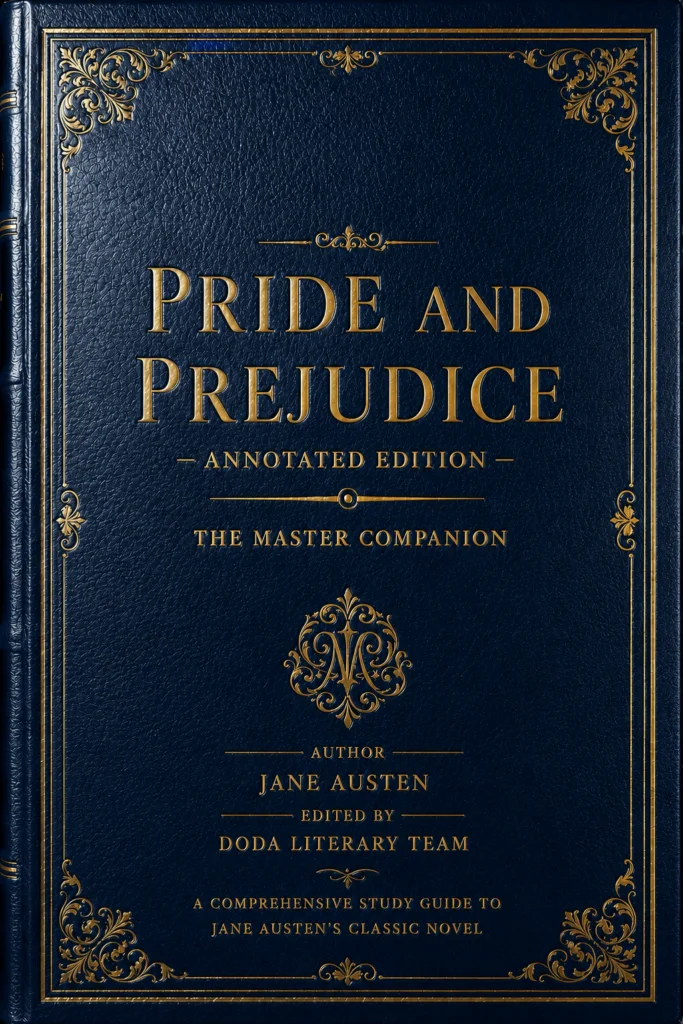
Get the Annotated EditionReading: The Pros
Control over pace: Pause after significant lines, re-read confusing paragraphs, slow down for dense passages and speed up through lighter ones. For a layered novel, this control matters enormously.
Access to annotations: This is the single biggest advantage of reading. An annotated edition places definitions, context, and analysis directly alongside the text. No audiobook can replicate this.
Better retention: Reading leaves a stronger memory trace than listening, particularly for complex material. Your eyes can scan back to confirm details, and your brain processes written language differently from spoken language.
Reading: The Cons
Time commitment: Reading takes 10–12 hours of focused, uninterrupted time — two to four weeks for most people, compared to two to three weeks for listening.
No audio cues: Silent reading lacks the rhythm and emphasis the audiobook provides. Readers unfamiliar with 19th-century prose sometimes read with flat intonation and miss the humour and irony.
The Honest Recommendation
If you have time, do both. Start by listening to the free LibriVox audiobook for the story, characters, and rhythm. Once you know what happens, read the annotated edition to focus on language, social context, and literary technique. The audio costs nothing. The annotated edition costs a fraction of a single dinner out. Together they give you deeper understanding than either medium alone.
Audio for Story
Free LibriVox recording gives you the plot and characters.
Reading for Depth
Annotations explain context, vocabulary, and technique.
Audio Pros
Forced pacing, language cues, convenience.
Reading Pros
Pace control, annotations, better retention.
Both Together
Dual channels fill each medium's gaps.
Best Value
Free audio + affordable annotated edition.
🎧 The Science of Listening vs Reading
The difference between the two mediums is not just a matter of preference — it is wired into how your brain processes each one. When you read, you control the flow of information: your eyes can pause, re-read, and move backward to confirm a detail the moment you doubt it. That ability to re-scan is one reason studies consistently find readers retain more from complex texts than listeners. Your working memory hands information to long-term memory more reliably when you can revisit it instantly.
When you listen, the information arrives in a fixed, linear stream that you cannot easily rewind and re-inspect at your own pace. The upside is that spoken language carries extra cues — tone, emphasis, rhythm — that written text on a page does not. For a novel like Pride and Prejudice, where so much meaning lives in how a line is delivered (the irony, the dry wit, the delicacy of an insult), hearing the narrator’s voice can unlock layers a silent reader might skim past. Neither channel is better in absolute terms; they simply offload different parts of the comprehension work.
💰 Cost and Access Compared
Perhaps the biggest practical difference between the two options is financial. The most popular audiobook recordings of Pride and Prejudice — including the free LibriVox version discussed throughout this article — are available at no cost, which makes listening by far the cheaper entry point. There are paid, professionally narrated editions too, and these can be excellent, but for this public-domain novel the free recordings give you the same text. If cost is your main constraint and you only want the story, you can legitimately meet that goal for nothing.
Reading, by contrast, has almost no genuinely free high-quality option — public-domain plain-text files exist, but they come without the context that makes Austen’s prose accessible. The real value difference appears once you want understanding, not just the plot. A commercial audiobook still gives you only the words; an annotated edition puts definitions, historical notes, and analysis beside each passage. For a fuller breakdown of what free and paid resources actually deliver, our comparison of free vs paid Pride and Prejudice resources lays out the trade-offs in detail.
📖 How the Annotated Edition Complements Both
If you decide to listen and read together, the annotated edition is the natural partner to whatever audio you choose. Start by listening to a chapter for the story, the rhythm, and the tone — then read that same chapter in the annotated edition, pausing over the notes to understand vocabulary and context you may have missed. Our listen-first guide walks through exactly this method, and the step-by-step listen-along article pairs the free recordings with reading for maximum benefit.
This dual approach works because the two channels fill each other’s gaps. Audio supplies the voice and the emotional temperature that Austen’s satire needs; annotations supply the meaning and the historical world that audio cannot explain. Used together, they transform a novel that can feel remote into one that is worth every hour you give it. If you want advice beyond the audio-versus-reading question — about which physical edition and how best to read the book overall — our guide to choosing the right Pride and Prejudice edition will point you in the right direction.
❓ Frequently Asked Questions
Can I get the same understanding from just listening?
Not from the free audiobook alone. You will understand the plot and characters but miss vocabulary nuances, historical context, and literary techniques.
Is the paid Audible version worth it for study?
For study purposes, no. The free LibriVox version gives you the same text. Spend your money on an annotated edition instead of a commercial audiobook.
How do I read and listen at the same time?
Download individual MP3 chapters, open your annotated edition, and play each chapter while reading along. Pause for annotations when needed.
Does listening count as reading?
For story comprehension, yes. For detailed analysis, reading is superior. The best approach uses both.
Which is faster?
Listening at normal speed takes about 12 hours. Reading takes 10–12 hours for most people, but reading time is harder to find in busy schedules.
Can I speed up the audiobook?
Yes. Most apps let you increase playback speed, and many listeners find 1.25x still comfortably clear. That shortens the 12-hour recording, but be careful — at higher speeds you can lose the rhythm and irony that make Austen's prose work.
Are listening and reading better for different parts of the book?
Generally yes. Listening is great for the rhythms of dialogue and the comedy of Austen's narration, while reading is better when you want to linger over vocabulary, social context, and literary technique. That split is exactly why the two work well together.
📚 Related Articles
Get the Best of Both Worlds
- Free LibriVox audiobook for story comprehension
- Annotated edition for deep analysis
- The complete Pride and Prejudice experience