A complete summary of Robert Burns poetry covering his major themes, writing style, and the meanings behind his most famous work — the big picture made simple.
Robert Burns Poetry Summary: Themes and Style
A complete summary of Robert Burns poetry covering his major themes, writing style, and the meanings behind his most famous work. Burns produced 539 poems and songs — the big picture is simpler than you think.
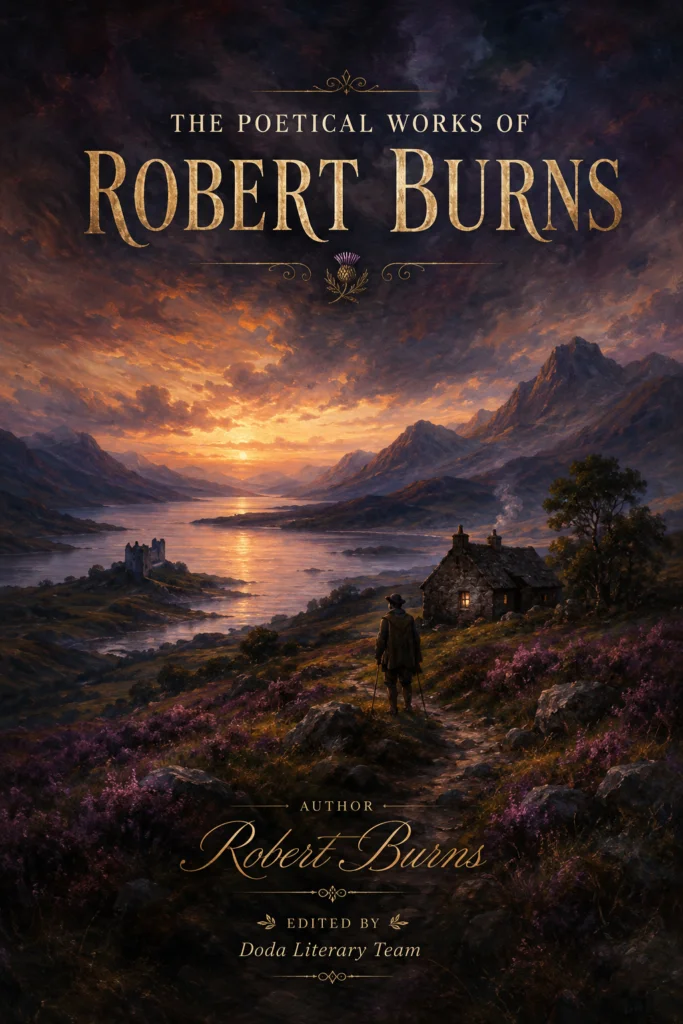
| Total Poems | 539 poems and songs |
| Major Themes | Love, nature, social justice, Scottish identity |
| Writing Languages | Scots, English, mixed |
| Key Form | Standard Habbie (Burns stanza) |
| Career Span | 1786–1796 (10 years) |
| Legacy | Scotland’s national poet |
📜 The Big Picture at a Glance
Robert Burns wrote and collected nearly 539 poems and songs across a short decade, enough to make him Scotland’s national poet and one of the most quoted writers in English. What is striking about that output is how compact his subjects are. Where other poets reach for grand abstractions, Burns writes from a single fixed point: the small farm where he lived, the people he loved and lost, the injustices he saw between rich and poor, and the stubborn pride of a Scot in a century that treated Scottishness as a joke.
That grounding is why his poems still feel immediate. He is not an author you must admire through a museum case; he is a man talking directly to you about things that matter to everyone. Reading the original Scots alongside a plain-English version shows exactly how much of the feeling lives in the sound of the words, not just their dictionary meaning.
If you are new here, this summary is the map. The themes below cover the territory, and the numbered poems in the annotated edition let you go straight from each big idea to the poem that proves it.
❤️ Major Theme: Love and Romance
Burns wrote more love poems than anything else. Some celebrate new love (“A Red, Red Rose”), others grieve lost love (“Ae Fond Kiss”), and a few are playful or even cheeky. His love poems work because they are specific — he writes about real people and real emotions rather than abstract ideals.
🌿 Major Theme: Nature and the Natural World
Burns grew up on a farm, and his poetry is full of animals, landscapes, and weather. But nature is rarely the main subject. He uses it as a mirror for human experience. The mouse’s destroyed nest reflects human suffering. The mountain daisy cut down by a plough represents fragile beauty destroyed by fate.
⚖️ Major Theme: Social Justice and Inequality
Burns was politically radical for his time. He believed in human equality long before it was fashionable. Poems like “A Man’s a Man for A’ That” argue that worth comes from character, not birth. He satirised the church, the aristocracy, and anyone who abused power.
📚 Explore every theme with line-by-line annotations
👉 Get the Annotated Edition🏴 Major Theme: Scottish Identity and Culture
Many of Burns’s poems celebrate Scottish history, language, and traditions. He wrote in Scots deliberately — it was a political choice at a time when the English upper classes looked down on Scottish culture. His work helped preserve the Scots language.
💀 Major Theme: Mortality and the Passing of Time
Death runs underneath nearly everything Burns writes, but it is rarely morbid. In “To a Mouse” he reflects that the mouse fears only the present while humans carry the weight of past regret and future dread. In “To a Daisy” he watches a flower cut down by his plough and reads in it the brief, fragile span of any life. Time, he keeps insisting, strips us all level.
That is part of what separates him from later melancholy poets: he does not brood on death for its own sake. He uses its certainty to make the present moment — the kiss, the glass, the friendship — worth more. Mortality gives his celebrations their urgency, and it surfaces in poems like “The Banks O’ Doon” and across his songs of regret.
✍️ Writing Style
Burns wrote in three modes:
- Standard English — for formal, serious poems
- Scots dialect — for personal, emotional, or satirical poems
- Mixed — switching between both in a single poem
His rhythm is musical because he wrote many poems as songs. The metre is regular and predictable, which makes them easier to set to music and easier to memorise.
🎭 Style Devices Worth Knowing
Beyond the lyrics, Burns has a handful of signature moves. The Burns stanza (Standard Habbie) is his six-line building block with its short rhyming fourth line — you will see it everywhere once you can recognise it. Dramatic monologue lets him ventriloquise: in “Holy Willie’s Prayer” he slips inside the voice of a self-righteous elder and damns him through his own words. Satire and irony run beneath even tender poems, and the epitaph and the elegy let him shift from comedy to genuine grief in a single breath.
He is also a master of compression. Burns was working the songs he collected into shape as much as composing fresh lines, and centuries of that editing habit taught him to land on the memorable phrase — “the best-laid schemes o’ mice an’ men,” “O wad some Pow’r the giftie gie us.” If you want to see these techniques applied to individual poems, the top 10 Burns poems explained and the summaries of his major works walk through them line by line.
🎬 Why This Summary Helps You Read
Knowing the themes in advance changes how a first reading feels. When you meet “To a Mouse,” you will already be listening for mortality and the shared lot of humans and beasts. When you meet “Ae Fond Kiss,” you will hear the farewell that Burns returned to throughout his work. Forearmed with the map, the Scots words stop being the main event — you are hunting for the theme in every stanza, and the poem opens far faster than it did when every line felt like a code.
This is exactly the kind of scaffolding the annotated edition provides on every page: poem summaries, historical context, and literary-device notes placed beside the text. If you would rather ease in with the gentlest selections first, the best poems for beginners are a short, low-friction place to start before you take on the full collection.
🏆 What Makes Burns Lasting
Two centuries after his death, Burns is still read because his concerns are universal. Love, loss, injustice, death, joy — he writes about what every human experiences. The Scots words are a surface barrier, but the emotions underneath are instantly recognisable.
🎯 What the Annotated Edition Unlocks
539 Fully Annotated Poems
Every poem with line-by-line explanations of Scots words, literary devices, and meaning.
500+ Scots Glosses
Comprehensive glossary indexed alphabetically with definitions and poem references.
Teacher's Insights
Stanza-level commentary explaining what Burns is doing with language, tone, and structure.
Poem Summaries
Overview, historical context, key themes, and literary devices for every poem.
Historical Context
Explanations of 18th-century Scottish references — people, places, and traditions.
Beautiful EPUB Format
Works on Kindle, Apple Books, Kobo, and all major e-readers.
❓ Frequently Asked Questions
What is the most common theme in Burns's poetry?
Love is the most common theme. Burns wrote love poems in every mode — joyful, sorrowful, playful, tender. His love poems outnumber any other category in his collected works.
Did Burns write about politics?
Yes, extensively. He was a radical who supported the French Revolution, believed in human equality, and satirised the church and aristocracy. “A Man’s a Man for A’ That” is his most famous political poem.
Why did Burns write in Scots dialect?
It was a political and artistic choice. Politically, writing in Scots asserted Scottish identity against English cultural domination. Artistically, Scots allowed him to write with an emotional directness that standard English did not provide.
What is a "Burns stanza"?
Also called the Standard Habbie, it is a six-line stanza with an AABCCB rhyme scheme and a short fourth line. Burns used it so often that it became named after him. You will see it everywhere once you know what to look for.
How many of Burns's poems are songs?
Most of his poems were written to be sung. Burns was a passionate collector of Scottish folk songs, and he wrote many of his poems to existing tunes. This is why his metre is so regular and musical.
What makes Burns different from other Romantic poets?
Burns was writing before the Romantic movement fully emerged. Unlike Wordsworth or Keats, Burns came from a farming background and wrote about everyday life with humour and directness. He never idealised the poor — he was one of them.
Is Burns's poetry hard to read for a modern reader?
It can be at first, mostly because of the Scots vocabulary. Once you learn a few recurring words (luve, gang, awa’, twa), the poems open up quickly, and the rhythm carries you even before you know every word. A glossary beside the text — like the 500+ entries in the annotated edition — removes almost all the friction.
Where should I start with Burns's poems?
Begin with “A Red, Red Rose,” “To a Mouse,” and “Ae Fond Kiss” — all short, famous, and emotionally direct. From there move to “A Man’s a Man for A’ That” and “Tam o’ Shanter” for his politics and humour, then range freely through the collection.
Is Burns actually a Romantic poet?
Loosely, and he influenced the Romantics who came after him — Wordsworth and Coleridge both admired him. But Burns wrote before Romanticism fully formed, and his earthy, comic, satirical side sits apart from the movement’s high earnestness. Think of him as the bridge between the eighteenth century and Romanticism.