Robert Burns poems explained in simple English — what his most famous poems actually say, line by line, in plain language anyone can follow.
Robert Burns Poems Explained in Simple English
Robert Burns poems explained in simple English — Scotland's national poet wrote in a mix of Scots and English that can feel like a foreign language. Here's what his most famous poems actually say, in plain language anyone can follow.
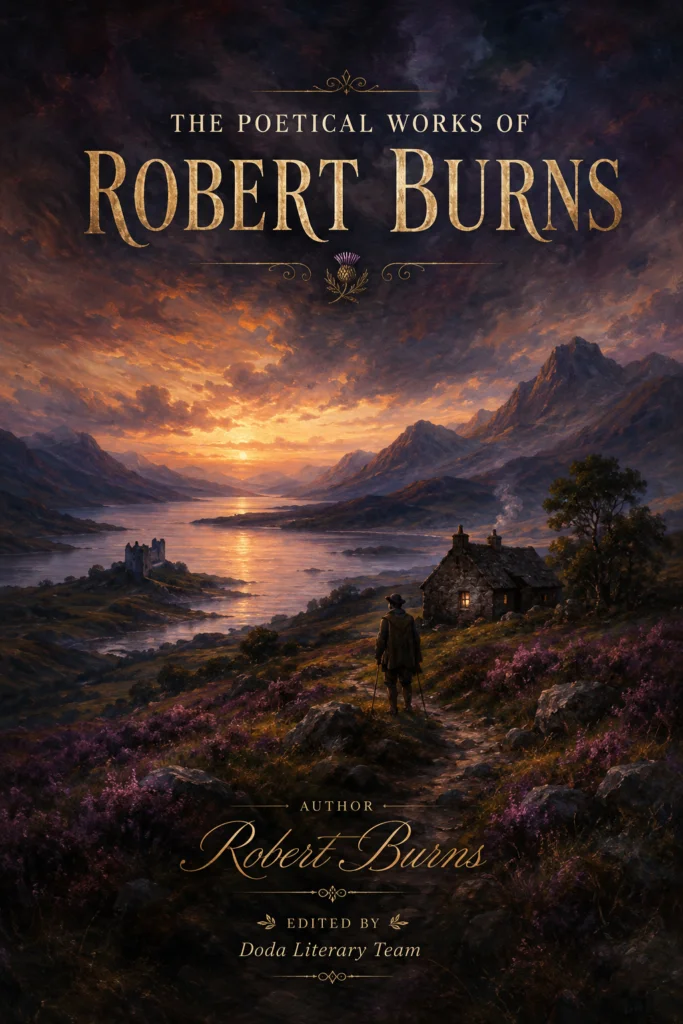
| Poet | Robert Burns (1759–1796) |
| Language | Scots and English |
| Total Works | 539 poems and songs |
| Difficulty | Moderate with Scots glossary |
| Key Words | ken (know), braw (good), wee (small), gang (go) |
| Best Entry Point | “A Red, Red Rose” |
📖 How Plain-English Burns Works
A plain-English version of a Burns poem does not replace his original; it runs beside it. The idea is simple: you keep Burns’s actual Scots lines on the page, and underneath (or alongside) each one you add a translation of that line into everyday modern English. That way you can hear the music of the original Scots and follow its meaning at the same time, without running to a dictionary every few words.
This matters because translating Burns is not like translating a clear modern poem. He wrote in a dialect of English — Scots — that shares much of its vocabulary but has its own words (ken for know, braw for good, wee for small, gang for go) and its own spelling. A plain-English version bridges that gap, and once the meaning is clear you can return to the original and enjoy its sound. This article shows that approach in action with several of Burns’s most famous poems, and our separate guide on the same idea looks at the principle in more depth.
🤔 Why Burns Is Hard to Read
Burns wrote in the late 1700s using the Scots dialect — a language closely related to English but with its own vocabulary and grammar. Words like ken (know), braw (fine/good), wee (small), and gang (go) appear constantly. Even native English speakers need help. The good news is that once you learn a few dozen Scots words, most of Burns becomes readable.
🌹 “A Red, Red Rose” — In Simple English
Burns’s most famous love poem is short and deceptively simple.
Original line: “O my Luve is like a red, red rose” Simple English: “My love is like a red, red rose”
Original line: “That’s newly sprung in June” Simple English: “That has just bloomed in June”
The poem compares love to a rose — fresh, beautiful, and fragile. Burns then says his love will last until the seas dry up and the rocks melt. It is an exaggerated promise, which makes it romantic rather than literal.
🐭 “To a Mouse” — In Simple English
This poem is where Burns feels guilty for destroying a mouse’s nest with his plough.
Original line: “Wee, sleekit, cow’rin, tim’rous beastie” Simple English: “Small, sleek, cowering, timid little creature”
Original line: “Thou need na start awa sae hasty” Simple English: “You do not need to start away so hastily”
The famous line “The best-laid schemes o’ mice an’ men gang aft agley” means “The best plans of mice and men often go wrong.” It speaks to how all creatures — human and animal — suffer from unpredictable misfortune.
📚 Want all 539 poems translated line by line?
👉 Get the Annotated Edition💔 “Ae Fond Kiss” — In Simple English
A sad goodbye poem about a love that cannot continue.
Original line: “Ae fond kiss, and then we sever” Simple English: “One loving kiss, and then we separate”
Original line: “Never met or never parted” Simple English: “If we had never met, we would never have parted”
The poem captures the pain of loving someone you cannot keep. It is one of Burns’s most emotional works.
⚖️ What’s Gained and What’s Lost
No translation is perfect, and plain-English Burns is no exception. It is worth being honest about what you gain and what you give up, because that honesty helps you read better.
What you gain is comprehension. Within a line or two, a plain-English version makes clear what Burns is actually saying — the scene, the argument, the joke, the emotion. For a reader new to Scots, this is the difference between recognising a few words and genuinely following a poem. That understanding is the single biggest barrier for most people, and plain English removes it almost entirely. You can see this in action across our summary of Burns’s major poems, which explains the meaning of many of his best-known works in accessible terms.
What you lose is the sound. Burns wrote in Scots because he loved its music and its earthiness. Words like braw and wee carry a warmth that their English translations do not quite match, and the rhyme and rhythm of the original can flatten out in translation. The Scots dialect is also bound up with Scottish identity in a way plain English cannot reproduce — a point our glossary of Scots vocabulary makes vivid as you see hundreds of dialect words gathered together.
What you gain back is both. The best approach is to read the plain-English version to understand the poem, then return to the original to hear it as Burns wrote it. The two readings support each other, and this is exactly the workflow the annotated edition is designed for — it keeps the original Scots text while providing the plain-English help alongside it.
🏛️ The Context Behind the Dialect
Burns chose to write in Scots at a moment when many educated Scots were abandoning their dialect for “proper” English as a route to respectability. His decision was therefore quietly radical. By writing in the language of the ordinary people — and especially the rural poor among whom he grew up — Burns dignified a voice that polite society looked down on. This is part of why he became, and remains, Scotland’s national poet: he gave the common Scottish voice an unforgettable literary form.
Understanding this context changes how you read even a love poem. When Burns writes “O my Luve is like a red, red rose,” he is not only writing romantically; he is writing a Scots word (luve) that asserts where he comes from. A plain-English version can convey the meaning, but knowing that the dialect itself was a political choice helps you appreciate what Burns was doing — and why the annotated edition keeps the original words right there beside the translation. To understand how Burns became Scotland’s national poet, our guide to that very question is a good companion.
🧭 Why Reading Him This Way Works
The plain-English approach works because it removes the single obstacle standing between most readers and one of the best poets in the language. Burns’s reputation can be intimidating, but his actual poems are short, direct, and deeply felt. Once the Scots is translated, readers usually discover not a difficult classic but a familiar, warm, funny, and moving writer — someone who seems to understand them.
It also works because it builds confidence fast. After just a few poems read with plain-English help, you begin to recognise the Scots words (ken, braw, wee) on sight, and the original text opens up on its own. This is why most people need only a few dozen vocabulary entries before the dialect stops being a barrier. Our guide to why Burns is hard to read explains this learning curve in more detail — and shows that the struggle is far smaller than people fear.
🌟 What the Annotated Edition Unlocks
539 Poems Annotated
Every poem with line-by-line translations of Scots words into plain modern English.
500+ Scots Word Definitions
Every unfamiliar word defined inline and indexed in a cumulative glossary.
Teacher's Insights
Commentary explaining what each stanza means and why it matters.
Poem Summaries
Overview, historical context, key themes, and literary devices for each poem.
Historical Context
Explanations of 18th-century Scottish references and cultural background.
EPUB 3 Format
Works on Kindle, Apple Books, Kobo, and all major e-readers.
❓ Frequently Asked Questions
How many Scots words do I need to learn to read Burns?
Most readers need about 50–100 Scots words to read Burns comfortably. The same words appear repeatedly across poems. After 3–5 poems, you’ll recognise 80% of the dialect vocabulary without checking.
What is the easiest Burns poem to read?
“A Red, Red Rose” is the easiest. It uses mostly modern English with only a few Scots words (luve, gang). The meaning is clear even on first reading.
Can I read Burns without learning Scots?
You can read the words, but you’ll miss the meaning. The Scots dialect carries emotional weight that plain English translations cannot fully capture. An annotated edition that preserves the original Scots alongside translations gives you both the music and the meaning.
Is there a version that shows original and modern English side by side?
Yes — the annotated edition provides line-by-line translations inline. You read the original Scots with the modern English equivalent right there, without flipping pages or looking up words.
What does the title mean — "Poems, Chiefly in the Scottish Dialect"?
It was the title of Burns’s first published collection (1786). It means exactly what it says: most of the poems are written in Scots, not standard English. This was a bold political statement at a time when Scottish culture was looked down on by the English upper classes.
How long does it take to become comfortable reading Burns?
Most readers need about 3–5 poems to adjust to the Scots vocabulary. After 10 poems, you’ll recognise 80% of the dialect words. The initial effort pays off quickly.
Does simple English change the meaning of Burns's poems?
The core meaning stays the same, but no translation is perfect. A plain-English version gets the sense across accurately while losing some of the music and warmth of the original Scots. That is why it is best to read the translation alongside the original — and why the annotated edition keeps both together.
Is reading Burns in simple English the same as reading a modernised version?
Not quite. A modernised version rewrites the whole poem in contemporary English, losing the original text entirely. A simple-English explanation keeps Burns’s original Scots lines and offers the plain-English meaning alongside them, so you still experience the poem as he wrote it.