If you have tried reading Pride and Prejudice and gave up by chapter three, you are not alone. Here is exactly why it is so hard to read and what you can do about it.
🤔
Why Is Pride and Prejudice Hard to Read?
Three specific problems make Pride and Prejudice difficult for modern readers — and three practical solutions that actually work.
| Problem 1 | Archaic language — words mean different things today |
| Problem 2 | Invisible social rules — Austen never explains them |
| Problem 3 | Hidden dialogue — characters rarely say what they mean |
| Quick Fix | Read with annotations and chapter summaries |
| Best Solution | Side-by-side annotated edition |
📜 Problem 1: The Language Is 200 Years Old
Austen wrote between 1796 and 1813. Words like “condescension” meant something different then (it meant “equal treatment of inferiors,” not “patronising”). Phrases like “being of consequence” do not match modern usage. Even the grammar is different — Austen uses double negatives, unusual word orders, and run-on sentences that span half a page.
Example of a real Austen sentence:
“It is a truth universally acknowledged, that a single man in possession of a good fortune, must be in want of a wife.”
That is only 22 words, so it is manageable. But many of her sentences run 60-80 words with multiple clauses stacked together. By the time you reach the full stop, you have forgotten what the sentence was about.
🏛️ Problem 2: The Social Rules Are Invisible
Austen never explains the social code her characters follow — because her original readers already knew it. Modern readers miss things like:
- Why a woman cannot propose marriage
- Why visiting someone’s home without a formal invitation is scandalous
- Why a family with no sons is in financial trouble (entailment)
- Why running away with a man ruins a woman’s reputation permanently
These are not minor details. They are the engine of the plot. Without understanding them, half the drama makes no sense.
🗣️ Problem 3: The Dialogue Requires Subtitle Reading
In Austen, characters rarely say what they mean. Elizabeth tells Darcy she “cannot fix on the hour” when she realised her feelings — and it takes him a moment to understand she means she is in love with him. The comedy comes from the gap between what people say and what they mean, but if you cannot read between the lines, the jokes land flat.
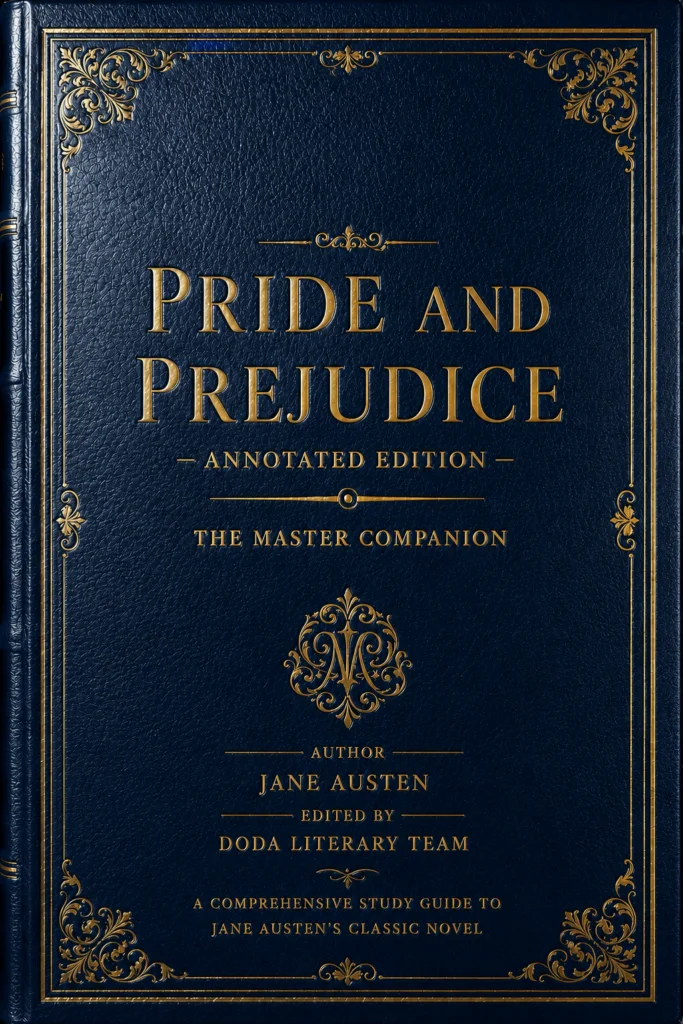
📖 Stop struggling. Get the annotated edition with everything explained.
👉 Get the Annotated Edition🔧 How to Fix Each Problem
| Problem | Quick Fix | Deep Fix |
|---|---|---|
| Archaic language | Read a sentence aloud | Use an annotated edition with modern side-by-side |
| Invisible social rules | Skim a plot synopsis first | Read chapter summaries before each chapter |
| Hidden dialogue meaning | Assume everyone means the opposite | Read thematic analysis alongside the text |
📖 The Easiest Fix: Side-by-Side Reading
The most practical solution is to read an edition that puts the original text alongside simplifications and annotations. Instead of pausing every five minutes to look up a word or guess at a social reference, you get the explanation right there.
For example, where Austen writes:
“Mr. Darcy walked off; and Elizabeth remained in the garden, with no very brilliant feelings in his favour.”
An annotated version might note: “Elizabeth is still angry with Darcy. She is alone in the garden, replaying their conversation and feeling more annoyed each time she thinks about it.”
📚 What the Annotated Edition Unlocks
242 Annotations
Every archaic word and social reference explained in context as you read
139 Simplifications
Dense 60-80 word sentences rewritten in clear modern English
Character Profiles
Relationship maps and personality guides so you never lose track
Discussion Questions
76 questions that help you unpack the hidden meanings in dialogue
143-Term Glossary
Words like condescension, breeding, and entailment defined clearly
Visual Guides
Character diagram and timeline to track the social web
🏛️ The Regency World Behind the Words
A large part of Pride and Prejudice’s difficulty is simply distance from its world. The novel was published in 1813, at the height of the Regency era, when British society ran on a set of assumptions that modern readers find foreign. Property, rank, and reputation governed every relationship — a family estate passed through male heirs (the entailment that threatens the Bennet sisters), young women could not work in respectable employment, and a single scandal could ruin a family’s prospects.
Austen did not explain these rules because she did not need to; her original readers lived them. That is why so many jokes and plot twists now pass us by. For example, Mr. Collins’s absurd proposal to Elizabeth only makes sense when you understand that a woman without a fortune had almost no secure future. If you are new to the period, a quick skim of Regency courtship customs before you start will unlock more of the story than any number of rereads. Our Pride and Prejudice study guide lays out these conventions in plain language.
🗣️ What the “Hidden Dialogue” Really Is
The trickiest feature of Austen’s prose is its indirection — what critics call free indirect discourse. Austen slides seamlessly between the narrator’s voice and a character’s unspoken thoughts, often without any signal. When Elizabeth muses about Darcy “with no very brilliant feelings in his favour,” we are inside her head hearing the polite, clipped way she resents him. Learning to spot these shifts is the single most rewarding skill for a new reader, because it is where Austen’s wit and social satire live.
Once you catch on, the novel transforms from a fussy period romance into something genuinely funny and sharp. Darcy’s awkward proposal, Mr. Collins’s pompous speeches, Mrs. Bennet’s frantic matchmaking — all of it lands harder once you hear the irony underneath. If the dialogue still feels impenetrable, our guide to Pride and Prejudice quotes explained decodes the best-known lines line by line.
🧭 A Reading Plan That Works
Rather than reading cold, try a three-step approach. First, prepare: spend ten minutes with a chapter summary so you know who the major characters are and what matters before you start. Second, read the original text in short sessions — one or two chapters at a time — aloud if it helps, letting the syntax wash over you even when a sentence runs long. Third, circle back to any passage that confused you and reread it in light of what you now know.
Sustaining momentum early matters most. The first chapters introduce a dozen characters quickly, and many readers stall there; push through to the Netherfield ball and the story’s rhythms settle. If you prefer to keep the plot firmly in mind before braving the prose, our Pride and Prejudice chapter summary gives you a detailed roadmap of every chapter.
📖 Why It Is Worth the Effort
Few books repay effort as generously as Pride and Prejudice. Its structure is close to perfect, its characters so vital that we still argue about them two centuries later, and its prose — once you learn its music — among the wittiest in English. The difficulty of the first chapters is a feature, not a bug.
Many readers who struggle the first time discover that a second attempt, with some help along the way, becomes one of their favourite books. Understanding the social rules and hearing the irony changes everything. If you are weighing a simplified version, know that you can keep both the original language and full comprehension — read our comparison of annotated versus original editions to see how.
❓ Frequently Asked Questions
Why is Pride and Prejudice so difficult for modern readers?
Three main reasons: the language is 200 years old with different word meanings, the social rules are never explained (entailment, courtship protocols, class hierarchy), and characters communicate through indirect dialogue that requires reading between the lines.
What is the hardest chapter in Pride and Prejudice?
Many readers struggle with the Mr. Collins proposal scene (Chapter 19) because the comedy depends on understanding Regency social etiquette. Without knowing that a woman could not support herself and was expected to accept any respectable offer, Collins's absurd proposal loses its satirical edge.
How long does it take to get used to Austen's writing style?
Most readers adjust within 3-5 chapters if they read regularly. Reading aloud helps enormously — Austen's prose was meant to be heard. An annotated edition can reduce the adjustment period to just 1-2 chapters by explaining unfamiliar terms immediately.
Should I read a simplified version first?
A simplified version can help you grasp the plot, but you will miss Austen's wit and irony. A better approach is to read the original with an annotated edition that provides simplifications alongside the original text — you get both the language and the understanding.
What does entailment mean and why does it matter?
Entailment is a legal rule that prevented the Bennet sisters from inheriting their father's estate because they were female. This means the Bennet family home goes to Mr. Collins, a male cousin, upon Mr. Bennet's death. This rule drives Mrs. Bennet's desperation to marry her daughters off and is central to the entire plot.
Is watching the movie first a good way to understand the book?
Watching an adaptation first can help you follow the plot and characters, but the films simplify or omit much of the social commentary and character development. Use the movie as a preview, then read the annotated edition to get the full experience.
Do I need to know British history to read Pride and Prejudice?
Not in depth, but a little context goes a long way. The key facts are the entailment that threatens the Bennet estate, the rules of Regency courtship, and the rigid class distinctions — all of which drive the plot. The annotated edition explains these as they come up, so you can read without stopping to research.
Is Pride and Prejudice worth reading if I already saw the movie?
Absolutely. The films capture the romance but compress most of the wit and social satire. The book lets you inside Elizabeth's and Darcy's minds through irony and free indirect discourse — something no adaptation fully conveys. The story you love is richer and funnier in the original.
📚 Related Articles
🎯 Stop Struggling. Start Understanding.
The annotated edition of Pride and Prejudice eliminates every barrier to understanding:
- ✅ Complete, unabridged text — every word of the 1813 original
- ✅ 242 chapter-by-chapter annotations — archaic words and social rules explained
- ✅ 139 modern simplifications — dense sentences rewritten in plain English
- ✅ Character profiles and relationship maps — never lose track of who is who
- ✅ 76 discussion questions with answers — unpack the hidden meanings in dialogue
- ✅ Glossary of 143 archaic terms — condescension, entailment, and more clarified