If Pride and Prejudice feels like a book you should read but keep putting off because it looks intimidating, this beginners guide is for you. No confusion, no academic jargon.
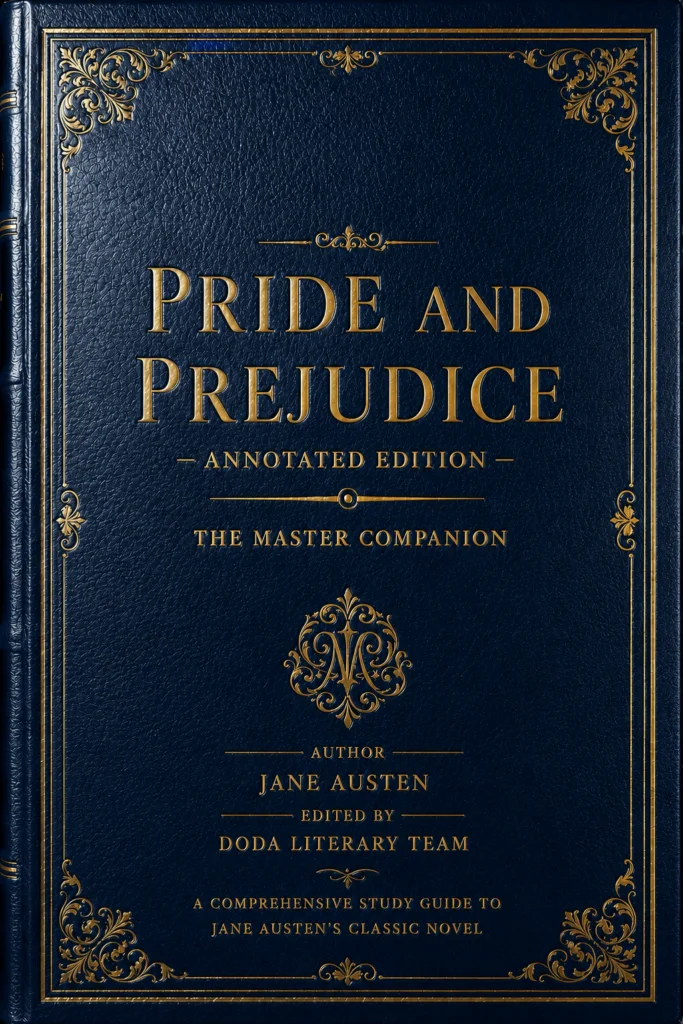
🌟
Pride and Prejudice Beginner's Guide: Everything You Need
The complete Pride and Prejudice guide for absolute beginners — simple language, clear character relationships, and a visual breakdown of the entire story.
| Story Type | Romance / Social satire |
| Published | 1813 |
| Main Characters | 6 key players to track |
| Reading Time | ~10-12 hours |
| Difficulty | 3/5 for beginners (with annotations) |
| Best Entry Point | Annotated edition or bundle |
📝 The One-Sentence Story
A clever young woman misjudges a rich, proud man based on a bad first impression, spends half the novel hating him, then realises she was wrong and falls in love with him.
That is it. That is the whole novel. Everything else is detail.
👥 Who Is Who (Simplified)
Elizabeth Bennet — The heroine. Smart, witty, quick to judge, not afraid to speak her mind. She is the second of five daughters and her father’s favourite.
Mr. Darcy — The hero. Wealthy, proud, terrible at socialising. He appears arrogant but is actually shy and principled. Elizabeth’s prejudice against him is the central conflict.
Jane Bennet — Elizabeth’s older sister. Kind, beautiful, always sees the good in people. She falls for Mr. Bingley.
Mr. Bingley — Darcy’s best friend. Friendly, wealthy, easygoing. He falls for Jane immediately but is easily influenced by others.
Mr. Wickham — A charming soldier with a handsome face and a dishonest heart. He tricks Elizabeth into believing his lies about Darcy.
Lydia Bennet — The youngest Bennet sister. Wild, impulsive, immature. Her reckless behaviour causes a major scandal.
🎬 How the Story Unfolds
Act 1: First Impressions (Chapters 1-20)
A rich bachelor named Mr. Bingley moves into a big house nearby. Mrs. Bennet, the mother of five daughters, is desperate to marry them off. Bingley likes Jane. His friend Darcy seems to hate everyone. He refuses to dance with Elizabeth, who decides he is insufferable.
A charming soldier named Wickham tells Elizabeth that Darcy ruined his life. Elizabeth believes him instantly.
Act 2: The Proposal Disaster (Chapters 21-35)
Darcy, who has actually fallen in love with Elizabeth, proposes to her — but does it in the most arrogant way possible. He says he loves her despite her family being embarrassing and her social status being low. Elizabeth is furious. She rejects him and lists every reason she despises him.
Darcy writes her a letter explaining that Wickham is a liar who tried to run away with Darcy’s 15-year-old sister for her money. He also admits he separated Bingley and Jane, but honestly believed Jane did not love Bingley.
Elizabeth reads the letter and realises she has been completely wrong about everything.
📖 Follow the full story with chapter-by-chapter annotations
👉 Get the Annotated EditionAct 3: Change and Growth (Chapters 36-50)
Elizabeth visits Darcy’s estate while he is away. She hears from his servants that he is a fair and generous master — not the cold snob she thought. Darcy comes home early, treats her politely, and helps her family when Lydia runs off with Wickham.
Elizabeth’s feelings shift. But she thinks Darcy has moved on.
Act 4: Happy Ending (Chapters 51-61)
Bingley proposes to Jane. Darcy proposes to Elizabeth again — this time humbly, without arrogance. She accepts. They both admit they were wrong about each other. The novel ends with two marriages and a lot of personal growth.
🤔 Why Beginners Get Confused
Three things trip up most new readers:
-
All the cousins and relatives. The Bennet family tree is small, but the novel mentions several obscure relatives. You only need to track the Bennets, Bingleys, and Darcys.
-
The social rules. Women could not propose, inherit property, or visit men alone. These rules feel arbitrary but they drive every major plot event.
-
The long sentences. Austen’s sentences can run 60+ words. If you get lost, read the sentence from the last full stop and treat each comma as a pause for breath.
📚 What the Annotated Edition Unlocks
Chapter Annotations
242 annotations that explain every confusing reference as you read
Modern Simplifications
139 complex passages rewritten in clear English alongside the original
Character Profiles
Detailed relationship maps showing exactly how everyone connects
Discussion Questions
76 questions with answers to check your understanding after each chapter
Glossary of Terms
143 archaic terms defined — including all the social rules that confuse beginners
Visual Guides
Character diagram, story timeline, and chapter length chart for planning
🏛️ A Beginner’s Time Machine: Life in 1813
Understanding a few Regency-era rules makes the whole novel click into place. First, the entail: the Bennet estate must pass to a male heir, so Mr. Collins, a distant cousin, will inherit everything when Mr. Bennet dies. Because the Bennets have no sons, the five daughters will be left with almost nothing — which explains Mrs. Bennet’s frantic matchmaking.
Second, the courtship rules. A single woman could not visit a man’s house unaccompanied, could not propose marriage, and could not be alone with a man without risking her reputation. This is why a mere dance at the Netherfield ball matters so much, and why Lydia’s secret elopement is treated as a catastrophe. Third, class and income governed everything. A man like Darcy, with ten thousand pounds a year, was moving in a completely different social orbit from the Bennets, which is exactly why his proposal is so startling — and why he at first believes he is lowering himself.
If any of these terms feel confusing while you are reading, our glossary-style guide to the novel’s language explains the vocabulary, and the character guide sorts out who is related to whom.
🎬 Why This Is a Great First Classic Novel
Plenty of readers discover Pride and Prejudice as their first classic novel, and it is an excellent choice. The prose, while old-fashioned, is far more readable than many 19th-century contemporaries. The chapters are short — often just a few pages — which makes the book easy to read in small doses. And because the plot is essentially a comedy of misunderstandings, there is always momentum pulling you forward.
Perhaps most important, the story is genuinely funny. Austen’s irony and sharp wit are present from the first line, and beginners often are surprised by how much they laugh. If you like this one, the guide to what to read next suggests other novels with a similar blend of wit, romance, and social satire.
📖 How to Read Your First Time Through
Start by setting realistic expectations. Do not try to finish in a weekend; instead, plan to read two or three short chapters per sitting. Before each chapter, glance at the chapter summary so you know what to look for. If you hit a dense sentence, read it slowly and treat each comma as a pause for breath rather than rushing to the end.
Keep a running list of who is who in your head using just the six core characters — Elizabeth, Darcy, Jane, Bingley, Wickham, and Lydia — and let everyone else be background color. When a passage feels confusing, check the modern simplification in the annotated edition rather than re-reading the same sentence five times. For a full step-by-step approach, our pride-and-prejudice read-faster guide outlines a chapter-by-chapter pacing plan.
❓ Frequently Asked Questions
Do I need to know 19th-century history to understand Pride and Prejudice?
Not if you read an annotated edition. Without annotations, you will miss the social rules that drive the plot. With annotations, everything is explained — entailment, courtship etiquette, class hierarchy, and why Mrs. Bennet is so desperate to marry off her daughters.
How many characters do I really need to keep track of?
Only six: Elizabeth, Darcy, Jane, Bingley, Wickham, and Lydia. The other characters (Mr. and Mrs. Bennet, Mr. Collins, Lady Catherine) are important but easy to remember because each has one defining trait.
Which is better for a beginner — the annotated edition or the simple English version?
For a first-time reader, the annotated edition is better because you experience Austen's actual language while getting explanations when you need them. The simple English version removes Austen's voice entirely. If the original still feels too difficult, try the simple English version first, then the annotated edition.
How should I pace my first reading?
Read 2-3 chapters per sitting. Each chapter is short (5-10 minutes). At this pace, you will finish the novel in about 3-4 weeks. Read the chapter summary before each chapter so you know what to expect.
Is it worth reading if I already know the story from movies?
Absolutely. The films capture the romance but miss most of the social commentary, irony, and character development that make the novel brilliant. The annotated edition helps you see why Austen is considered one of the greatest English writers, not just a romance novelist.
What is the best edition for a complete beginner?
The bundle is the safest choice because it includes all three editions. Start with the simple English version if the original seems daunting, then read the annotated edition for depth, and use the 15-minute guide for revision. If you prefer to buy just one, get the annotated edition.
Is Pride and Prejudice actually funny, or is it dry?
It is genuinely funny. Austen's narration is full of irony and dry wit, and many of the characters — especially Mrs. Bennet and Mr. Collins — are comic creations. First-time readers are often surprised by how much laughter the novel produces alongside the romance.
Should I read a chapter summary before or after each chapter?
Before. Reading the summary first gives you a map so you know what to look for and never feel lost. After finishing the chapter, glance back at the summary to check you picked up the key beats. This before-and-after rhythm is the fastest way to build understanding on a first read.
📚 Related Articles
🎯 Start Your Pride and Prejudice Journey Today
The annotated edition of Pride and Prejudice is the perfect starting point for beginners:
- ✅ Complete, unabridged text — every word of the 1813 original
- ✅ 242 chapter-by-chapter annotations — no more confusion about what is happening
- ✅ 139 modern simplifications — dense passages rewritten in plain English
- ✅ Character profiles and relationship maps — easily track who is who
- ✅ 76 discussion questions with answers — check your understanding as you go
- ✅ Glossary of 143 archaic terms — all the Regency vocabulary explained