If you loved — or even just finished — Pride and Prejudice, here are 10 books to read next, starting with Austen’s own work and expanding outward into similar social commentary and modern retellings.
10 Books to Read After Pride and Prejudice
From Austen's other masterpieces to modern retellings and classic social commentary — curated recommendations for every taste.
| Category | Book | Author | Why It Works |
|---|---|---|---|
| More Austen | Emma | Jane Austen | Same ironic voice, sharper comedy |
| More Austen | Persuasion | Jane Austen | More mature, more emotional |
| Social commentary | North and South | Elizabeth Gaskell | Pride and Prejudice of the Industrial Revolution |
| Social commentary | The Age of Innocence | Edith Wharton | Class and social rules with a bittersweet ending |
| Social commentary | Middlemarch | George Eliot | Elizabeth Bennet as a tragedy |
| Modern retelling | Bridget Jones’s Diary | Helen Fielding | Direct modernisation of Darcy-Elizabeth |
| Modern retelling | The Other Bennet Sister | Janice Hadlow | Mary Bennet gets her own story |
| Modern retelling | Eligible | Curtis Sittenfeld | P&P in contemporary Cincinnati |
| Biography | Jane Austen: A Life | Claire Tomalin | Understanding the woman behind the novels |
| Reference | The Annotated Pride and Prejudice | David M. Shapard | Hundreds of notes explaining every chapter |
🧭 How to Choose What to Read Next
The hardest part of finishing Pride and Prejudice isn’t finding another good book — it’s deciding which direction your next read should take. The ten recommendations below are grouped by the reason you loved the original, because what you want next depends almost entirely on which aspect of the novel you’ll miss most.
If you were swept up by the sparkling dialogue and the war of words between Elizabeth and Darcy, you want another book built on sharp, witty conversation — another Austen novel, or a modern retelling that reproduces that banter. If the real draw was the social observation — the way money, class, and propriety shape every relationship — you want a novel of manners set in a similar world, like North and South or The Age of Innocence. And if what stuck with you was the emotional payoff of the central romance, you want something with the same slow-burn dynamic of misunderstanding and reconciliation.
A genuinely useful reading list links every suggestion back to the reasons the original worked. So as you move through the ten books below, notice why each one is paired with Pride and Prejudice — the specific thread (voice, setting, structure, sensibility) it shares. That’s the difference between a list of “classic books” and a real next-read recommendation.
🏛️ Regency England: The World Behind the Novel
Part of understanding which books to reach for next is understanding the world Elizabeth Bennet lives in — because nearly every recommendation here exists in conversation with it. Pride and Prejudice was published in 1813, though Austen drafted it in the late 1790s, and it captures a moment when English society was deeply stratified by money and inherited land. The Bennet family’s whole problem — five daughters and an entail that will pass Longbourn to a male cousin — is a financial dilemma made social, and it drives every matchmaking decision in the novel.
Regency society ran on a strict set of unwritten rules: who could be introduced to whom, what counted as a proper courtship, how wealth was displayed, and why a man like Darcy, with ten thousand a year, could marry “down” only with scandal attached. If you go on to read the other novels recommended here, you’ll keep meeting this world in different forms — the industrial North of Gaskell’s North and South, the suffocating old-money drawing rooms of Wharton’s The Age of Innocence, even the contemporary stand-ins in Sittenfeld’s Eligible. Seeing these parallels is one of the quiet pleasures of reading onward. If you want more help tracking the characters and their connections as you re-enter this world, our guide to the characters of Pride and Prejudice and our overview of the novel’s central themes are useful companions.
If You Want More Austen
Emma is Austen’s most accomplished comedy. Emma Woodhouse is Elizabeth Bennet without the humility — rich, clever, and insufferably confident in her matchmaking abilities. Watching her learn the same lesson Elizabeth learned is deeply satisfying. Emma Woodhouse is Elizabeth Bennet without the humility — rich, clever, and insufferably confident in her matchmaking abilities. Watching her learn the same lesson Elizabeth learned is deeply satisfying.
Persuasion is Austen’s last completed novel and her most mature. Anne Elliot is older (27 — ancient for Austen) and quieter than Elizabeth. She was persuaded to break off an engagement eight years ago and now watches the man return, wealthy and still angry. If you loved Darcy and Elizabeth’s misunderstandings, Persuasion does the same with more pain and less comedy.
If You Want Similar Social Commentary
North and South by Elizabeth Gaskell is often called the “Pride and Prejudice of the Industrial Revolution.” Margaret Hale clashes with a proud, brooding mill owner named Mr. Thornton. The romance dynamic is identical to Elizabeth and Darcy.
The Age of Innocence by Edith Wharton is set in 1870s New York high society. The plot is about the tension between social expectation and personal desire — Austen themes with a more bittersweet ending.
Middlemarch by George Eliot is longer, denser, and more philosophical. Dorothea Brooke is Elizabeth Bennet as a tragedy — equally intelligent and idealistic, but without Austen’s comic framework.
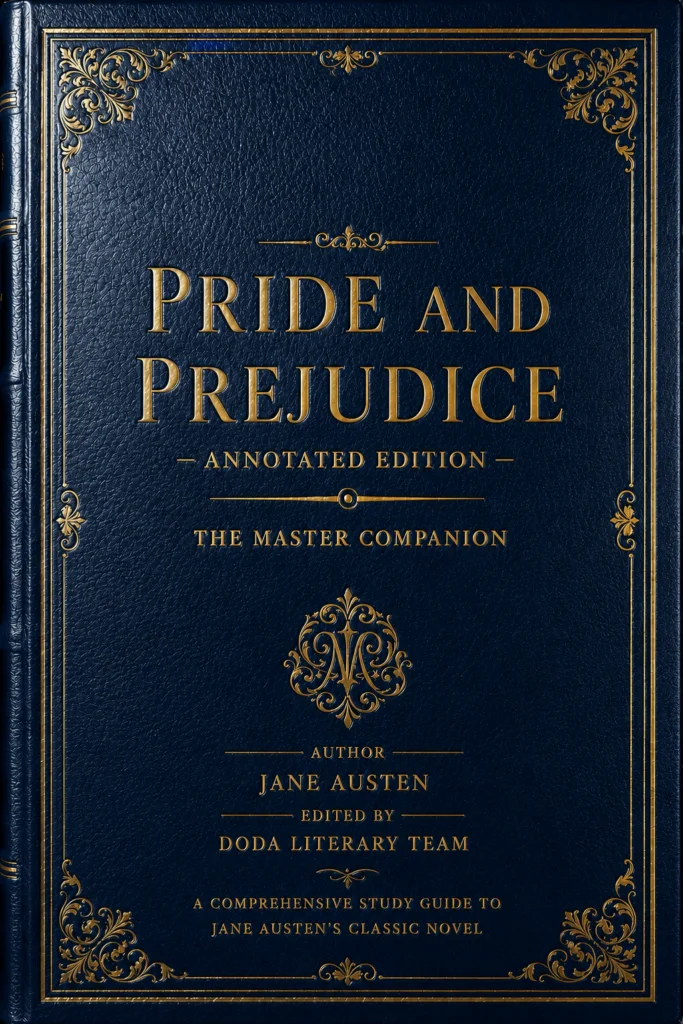
Re-read with fresh eyes. The annotated edition makes a second reading feel like a first read.
Get the Annotated EditionIf You Want Modern Retellings
Bridget Jones’s Diary by Helen Fielding is the most famous modern retelling. Mark Darcy is exactly who you think he is. Hilarious and surprisingly touching.
The Other Bennet Sister by Janice Hadlow gives Mary Bennet — the plain, bookish middle sister — her own story after Pride and Prejudice ends. Deeply satisfying for fans.
Eligible by Curtis Sittenfeld updates the Bennet family to contemporary Cincinnati. Liz is a magazine writer, Darcy is a neurosurgeon. It follows the original plot closely enough to be recognisable but changes enough to be surprising.
If You Want to Understand Austen Better
Jane Austen: A Life by Claire Tomalin is the definitive biography. Austen’s own life was constrained, difficult, and far less romantic than her novels. Understanding her circumstances makes the novels richer.
The Annotated Pride and Prejudice by David M. Shapard has hundreds of notes explaining the social, historical, and linguistic context of every chapter. It turns a second reading into a completely new experience.
💡 Why These Ten Work as a Set
Reading these books together — rather than one at a time in isolation — is where the real payoff is. Austen’s novels talk to each other: Emma and Pride and Prejudice are both about a clever young woman learning that her judgement of people is fallible, but Emma starts rich and sure while Elizabeth starts proud of her own discernment. Read back to back, you see Austen turning the same moral experiment over with different variables.
The social-commentary picks refract Elizabeth Bennet through different lenses and darker endings. Middlemarch gives you a heroine just as intelligent and idealistic but trapped in a world with no comic safety net; Dorothea Brooke is frequently described as what Elizabeth Bennet might have become in a novel without a happy marriage and a Darcy to meet it. North and South and The Age of Innocence both ask Austen’s central question — can personal feeling survive the pressure of social expectation? — but answer it with far more grit and melancholy.
And then there are the retellings, which are the most direct way to see how durable Austen’s structure is. Bridget Jones’s Diary, Eligible, and The Other Bennet Sister all assume you already know the skeleton of the story, and they riff on it for readers who do. If you’ve just finished the original, you’re the exact audience these books were built for — which is partly why they stay so popular.
📖 A Note on Re-reading Before You Move On
One thing worth doing before you commit to the next book: consider a second pass at Pride and Prejudice itself. Many readers are surprised by how much they missed the first time — the subtle class commentary, the way almost every character misreads someone else, the jokes that land differently when you already know the ending. If you want to see the text with fresh, sharper eyes, our overview and study guide to Pride and Prejudice breaks the novel down chapter by chapter, and a re-read with an annotated edition is the fastest way to unlock that depth. It’s a small investment of time that makes every recommendation on this list richer by comparison.
Emma
Austen's sharpest comedy about a meddling matchmaker.
Persuasion
Second chances and mature love in Austen's last novel.
North and South
Industrial revolution meets Darcy-Elizabeth dynamics.
Bridget Jones
Modern Darcy in 1990s London.
Middlemarch
Deep philosophical novel about marriage and society.
Annotated P&P
Re-read with full context and analysis.
Frequently Asked Questions
Which Austen novel should I read next?
After Pride and Prejudice, most readers go to Emma for comedy or Persuasion for emotional depth. Both are excellent choices.
Are there any modern retellings that capture Austen's voice?
Bridget Jones's Diary captures the romantic dynamic perfectly. Eligible captures the plot structure. The Other Bennet Sister captures the world.
What if I want something more challenging?
Middlemarch is the next step up in complexity. It rewards the same close reading skills that Pride and Prejudice develops.
Is there a non-fiction book about Austen?
Claire Tomalin's biography is the best starting point. It is readable, well-researched, and illuminates the novels without being academic.
Should I re-read Pride and Prejudice first?
A re-read with an annotated edition reveals how much you missed the first time. Many readers say the second reading is the better one.
Is any other Austen novel as funny as Pride and Prejudice?
Emma comes closest — it shares the same ironic narrative voice and the delight of watching a clever protagonist be wrong. Northanger Abbey is also very funny if you enjoy parody and satire.
What should I pick if I loved Darcy and Elizabeth specifically?
Persuasion for the most mature love story, North and South for the closest Darcy-Elizabeth dynamic, and Bridget Jones's Diary for the most direct modern adaptation of that exact couple.
Are the modern retellings worth reading right after the original?
Yes — they reward you precisely because you know the original. The Other Bennet Sister works best when you remember Mary from the main novel, and Eligible plays directly on the plot you just finished.
Discover More with Annotations
- Re-read Pride and Prejudice with full context
- Chapter notes that reveal hidden depth
- Perfect preparation for your next classic