Thomas Gordon Hake (1809–1895) occupies a distinctive position in Victorian poetry. A physician by profession and a poet by vocation, he moved in the circle of the Pre-Raphaelite Brotherhood, counting Dante Gabriel Rossetti among his closest friends and admirers.
📖
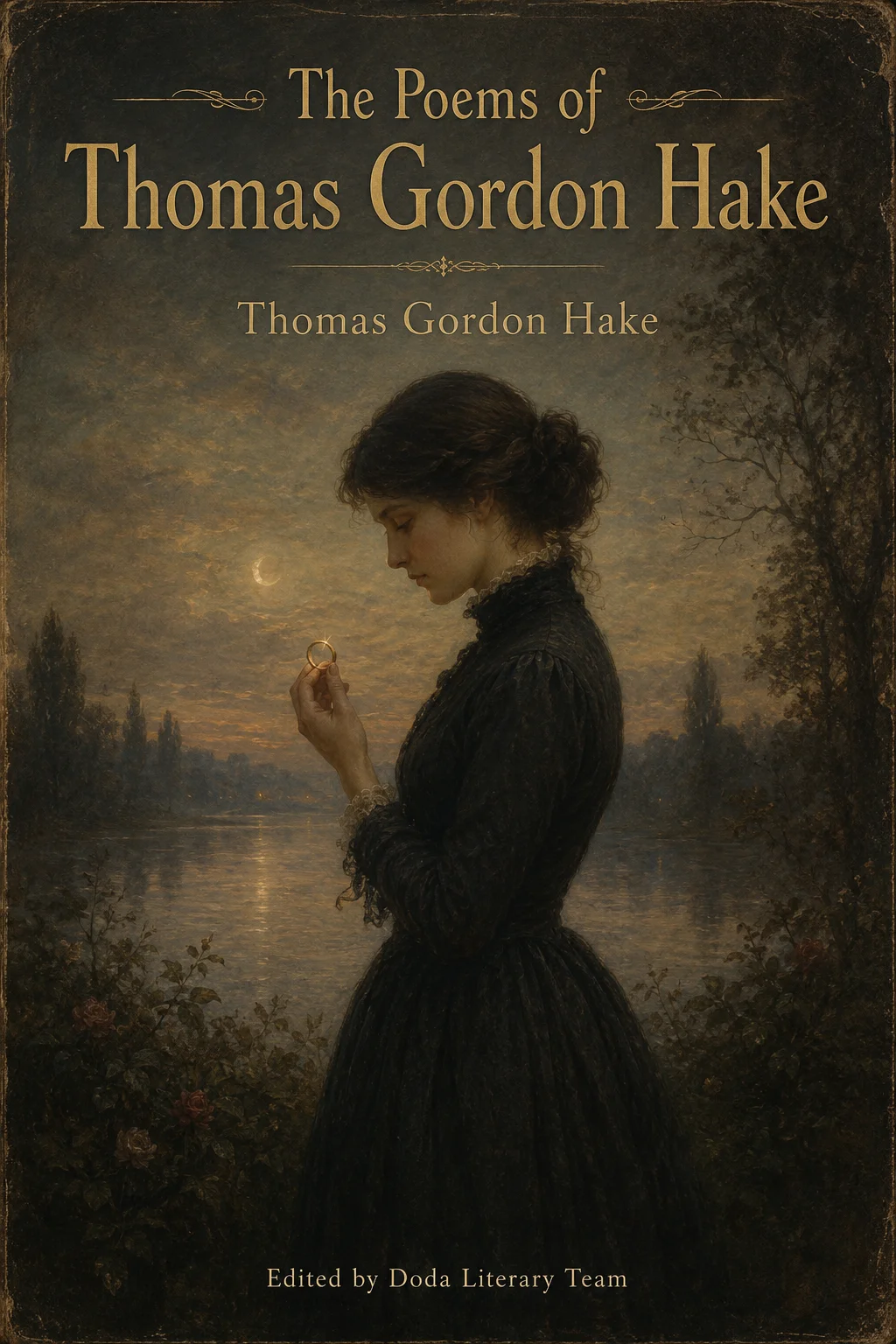
The Poems of Thomas Gordon Hake
27 selected poems from one of Victorian poetry's hidden treasures — with a prefatory note by Alice Meynell and a portrait by Dante Gabriel Rossetti.
| Poet | Thomas Gordon Hake |
| Span | 1809–1895 |
| Genre | Victorian poetry |
| Poems | 27 selected works |
| Editor | Alice Meynell (prefatory note) |
| Portrait | Dante Gabriel Rossetti |
| Notable Poems | ALONE, VENUS URANIA, ECCE HOMO!, THE SNAKE CHARMER, THE WEDDING RING |
📜 About the Collection
This edition brings together 27 poems spanning more than fifty years of Hake’s creative life, from The Piromides (1839) to The New Day (1890). The selection was made by the celebrated poet and essayist Alice Meynell, who contributed a prefatory note. The volume includes Rossetti’s 1872 portrait of Hake, a striking image that captures the poet in his later years.
The poems range from lyrical nature pieces to meditations on art, love, mortality, and the human condition. Hake’s style blends the influence of the Romantic poets with the Pre-Raphaelite attention to detail and symbolic depth.
🎯 Notable Poems
ALONE
A meditation on solitude and the creative spirit. Hake explores the paradox of the poet’s isolation — necessary for creation yet heavy with loneliness. The poem’s measured couplets and introspective tone showcase his technical control.
VENUS URANIA
Perhaps Hake’s most ambitious poem, Venus Urania explores the nature of beauty — not the superficial beauty of the senses but the transcendent beauty that Plato called “heavenly.” The poem reflects the Pre-Raphaelite fascination with the ideal and the eternal.
ECCE HOMO!
A powerful poem on the nature of suffering and sacrifice. “Ecce Homo!” (“Behold the Man!”) takes its title from the words of Pontius Pilate and examines the intersection of the divine and human in the experience of pain. The poem’s intensity and willingness to engage with theological questions mark it as one of Hake’s most striking works.
THE SNAKE CHARMER
A vivid dramatic poem set in the East, The Snake Charmer showcases Hake’s gift for narrative and description. The poem weaves together themes of exoticism, danger, and the mysterious bond between the charmer and his serpents.
THE WEDDING RING
A dialog poem in which speakers debate the meaning of marriage and commitment. The poem’s structure — alternating voices with distinct perspectives — demonstrates Hake’s skill with dramatic form.
📖 Literary Significance
Thomas Gordon Hake has been described as a “poet’s poet” — admired by other writers but little known to the general public. Dante Gabriel Rossetti wrote a celebrated review praising Hake’s work, calling him “a poet of no common order.” Algernon Charles Swinburne also admired Hake’s verse.
Hake’s obscurity is undeserved. His best poems possess a clarity of vision and a musicality of language that place them alongside the better-known Victorian poets. His connections to the Pre-Raphaelite Brotherhood make him an important figure in the history of Victorian art and literature.
This edition, with its selection by Alice Meynell and its portrait by Rossetti, represents the definitive introduction to Hake’s work.
✨ What Makes the DodaBooks Edition Special
This is the original collected edition, carefully prepared for modern readers without distractions or clutter.
Zero Distractions
No ads, no license pages — just the complete collection of 27 poems, clean and uninterrupted.
Poetic Formatting
Each poem structured with proper line indentation, section numbering, and typographic refinement.
Full Navigation
Complete table of contents for all 27 poems, including the prefatory note and portrait.
Prefatory Note
Alice Meynell's original introduction, providing context for Hake's life and work.
Rossetti Portrait
The original 1872 portrait by Dante Gabriel Rossetti included in high quality.
No DRM
You own your copy — read on any device, anytime, forever.
🏛️ The Victorian Poetry World Hake Inhabited
To understand Hake, it helps to know who else was writing verse when he came to prominence. The middle decades of the nineteenth century were dominated by a handful of towering figures — Tennyson’s musical moralism, Browning’s knotty dramatic monologues, and Arnold’s sober, elegiac reflection between the two. Below them, a broad middle ground of poets fought for the attention of periodicals and publishers, and it was in this lively middle world that Hake eventually found his voice.
The Pre-Raphaelite Brotherhood, which began as a band of rebellious young painters in 1848, had by the 1860s and 70s grown into a wider literary and artistic movement. Poetry was central to it. Dante Gabriel Rossetti and Christina Rossetti, William Morris, and Algernon Charles Swinburne were reimagining what verse could do — valuing precision of image, sensuous detail, and emotional intensity over the moralising that characterized much official Victorian poetry. It was precisely this ferment that Hake stepped into when, late in middle age, he began to publish seriously. His poetry belongs to the mood of that Pre-Raphaelite circle rather than to the mainstream of Victorian taste, which is one reason it can feel unfamiliar to modern readers accustomed to Nineteenth-Century Literature anthologies built around Tennyson and Browning.
👨⚕️ The Poet, the Physician, and His Circle
Every account of Hake returns to one striking fact: he was a doctor who wrote poetry, and he did not seriously commit himself to verse until his middle years. Born in 1809 and trained as a physician in Edinburgh and Glasgow, he practised medicine for decades before literature claimed him. That dual identity runs through his work. His poems combine a clinician’s eye for precise observation with a mystic’s taste for the visionary and strange — a combination that baffled many contemporaries and quietly fascinates our own age.
His most important connection was to Dante Gabriel Rossetti, who admired Hake’s early writing long before they met and, once they did, became one of his most devoted champions. Rossetti painted Hake’s portrait and wrote reviews of his verse, an extraordinary vote of confidence from an artist notoriously reluctant to praise others. When we link the plain collected edition here with its richer companion, the poems of Thomas Gordon Hake annotated guide, the annotations there map that circle in detail — the friendships with Swinburne and with Alice Meynell, the poet-essayist who selected the poems in this very collection and introduced them with a prefatory note. Between the two editions, you get both the bare text and the full biography of the man behind it.
✨ Why Hake Still Matters
Hake was what critics call a “poet’s poet” — admired by the writers who mattered, largely unknown to the general public. That label used to sound like a sentence to obscurity, but it has aged remarkably well. Rossetti’s willingness to review him, Swinburne’s respect, and Meynell’s decision to curate his work all point toward genuine quality, and the readers who discover him tend to stay.
His poems reward attention in a way that has kept them alive long after the taste of his own era passed. The study of solitude and the creative spirit in “ALONE,” the ambitious meditation on transcendent beauty in “VENUS URANIA,” the theological intensity of “ECCE HOMO!” — these are not period curiosities but verse written out of a private vision, with all the strangeness and integrity that implies. In an age that prizes as much editorial guidance as readers can get, Hake is a perfect subject: his difficulty, once met with a little help, becomes part of the pleasure rather than a barrier.
🎓 How to Read the Poems
Because Hake’s diction and references are the main barrier, the best approach is to read generously on a first pass and attentively on a second. Begin with the shorter, more lyrical poems — these give you his voice and his characteristic imagery without the heavier demands of the longer meditative pieces. Let the rhythm carry you; notice which images catch you before you worry about what everything means.
On a second read, revisit the poems with an eye to Hake’s recurring concerns: the nature of artistic isolation, the search for a beauty that outlasts the senses, the place of suffering in human life. Where the plain text leaves you reaching for help, the annotated edition supplies vocabulary and context on the page. For readers new to the broader Victorian landscape, our overview of Burns’s themes and style offers a complementary way in to nineteenth-century verse, while Scott’s The Lady of the Lake shows the narrative-poem side of the century in full flight.
❓ Frequently Asked Questions
Who was Thomas Gordon Hake?
A Victorian physician and poet, friend of Dante Gabriel Rossetti and the Pre-Raphaelite circle. He practiced as a doctor while writing poetry throughout his long life (1809–1895).
Why are there only 27 poems?
This edition presents a selection made by Alice Meynell, spanning Hake’s entire career. It includes his finest and most representative works.
Is Rossetti's portrait included?
Yes. Dante Gabriel Rossetti’s 1872 portrait of Hake is included in the edition.
What makes Hake's poetry distinctive?
His work combines Romantic sensibilities with Pre-Raphaelite attention to detail. His poems are characterized by musical language, vivid imagery, and a willingness to engage with philosophical and theological questions.
Is this the same as the annotated edition?
No. This guide covers the plain collected edition — the clean text of 27 poems with professional formatting. The companion annotated and illustrated edition adds per-poem artwork, vocabulary cards, historical context, and close reading analysis to the same selection.
Should I read this or the annotated edition first?
Start with the plain text if you want to meet the poems on their own terms. Turn to the annotated edition when the vocabulary or the historical references become a barrier — it explains every difficulty on the page.
Why was Hake called a "poet's poet"?
He was admired by fellow writers such as Rossetti and Swinburne but had little general fame. The phrase captures his status as a quietly serious craftsman valued by those best placed to judge — and increasingly rediscovered by modern readers.
📚 Related Articles
📖 Read the Victorian Collection
Discover the poetry of Thomas Gordon Hake — admired by Rossetti and Swinburne, now rediscovered for modern readers:
- ✅ 27 selected poems spanning 50+ years of Hake’s career
- ✒️ Proper stanza-based formatting
- 📝 Prefatory note by Alice Meynell
- 🎨 Portrait by Dante Gabriel Rossetti
- 📜 Full table of contents for all poems
- 🔒 DRM-free — read on any device, anytime