Learning how to read old English and Scots poetry without confusion comes down to four specific skills. Once you have them, poets like Burns, Chaucer, and the medieval makars become accessible rather than impossible.
How to Read Old English and Scots Poetry Without Confusion
A practical four-skill system for reading old English and Scots poetry — recognise false friends, master common words, read aloud, and use the three-pass method for full understanding.
👉 Get the Annotated Edition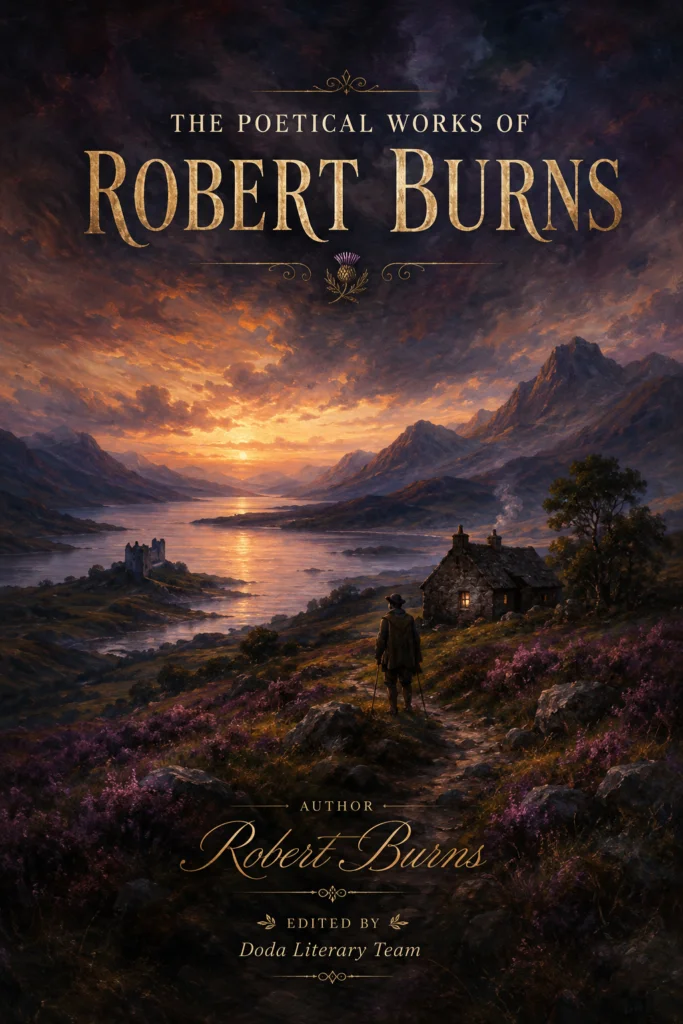
| Skill Area | Reading historical poetry |
| Key Focus | Scots and 18th-century English |
| System | 4 skills + 3-pass method |
| Best For | Burns, Chaucer, medieval poetry |
| Primary Tool | Glossary + annotations |
⚠️ Skill 1: Recognise False Friends
False friends look like English words but mean something different. Common Scots examples:
| Word | Looks Like | Actually Means |
|---|---|---|
| greet | to greet someone | to cry |
| bonny | funny/bonkers | beautiful |
| keen | sharp/eager | know |
| sleekit | sleek | sneaky or sleek |
| braw | brawny | fine, good, excellent |
When a poem does not make sense with the English meaning, assume it is a false friend and check a glossary.
📝 Skill 2: Master the Common 50 Words
Historical poetry tends to use the same unfamiliar words repeatedly. Learn the 50 most common Scots words — they appear in almost every Burns poem. A good annotated edition includes a glossary so you never need to memorise.
🎤 Skill 3: Read Aloud
Poetry was meant to be heard. Reading aloud forces you to slow down and process each word. Rhythm and rhyme become clearer. Many Scots words sound closer to English than they look on the page.
🔄 Skill 4: Use the Three-Pass Method
Pass 1: Read for sound. Ignore meaning. Just let the rhythm and rhyme wash over you.
Pass 2: Read with a glossary. Look up every word you do not know.
Pass 3: Read for meaning. Now that you know the words, focus on what the poem says.
🛠️ The Tools You Need
- A glossary of Scots words (or an annotated edition with one built in)
- A short summary of the poem’s subject before you start
- Patience — the first poem takes time, but poem ten takes half the time
📚 Get the complete reading toolkit for Burns
👉 Get the Annotated Edition🎓 What the Annotated Edition Unlocks
Line-by-Line Explanations
Every difficult line is paraphrased in plain English — you never get stuck on a line.
500+ Scots Glossary
Complete glossary of every Scots word used across all 539 poems — your primary decoding tool.
False Friend Warnings
The glossary highlights false friends — words that look like English but mean something else.
Poem Summaries
Read a one-paragraph summary before each poem so you know the subject before you start.
Three-Pass Ready
The format is designed for the three-pass method — read for sound, decode with glossary, then understand with annotations.
Study Anywhere
Works on Kindle, Apple Books, Google Play Books, Kobo, and Foliate for reading on any device.
🏛️ Historical & Cultural Context: Why the Language Looks Strange
Part of what makes old English and Scots poetry feel so foreign is that it was written in a world with very different assumptions. Eighteenth-century Scotland, where Burns wrote, was a society in rapid change: the Gaelic-speaking Highlands and the Scots-speaking Lowlands were being pulled toward the English of a growing urban and commercial culture. Burns deliberately chose to write in Scots at a time when educated Scots were being told to abandon their dialect in favour of “proper” English. That choice was political as much as aesthetic — it was a quiet assertion that the language of ordinary Scottish people had its own dignity and power.
Understanding this context changes how you read. When Burns calls up the local people, farms, and customs of his corner of Ayrshire, he is not being quaint; he is doing something deliberate with language. The same is true of the older medieval makars and, further back, of the Middle English of Chaucer, which sits right at the boundary between the older inflected English and the modern language we recognise. Each poem is a small argument about belonging — whose stories count, whose voices deserve to be written down. That is why the difficult surface hides a deeply human reward. A full picture of Burns’s place in that world is in our complete guide to Robert Burns, and the mechanics of the language problem are unpacked further in why Burns’s poems are hard to understand.
The practical lesson for readers is simple: never blame yourself for struggling. The difficulty is not a failure of intelligence; it is a genuinely different language with different grammar and vocabulary. Our 500-word Scots glossary gives you the single most useful decoding tool, a reference that turns unfamiliar lines into familiar ones. Once you accept that you are learning a new dialect rather than reading an old version of English, the poems open up astonishingly fast.
🤝 How to Make Progress: Practice the System in the Wild
The four skills above work, but they work faster when you practise them in a deliberate order. Start with a short, ballad-like poem — the kind Burns wrote to a tune — rather than a long narrative like Tam o’ Shanter. Ballads repeat words and refrains, which lets you build vocabulary quickly. Move through the three passes on that one poem until you can read it aloud comfortably, then move to the next. Each poem you master teaches you words that appear again in the next, so the early poems are the slowest and everything after them snowballs.
A useful habit is to keep a running list of the words each poem taught you. You will be surprised how quickly the list stops growing — the same core Scots vocabulary recurs again and again. Read poems aloud even when you are unsure of pronunciation; the rhythm will guide you, and the sound often clarifies meaning that silent reading misses. If you hit a line that defeats you even with a glossary, sit with the sound of it and let a plain-English paraphrase in an annotated edition resolve the confusion. For more structured practice, our poems explained in simple English offers line-by-line versions of the most famous works to build your confidence before you tackle the rest.
💡 Making It Stick: A Reading-Tips Checklist
- Start short: a ballad or song, not a long narrative poem, on your first attempt.
- Read aloud every time — the sound is half the meaning.
- Use the glossary-first rule: skim the new words before you read the poem, then confirm them as you go.
- Don’t aim for perfection: getting the gist of a hard stanza is real progress.
- Revisit old poems: each re-read is dramatically faster and deeper than the last.
Keep this checklist beside you and you will be surprised how quickly the “hard” poet becomes genuinely enjoyable. The goal is not to translate every word instantly but to reach the point where you can feel the music and the emotion first, and let the meaning follow — which is exactly how Burns’s original readers experienced them.
❓ Frequently Asked Questions
How long does it take to become comfortable reading Burns?
Most readers feel comfortable after 3–4 poems using the three-pass method. The first poem takes 15–20 minutes with a glossary, but by poem five you’ll recognise the most common words automatically.
Can I use this system for Chaucer or other historical poets?
Yes. The same three-pass method works for any historical poetry — read for sound, decode unknown words, then read for meaning. The false friend concept applies to Middle English too.
Is it better to read silently or aloud for Burns?
Aloud. Burns wrote most of his poems to be sung or recited. Reading aloud reveals the rhythm, rhyme, and musicality that silent reading misses.
What if I don't have a glossary?
You can use online resources, but an annotated edition with a built-in glossary is much more convenient — everything is in one place.
How many false friends are there in Burns?
About 30–40 common false friends. The most dangerous are greet (cry, not say hello), bonny (beautiful, not funny), and sleekit (sly, not just sleek).
What's the hardest part of reading historical poetry?
The double barrier of unfamiliar vocabulary and unfamiliar cultural references. The vocabulary can be learned; the references need footnotes or annotations.
Is Scots a separate language or a dialect of English?
Linguists treat Scots as a distinct language, related to English but with its own vocabulary, grammar, and pronunciation. For a reader, the practical effect is that you cannot reliably guess meanings from English alone — the false-friend problem is everywhere.
Do I need to learn the pronunciation to understand the poems?
Reading aloud is the fastest route to understanding, even if your pronunciation is approximate. The rhythm and rhyme clarify meaning, and many Scots words are instantly recognisable once you hear them spoken.
Which Scottish poet is easiest to start with?
Burns is the most accessible because he wrote short, song-like poems with strong rhythm and memorable refrains. His light verse and love songs are the gentlest introduction; the long and dense pieces are best left until you have built momentum.
📚 Related Articles
Master the art of reading historical poetry
Poems and Songs of Robert Burns — The Annotated Edition
All 539 poems with line-by-line explanations, complete glossary, and everything you need to read with confidence.
👉 Get the Annotated Edition{ .cta-button }