Studying Robert Burns at home is an excellent choice for a high school poetry unit — his poems are short, his themes are accessible, and the Scots vocabulary challenge builds reading skills.
Homeschool Robert Burns Poetry Study: A Complete Self-Guided Unit
A complete self-guided 6-week homeschool unit on Robert Burns — weekly activities, essay prompts, creative projects, and transcript credit information for high school students.
👉 Get the Annotated Edition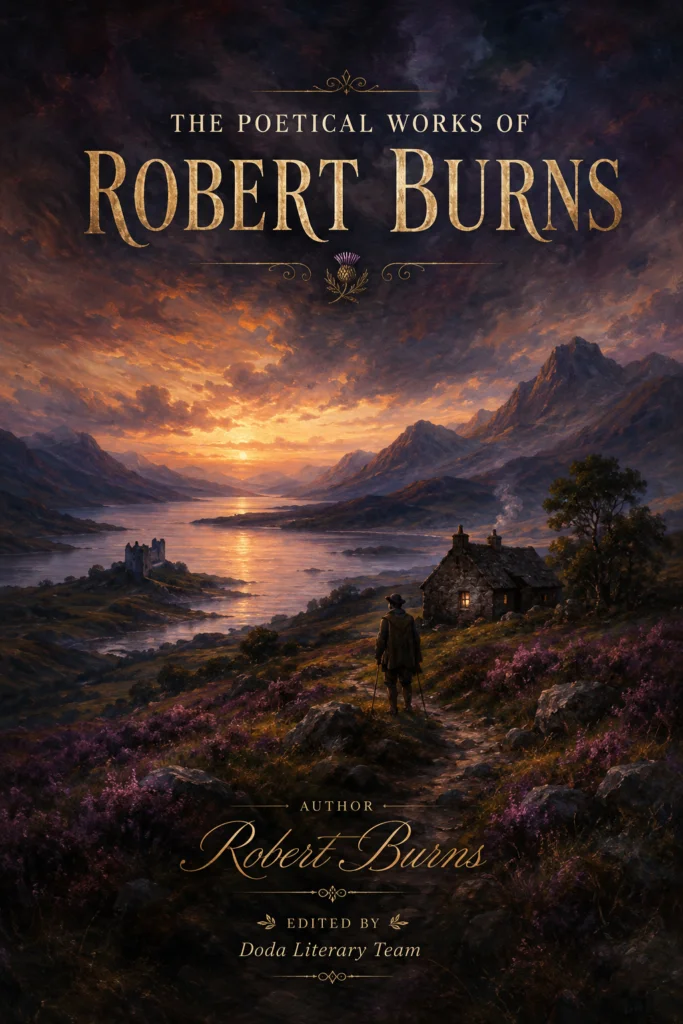
| Poet | Robert Burns (1759–1796) |
| Unit Length | 6 weeks |
| Credit Value | 0.25 English credits |
| Best For | Independent high school study |
| Primary Resource | Annotated edition (all-in-one) |
✅ Why Burns Works for Homeschool
Burns offers several advantages over other poets for homeschool study:
- Short poems — most are 1–4 pages, so you can cover several in a sitting
- Memorable language — “Auld Lang Syne” and “The best-laid schemes” are quoted everywhere
- Cross-curricular — history (Scottish Enlightenment, French Revolution), music (Burns songs), culture (Burns Night)
- Self-contained resource — an annotated edition with line-by-line explanations means your teen can study independently
📅 The 6-Week Unit
Week 1: Who Was Robert Burns?
Read the author biography and historical context sections of the annotated edition.
Activities:
- Read the biography and timeline
- Watch a short documentary on Burns’s life
- Find Ayrshire and Alloway on a map
- Write a one-page summary: who was Burns and why does Scotland still celebrate him?
Week 2: Learning the Language
Before reading Burns seriously, spend a week building Scots vocabulary.
Activities:
- Study the 50 most common Scots words from the annotated edition’s cumulative glossary
- Practise reading Scots aloud (Burns wrote for the ear)
- Translate a short poem line by line using the glossary
- Create flashcards for the 20 most common words
Week 3: Core Poems (Part 1)
Read and analyse four poems: To a Mouse, A Red, Red Rose, Ae Fond Kiss, A Man’s a Man for A’ That.
Activities for each poem:
- Read the Poem Summary (Overview, Context, Themes, Devices)
- Read the poem with line-by-line annotations
- Write a one-paragraph response
- Memorise 4–8 lines from one poem
Week 4: Core Poems (Part 2)
Three longer or more challenging poems: Tam o’ Shanter (excerpts), Holy Willie’s Prayer, Address to a Haggis.
Activities:
- Compare comic tone with satirical tone
- Discuss why Burns uses humour for serious topics
- Practise reciting Address to a Haggis with proper pronunciation
Week 5: Themes and Connections
Synthesise what you’ve learned.
Essay prompts (choose one):
- How does Burns use nature to explore human emotions?
- Compare how Burns handles love in A Red, Red Rose and Ae Fond Kiss
- How does Burns use satire to critique society?
- Why does Burns write in Scots rather than standard English?
Week 6: Creative Project
Choose one: recitation, mini Burns Supper, creative writing in Scots, or an analysis portfolio.
📜 Transcript and Credit Information
For high school transcript purposes, this unit is worth approximately 0.25 credits (one-quarter of a full-year English credit) or can be combined with other poetry units for a full 0.5 credit.
Learning outcomes you can list:
- Analyse how poets use figurative language, tone, and structure
- Compare thematic treatment across multiple poems
- Use textual evidence to support literary analysis
- Write argumentative essays about literature
- Understand the historical and cultural context of 18th-century Scottish poetry
👧 Ages and Grade Levels
This unit fits most comfortably in grades 9–12, but it can be adjusted up or down with relative ease. The key variable is the amount of support a reader needs with Scots vocabulary. A strong 9th or 10th grader can work through the poems with the annotated edition’s glossary and line-by-line explanations, which do most of the heavy lifting. Older students, in grades 11–12, can take on the harder poems such as “Tam o’ Shanter” (or its excerpts), handle longer essays, and manage more ambitious creative projects.
For middle school students who want an introduction, you can run a pared-down version using just the first few celebrated poems — “To a Mouse,” “A Red, Red Rose,” and “Ae Fond Kiss” — and scale back the essay requirements. The beauty of a self-contained unit like this is that you can raise or lower expectations for essay depth and project complexity without changing the core reading. And because the unit works for multiple children at once, siblings in different grades can study together with different expectations, which makes it unusually flexible for a homeschool setting.
🍀 Scottish Culture Tie-Ins: Burns Night and Beyond
One of the great strengths of studying Burns is that his poetry connects to living culture — and no homeschool unit should pass up the chance to bring it to life. The most obvious tie-in is Burns Night, celebrated on the poet’s birthday, 25 January. The traditional Burns Supper involves reading Robert Burns’s work aloud, reciting (or dramatically performing) the “Address to a Haggis,” toasts, songs, and supper — and it maps perfectly onto a poetry unit as a concluding celebration.
If you want to hold your own mini Burns Supper, it does not need to be elaborate or expensive. Play some Scottish music, read a few poems around the table, and attempt a short recitation of the “Address to a Haggis” (the annotated edition’s pronunciation and glossary help enormously with the Scots). You can even end the unit with a family or co-op Burns Night as a living assessment — a chance for your teen to perform what they have learned rather than just write about it. For a full year-round guide to the tradition, our Burns Night guide has everything you need to plan one.
Beyond Burns Night, bring in Scottish culture through music (Burns wrote the lyrics to countless traditional songs), geography (locating Ayrshire, Alloway, and the River Ayr on a map), and history (the Scottish Enlightenment and the wider 18th-century world Burns lived in). These cross-curricular connections turn a poetry unit into a richer humanities study.
⚙️ More Activities and Assessment Ideas
Beyond the essays and projects in the weekly plan, consider these additions. Recitation is one of the most valuable — Burns wrote for the ear, and memorising even four lines teaches rhythm and pronunciation in a way silent reading cannot. Try a “poetry slam” where each student performs a poem for the family or co-op. Creative writing in Scots is a playful extension: after studying the glossary, teens can try drafting a short poem or a few lines using Burns’s vocabulary. Comparative analysis across poems — how Burns handles love in “A Red, Red Rose” versus “Ae Fond Kiss,” or satire in “Holy Willie’s Prayer” versus “Address to a Haggis” — makes an excellent essay prompt because it forces genuine synthesis rather than summary.
For assessment, you have several trustworthy options. Use the annotation’s own analysis as a grading reference for accuracy. Collect a portfolio of written responses, essays, and the final project. Have your teen self-assess against the learning outcomes listed above. A 10–15 minute oral exam, in which they explain a poem they have studied, is an especially useful and low-pressure way to gauge understanding. Whatever you choose, the annotated edition keeps every answer referenceable, which makes fair grading far easier for parents who are not themselves Burns specialists.
📚 The only resource your teen needs for the entire unit
👉 Get the Annotated Edition🎓 What the Annotated Edition Unlocks for Homeschool
Line-by-Line Explanations
Every poem is fully explained — your teen never gets stuck on a line. Perfect for independent study without parent help.
500+ Scots Glossary
A complete glossary that builds vocabulary skills. Teens learn to use reference tools independently.
Poem Summaries
Every poem includes Overview, Historical Context, Key Themes, and Literary Devices — ready-made essay material.
Teacher's Insights
Analysis that teens can reference in essays — no need for parents to prepare separate teaching materials.
Self-Paced Format
Colour-coded sections make it easy to navigate. Teens can work through the unit at their own pace.
Portable Study
Works on Kindle, Apple Books, Kobo, and all major e-readers — study anywhere, anytime.
❓ Frequently Asked Questions
Can my teen complete this unit independently?
Yes. The annotated edition includes everything needed — poem texts, explanations, glossary, and analysis. Minimal parent involvement is required.
What credit value does this unit provide?
This 6-week unit is worth approximately 0.25 English credits. Combine it with other poetry or literature units for a full 0.5 credit.
Do I need to buy additional resources?
No. The annotated edition contains the complete works, glossary, and analysis — the only resource needed for the entire unit.
What if my teen finds the Scots too difficult?
Start with the glossary-first approach in Week 2. The annotated edition’s line-by-line translations mean they can always fall back on the modern English version.
Can I use this unit for multiple children?
Absolutely. The unit works for multiple grade levels (9–12) with different expectations for essay depth and project complexity.
How do I assess my teen's work?
The unit includes essay prompts, creative projects, and recitation options. Use the poem analysis from the annotated edition as a grading reference.
Can I run a Burns Night as part of this unit?
Definitely — a family or co-op Burns Night (around 25 January) is one of the best ways to bring the unit to life and can double as its final celebration. Readings, toasts, and an “Address to a Haggis” recitation let your teen perform what they have learned. Our Burns Night guide helps you plan one.
What if my student is younger than high school?
You can run a trimmed version with the best-known poems, lighter activities, and simpler expectations. Because the unit relies on a self-contained annotated edition, it is easy to dial difficulty up or down without extra resources.
📚 Related Articles
The only resource your homeschool needs for Burns
Poems and Songs of Robert Burns — The Annotated Edition
All 539 poems, line-by-line explanations, 500+ Scots glossary, and Teacher’s Insights — everything in one ebook.
👉 Get the Annotated Edition{ .cta-button }