Burns Night (January 25) is Scotland’s annual celebration of Robert Burns — and it has grown into a worldwide event. Whether you are hosting a Burns Supper, attending one, or teaching students about the tradition, here is everything you need to know.
🏴
Burns Night: Complete Guide to Celebrating Robert Burns
Everything you need for Burns Night — the poet, the supper traditions, the poems you need to know, and how an annotated edition helps you prepare for January 25.
| Date | January 25 (Burns’s birthday) |
| First Supper | 1801 at Alloway Kirk |
| Key Event | Burns Supper with haggis, whisky, poetry |
| Traditional Menu | Haggis, neeps, tatties, cranachan |
| Closing Song | Auld Lang Syne |
| Global Reach | Celebrated wherever Scots have emigrated |
📖 What Is Burns Night?
Burns Night marks the birthday of Robert Burns (25 January 1759). The first Burns Supper was held in 1801, five years after his death, by his friends at Alloway Kirk. Since then, the tradition has spread across Scotland and around the world. Burns Suppers are now held wherever Scots have emigrated — Canada, Australia, the United States, and beyond.
The format of a Burns Supper is surprisingly consistent: haggis, whisky, poetry readings, and speeches. There is a set order of events that has changed very little in 200 years.
📋 The Order of a Burns Supper
1. The Selkirk Grace
The evening begins with Burns’s Selkirk Grace, a short prayer thanking God for food:
“Some hae meat and canna eat, And some wad eat that want it; But we hae meat, and we can eat, And sae the Lord be thankit.”
2. The Piping and the Haggis
The haggis is brought in on a platter while a bagpiper plays. The host recites Address to a Haggis — Burns’s comic ode to Scotland’s most famous dish. At the line “An’ cut you up wi’ ready slight,” the speaker plunges a knife into the haggis. The poem is performed with dramatic gestures, and the audience joins in at the end with a toast: “Whisky! Whisky!”
From the annotated edition: The Teacher’s Insights for Address to a Haggis explain the poem’s mock-heroic style — Burns treats the haggis with the language of an epic hero, which is the joke. The Scots glossary defines skinkin (thin, watery), groaning trencher (a loaded plate), and chaukie (chalky, white-faced).
3. The Toast to the Haggis
After the poem, everyone toasts the haggis with whisky. The haggis is then carved and served with neeps and tatties (turnips and potatoes).
4. The Meal
The traditional menu is haggis, neeps, and tatties, followed by cranachan (a dessert of raspberries, cream, oats, and whisky) or Tipsy Laird (a Scottish trifle).
5. The Immortal Memory
This is the main speech of the evening — a toast to the poet himself. The speaker gives a short address on Burns’s life, work, and significance. A good Immortal Memory covers who Burns was, why he matters, and what his poetry means today.
Preparation tip: The annotated edition’s author biography provides a ready-made structure for an Immortal Memory — Burns’s early life as a ploughman, his rise to fame, his political radicalism, his love affairs, and his lasting cultural impact.
6. The Toast to the Lassies
A humorous speech about women, originally given by a man. Traditionally it praises women while poking gentle fun at them. In modern Suppers, this is often paired with a Reply from the Lassies.
7. Poetry and Songs
The evening continues with readings of Burns’s poems and singing of his songs. Common choices include A Red, Red Rose, Tam o’ Shanter, To a Mouse, and Ae Fond Kiss.
8. Auld Lang Syne
The evening ends with everyone standing in a circle, crossing arms, and singing Auld Lang Syne.
📚 Prepare your Burns Night readings with the annotated edition — pronunciation guides, glossaries, and historical context
👉 Get the Annotated Edition📜 The Poems You Need to Know for Burns Night
| Poem | Where It Appears |
|---|---|
| Selkirk Grace | Opening grace |
| Address to a Haggis | Haggis ceremony |
| Tam o’ Shanter | Common table reading |
| A Red, Red Rose | Frequently recited |
| A Man’s a Man for A’ That | Sometimes sung or recited |
| Auld Lang Syne | Closing song |
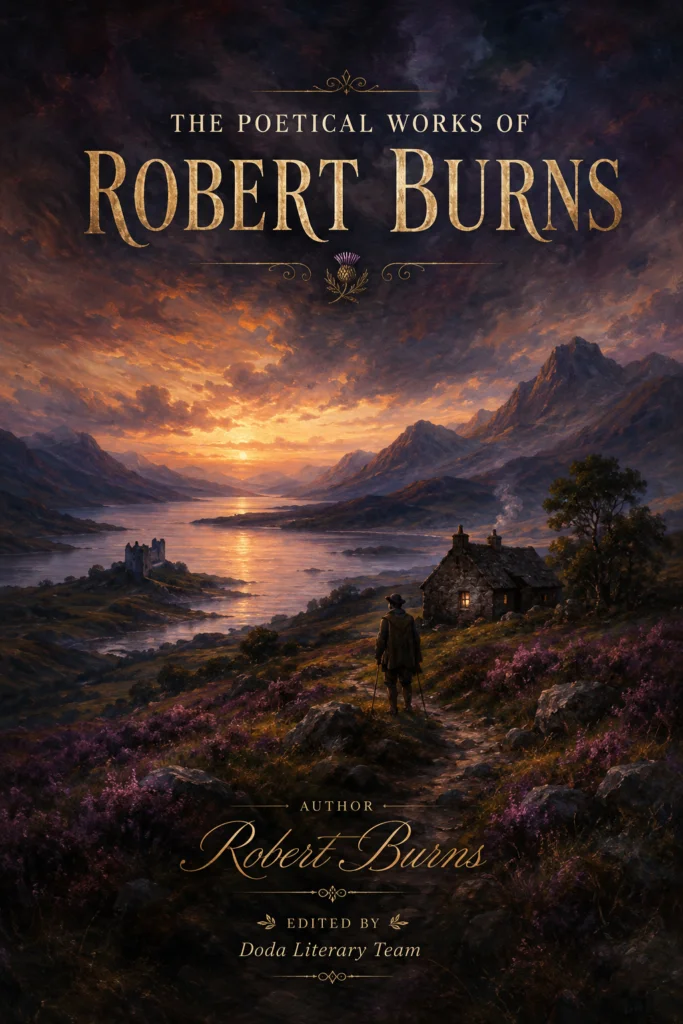
The Poems and Songs of Robert Burns — The Annotated Edition includes all of these with line-by-line explanations, so you can practise pronunciation and understand every reference before the evening.
🎯 How to Prepare for Burns Night with the Annotated Edition
If you are giving the Immortal Memory: The edition’s biography and Historical Context sections give you the facts and themes you need for a 5-minute speech. Focus on three things: Burns’s rise from poverty, his political radicalism, and his gift for capturing universal emotions in Scots dialect.
If you are reading a poem aloud: Read the line-by-line explanation first so you understand every word. Then practise reading the original Scots aloud — the edition’s phonetic glosses help with pronunciation. Scots words like skellum (scoundrel), gabbit (scolded), and drouthy (thirsty) need to be pronounced correctly for the poem to land.
If you are hosting a classroom Burns Supper: The edition’s Poem Summaries work as student handouts. Assign each student a poem to prepare, with the summary providing context and the annotations providing analysis.
📚 What the Annotated Edition Unlocks
539 Poems Annotated
Every poem with line-by-line explanations and Scots translations
Scots Glossary
500+ Scots words defined and indexed for quick lookup
Teacher's Insights
Stanza-level commentary for every poem explaining literary techniques
Poem Summaries
Overview, context, themes, and devices for each poem
Historical Notes
Explanations of every 18th-century Scottish reference
Beautiful Formatting
Colour-coded card design, works on all major e-readers
🏛️ The History of Burns Night
Burns Night began as a quiet act of remembrance. In July 1796, Robert Burns died at just 37, leaving behind a body of work that had already made him Scotland’s most famous poet. Five years later, in 1801, nine of his friends gathered at Alloway Kirk in Ayrshire — the birthplace of Burns’s mother and steeped in the poet’s own childhood memories — to mark the anniversary of his birth. They ate haggis, drank whisky, recited his verses, and raised a toast to his memory. That small gathering became the template for every Burns Supper since.
From those nine men, the tradition spread. By the mid-nineteenth century, Burns Clubs had formed across Scotland, and as Scots emigrated to Canada, Australia, New Zealand, and the United States, they carried the ritual with them. Today Burns Night is less a religious or national holiday than a cultural one — a celebration of poetry, hospitality, and shared Scottish identity, which is one reason Burns holds his place as Scotland’s national poet. Over two centuries, the format has barely changed, which is part of its power. Hosting a Supper means taking part in a tradition that has been passed down almost unchanged since 1801.
✨ Why Burns Night Matters Today
Burns Night endures because Burns himself endures. His poems speak about universal human experiences — love, loss, poverty, friendship, the dignity of ordinary working people — in a voice that feels startlingly modern. When you recite A Red, Red Rose or To a Mouse, you are not just performing old verses; you are connecting with a poet who believed that the feelings of a farmer or a maid were as worthy of great poetry as those of a king.
The night also matters as a celebration of the Scots language. Burns wrote in a rich mixture of Scots dialect and standard English, and one of the evening’s joys is hearing that language spoken aloud, preserved through performance. The Scots glossary in the annotated edition makes it possible to follow every word, even if you have never heard the dialect before. And because Burns Night depends on readings, it is one of the few occasions where poetry is truly meant to be heard — which is why preparation, understanding, and a good edition make all the difference.
❓ Frequently Asked Questions
When is Burns Night?
Burns Night is celebrated on January 25 — the birthday of Robert Burns (25 January 1759). If January 25 falls on a weekend, some groups celebrate on the nearest Friday or Saturday.
What is the Selkirk Grace?
The Selkirk Grace is a short prayer attributed to Burns: "Some hae meat and canna eat, and some wad eat that want it; but we hae meat, and we can eat, and sae the Lord be thankit." It is traditionally recited at the start of the Burns Supper meal.
Do I have to eat haggis?
No. Vegetarian haggis is widely available and many suppers now offer alternatives. The ceremony of the haggis is about tradition and symbolism, not forced eating. The spirit of Burns Night is inclusivity.
What should I wear to a Burns Supper?
Traditional dress is Highland wear (kilt, sporran, jacket) for those who have it. However, most suppers welcome any formal or semi-formal attire. The most important thing is participation, not costume.
Can children attend Burns Night?
Yes. Many Burns Suppers are family-friendly events. The early parts of the evening (the meal, the grace, the haggis ceremony) are suitable for all ages. Whisky toasts are typically reserved for adults.
How do I host a Burns Supper at home?
Follow the traditional order of events: Selkirk Grace, haggis ceremony with Address to a Haggis, meal, Immortal Memory, Toast to the Lassies, poetry readings, and Auld Lang Syne. The annotated edition includes all the poems and speeches you need.
What is the Immortal Memory speech?
The Immortal Memory is the keynote toast of the evening — a short speech about Burns's life, work, and legacy. It usually lasts 5-10 minutes and covers Burns's significance as Scotland's national poet, his radical politics, and his enduring cultural impact.
What poems are commonly read at Burns Night?
The most common are the Selkirk Grace and Address to a Haggis during the ceremony, followed by favourites like A Red, Red Rose, Tam o' Shanter, To a Mouse, and A Man's a Man for A' That. Groups often divide these among guests so everyone reads something.
Do I need to be Scottish to celebrate Burns Night?
Not at all. Burns Night is celebrated around the world by people of all backgrounds. At its heart it is a celebration of poetry, hospitality, and friendship — values that travel far beyond Scotland. Anyone who loves good food, good company, and good verses can take part.
📚 Related Articles
🎯 Prepare Your Burns Night with the Complete Annotated Edition
The Poems and Songs of Robert Burns: Annotated Edition includes every poem you need for Burns Night — the Selkirk Grace, Address to a Haggis, Tam o’ Shanter, Auld Lang Syne, and 535 more — with Scots glossary, pronunciation guides, and historical context.