This complete guide to Robert Burns for beginners covers everything you need to start reading — and actually enjoying — Scotland’s national poet. You just need a clear path through his work.
Complete Guide to Robert Burns for Beginners (Start to Finish)
A complete start-to-finish guide to Robert Burns — his life, five essential poems every beginner should read first, the three big themes, and a simple system for reading his work.
👉 Get the Annotated Edition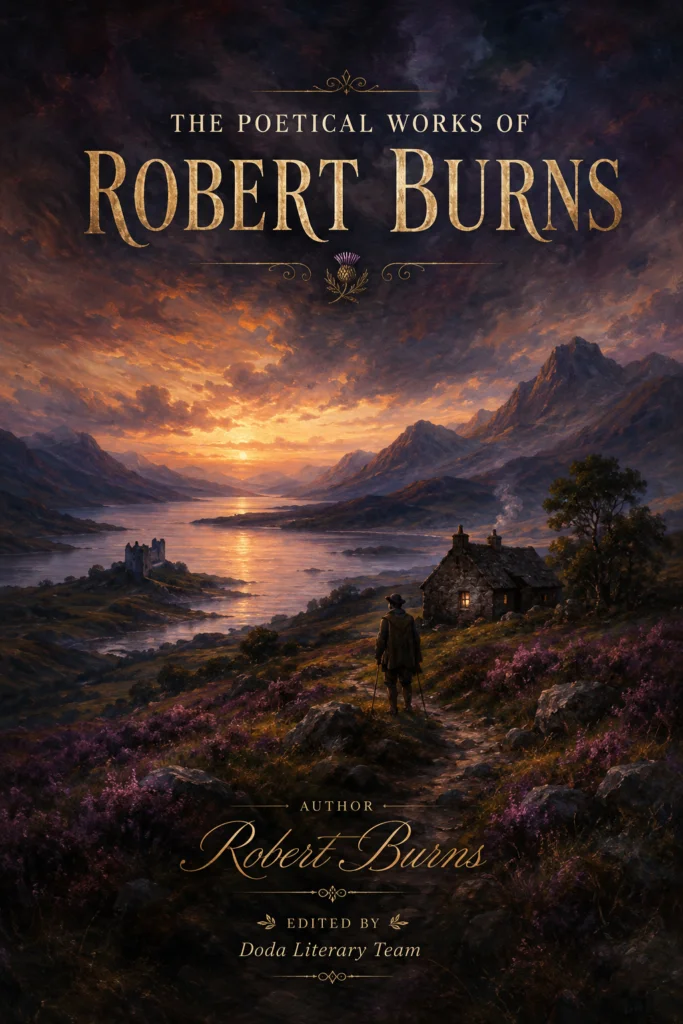
| Poet | Robert Burns (1759–1796) |
| Total Works | 539 poems and songs |
| Best For Beginners | 5 poems to start |
| Key Themes | Love, inequality, Scottish identity |
| Reading System | 5-step method explained below |
👤 Who Was Robert Burns?
Robert Burns (1759–1796) was a Scottish poet and songwriter. He was born into a poor farming family in Alloway, Ayrshire. He lived only 37 years, but in that time he produced poems and songs that made him Scotland’s most famous literary figure.
He worked as a farmer, failed at it, nearly moved to Jamaica, and became famous only in the last five years of his life. He died young, broke, and beloved.
🚧 Why Beginners Find Burns Hard
There are three real barriers — and none of them are your fault.
The Scots language. Burns wrote in a dialect that uses different words for common concepts. Ken = know. Gang = go. Bonnie = beautiful. Auld = old. You cannot guess these from context.
The 18th-century references. Burns wrote about real people and events his original audience knew. Without footnotes, modern readers miss the inside jokes and political commentary.
Dense imagery. Long poems like “Tam o’ Shanter” pack multiple images into every stanza. It is easy to lose the thread.
The solution to all three is the same: use an annotated edition that explains the words, the references, and the meaning as you read.
📋 The 5 Poems Every Beginner Should Read First
| Poem | Why Start Here |
|---|---|
| “A Red, Red Rose” | Short, beautiful, mostly modern English |
| “To a Mouse” | Famous, universal theme, manageable length |
| “Ae Fond Kiss” | Emotionally powerful, easy to follow |
| “To a Louse” | Funny, short, teaches you about Burns’s social satire |
| “A Man’s a Man for A’ That” | The heart of Burns’s philosophy in one poem |
Read them in that order. By poem five, you will recognise the most common Scots words and understand Burns’s voice.
💡 The Three Big Themes
Everything Burns wrote comes back to three ideas:
- Love in all its forms — joyful, painful, tender, and messy
- Inequality — the belief that character matters more than class
- Scottish identity — celebrating the language, culture, and people of Scotland
Once you recognise these themes, every poem fits into a bigger picture.
🔍 How to Read a Burns Poem
- Read the title and date — when and why did Burns write this?
- Read a one-paragraph summary first — know the subject before you start
- Read the poem once for sound — focus on rhythm, not meaning
- Read with annotations — understand every unfamiliar word
- Read again for meaning — now you know the words, what is the poem saying?
🎁 What You Get for Your Effort
Two hundred and thirty years after his death, Burns is still read because he is still relevant. He wrote about what every human being experiences: love, loss, injustice, joy, and the struggle to live a decent life. The Scots words are a surface barrier. The emotions underneath are yours.
📚 Start reading Burns with confidence
👉 Get the Annotated Edition🎓 What the Annotated Edition Unlocks
Line-by-Line Explanations
Every difficult line in all 539 poems is paraphrased in plain English — no more guessing what Burns meant.
500+ Scots Glossary
A complete Scots-to-English glossary cross-referenced to poem locations. Look up any word in seconds.
Poem Summaries
Every poem includes Overview, Historical Context, Key Themes, and Literary Devices — perfect for beginners.
Teacher's Insights
Thematic analysis and literary commentary for every stanza — understand the deeper meaning behind every poem.
Beginner-Friendly Format
Colour-coded sections help you find poem summaries, annotations, and glossary entries at a glance.
Read Anywhere
Works on Kindle, Apple Books, Google Play Books, Kobo, and Foliate — study on any device.
🕰️ Burns in History: The Man and His Times
To enjoy Burns properly, it helps to picture the world he came from. He was born in 1759 in a clay-walled farmhouse in Alloway, Ayrshire, to a struggling tenant farmer. He grew up poor, largely self-educated, reading what he could borrow and listening to the folk songs and stories of rural Scotland that would later flow into his own writing. For the first part of his life he seemed destined for the same grinding agricultural poverty that broke his father.
Everything changed in 1786. Facing a failed farm, a failed love affair, and a plan to emigrate to Jamaica, Burns published a first volume of poems to raise money for his passage. Called the Kilmarnock edition, it was an overnight success. Instead of leaving Scotland, he was invited to Edinburgh, feted by polite society, and became, within a few astonishing years, a national celebrity — all while remaining unmistakably a man of the common people in his sympathies and speech.
🎶 Why the Songs Matter as Much as the Poems
Beginners often think of Burns only as a poet, but roughly a third of his output is songs — and many of his most famous works, including “Auld Lang Syne” and “A Red, Red Rose,” were written to be sung. Burns spent his final years travelling Scotland collecting and restoring folk songs, and he had a genius for setting vivid, plain-spoken words to melodies that were already loved.
This matters for a beginner because it changes how the work is best experienced. While long narrative poems like “Tam o’ Shanter” reward close reading, the songs are better met by hearing them — even once, aloud — so the rhythm and the rhymes land before you worry about every word. Some readers find it easier to start with the song-lyrics for exactly this reason. If you want to understand the language barrier first so it never blocks you again, our introduction to reading Old English and Scots poetry and plain breakdown of the Scots “Ae Fond Kiss” are useful next steps.
🏴 The Heart of Burns’s Appeal
Strip away the dialect and the historical detail and Burns is, above everything, an advocate for common humanity. He believed that character matters more than class, that love and friendship are worth more than status, and that a person’s worth cannot be measured by their bank balance. Those convictions — celebrated in poems like “A Man’s a Man for A’ That” — are the reason his work still speaks to readers two centuries later, and the reason he became Scotland’s national poet.
That is the deeper point of this whole guide. The Scots words are a temporary screen, but the emotions and the values behind them belong to everyone. Once you get past that surface barrier — and a good annotated edition removes it almost entirely — you discover a writer whose warmth, humour, and indignation have not dated at all. To understand why he holds that role, our piece on what makes Robert Burns Scotland’s national poet fills in the legacy.
🧭 Your First Week of Burns
If you want a simple plan, here it is. Day one, read “A Red, Red Rose” — short, beautiful, mostly plain English. Day two, read “To a Mouse,” the poem that gave Steinbeck his title and speaks to human plans going wrong. Day three, try “Ae Fond Kiss,” a farewell that is among the most moving songs in the language. Day four, read “To a Louse,” where Burns turns a tiny insect on a lady’s bonnet into a lesson about pride. Day five, finish with “A Man’s a Man for A’ That,” the anthem of his philosophy.
By the end of the week you will have met each of his three big themes, learned the most common Scots words, and built a foundation for exploring the other 530-ish poems at your own pace. That is the whole point of starting right: a little structure up front turns frustration into discovery.
❓ Frequently Asked Questions
How many poems do I need to read to understand Burns?
Reading 5–10 poems gives you a solid understanding of his voice and themes. The 5 poems listed in this guide are the perfect starting point.
Do I need to learn Scots before reading Burns?
No. An annotated edition explains every Scots word as you go. Over time, you’ll naturally learn the most common words through repeated exposure.
Is Burns harder than other classic poets?
Harder in one way (the Scots language), easier in others (shorter poems, clearer narratives, more humour). The overall difficulty depends on which edition you use.
What if I give up after the first poem?
Try a different poem. “A Red, Red Rose” is the easiest starting point. If that still feels hard, read the modern English translation first, then go back to the original.
How long does the annotated edition take to read?
Reading all 539 poems with annotations takes 20–30 hours. Most readers focus on the 20–30 most famous works, which takes 3–5 hours.
Can I read Burns on my phone?
Yes. The annotated edition works on all major e-reader apps, including Apple Books, Google Play Books, and Kindle — all available on your phone.
What is Burns Night and do I need to know it?
Burns Night is the annual 25 January celebration of Burns’s birthday, marked with supper, whisky, readings, and “Auld Lang Syne.” You do not need it to enjoy the poems, but knowing a little about it gives context, and reading a few of his works first makes the celebration far more meaningful.
Are Burns's themes still relevant today?
Remarkably so. He wrote about love, inequality, friendship, and the dignity of ordinary people — subjects that resonate as strongly now as in the 1780s. It is precisely this lasting relevance that keeps him read and recited two centuries after his death.
📚 Related Articles
Start your Burns journey today
Poems and Songs of Robert Burns — The Annotated Edition
All 539 poems with line-by-line explanations, Scots glossary, and Teacher’s Insights — the perfect companion for beginners.
👉 Get the Annotated Edition{ .cta-button }