Beautiful Robert Burns quotes appear everywhere — on wedding invitations, in graduation speeches, tattooed on arms. But the Scots dialect means many people quote Burns without fully understanding what the lines actually say.
Beautiful Robert Burns Quotes Explained (With Meaning)
Famous Robert Burns quotes translated into plain English — what each line really means, why it matters, and the context behind Scotland's most quoted poet.
👉 Get the Annotated Edition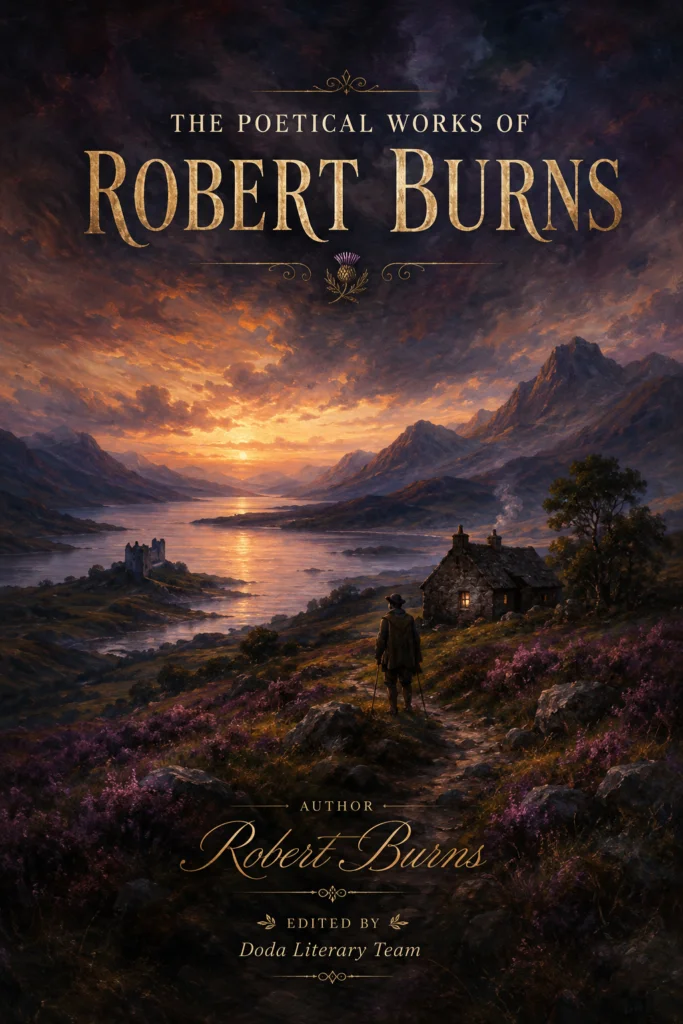
| Poet | Robert Burns (1759–1796) |
| Quotes Featured | 6 of his most famous |
| Key Themes | Love, equality, self-awareness, loss |
| Language | Scots with modern English translations |
| Best For | Quick reference, speech writing, study |
🌹 “O my Luve is like a red, red rose”
From: “A Red, Red Rose” Modern English: “My love is like a red, red rose” Meaning: Burns compares his love to a rose at its peak — fresh, beautiful, and newly bloomed. The repetition of “red” intensifies the image. This is love at its most joyful and confident.
🐭 “The best-laid schemes o’ mice an’ men gang aft agley”
From: “To a Mouse” Modern English: “The best plans of mice and men often go wrong” Meaning: No matter how carefully you plan, life can destroy everything in an instant. Burns wrote this after accidentally destroying a mouse’s nest, but the line speaks to every human experience of failed plans.
👁️ “O wad some Pow’r the giftie gie us to see oursels as ithers see us”
From: “To a Louse” Modern English: “Oh, would some Power give us the little gift to see ourselves as others see us” Meaning: We are all blind to our own flaws. If we could see ourselves from the outside, we would be more humble. Burns wrote this while watching a louse crawl on a wealthy woman’s hat — she had no idea how ridiculous she looked.
👑 “A Man’s a Man for A’ That”
From: “A Man’s a Man for A’ That” Modern English: “A man is a man for all that” (regardless of wealth or rank) Meaning: Your worth comes from your character, not your birth, money, or social position. This was Burns’s most radical statement — the idea that a poor, honest person is more valuable than a dishonest nobleman.
💔 “Never met or never parted — We had ne’er been broken-hearted”
From: “Ae Fond Kiss” Modern English: “If we had never met or never parted, we would never have been heartbroken” Meaning: Love and loss are inseparable. The joy of meeting someone made the pain of parting inevitable. It is a heartbreaking acknowledgement that some loves are worth the pain.
🏆 “The honest man, though e’er sae poor, is king o’ men for a’ that”
From: “A Man’s a Man for A’ That” Modern English: “The honest man, no matter how poor, is the king of men despite everything” Meaning: True nobility is moral, not social. An honest poor person outranks a dishonest rich one.
🎶 “Should auld acquaintance be forgot”
From: “Auld Lang Syne” Modern English: “Should old friends be forgotten” — in the famous chorus, “for auld lang syne” means “for old times’ sake” Meaning: We should never lose sight of the dear friends and good times of the past, no matter how far life has carried us. Burns polished an older folk song into the world’s most beloved anthem of friendship and remembrance, sung everywhere at the stroke of midnight on New Year’s Eve.
⚖️ “Man’s inhumanity to man makes countless thousands mourn”
From: “Man Was Made to Mourn” Modern English: The cruelty people inflict on each other makes countless numbers of people grieve Meaning: Burns’s bleakest statement about suffering — that most human misery is caused not by fate but by other people’s callousness. The line has become a shorthand for every form of social cruelty and is quoted whenever people want to condemn injustice.
📚 Understand every Burns quote with full annotations
👉 Get the Annotated Edition🎓 What the Annotated Edition Unlocks
Line-by-Line Explanations
Every famous line is explained in context — see exactly what Burns meant and why he chose those words.
500+ Scots Glossary
Look up any Scots word instantly. The complete glossary covers every word Burns used across all 539 poems.
Poem Summaries
Every poem includes Overview, Historical Context, Key Themes, and Literary Devices — perfect context for quotes.
Teacher's Insights
Thematic analysis and literary commentary that explains why certain lines became so famous.
Quote Reference
Colour-coded formatting makes it easy to find specific quotes and their analysis for essays or speeches.
Portable Reference
Works on all major e-readers — carry every Burns quote and its meaning wherever you go.
✍️ The Man Behind the Quotes
Robert Burns (1759–1796) was born into a poor farming family in Alloway, Ayrshire, and spent his short life struggling to make a living from the land while pouring his energy into poetry. He wrote in Scots, the everyday language of rural Scotland, which is why his lines feel so alive and direct — he wasn’t writing for aristocrats in a library but for ordinary people in the fields and villages where he lived. He came to be known as the Ploughman Poet, and his sudden fame, after the publication of his poems in 1786, turned him into a national figure within a few years.
Burns lived through extraordinary times. He was a young man during the American Revolution and the French Revolution, when debates about liberty, equality, and human rights were reshaping Europe, and you can hear that spirit in his poems. “A Man’s a Man for A’ That” reads almost like an anthem of the democratic age — it insists that a person’s worth has nothing to do with rank, birth, or money. Understanding that Burns was a man of the people, writing about the things that mattered to ordinary men and women, explains why his words carry so much weight two centuries later. For the full sweep of his life and best poems, our guide to Robert Burns is a good place to begin.
🎭 Why These Lines Endure
The quotes in this article have lasted because each one names a feeling almost everyone has had. “O my Luve is like a red, red rose” endures because it captures love at its most joyful and confident — which is why it appears on so many wedding invitations and Valentine’s cards. “The best-laid schemes o’ mice an’ men gang aft agley” endures because it names life’s central uncertainty: no matter how carefully we plan, things can go wrong in a moment, a truth that speaks to everyone. “Ae fond kiss” (‘Never met or never parted — We had ne’er been broken-hearted’) endures because it admits that love and loss are inseparable, the bittersweet cost of having loved at all. “O wad some Pow’r the giftie gie us to see oursels as ithers see us” endures because it pokes gentle, uncomfortable fun at our blindness to our own flaws. And “A Man’s a Man for A’ That” endures because its cry for human equality still feels urgent. Each line is a tiny map of a universal human experience.
📖 How to Read Burns: A Quick Glossary Tip Sheet
Burns wrote in Scots, and while much of it is close to English, a handful of words trip readers up again and again. Here’s a mini-glossary to help: luve (love), sae (so), gang (go), aft (often), agley (awry, or astray), wad (would), gie (give), ithers (others), a’ (all), ne’er (never), e’er (ever). A useful trick for any Burns poem is to read the lines aloud — most of his poems were written to be sung or spoken, so the rhythm and rhyme often unlock the meaning even when a word looks unfamiliar. When you hit a line you can’t untangle, pause and translate the few Scots words syllable by syllable; you’ll usually find the sense snaps into focus. For a gentler way in, our guide to “To a Mouse” walks through one of his most famous poems line by line, and our look at common themes in Burns’s poetry ties the quotes together.
❓ Frequently Asked Questions
What is the most famous Burns quote?
“The best-laid schemes o’ mice an’ men gang aft agley” from “To a Mouse” is his most quoted line, popularised further by John Steinbeck’s novel Of Mice and Men.
What is Burns's most romantic quote?
“O my Luve is like a red, red rose” from “A Red, Red Rose” is his most famous romantic line, frequently used in wedding readings and Valentine’s cards.
What does "A Man's a Man for A' That" mean?
It means a person’s worth comes from their character, not their wealth or social rank. It’s Burns’s powerful statement about human equality.
Why are Burns's quotes hard to understand?
Burns wrote in Scots, a distinct language with different vocabulary. Words like wad (would), gie (give), ithers (others), and sae (so) look like English but mean something else.
Can I use Burns quotes in a wedding speech?
Absolutely. “A Red, Red Rose” is perfect for weddings, especially “O my Luve is like a red, red rose” and “I will luve thee still, my dear, Till a’ the seas gang dry.”
How can I learn more Burns quotes?
The annotated edition contains all 539 poems with explanations of every famous line — the best way to discover quotes beyond the well-known ones.
What does "Auld Lang Syne" actually mean?
Literally it means “old long since,” or “for old times’ sake.” The song is about cherishing old friends and shared memories as the year turns over, which is why it is sung at New Year’s celebrations around the world.
Where does "Man's inhumanity to man" come from?
It comes from Burns’s poem “Man Was Made to Mourn” — the full line is “Man’s inhumanity to man makes countless thousands mourn.” Burns is saying that the worst suffering in the world is caused by people’s cruelty to one another, not by fate or nature.
📚 Related Articles
Want every Burns quote explained in full?
Poems and Songs of Robert Burns — The Annotated Edition
All 539 poems with line-by-line explanations, Scots glossary, and the context behind every famous line.
👉 Get the Annotated Edition{ .cta-button }