The best edition of Robert Burns poems for beginners — what to look for, which features matter most, and which edition gives you the best reading experience.
Best Edition of Robert Burns Poems for Beginners
The best edition of Robert Burns poems for beginners — what to look for, which features matter most, and which edition gives you the best reading experience if you are new to Burns.
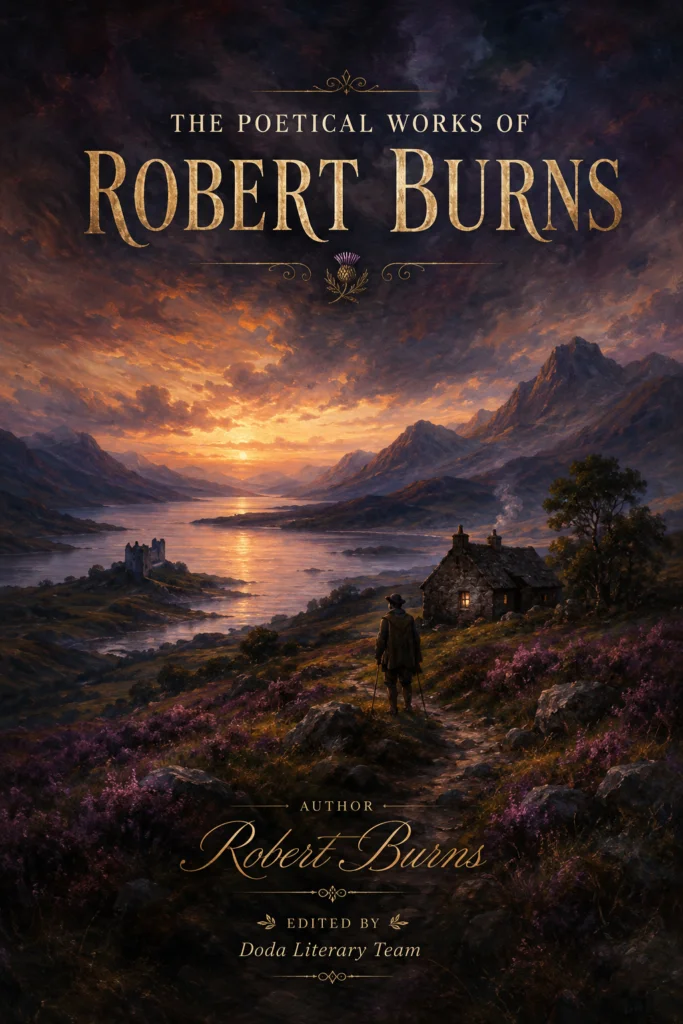
| Option 1 | Plain Reprints ($5–$10) |
| Option 2 | Scholarly Editions ($20–$40) |
| Option 3 | Annotated Editions ($10–$15) |
| Key Feature | Line-level annotation |
| Best for Beginners | Annotated Editions |
| Price Sweet Spot | $7.99–$12.99 |
🎯 What Beginners Actually Need
A beginner edition needs three things that scholarly editions often skip:
- Modern translations of Scots words — you cannot enjoy a poem if you stop to look up every third word
- Historical context — who was “Holy Willie”? What is “Mauchline”? Why should you care?
- Readable formatting — clear type, good layout, notes that do not clutter the page
📊 The Options Compared
Plain Reprints ($5–$10)
These are bare collections of Burns’s poems with no notes, no glossary, and no context. They are cheap but they assume you already understand Scots and 18th-century Scotland.
Best for: Experienced readers of older poetry. Frustrating for beginners.
Scholarly Editions ($20–$40)
University press editions with extensive footnotes and academic introductions. They are authoritative but written for other academics. The notes assume you already know the basics.
Best for: Literature students and researchers. Dense and intimidating for casual readers.
📚 Get the edition designed for beginners
👉 Get the Annotated EditionAnnotated Editions for General Readers ($10–$15)
These editions aim to make Burns accessible. They include line-by-line translations, historical notes, and a glossary. The annotations explain what you need to know without assuming prior knowledge.
Best for: Beginners, and honestly most general readers too.
🔑 The Key Feature to Look For
The single most important feature is line-level annotation. A good annotated edition places the translation or explanation right where you need it — next to the line you are reading. If you have to flip to the back of the book every time you hit an unfamiliar word, you will lose the rhythm of the poem.
🎓 What the Annotated Edition Unlocks
539 Poems Annotated
Every poem with line-by-line translations of Scots words into modern English.
500+ Scots Glosses
Comprehensive glossary indexed alphabetically with definitions and poem references.
Teacher's Insights
Stanza-level commentary explaining literary devices, tone, and structure.
Poem Summaries
Overview, historical context, key themes, and literary devices for every poem.
Historical Notes
Explanations of 18th-century Scottish references — people, places, and events.
Beautiful EPUB Format
Works on Kindle, Apple Books, Kobo, and all major e-readers.
🏴 Robert Burns’s Scotland (1759–1796)
To understand why Burns needs annotation, you have to meet the world he wrote from. Burns was born in 1759 into a poor farming family in Alloway, Ayrshire, and lived his whole short life — he died at 37 — at the intersection of two cultures. Educated Scots spoke and wrote in English, the language of Edinburgh, law, and print. But the ordinary people of the Lowlands, the farmers, weavers, and lovers he wrote for and about, spoke a rich Scots dialect. Burns worked in both registers and often mixed them in a single poem, which is exactly what makes him so alive — and so difficult for a modern reader encountering that Scots for the first time.
The same goes for his references. Burns wrote to and about real people: Holy Willie was a self-righteous church elder of his parish, the “Mauchline” he names was a town he knew intimately, and dozens of his poems are occasional — written for a wedding, an election, or a feud among neighbours. His politics, his freethinking, and his sympathy with the poor and the marginalised run through everything. Without a line or two of context, a poem like “Address to the Deil” or “To a Mouse” loses half its charge. This is why a good beginners’ edition does so much more than reprint the words: it reintroduces the man and his Scotland. For the full story, our complete guide to Robert Burns gives you his life, work, and the glossary you need in one place.
❤️ Which Poems to Start With
If you are brand new to Burns, do not begin alphabetically — begin with the poems that show off his warmth and humour most immediately. Almost everyone should start with “To a Mouse,” “A Red, Red Rose,” and “Tam o’ Shanter,” the comic narrative that reveals his storytelling genius at full stretch. If you want plain-English versions of these and others explained line by line, our simple guide to Burns’s poems is built exactly for this moment. Our collection of Burns’s love poems explained is a great next stop if the romantic side of his work draws you in first.
A useful rule of thumb: read the poem in Scots once, out loud, then read the translation. Burns wrote to be heard, and even a rough pronunciation unlocks the rhythm in a way silent reading cannot. Resist the urge to look up every word — let the poem carry you, then go back with the glossary. This is where line-level annotation earns its keep, because you can glance at the note and keep moving instead of breaking the spell.
🎯 The Sweet Spot: How to Actually Choose
Putting it together, here is the practical checklist for a first Burns edition. It should contain the complete poems and songs (so you never outgrow it), line-level translations of Scots rather than footnotes you must flip to, historical context that explains the people and places, a glossary you can search, and readable formatting in a format that works on your device. The annotated edition at the heart of this guide hits every one of those boxes — every poem annotated, 500+ Scots glosses, teacher’s insights, and summaries. If you are comparing editions, the single most important question to ask is simple: can I understand the first stanza of “Tam o’ Shanter” without closing the book? If the answer is no, keep looking.
📖 Why Burns Still Matters
Two and a half centuries on, Burns remains the writer people actually sing every December 31st — “Auld Lang Syne” is the honest, wistful heart of New Year’s celebrations worldwide. But the annotated Burns is about far more than one song. His voice — irreverent, tender, funny, and fiercely democratic — feels startlingly modern. He wrote about the dignity of ordinary people, the pain of love, the cruelty of the world, and the pure joy of being alive, and he did it in a language that was his own. When you can actually understand him, you discover why Scotland built him a literary monument bigger than any other writer’s — and why he is well worth meeting, properly annotated, on your own terms.
❓ Frequently Asked Questions
Can I just read Burns for free online?
Yes, the original poems are free on Project Gutenberg. But without annotations, most beginners give up after one or two poems. The free versions assume you already understand Scots and 18th-century Scotland.
Are the expensive scholarly editions better?
They are more authoritative but less accessible. Scholarly editions (Norton, Oxford) are written for academics who already know the basics. Beginners will find annotated editions far more helpful.
What is the most important feature for a beginner edition?
Line-level annotation. The translation or explanation should appear right next to the line you are reading, not at the back of the book. Flipping pages breaks your concentration and ruins the poem’s rhythm.
Should I buy a complete collection or selected poems?
For beginners, the complete collection with annotations is better value. You pay slightly more but get all 539 poems. Selected editions save money but leave you wanting more when you inevitably fall in love with Burns.
Does the annotated edition include "Auld Lang Syne"?
Yes — the annotated edition contains all 539 poems and songs, including “Auld Lang Syne” with full annotations explaining the Scots words and the song’s history.
What format should I buy — print or ebook?
For Burns, an ebook with hyperlinked footnotes is ideal. You can tap a note to read it and tap again to return. The Poems and Songs of Robert Burns: Annotated Edition is available in EPUB 3 format, which works on all major e-readers.
Who was Robert Burns, and why does his work need explaining?
Burns was an 18th-century Scottish poet who wrote in Scots dialect, English, and a joyful mix of both. His poems reference real people, places, and events in Ayrshire that modern readers cannot recognise without notes — which is why a good annotated edition gives you the context alongside the verse.
Which Robert Burns poem should I read first?
Start with “To a Mouse,” “A Red, Red Rose,” or “Tam o’ Shanter.” They show off Burns’s warmth, humour, and storytelling at their most accessible. Reading a plain-English translation alongside the original helps the rhythm of the Scots click into place quickly.
Do I need to learn Scots before I can enjoy Burns?
Not at all. You can enjoy Burns with a good annotated edition — line-level translations and a glossary do the work for you. Reading the poems aloud in Scots (even roughly) and then checking the notes is the fastest way to feel the music of the language.