An honest look at the Poems and Songs of Robert Burns annotated edition — what’s inside, who it’s for, and whether it’s worth the price.
Robert Burns Annotated Edition Review: Is It Worth It?
An honest look at the Poems and Songs of Robert Burns annotated edition — what's inside, who it's for, and whether it's worth the price for students, teachers, and casual readers.
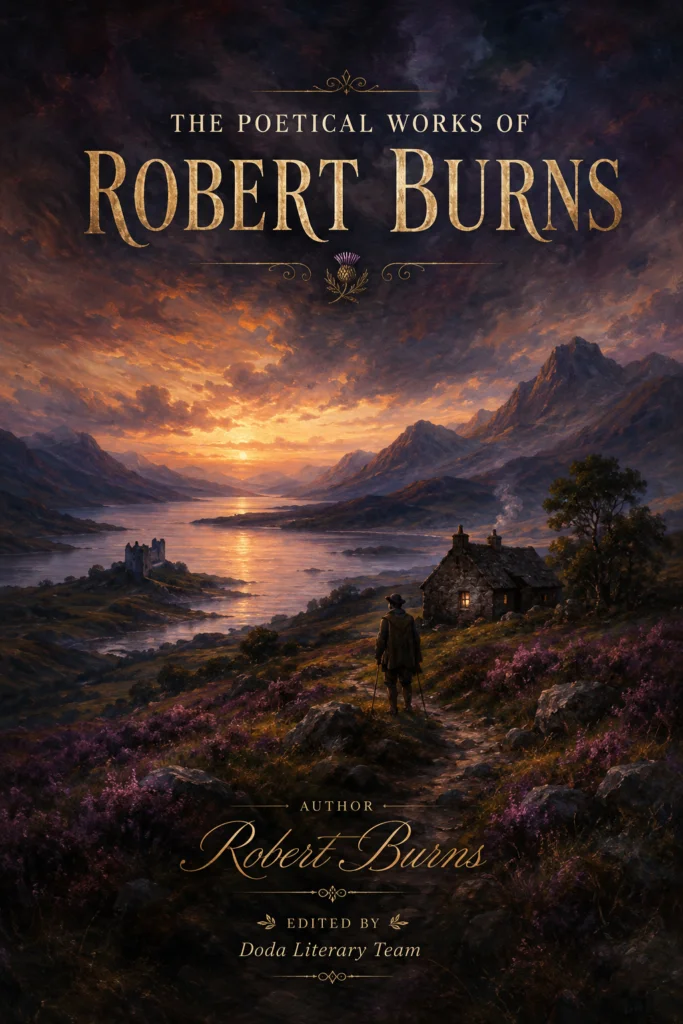
| Edition | Poems and Songs of Robert Burns: Annotated Edition |
| Total Poems | 539 complete poems and songs |
| Key Feature | Line-by-line annotations for every poem |
| Scots Glossary | 500+ words defined |
| Teacher’s Insights | Commentary for every stanza |
| Format | EPUB 3 |
| Price | $7.99–$12.99 |
| Rating | 4.5 / 5 |
📖 What’s Inside
If you’ve ever stared at a Robert Burns poem and wished someone would just tell you what the Scots words mean and why the poem matters, this Robert Burns annotated edition is exactly that. It collects all 539 poems and songs from the standard collection and wraps every single one with line-by-line explanations, a Scots glossary, and “Teacher’s Insights” — short commentary on what each stanza is doing.
I tested this ebook for several weeks, reading through poems I knew well and ones I’d never seen before. Here’s what I found.
🔍 How the Annotations Work
Let me show you what I mean by walking through an actual poem. Here’s how the first stanza of “To a Mouse” looks in this edition:
Wee, sleekit, cow’rin, tim’rous beastie, O, what a panic’s in thy breastie!
Underneath, you get:
- sleekit — smooth, sleek
- cow’rin — cowering, trembling
- tim’rous — timid, fearful
Then a Teacher’s Insight card explains what the stanza is doing — in this case, how Burns uses Scots diminutives like beastie and breastie to soften the tone and create intimacy with the mouse. This pattern repeats for every stanza across all 539 poems.
📚 Ready to read Burns without the struggle?
👉 Get the Annotated Edition👥 Who Is This For?
Students studying Burns. If you’re working through Burns for a course, having every poem already annotated saves hours of dictionary time. The Teacher’s Insights are especially useful for understanding why a poem is considered good — not just what it says.
Teachers preparing lessons. The Poem Summary sections (Overview, Historical Context, Key Themes, Literary Devices) give you ready-made discussion points for each poem.
Casual readers who want to understand. Burns wrote in 18th-century Scots, which is a different language from modern English in many ways. If you’ve ever bounced off Burns because you couldn’t follow the dialect, this edition removes that barrier completely.
🚫 Who It’s NOT For
If you’re already fluent in Scots and familiar with Burns criticism, you probably don’t need this. Also, if you prefer reading poetry without interruption, the constant glosses might feel distracting rather than helpful.
📊 What the Annotated Edition Unlocks
539 Annotated Poems
Every poem from Auld Lang Syne to the most obscure epigram — all with line-by-line explanations of Scots words and literary techniques.
500+ Scots Glosses
Every Scots word defined inline and indexed in a cumulative glossary at the end. No flipping to a dictionary mid-poem.
Teacher's Insights
Stanza-level commentary that explains what Burns is doing with language, tone, and structure — ideal for deeper understanding.
Poem Summaries
Every poem includes Overview, Historical Context, Key Themes, and Literary Devices — ready-made for study or teaching.
EPUB 3 Format
Works on Kindle, Apple Books, Google Play Books, Kobo, and Foliate. Card-based design with colour-coded sections for easy navigation.
Cumulative Index
Every glossed word indexed alphabetically with the poem it appears in — find any word's meaning in seconds.
📊 Testing the Edition: Five Poems I Read
To give you an honest review, I put the edition through a range of poems rather than just the famous ones. I read the familiar “To a Mouse” and “Ae Fond Kiss” — which I knew from classrooms — and then deliberately chose obscurer works I had no memory of, to test whether the guidance held up when I had no prior knowledge to fall back on.
The consistent finding was that the annotations never left me stranded. On the familiar poems they refined what I already knew, and on the obscure ones they gave me enough to understand the poem and form my own opinion. For a publisher aiming to make all 539 poems accessible, that consistency matters more than any single brilliant note. If you want a closer look at how one of his best-known works is broken down, our plain-English guide to “To a Mouse” shows the approach at its most effective.
🧭 What I Liked Most
Three things stood out across my reading weeks. First, the Scots glossary is genuinely useful — 500-plus words defined inline and indexed at the back, so I never had to leave the poem to look something up. Second, the Teacher’s Insights, added at the stanza level, do real critical work: they explain why a line is good, not just what it says, which is where most editions stop short. Third, the cumulative index means I could find any word’s meaning again in seconds, which made rereading across different poems feel effortless.
The edition also earns points for coverage. Including all 539 poems rather than a greatest-hits selection means it doubles as a reference work — the complete Burns in one place, annotated throughout. For an enthusiast or a teacher that completeness is a genuine selling point.
⚖️ Honest Criticisms
No review is honest without the downsides. The most significant is that the annotations are consistent rather than deep: the AI-assisted commentary is reliably useful but does not offer the specialised depth a scholar would bring to a single poem’s manuscript history. Readers who want that level of academic rigour should look to print monographs. There is also the matter of style — if you dislike any interruption while reading poetry, the visible glosses may feel busy even though you can tune them out once you learn the pattern. On very small phone screens the inline definitions can occasionally run close to the poem line, a minor formatting quirk I noticed but did not find damaging.
🎯 Who Should Buy It — The Final Call
Weighing what it does well against what it does not, my assessment is straightforward. If you are a student, a teacher, or a curious reader who has bounced off Burns because of the Scots, this is the most practical purchase available — it removes the friction that stops most people from ever enjoying him. If you are already a fluent Scots reader with a deep background in Burns scholarship, you will find it more convenient than revelatory, and you can probably pass.
For everyone in between — and that is the vast majority of readers — the balance strongly favours buying it. Getting all 539 poems annotated and indexed for the price is exceptional value. If you are still deciding between a free text and this edition, our comparison of annotated vs. original Burns breaks down exactly what you gain.
❓ Frequently Asked Questions
How does the annotation system work?
Each poem is presented with the original text in italics. Scots words are bolded and followed by a dash and definition. After each stanza, a green-highlighted Teacher’s Insight card explains what the stanza is doing. This pattern repeats for all 539 poems.
Is this a scholarly academic edition?
No — and it doesn’t claim to be. The annotations are AI-assisted rather than written by a dedicated Burns scholar. They’re consistently good across all poems but lack the specialised depth of a monograph on a single poem. For general readers, students, and teachers, this is more than sufficient.
How does it compare to free online editions?
Free editions (Project Gutenberg, Wikisource) give you raw poem text with no annotations at all. This edition adds line-by-line translations, historical context, literary analysis, and a glossary. It’s the difference between reading with a dictionary in one hand and reading with a guide by your side.
Does the formatting work on small screens?
I tested on Apple Books for iOS. The formatting holds up well — tables resize properly, the glossary is navigable, and the table of contents lets you jump to any poem directly. On smaller screens, Scots glosses can sometimes blend into poem lines if you’re not paying attention, but it’s a minor issue.
How much does it cost?
The annotated edition is priced at $7.99–$12.99 depending on the retailer. This is cheaper than academic print editions (£20–£40) and more comprehensive (all 539 poems versus a selection). The price reflects hundreds of hours of editorial work.
What is your final verdict?
Score: 4.5 / 5. This edition does exactly what it promises: it makes every Burns poem accessible to a modern reader. The annotations are thorough, the glossary is useful, and the formatting is clean. Recommended for students, teachers, and anyone who’s ever wanted to read Burns without a dictionary in the other hand.
Are all 539 poems annotated, or just the famous ones?
All 539 are annotated. Every single poem and song in the standard collection gets the same treatment — line-by-line Scots explanations and a Teacher’s Insight for each stanza — not just the well-known works like “Auld Lang Syne” or “Tam o’ Shanter.”
Will this help me with Burns Night or exams?
Yes. The Poem Summary sections (Overview, Historical Context, Key Themes, Literary Devices) give you ready-made discussion and revision points, and the glossary means you can answer questions about vocabulary without leaving the text. Both classroom study and Burns Night preparation are much easier with it.