George Eliot’s Middlemarch is widely considered the greatest Victorian novel — a masterful tapestry of provincial life, marriage, ambition, and the quiet tragedies of unfulfilled potential. Published in 1871-1872, it remains one of the most profound and rewarding works in the English language.
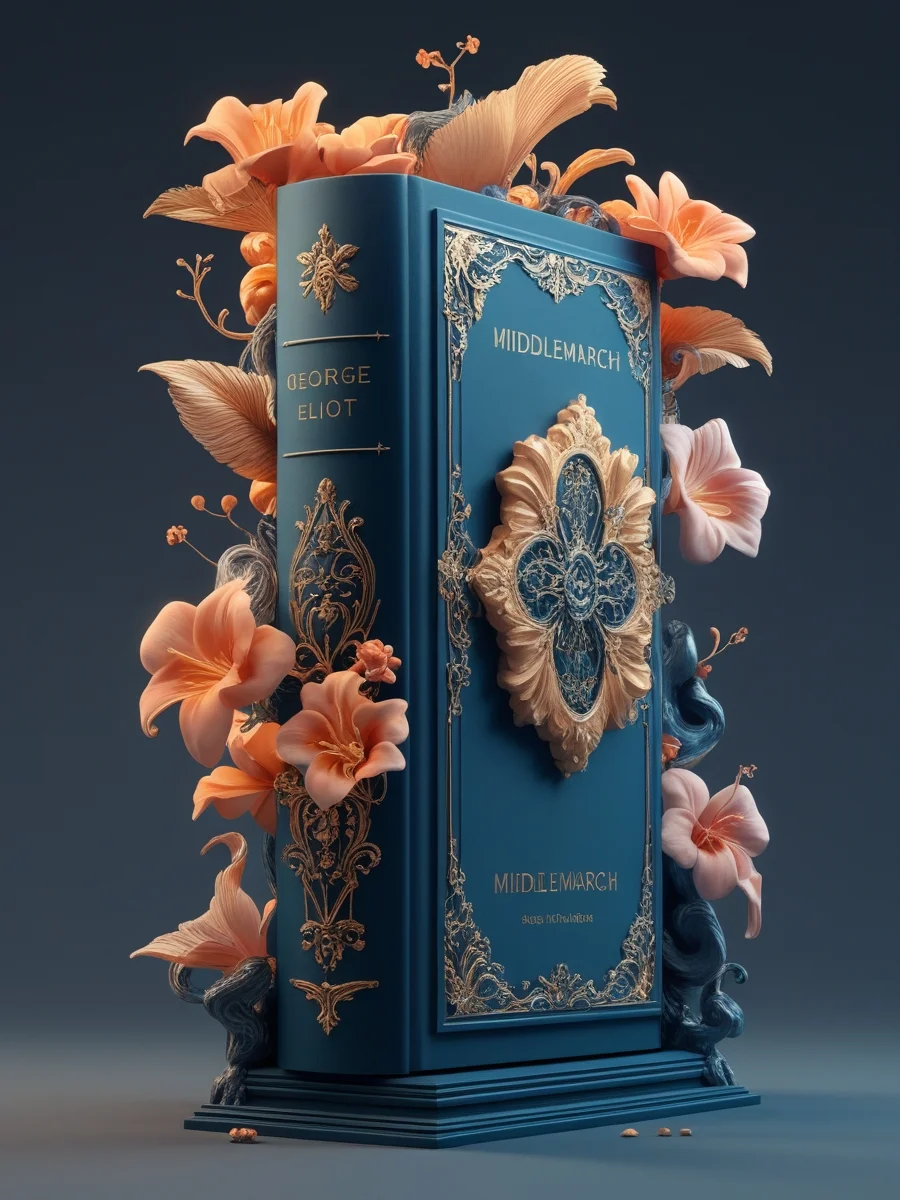
🏘️
Middlemarch
The greatest Victorian novel — a masterful tapestry of provincial life, marriage, ambition, and the quiet tragedies of unfulfilled potential.
| Author | George Eliot (Mary Ann Evans) |
| Published | 1871-1872 |
| Genre | Realist novel, social commentary, psychological fiction |
| Chapters | 86 (8 books + prelude + finale) |
| Setting | 1829-1832 provincial England — the fictional town of Middlemarch in the Midlands |
| Legacy | Widely considered one of the greatest novels in the English language; Virginia Woolf called it “one of the few English novels written for grown-up people” |
🏘️ The Story
Middlemarch weaves together multiple storylines in the fictional Midlands town during the years leading up to the Reform Act of 1832. At its center are two idealistic figures whose ambitions collide with the stubborn realities of provincial life.
Dorothea Brooke, a passionate young woman yearning for intellectual and moral purpose, marries the elderly scholar Edward Casaubon, hoping to assist his great work — only to discover that his life’s research is hollow. Tertius Lydgate, a talented young physician with revolutionary ideas about medicine, arrives in Middlemarch with dreams of scientific progress but finds himself trapped by financial difficulties and a disastrous marriage to the beautiful but shallow Rosamond Vincy.
Around these central stories, Eliot constructs a rich web of secondary characters: the idealistic Will Ladislaw, the honest Mary Garth, the self-made Nicholas Bulstrode, and the good-natured Fred Vincy. Each subplot explores a different facet of provincial life — love, money, ambition, compromise, and the slow, painful process of growing up.
🎭 Key Characters
Dorothea Brooke
Dorothea is one of literature’s great heroines — intelligent, passionate, and determined to live a life of meaning. Her youthful idealism leads her into a disastrous marriage with Casaubon, but her journey toward wisdom and self-knowledge forms the novel’s moral heart. Eliot presents her not as a saint but as a fully human woman whose greatest gift is her capacity for sympathy.
Tertius Lydgate
Lydgate arrives in Middlemarch as a man of genuine promise — a physician with revolutionary ideas and high ambitions. But his pride and his inability to resist social pressure lead him into compromise after compromise. His marriage to Rosamond is a slow-motion catastrophe, and his story is a devastating portrait of how noble intentions can be ground down by circumstance.
Edward Casaubon
Dorothea’s elderly husband, Casaubon is a scholar whose life’s work — a “Key to All Mythologies” — is doomed to failure. His portrait is one of Eliot’s most compassionate creations: a man who knows he is mediocre but cannot stop pretending otherwise. His jealousy, his possessiveness, and his secret despair make him both pitiable and oppressive.
Rosamond Vincy
Beautiful, charming, and utterly self-centered, Rosamond is one of literature’s most convincingly drawn antagonists. She is not evil — she simply cannot imagine any perspective beyond her own. Her marriage to Lydgate is a study in mutual destruction, and her refusal to compromise makes her both fascinating and infuriating.
Will Ladislaw
A young man of mixed English and Polish heritage, Will is artistic, idealistic, and deeply in love with Dorothea. He represents the possibility of a life lived for art and feeling rather than duty and convention, but his own lack of direction sometimes undermines his ideals.
📖 Literary Significance
Virginia Woolf called Middlemarch “one of the few English novels written for grown-up people,” and the description has stuck. The novel’s achievement is its unflinching honesty about the gap between ambition and reality, between the life we imagine and the life we actually live.
Eliot’s prose is extraordinary — intelligent, compassionate, and often devastatingly perceptive. She moves between characters with an omniscience that never feels intrusive, and her ability to render interior life — the private thoughts, doubts, and self-deceptions that people hide from each other — was unprecedented.
The novel’s structure is also revolutionary. Rather than following a single protagonist, Eliot weaves together multiple storylines that intersect and diverge, creating a portrait of a community rather than a single life. This technique, borrowed from the epic tradition, gives the novel its extraordinary scope and its enduring power.
✨ What Makes the DodaBooks Edition Special
This is the original 1871-1872 text, carefully prepared for modern readers without distractions or clutter.
Zero Distractions
No ads, no license pages, no project boilerplate — just the original novel, clean and uninterrupted.
Smart Typography
Curly quotes, em-dashes, proper ellipsis — typeset with care for a premium reading experience.
Chapter Navigation
Full table of contents with back-to-chapter links in every section — jump between all 86 chapters effortlessly.
Cleaned & Polished
All Gutenberg boilerplate stripped, consistent formatting throughout the text.
No DRM
You own your copy — read on any device, anytime, forever.
Instant Download
EPUB + PDF + AZW3 formats included, delivered instantly after purchase.
🏛️ Historical Context: England on the Eve of Reform
Middlemarch is set between 1829 and 1832, during the heated campaign for the Reform Act that would extend the vote and shake up a political system long controlled by a handful of landed families. Eliot subtitled her book “A Study of Provincial Life,” and she uses the fictional town of Middlemarch to examine how national events — political reform, debates over medicine, the influence of new wealth — ripple through the lives of ordinary people. The town’s doctors, clergy, bankers, and gentry are all caught up in the same forces that were reshaping Victorian England.
This grounding in real history gives the novel its extraordinary texture. Eliot had done deep research into medical reform, and Lydgate’s hopes of introducing new methods of treatment reflect genuine debates of the era. For readers who enjoy novels rooted in social and political change, the community portrait in Cranford offers a gentler counterpart, while Sense & Sensibility shows Austen exploring similar questions of money and marriage a generation earlier.
🔥 Why Middlemarch Still Matters
Middlemarch remains relevant because it is, above all, a book about ordinary life — about the gap between what people dream and what they settle for, and about the quiet dignity of compromise. Eliot refuses to moralise: she shows that a noble ideal can curdle into self-deception (Casaubon’s “Key to All Mythologies”), that genuine talent can be worn down by circumstance (Lydgate), and that sympathy is the rarest and most valuable of human gifts (Dorothea).
Modern readers often find Eliot startlingly contemporary. Her insistence on women’s intellectual and emotional independence, her scepticism about institutional authority, and her psychological realism anticipate the modern novel. The book is sometimes called the first novel truly written “for grown-up people,” and its pleasures deepen with age.
🎓 How to Read Middlemarch
The novel’s 86 chapters across eight books can feel daunting, but the structure is more forgiving than it looks. Treat each of the eight books as a self-contained movement, and follow the two great threads — Dorothea’s marriage to Casaubon and Lydgate’s to Rosamond — as they braid together. Because Eliot shifts between many characters, you can dip in and out, but the reward comes from letting the overlapping storylines build a complete world.
Read slowly enough to appreciate Eliot’s prose and her psychological insight, but don’t worry about catching every subplot on a first pass. If the social scope appeals to you, the complete guide to Pride and Prejudice offers a lighter, wittier entry into 19th-century social fiction, and our guide to Cranford shows another master working in a similar vein.
❓ Frequently Asked Questions
Why is Middlemarch considered the greatest novel?
Critics consistently rank it at or near the top of English fiction. Virginia Woolf called it “one of the few English novels written for grown-up people.” Its combination of psychological depth, social scope, moral seriousness, and prose style has never been surpassed. It reads both as a portrait of a specific time and place and as a timeless meditation on human ambition, compromise, and growth.
How long does it take to read?
At 602 pages, most readers take 20-30 hours to finish. The novel is divided into eight books, each with a natural break point, making it manageable to read in sessions. Many readers find the length a virtue — there’s room to live with the characters.
Is Middlemarch boring?
It depends on what you enjoy. If you want action and plot twists, this may not be your book. But if you enjoy psychological complexity, sharp social observation, and prose that illuminates the inner lives of characters with devastating precision, Middlemarch is electrifying. The novel rewards patience — its pleasures are intellectual and emotional rather than dramatic.
What is the book about?
At its simplest, Middlemarch is about a group of people in a provincial English town during the 1830s. But it’s really about the gap between ideals and reality — between the lives we imagine for ourselves and the lives we actually lead. Every character faces some version of this gap, and the novel explores what happens when ambition meets compromise.
Should I read it in 2026?
Absolutely. The novel’s concerns — political reform, medical ethics, women’s autonomy, the tension between tradition and progress — are as relevant as ever. And Eliot’s understanding of human nature is so profound that the characters feel startlingly modern. It’s a book that grows richer with every rereading.
Who is the narrator of Middlemarch?
The novel uses an omniscient third-person narrator who moves freely between characters’ inner lives, commenting on events with Eliot’s distinctive blend of irony and sympathy. This narrative voice is one of the book’s great achievements — it can be gently satirical one moment and deeply compassionate the next, constantly guiding the reader toward a fuller understanding of every character.
Do I need to know British history to enjoy Middlemarch?
No. Eliot explains the political and social context within the novel itself, and the moral and psychological drama needs no historical background to be understood. That said, a little knowledge of the Reform Act era makes the book even richer, which is why the annotated edition provides historical notes on the medicine, politics, and society of 1830s England.
📚 Related Articles
🏘️ Read the Original Masterpiece
Middlemarch is widely considered the greatest Victorian novel. The DodaBooks edition preserves the complete original text in a clean, distraction-free format:
- ✅ Complete 86-chapter novel — every word of the 1871-1872 edition
- ✒️ Smart typography — curly quotes, em-dashes, proper ellipsis
- 📜 Full table of contents with chapter navigation
- 🔒 DRM-free — read on any device, anytime
- 📥 Instant download — EPUB + PDF + AZW3 formats