Louisa May Alcott’s Little Women follows the March sisters — Meg, Jo, Beth, and Amy — through poverty, illness, love, and the challenges of growing up in Civil War-era New England.
🏠
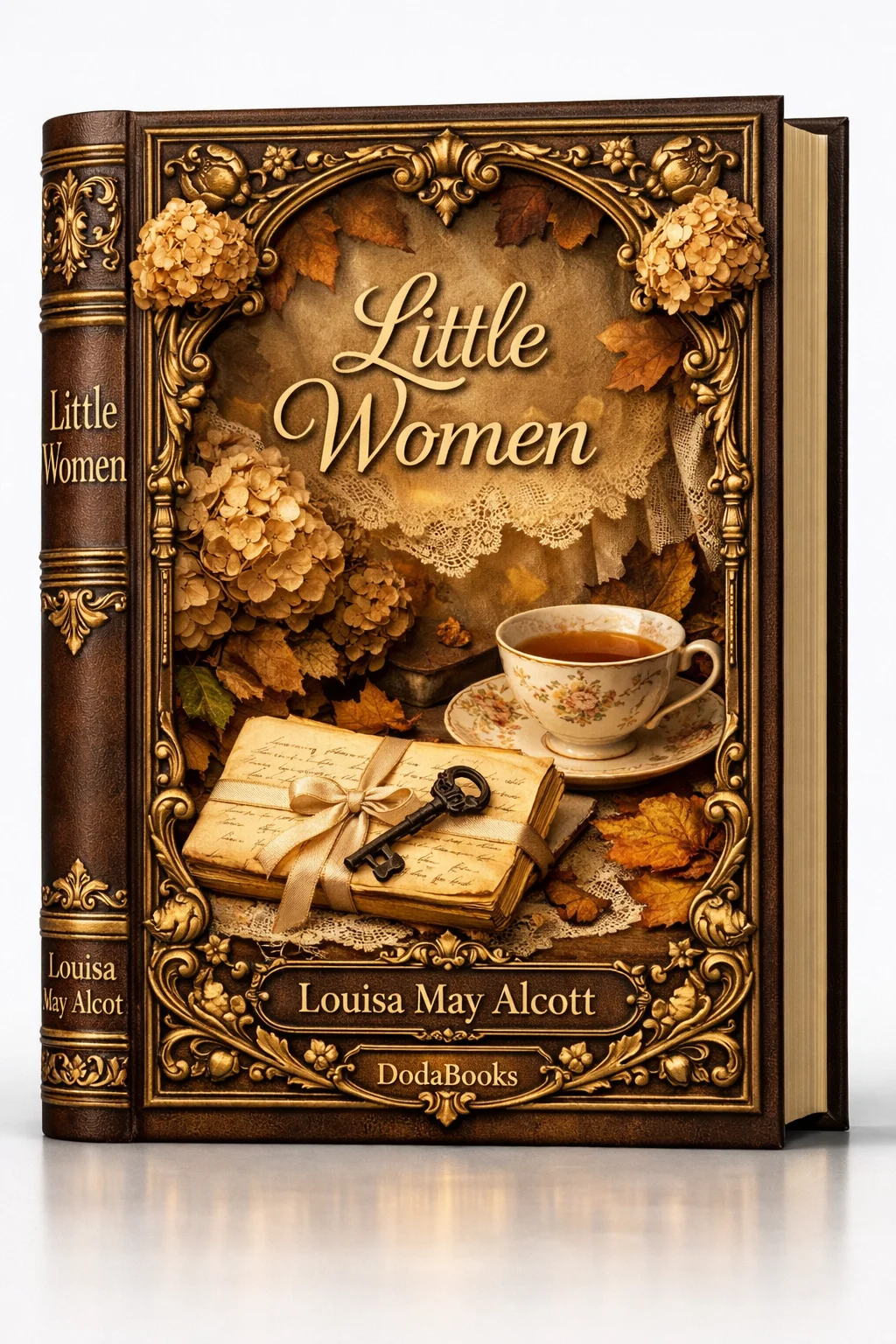
Little Women
Four sisters, one family, and the unforgettable journey from childhood to womanhood — the 1868 classic that defined the American family novel.
| Author | Louisa May Alcott |
| Published | 1868–1869 |
| Genre | Coming-of-age, domestic fiction, family saga |
| Chapters | 48 (23 in part 1, 25 in part 2 / “Good Wives”) |
| Setting | 1860s Concord, Massachusetts — the March family home during and after the American Civil War |
| Legacy | One of the most beloved novels in American literature; adapted into multiple acclaimed films |
🏠 The Story
In Concord, Massachusetts, during the Civil War, the four March sisters live with their mother (Marmee) while their father serves as a chaplain in the Union Army. The sisters — Meg, Jo, Beth, and Amy — are warm, flawed, and deeply human. Meg is the eldest, pretty and conventional. Jo is a tomboy with a fierce temper and a passion for writing. Beth is shy and musically gifted. Amy is the youngest, vain but artistic.
The novel follows the sisters through the trials of adolescence: Meg’s courtship and marriage to John Brooke; Jo’s struggle to establish herself as a writer in New York; Beth’s devastating illness with scarlet fever, which leaves her permanently weakened; and Amy’s journey from selfish child to graceful woman. Jo rejects Laurie’s marriage proposal, and Beth eventually dies — the emotional heart of the novel.
In the second part, “Good Wives,” the sisters grow into women. Meg settles into domesticity. Jo establishes a school with Professor Bhaer, whom she eventually marries. Amy marries Laurie, combining the March warmth with the Laurence fortune. Beth’s memory remains a guiding force for the family.
🎭 Key Characters
Jo March
Jo is one of American literature’s most beloved heroines. She is passionate, independent, creative, and stubbornly herself. She rejects conventional femininity, chops off her hair, and dreams of writing great novels. Her refusal to marry Laurie was shocking to 1868 readers — and remains one of the novel’s most powerful moments.
Meg March
Meg is the eldest sister — beautiful, conventional, and the most traditionally “feminine” of the four. She marries John Brooke and learns to manage a household on a modest income. Her story explores the dignity and difficulty of domestic life.
Beth March
Beth is the quiet heart of the family. Shy, gentle, and deeply musical, she never leaves home and dies young of scarlet fever. Her death is the novel’s emotional climax, and her absence haunts the rest of the story. Beth represents the beauty and fragility of the things that matter most.
Amy March
Amy is the youngest and the most complex of the sisters. She is vain, selfish, and ambitious in childhood — but she matures into a sophisticated, compassionate woman who marries Laurie. Her European journey transforms her from a spoiled child into a graceful adult.
Marmee (Mrs. March)
Marmee is the moral center of the novel. She manages the household alone during the war, guides her daughters with wisdom and patience, and confesses to Jo that she struggles with anger every day — a moment of stunning honesty that makes her more than just a symbol of maternal perfection.
📖 Literary Significance
Little Women is the first truly American family novel. Before Alcott, most domestic fiction was written from a European perspective. Alcott created a world that was unmistakably New England — the cold winters, the modest comforts, the intellectual culture of Concord — and populated it with characters who felt real.
The novel’s greatest achievement is its honesty about the constraints on women’s lives. Jo wants to write, but she must write what sells. Meg wants to be a good wife, but poverty makes domesticity a struggle. Beth wants nothing more than home and family, and she dies. Amy wants beauty and success, and she achieves them — but only through compromise and hard work. None of the sisters gets exactly what she wants, and that is precisely what makes the novel truthful.
Alcott wrote Little Women quickly, under pressure from her publisher, and later said she didn’t enjoy writing it. But the novel’s enduring popularity suggests she captured something essential about the experience of growing up — the loss of innocence, the difficulty of choosing a life, and the bonds that hold families together even when everything else falls apart.
✨ What Makes the DodaBooks Edition Special
This is the original text, carefully prepared for modern readers without distractions or clutter.
Zero Distractions
No ads, no license pages, no project boilerplate — just the original novel, clean and uninterrupted.
Smart Typography
Curly quotes, em-dashes, proper ellipsis — typeset with care for a premium reading experience.
Chapter Navigation
Full table of contents with back-to-chapter links in every section — jump between all 48 chapters effortlessly.
Cleaned & Polished
All Gutenberg boilerplate stripped, consistent formatting throughout the text.
No DRM
You own your copy — read on any device, anytime, forever.
Instant Download
EPUB + PDF + AZW3 formats included, delivered instantly after purchase.
✍️ Alcott Wrote Herself into Jo
Alcott had lived half the March sisters’ story before she wrote a word of it. Raised in a brilliant but poor Concord family, she became the household breadwinner in her teens, writing potboilers to keep everyone fed. Jo’s hunger to write, her temper, her impatience with ladylike behaviour — even selling her hair — all come straight from the author.
That biography is the secret of the novel’s power. The March family’s cheerful poverty lightly disguises the Alcotts’ own struggles, and Marmee’s confession about her temper echoes the moral teaching of Alcott’s parents.
🕯️ Beth and the Cost of Growing Up
The novel’s most devastating thread belongs to Beth, the quiet sister who never asks for anything. Scarlet fever weakens her heart; she seems to recover, then fades until the family must say goodbye. Alcott never lets the death turn sentimental, and that restraint is why it hurts.
“If love is enough,” she said, “I shall not be lonely.”
Beth’s passing is the hinge of the book. Before it, the sisters bicker and dream; after it, each must choose her life knowing how short it can be. Growing up, Alcott suggests, means losing someone you could not imagine living without.
📖 Themes: What Little Women Actually Says
Beneath its warm surface, Little Women is quietly radical about the choices women face. Jo wants to be a writer, but she must write what sells. Meg wants a home, but poverty makes domesticity a struggle. Amy wants beauty, and she gets it — through patience and compromise. None of the sisters gets exactly what she wished for — and that honesty is why the novel still feels true.
The book also insists ambition and love are not opposites. Jo’s marriage to Professor Bhaer, which disappointed readers who wanted Laurie, is Alcott’s firmest statement on the subject: a partnership of the mind can be as passionate as a drawing-room romance. Fans of courtship novels with sharp heroines will find a kindred spirit in our guide to Pride and Prejudice, and our Jane Eyre guide follows another independent woman who refuses the life society offers her.
🎓 How to Read It Today
Treat Little Women as two novels — that is exactly how it was published. Part 1 (1868) is the childhood story and ends at the edge of adult life. Part 2 (1869, sometimes called Good Wives) follows the marriages, the writing career, and Beth’s death. Together they give the full arc; each half also stands alone.
The style is intimate and unhurried — a family chronicle rather than a tightly plotted novel — so let each chapter work as a vignette: a lesson learned, a friendship tested, a small triumph. And notice how often the sisters fail the moral lessons; Alcott was more honest than her reputation suggests.
❓ Frequently Asked Questions
How long does it take to read 710 pages?
At a moderate pace of 30–40 pages per hour, most readers finish in 18–24 hours. The novel is often read in two sittings — part 1 and part 2 — which makes it feel like two shorter books.
Which movie adaptation is best?
The 1994 Winona Ryder version is the most faithful to the novel. The 2019 Greta Gerwig version is the most artistically ambitious, restructuring the timeline and adding a powerful ending. Both are excellent — it depends on whether you want fidelity or innovation.
Is it just for girls?
No. While the novel centers on four sisters, its themes — family, ambition, loss, growing up, and finding your place in the world — are universal. Many male readers find it deeply moving.
Does Jo marry Laurie?
No — and this was one of the most controversial choices in 19th-century fiction. Jo rejects Laurie’s proposal, recognizing that they are too alike to be happy together. She eventually marries Professor Bhaer, a choice that surprised and disappointed many readers.
Should I read part 1 and part 2 separately?
They were published separately (1868 and 1869) and can be read that way. Part 1 ends with the sisters as young women; part 2 follows their adult lives. Reading them together gives the full arc, but part 1 alone is a complete and satisfying story.
Is Little Women based on Alcott's own family?
Very closely. Alcott grew up poor in Concord, Massachusetts, the second of four daughters, and supported her family by writing. The March sisters are recognizably modelled on the Alcott girls, and Jo’s struggles — even selling her hair — come straight from the author’s biography.
What is Good Wives and how does it fit the story?
Good Wives is the subtitle generally given to the second half of the novel, first published separately in 1869. It follows the March sisters into adult life — Meg’s marriage, Jo’s writing career and eventual wedding to Professor Bhaer, Amy’s European tour and marriage to Laurie, and Beth’s death. Together the two parts make up the complete Little Women.
Why is Little Women still taught in schools?
Because it is one of the first American novels to treat a girl’s inner life with complete seriousness. The book raises questions about ambition, gender, class, and the meaning of a good life that students can debate as easily today as readers did in 1868 — and its honest endings still manage to surprise them.
📚 Related Articles
🏠 Read the Original Classic
Little Women is one of the most beloved novels in American literature. The DodaBooks edition preserves the complete original text in a clean, distraction-free format:
- ✅ Complete 48-chapter novel — every word of the original
- ✒️ Smart typography — curly quotes, em-dashes, proper ellipsis
- 📜 Full table of contents with chapter navigation
- 🔒 DRM-free — read on any device, anytime
- 📥 Instant download — EPUB + PDF + AZW3 formats