Alexandre Dumas’s The Count of Monte Cristo is the ultimate revenge novel — a sweeping tale of betrayal, imprisonment, hidden treasure, and a man who remakes himself as an instrument of justice.
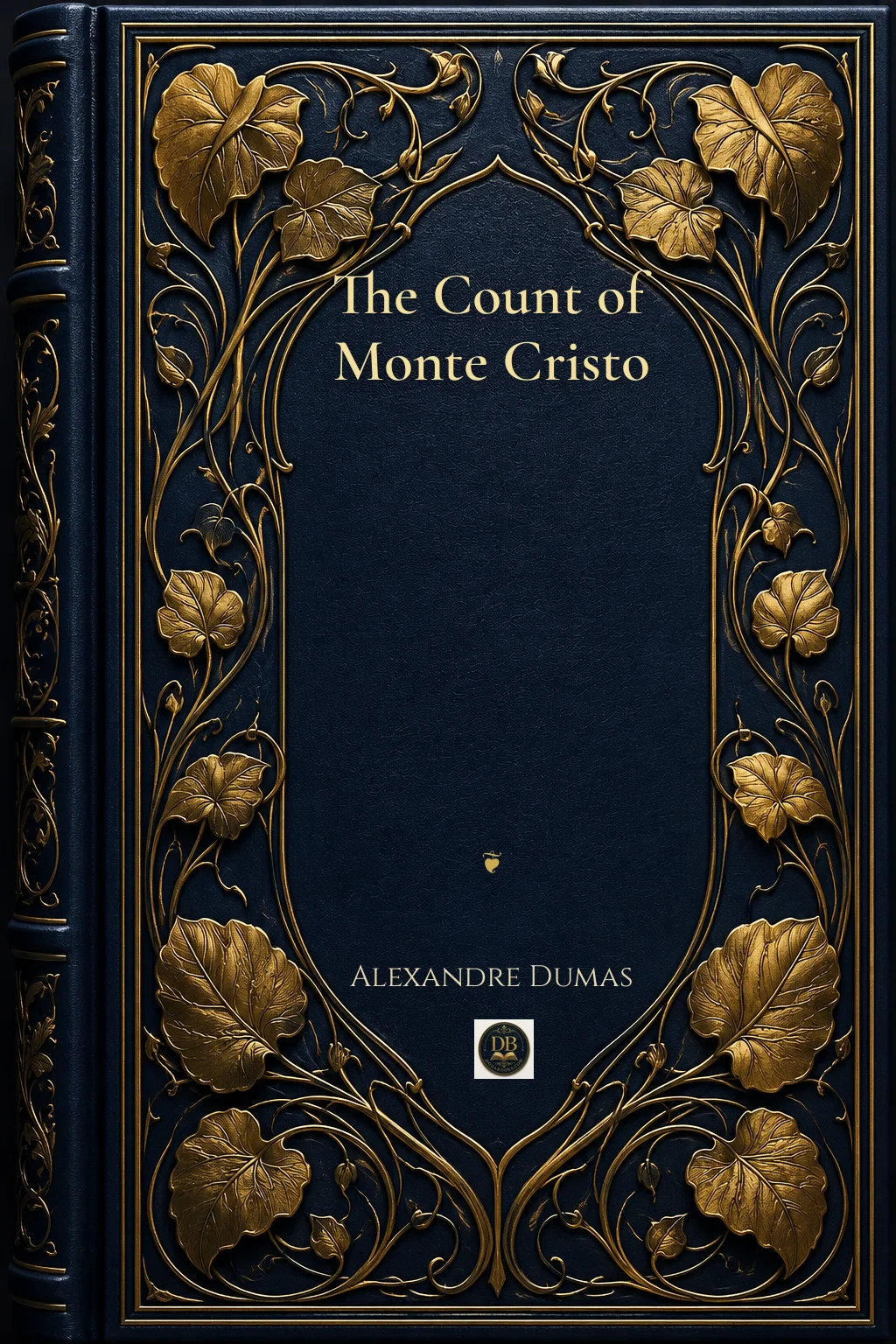
⚓
The Count of Monte Cristo
Betrayal, imprisonment, hidden treasure, and elaborate revenge — the 1844 masterpiece that defined the adventure novel.
| Author | Alexandre Dumas (with Auguste Maquet) |
| Published | 1844–1846 (serialized) |
| Genre | Historical adventure, revenge thriller, romance |
| Chapters | 117 |
| Setting | 1815–1838 France, Italy, and the Mediterranean — Marseille, Paris, the Château d’If, Monte Cristo island |
| Legacy | One of the most celebrated adventure novels ever written; the ultimate story of wrongful imprisonment and elaborate revenge |
⚓ The Story
Edmond Dantès, a young and promising sailor, is about to be made captain of a ship and marry his beloved Mercédès. But jealousy and greed conspire against him: Fernand Mondego loves Mercédès, Danglars envies Dantès’s promotion, and Villefort — a prosecutor seeking political advancement — has personal reasons to silence him. Dantès is arrested on his wedding day and thrown into the Château d’If, a fortress prison from which no one escapes.
For fourteen years, Dantès languishes in darkness. In prison, he meets Abbé Faria, an extraordinary intellect who becomes his mentor, teaching him languages, science, history, and the art of strategy. Faria also reveals the location of a vast hidden treasure on the island of Monte Cristo. When Faria dies, Dantès escapes by taking his place in a burial shroud and, after a harrowing journey, finds the treasure.
Now fabulously wealthy, Dantès reinvents himself as the enigmatic Count of Monte Cristo. He spends years meticulously orchestrating his revenge — infiltrating Parisian society,befriending the families of those who wronged him, and destroying them one by one through manipulation, exposure, and poetic justice. But as his plans unfold, Dantès must confront the moral cost of vengeance and whether any human being has the right to dispense justice on such a scale.
🎭 Key Characters
Edmond Dantès / The Count of Monte Cristo
Dantès begins as a hopeful, trusting young man and is forged by suffering into someone entirely different. As the Count of Monte Cristo, he is cold, calculating, and seemingly omniscient — but beneath the masks, the wound of his betrayal never fully heals. His journey asks whether revenge can ever truly restore what was taken.
Mercédès
Mercédès is Dantès’s childhood love, who believes him dead and eventually marries Fernand Mondego. She is noble and perceptive, and she alone recognizes the Count of Monte Cristo for who he truly is. Her fate is intertwined with the consequences of the men around her choices.
Fernand Mondego
Fernand is driven by jealousy and ambition. He betrays Dantès out of love for Mercédès and later builds a career on treachery — including selling his Greek protector Ali Pasha to the Turks. His rise and fall mirror the novel’s central theme: that injustice eventually finds its reckoning.
Abbé Faria
The Abbé is the novel’s most compassionate figure. Imprisoned for his political views, he spends years tunneling toward freedom and devotes his final years to educating Dantès. He is the catalyst for Dantès’s transformation — without Faria, there is no Count of Monte Cristo.
Villefort
Villefort is the novel’s most complex antagonist. A prosecutor who sacrifices Dantès for his own career, he is also a man trapped by his family’s secrets — his father’s Bonapartism, his own murderous cover-up, and the crimes of his second wife. His destruction is slow, methodical, and deeply satisfying.
📖 Literary Significance
The Count of Monte Cristo is often considered the greatest revenge novel ever written. Dumas takes a simple premise — innocent man wrongfully imprisoned — and expands it into a vast, intricate narrative spanning two decades and multiple countries.
The novel’s structure is remarkable. Dumas constructs an elaborate web of coincidences and connections that gradually tightens around his enemies like a noose. Every character in Parisian society is connected to Dantès’s past, and every social event becomes a stage for his machinations. The pacing — slow and methodical in the middle sections, explosive in the climax — is masterful.
Beyond entertainment, the novel raises profound questions about justice and mercy. Dantès eventually recognizes that his vengeance has hurt the innocent as well as the guilty, and the novel’s final message is one of Christian forgiveness and the limits of human judgment. The famous line — “Wait and hope” — encapsulates Dantès’s ultimate wisdom: that true justice requires patience, not just power.
✨ What Makes the DodaBooks Edition Special
This is the original text, carefully prepared for modern readers without distractions or clutter.
Zero Distractions
No ads, no license pages, no project boilerplate — just the original novel, clean and uninterrupted.
Smart Typography
Curly quotes, em-dashes, proper ellipsis — typeset with care for a premium reading experience.
Chapter Navigation
Full table of contents with back-to-chapter links in every section — jump between all 117 chapters effortlessly.
Cleaned & Polished
All Gutenberg boilerplate stripped, consistent formatting throughout the text.
No DRM
You own your copy — read on any device, anytime, forever.
Instant Download
EPUB + PDF + AZW3 formats included, delivered instantly after purchase.
🏛️ Historical Roots: From Fact to Fiction
The Count of Monte Cristo did not spring entirely from Dumas’s imagination. He drew on the real case of Pierre Picaud, a nineteenth-century French shoemaker who was falsely denounced as a British spy, imprisoned for years, and released to inherit a fortune left by a fellow prisoner. Picaud then spent years tracking down and destroying the men who had framed him. This true story of wrongful imprisonment and methodical revenge supplied Dumas with his core premise.
Dumas also had a lifelong habit of writing with collaborators. His regular associate Auguste Maquet contributed heavily to the plotting and research, and their partnership produced many of the books we now credit to Dumas alone. This is partly why the novel is so vast — 117 chapters — and so tightly constructed. The opening chapters, set against the backdrop of Napoleon’s return from Elba, anchor the story in real historical events that contemporary readers would have recognized immediately.
🗺️ The Shape of a Marathon Read
At roughly 892 pages, The Count of Monte Cristo is a commitment, but the structure makes it more manageable than it looks. The novel falls naturally into three movements. The first is the imprisonment and escape — fast, dramatic, and self-contained. The second is Dantès’s transformation into the Count and his slow infiltration of Parisian society, where the pacing deliberately slows as he sets his elaborate traps. The third is the convergence, where the individual revenge plots collide in a series of devastating revelations.
The best way to enjoy it is to treat each movement on its own terms rather than expecting non-stop action. The middle section rewards patience: every new character and social entanglement is a strand Dantès will later pull. If you finish and want more of Dumas’s storytelling, Twenty Years After continues the musketeer saga in the same serialized style, and readers who enjoy the theme of crime and moral consequence will find a kindred spirit in Crime and Punishment.
💡 What the Novel Is Really About
Beneath the swashbuckling surface, The Count of Monte Cristo is a philosophical novel about the morality of revenge. Dantès begins his quest convinced that he is merely an agent of justice, righting the wrongs done to him. But as his plans unfold, he discovers that vengeance has collateral damage — the innocent suffer alongside the guilty, and the avenger risks becoming as monstrous as those he hunts.
The famous closing line — “Wait and hope” — is the novel’s quiet answer to its own questions. True justice, Dumas suggests, requires patience, mercy, and the recognition that no human being is powerful enough to play God. This inner tension between the thrilling appeal of revenge and its moral cost is what elevates the book from entertainment to literature and keeps readers debating its ending for two centuries.
❓ Frequently Asked Questions
How long does it take to read 892 pages?
At roughly 40–50 pages per hour, most readers finish in 18–22 hours. Many prefer to read it in sittings over a week or two — it’s a marathon, not a sprint.
Is The Count of Monte Cristo based on a true story?
Yes. Dumas based the novel on the real-life case of Pierre Picaud, a shoemaker from Nîmes who was falsely accused of being a spy and imprisoned. After his release, he took revenge on those who wronged him. Dumas expanded this into a much larger, more elaborate narrative.
Is the movie adaptation accurate?
Most film versions condense the plot significantly and simplify the revenge scheme. The 2002 Jim Caviezel version captures the spirit but changes many details. The 1954 French version and the 1998 miniseries are more faithful. But nothing compares to the full novel — the depth of the revenge scheme is simply too vast for a two-hour film.
What's the correct reading order for Dumas?
The Count of Monte Cristo is a standalone novel and can be read independently. If you want to read Dumas’s musketeer books, the order is The Three Musketeers, Twenty Years After, and The Vicomte of Bragelonne. None of these share characters or plot with Monte Cristo.
Is it worth reading in 2026?
Absolutely. The novel’s themes — wrongful imprisonment, institutional corruption, the seductive danger of revenge, and the power of patience — are timeless. It remains one of the most gripping and satisfying novels ever written.
Why does the novel shift so much focus between characters?
Dumas builds his revenge scheme as a web of interconnected plots, each requiring readers to know the different families Dantès targets. Shifting focus between the Morrel, Danglars, Villefort, and Mondego households lets Dumas show how each villain falls in a poetically fitting way — and keeps the massive cast clear.
Is there a particular edition or translation to prefer?
The original was serialized in French, so translations vary considerably. The classic Robin Buss translation is widely praised for staying close to Dumas’s tone and humor. Whichever you choose, look for a complete, unabridged version — many abridgements cut the middle sections that give the revenge its depth.
📚 Related Articles
⚓ Read the Original Classic
The Count of Monte Cristo is one of the greatest adventure novels ever written. The DodaBooks edition preserves the complete original text in a clean, distraction-free format:
- ✅ Complete 117-chapter novel — every word of the original
- ✒️ Smart typography — curly quotes, em-dashes, proper ellipsis
- 📜 Full table of contents with chapter navigation
- 🔒 DRM-free — read on any device, anytime
- 📥 Instant download — EPUB + PDF + AZW3 formats