Is Pride and Prejudice worth reading in 2026? The honest answer is yes for most people, but not for everyone. Here is who will get value from it, who will not, and why the novel has survived for over 200 years.
Is Pride and Prejudice Worth Reading Today?
A practical look at why this 200-year-old novel still connects with modern readers — and an honest assessment of who might want to skip it.
| Published | 1813 |
| Word count | ~120,000 words |
| Reading time | 10–14 hours |
| Primary genre | Novel of manners, romance, satire |
| Cultural impact | Endless adaptations and references |
| Verdict | Yes for most, not for all |
✅ The Case For Reading It
It is genuinely funny. Austen’s wit is sharp and modern. The ridiculous characters (Mr. Collins, Lady Catherine, Mrs. Bennet) are recognisable types we still encounter. The humour does not feel 200 years old.
It understands people. The core insight — that smart people can be completely wrong about each other — has not aged. Elizabeth’s journey from “I know I am right” to “I was wrong” is relatable at any age.
It is culturally essential. References to Pride and Prejudice appear everywhere — in movies, TV shows, advertising, and other books. Reading it gives you context for thousands of cultural references you have been missing.
It is relatively short. Around 120,000 words — about the length of a modern thriller. It is not the time commitment most people assume.
❌ The Case Against Reading It
The language is a barrier. Even if you are a strong reader, Austen’s sentences demand focus. If you read for relaxation after a long day, this might feel like work rather than pleasure.
The pace is slow. Nothing dramatic happens for long stretches. If you need plot-driven fiction with high stakes, this is not it.
The social world is alien. The rules that drive the story — entailment, courtship rituals, class hierarchy — require explanation. Without that context, half the drama is invisible.
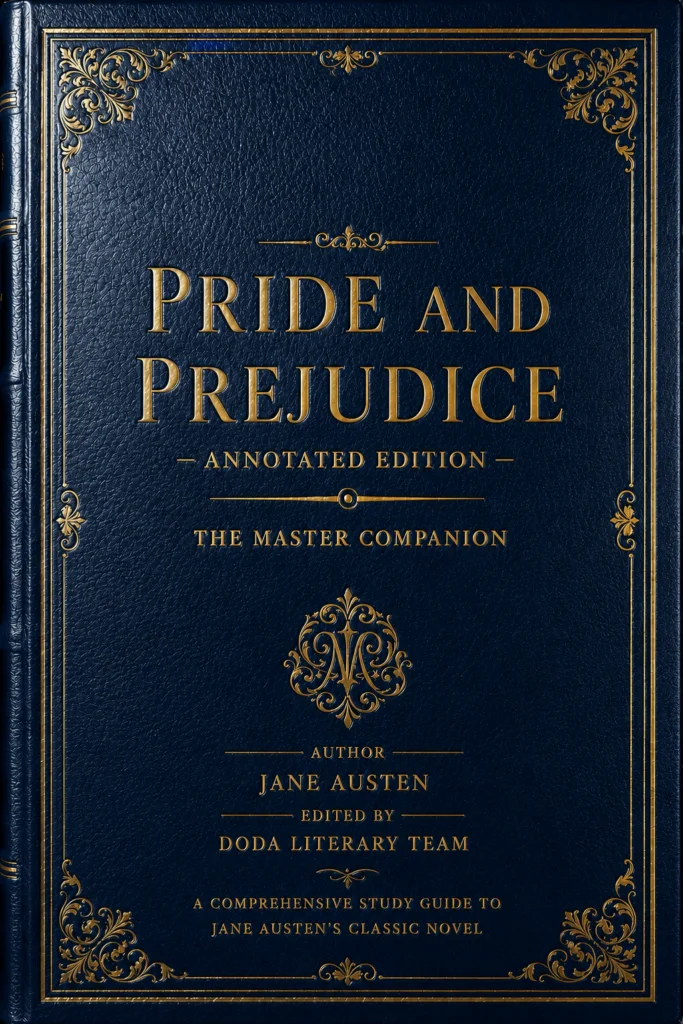
📚 Experience the story with context that makes it shine
👉 Get the Annotated Edition👥 Who Should Read It
| Reader Type | Verdict | Reason |
|---|---|---|
| Literature student | Yes | Required reading for a reason |
| Casual fiction reader | Yes, with annotations | The story rewards the effort |
| English learner | Simplified version | The original is too hard |
| Thriller/mystery fan | Probably not | Too slow for the genre |
| Austen fan | Obviously | You already know this |
🤔 How to Decide
If you are curious but unsure, try this: read the first three chapters online (they are free). If you enjoy the tone and can follow the dialogue, continue. If you are struggling and not enjoying it, try an annotated or simplified version before giving up entirely.
Most people who dislike Pride and Prejudice do not dislike the story — they dislike the experience of reading the original text without support. The story itself — about a clever woman who learns that her judgment is not perfect — is as relevant as ever.
🧩 What the Annotated Edition Unlocks
242 Literary Annotations
Historical context, critical analysis, and literary allusions for every chapter — understand why Austen chose certain words and what Regency-era social rules mean for the plot.
139 Modern Simplifications
Complex passages rewritten in clear modern English. When Austen's sentences get dense, you will find a plain-English breakdown right there on the page.
Chapter Summaries
Every chapter begins with a concise 150–250 word recap of key events — perfect for quick orientation before you read or for revision after.
76 Discussion Questions
With original answers. Perfect for teachers planning classroom activities, book clubs preparing for meetings, or students writing essays.
Character Relationship Maps
Detailed profiles of every major character with relationship diagrams showing how Elizabeth, Darcy, Bingley, Jane, Wickham, and the rest connect.
Bonus Resources
Story timeline, chapter length bar chart, 10-question quiz with answers, comprehensive glossary of 143 archaic terms, and further reading recommendations.
🏛️ A Quick Look at the Story
If you are new to the novel, here is the story in outline. In a small village in Regency England, the Bennet family faces a serious problem: all five daughters stand to inherit nothing because the family estate is entailed to a male relative. So when the wealthy and handsome Mr. Bingley arrives, his attentions to the eldest daughter Jane are watched eagerly. His friend Mr. Darcy is far less charming — proud, cold, and openly dismissive of local society, which sets Elizabeth Bennet instantly against him.
Over the following months, a tangle of misunderstandings, meddling relatives, and one very handsome liar drive Elizabeth and Darcy apart before finally bringing them together. The genius of the book is that both of them are wrong about the other, and the pleasure of reading is watching each discover just how wrong. For a fuller blow-by-blow, our clear chapter-by-chapter summary maps every turning point, and a closer look at Elizabeth and Darcy’s relationship explains why the pair have become one of the most beloved couples in all of fiction.
💎 What Makes It Timeless
Ask a hundred readers why Pride and Prejudice survives and you will get a hundred overlapping answers — but the deepest reason is that Austen refuses to tie her story to a single era. Strip away the carriages and the evening dances and you are left with a story about courtship under pressure: about reading other people correctly, about the cost of pride and the danger of prejudice, about what happens when family loyalty forces bad decisions. Those are subjects that never go out of date.
There is also pure craft. Austen’s sentences are among the sharpest in the English language, and her free indirect style — hovering inside a character’s thoughts while commenting on them with quiet irony — was decades ahead of its time. Modern novelists still try to capture the immediacy and wit she achieved in the 1810s. That is part of why the novel keeps being rediscovered by each new generation.
🧭 Is It Right for You?
The honest truth is that the right answer depends on what you read for. If you love character, wit, and the slow, satisfying combustion of two people finally understanding each other, Pride and Prejudice will reward you enormously. If you need constant action, high plot stakes, or a world that makes sense without any historical background, it may frustrate you — and that is a fair thing to admit.
The good news is that there are now versions tailored to every kind of reader. An annotated edition keeps every word of Austen’s original but lights up the historical context, the vocabulary, and the jokes you would otherwise miss, so the experience of reading becomes warmer and clearer rather than more difficult. If the original has ever defeated you, that is worth knowing before you give the book up for good.
❓ Frequently Asked Questions
Why is Pride and Prejudice still popular after 200 years?
The themes are universal — pride, prejudice, family pressure, and the tension between personal desire and social expectation. Also, Austen’s wit and psychological insight feel remarkably modern.
Do I need to know history to understand it?
Not necessarily, but it helps enormously. Key concepts like entailment (only male heirs inherit property) and courtship conventions drive the entire plot. An annotated edition explains these as you read.
Is it a romance novel?
It is a social satire that contains a romance. Readers expecting a modern romance with grand gestures and explicit passion will be disappointed. Readers who enjoy slow-burn character development and witty dialogue will love it.
Can I read it for free?
The original text is in the public domain and available for free on Project Gutenberg. Annotated editions are paid products because they include original scholarly content.
What if I start it and hate it?
Try an annotated edition first. If you still hate it after Chapter 12, the novel is probably not for you — and that is fine. Not every classic suits every reader.
Is there a version for modern readers?
Yes, the annotated edition is specifically designed for modern readers. It keeps Austen’s original text but adds context, explanations, and summaries that make the 200-year-old novel accessible.
How long will it take me to read it?
At average reading speed (200 words per minute), the original text takes about 10 hours. The annotated edition takes 12–14 hours because of the supplementary material.
Is Pride and Prejudice a feminist book?
In a broad sense, yes. Elizabeth insists on marrying for respect and love rather than security, and Austen satirises the way her society leaves women dependent on marriage for survival. It is not a manifesto, but its sharp critique of that dependency feels startlingly modern.
Should I watch the film first?
It can help. The famous 1995 BBC adaptation is a warm, faithful companion to the novel, and seeing the story once can make the book’s dialogue easier to follow. Most readers find the book unexpected and richer than any adaptation, so let the film lower the barrier, then let the novel surprise you.