Where to Buy Crime and Punishment: Best Editions & Translation Guide
When modern readers decide to embark on Fyodor Dostoevsky’s 1866 masterpiece Crime and Punishment, the single most consequential decision they face is: Which English translation should I buy?
Because Dostoevsky wrote in 19th-century Russian, English readers do not experience Dostoevsky directly; they experience the choices, syntax, vocabulary, and ideological filters of his translators. Over the past 140 years, more than ten major English translations have appeared. Some render Dostoevsky’s frantic, breathless Russian into stiff, Victorian drawing-room prose; others attempt hyper-literal translations that preserve idiosyncratic Russian word orders at the expense of readability; while the finest modern translations successfully capture Dostoevsky’s feverish psychological urgency, black humor, and philosophical depth.
Furthermore, book buyers must choose between physical printings—ranging from budget paperbacks with cramped, unreadable fonts to durable multi-volume hardcovers—and modern digital editions optimized for e-readers.
This definitive translation and book buying guide compares the four leading English translations of Crime and Punishment, evaluates their strengths and weaknesses, ranks the top editions available today, and helps you select the perfect copy for your personal library.
⚡ Best Crime and Punishment Editions: At a Glance
- #1 Best Digital / Overall Reading Edition: DodaBooks Edition — Features the complete unabridged 41-chapter text, clear digital typography, Russian naming guides, historical St. Petersburg maps, and 100% DRM-free EPUB formatting.
- Best Modern English Translation: Penguin Classics (Translated by Oliver Ready) — Widely hailed by modern critics as the premier contemporary translation; captures Dostoevsky's manic rhythm, irony, and psychological fever without sounding academic or archaic.
- Best Scholarly / Literal Translation: Everyman's Library / Vintage (Translated by Richard Pevear and Larissa Volokhonsky) — Highly literal, capturing Dostoevsky's deliberate syntactic awkwardness and raw Russian idioms; popular in university literature courses.
- Best Historical Victorian Translation: Oxford World's Classics / Modern Library (Translated by Constance Garnett, revised) — The pioneer 1914 translation that introduced Dostoevsky to Virginia Woolf and Ernest Hemingway; lyrical, but smooths over Dostoevsky's rough edges.
- Best Heirloom Hardcover: The Folio Society / Everyman's Library — Elegant clothbound presentations with acid-free paper, sewn bindings, and ribbon markers built for lifelong display.
📊 Comprehensive Translations Comparison Matrix
+--------------------------------------------------------------------------------------------------------------------+
|                                CRIME AND PUNISHMENT ENGLISH TRANSLATIONS EVALUATED                                 |
+----------------------+-----------+--------------------+---------------------+------------------+-------------------+
| TRANSLATION          | FORMAT    | STYLE & PROSE      | ACCURACY & TONE     | BEST FOR         | PRICE RANGE       |
+----------------------+-----------+--------------------+---------------------+------------------+-------------------+
| DodaBooks Edition    | Digital   | Unabridged Classic | Complete text with  | Seamless reading | $4.99 – $7.99     |
|                      | (EPUB)    | with modernized    | Russian naming map  | on Kindle, Kobo, | (DRM-Free)        |
|                      |           | punctuation & flow | & historical context| iPad, and phone  |                   |
+----------------------+-----------+--------------------+---------------------+------------------+-------------------+
| Oliver Ready         | Trade     | Energetic, vivid,  | Highly accurate;    | The gold standard| $15.00 – $18.00   |
| (Penguin Classics)   | Paperback | natural modern     | reproduces manic    | for both general |                   |
|                      |           | English rhythm     | tempo & black humor | & college readers|                   |
+----------------------+-----------+--------------------+---------------------+------------------+-------------------+
| Pevear & Volokhonsky | Hardcover | Formal, literal,   | Closest to literal  | University study,| $16.00 – $28.00   |
| (Everyman / Vintage) | & Paper   | intentionally      | Russian syntax; can | close literary & |                   |
|                      |           | jagged syntax      | feel clunky at times| textual analysis |                   |
+----------------------+-----------+--------------------+---------------------+------------------+-------------------+
| Constance Garnett    | Mass      | Lyrical, Victorian,| Tends to Victorianize| Historical       | $8.00 – $14.00    |
| (Revised / Oxford)   | Paperback | Edwardian cadence  | Dostoevsky's voice;| purists & budget |                   |
|                      |           | & smooth phrasing  | softens vulgarities | paperback buyers |                   |
+----------------------+-----------+--------------------+---------------------+------------------+-------------------+
| David McDuff         | Mass      | Methodical, precise| Faithful and steady;| Traditional      | $11.00 – $16.00   |
| (Penguin Classics)   | Paperback | rhythmic diction   | good balance of tone| readers wanting  |                   |
|                      |           |                    | and narrative pacing| classic feel     |                   |
+----------------------+-----------+--------------------+---------------------+------------------+-------------------+
🔍 In-Depth Translation Analysis: Which Voice Is Right for You?
1. Oliver Ready (2014, Penguin Classics Deluxe) — The Modern Masterpiece
For decades, English readers were caught in a rigid dispute between the smooth Victorian phrasing of Constance Garnett and the stiff literalism of Pevear and Volokhonsky. In 2014, Oxford scholar Oliver Ready published a translation that has rapidly become the consensus modern favorite among literary critics and general readers alike.
- Capturing the Manic Fever: Dostoevsky did not write polished, stately prose; he wrote in a feverish, breathless rush that mirrors Raskolnikov’s delirium. Ready captures this manic velocity like no other translator. The dialogue crackles with nervous energy, and the psychological monologues sound like an authentic human mind collapsing under guilt.
- Natural English Idioms Without Loss of Fidelity: Where older translations use bizarre literalisms that sound unnatural to modern ears, Ready finds dynamic English equivalents that convey Dostoevsky’s psychological nuance and dark Russian irony.
- Who It Is For: Recommended as the single best physical translation for first-time readers, general book lovers, and college students who want to be captivated by the story without being slowed down by clunky phrasing.
2. Richard Pevear and Larissa Volokhonsky (1992, Vintage / Everyman’s Library) — The Scholarly Literalists
The husband-and-wife translating team of Richard Pevear and Larissa Volokhonsky (often abbreviated as P&V) sparked a revolution in Russian literary translation in the 1990s, winning the PEN/Book-of-the-Month Club Translation Prize for their rendering of Crime and Punishment.
- Faithfulness to Russian Syntax: Pevear and Volokhonsky believe that a translator should not “smooth out” an author’s awkwardness. If Dostoevsky repeats the same word three times in a single sentence, or constructs a breathless run-on clause, P&V reproduce it directly in English.
- Preserving Cultural Specifics: They retain colloquial Russian nicknames, street slang, and theological vocabulary with uncompromising fidelity.
- Criticisms: Some readers find P&V’s English prose wooden, stiff, or overly academic. What reads as rough, urgent genius in Russian can occasionally sound awkward or unnatural in English.
- Who It Is For: Ideal for literature seminars, comparative translation courses, and readers who want an unvarnished, literal reflection of Dostoevsky’s original Russian sentence structures.
3. Constance Garnett (1914, Heinemann / Modern Library / Revised Oxford) — The Historical Pioneer
Constance Garnett was the heroic Victorian woman who single-handedly translated dozens of volumes of Dostoevsky, Tolstoy, Turgenev, and Chekhov in the late 19th and early 20th centuries, virtually introducing Russian literature to the English-speaking world.
- Lyrical, Edwardian Cadence: Garnett wrote with beautiful, fluid English rhythms that enchanted writers like Joseph Conrad, Virginia Woolf, and Ernest Hemingway. Her prose has an undeniable period charm.
- Flaws & Censorship: Garnett frequently translated at breakneck speed. When she encountered obscure Russian slang or vulgar tavern curses, she would skip them or replace them with polite Victorian euphemisms. Her translation tends to make Dostoevsky sound like a respectable English contemporary of Charles Dickens, erasing much of the wild, unhinged Russian psychological dirt.
- Who It Is For: Great for readers who love traditional, formal English cadences or those purchasing classic vintage print editions.
🚫 Buyer Beware: Critical Traps When Buying Crime and Punishment
Because Crime and Punishment is in the public domain, Amazon, Barnes & Noble, and Google Play are flooded with hundreds of cheap, predatory print-on-demand copies. Before clicking purchase, beware of these three critical traps:
1. Unaccredited Public-Domain OCR Scrapes
Predatory publishing mills scrape free raw text of Constance Garnett’s expired 1914 translation from Project Gutenberg, run it through an automated script, slap an AI-generated cover on it, and sell it as a paperback. These copies routinely feature mangled Russian names (turning “Raskolnikov” into “Raskolnikoy” or “Dunya” into “Dnnya”), lack paragraph breaks in internal monologues, and contain zero footnotes explaining Russian currency or imperial ranks.
2. Missing Epilogue or Censored Chapters
Certain cheap budget editions and abridged school editions omit the two-part Siberian Epilogue, ending the novel immediately after Raskolnikov confesses at the police bureau. This ruins the entire theological and moral arc of the novel: without the Siberian Epilogue and Sonya’s love, the story lacks its profound resurrection and leaves Raskolnikov as an unredeemed nihilist.
3. Microscopic 7-Point Type in Budget Paperbacks
Some mass-market paperbacks attempt to cram Dostoevsky’s 210,000-word novel into a 350-page mass pocketbook. The result is tiny, unreadable font, paper-thin pages with severe ink bleed-through, and impossibly tight margins that make reading an exhausting physical chore.
🏆 In-Depth Reviews of the Best Editions
1. DodaBooks Edition (Top Digital Recommendation)
For readers who read on Kindle, Kobo, iPad, or mobile devices, the DodaBooks Edition represents the premier digital choice:
- Complete, Unabridged 41-Chapter Text: Contains all six parts and the full two-part Siberian Epilogue, preserved with complete fidelity.
- Optimized Digital Formatting: Custom-typeset with curly quotes, em-dashes, proper Russian accentuation, and clean section breaks designed for hours of distraction-free reading.
- Russian Naming & Cultural Guides: Features integrated explanatory guides decoding Russian patronymics (Romanovich, Semyonovna) and diminutive nicknames (Rodka, Rodya, Rodyenka; Dunya / Avdotya) so you never confuse characters.
- Pure DRM-Free Universal Ownership: Delivered instantly in high-standard EPUB format, compatible with Kindle (Paperwhite, Scribe, Oasis), Kobo e-readers, Apple Books, and Android reading suites.
2. Penguin Classics Deluxe Edition (Translated by Oliver Ready)
If you prefer a physical paperback volume:
- Deckle Edge Binding: Features gorgeous rough-cut “deckle” page edges, French flaps, and striking graphic cover art.
- Exemplary Editorial Context: Includes an extensive introductory essay by Oliver Ready, maps of 1860s St. Petersburg tracing Raskolnikov’s exact steps from his garret to the pawnbroker’s apartment, and a comprehensive character guide.
- Comfortable Margins: Printed with generous line spacing and clear, dark typography that prevents eye fatigue.
3. Everyman’s Library Clothbound Hardcover (Translated by Pevear & Volokhonsky)
For collectors seeking an elegant physical keepsake for their home bookshelf:
- Heirloom Durability: Bound in rich burgundy cloth with gold-stamped spine lettering, an integrated silk ribbon marker, acid-free cream paper, and durable Smyth-sewn binding that lies flat on your reading table.
- Scholarly Apparatus: Features an introduction by prominent Dostoevsky scholar W. J. Leatherbarrow, a detailed historical chronology of Dostoevsky’s life alongside world events, and comprehensive endnotes.
💡 Buyer’s Recommendation Checklist
To choose the edition that best matches your reading preferences:
- If you read on an e-reader, tablet, or phone: Choose the DodaBooks Edition. It provides the complete unabridged text with smart typography and zero DRM restrictions across all your devices.
- If you want the best physical paperback translation for general reading: Choose the Penguin Classics edition translated by Oliver Ready. Its prose is electrifying, natural, and psychologically urgent.
- If you are studying Dostoevsky in a university literature course: Choose the Everyman’s Library or Vintage edition translated by Pevear and Volokhonsky.
- If you want an heirloom clothbound volume for your shelf: Choose the Everyman’s Library hardcover.
❓ Frequently Asked Questions
Is Oliver Ready's translation better than Pevear and Volokhonsky's?
For most general readers and students, yes. While Pevear and Volokhonsky are praised for their strict literal adherence to Russian syntax, their prose can occasionally feel stiff and awkward in English. Oliver Ready captures Dostoevsky’s frantic, breathless psychological tempo and black humor while maintaining natural, vibrant English rhythm.
Why are Russian character names so confusing in Crime and Punishment?
In 19th-century Russia, characters are called by different names depending on formality and intimacy:
- Full Formal Name: First name + Patronymic (father’s name) — e.g., Rodion Romanovich (Rodion, son of Roman).
- Surname: Raskolnikov.
- Diminutive / Intimate Nicknames: Family and close friends use affectionate diminutives — Rodya, Rodka, Rodyenka. Similarly, his sister Avdotya Romanovna is called Dunya or Dunechka, and Sofya Semyonovna is called Sonya or Sonechka.
How long does it take to read Crime and Punishment?
At approximately 210,000 words, reading at an average pace of 250 words per minute takes roughly 14 to 18 hours. On a comfortable 21-day reading schedule (reading about two chapters per day), you can finish the entire novel in three weeks. See our full reading schedule in Is Crime and Punishment Hard to Read?.
Should I read a chapter summary before reading the book?
If you want an overview of the six parts and the psychological progression of Raskolnikov’s guilt, explore our complete Crime and Punishment Summary by Part & Chapter.
Where can I purchase the complete DodaBooks Edition?
You can purchase and download the edition directly from the DodaBooks Storefront. It comes with instant digital delivery, zero DRM restrictions, and lifetime access across all your e-reading devices.
📚 Related Articles
Exploring classic 19th-century philosophical epics and mystery novels? Discover our The Count of Monte Cristo Best Editions Guide and our The Moonstone Best Editions Guide.
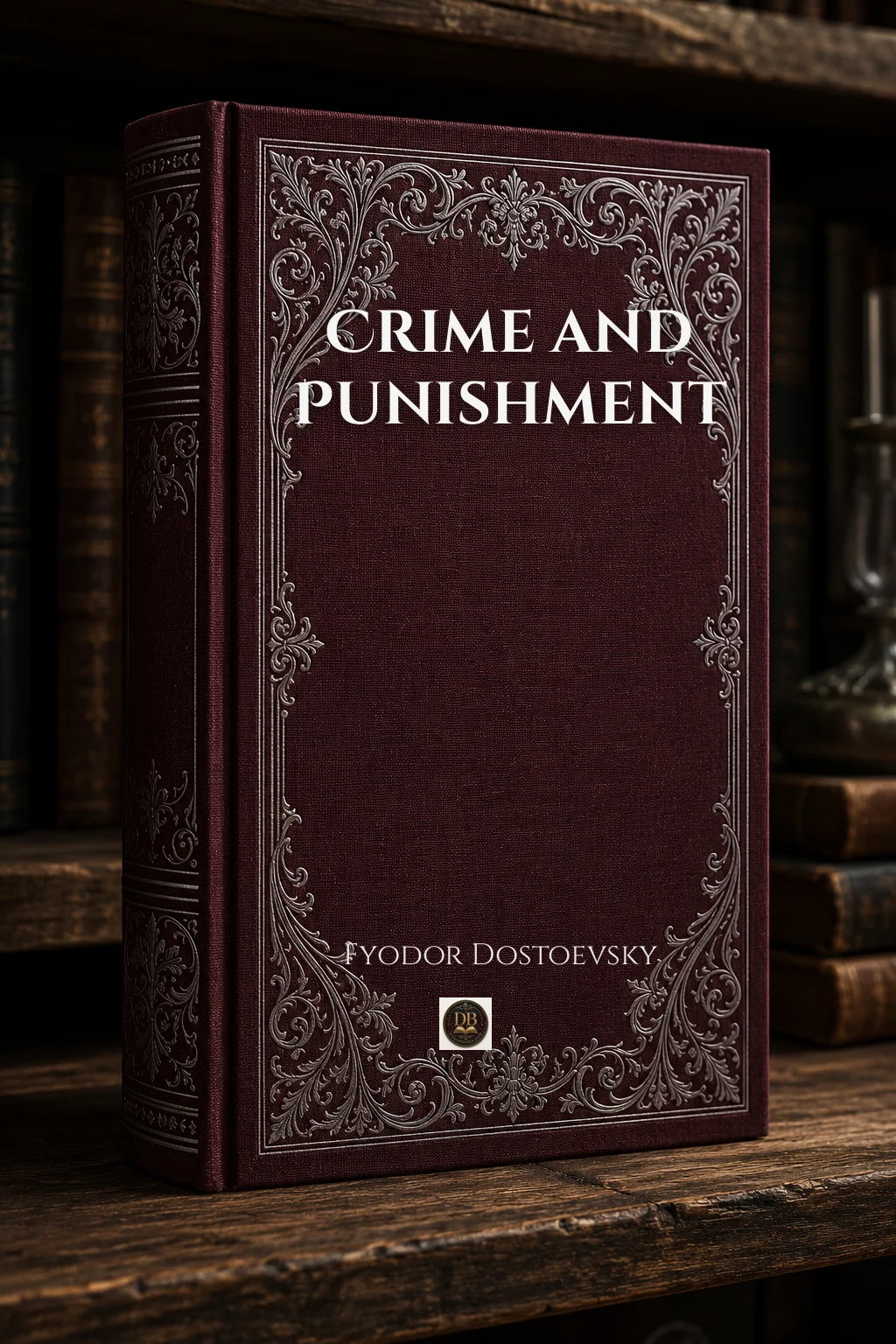
🪓 Experience Dostoevsky’s Masterpiece in Full Splendor
Read the story of Raskolnikov’s divided soul, Sonya’s faith, and the path to redemption in an authoritative, distraction-free edition:
- ✅ Complete, unabridged 41-chapter text across all six parts and the Siberian Epilogue
- 🏛️ St. Petersburg geography & 1860s Russian context decoded — understand the intellectual currents
- 🗂️ Passage-specific annotation cards detailing Russian naming customs and philosophical debates
- 🔒 DRM-free EPUB format — readable on any Kindle, Kobo, iPad, or mobile device
- 📥 Instant digital download delivered directly after checkout