Benjamin Franklin’s Autobiography is one of the most widely published, adapted, and anthologized works in American literary history. Yet, behind its ubiquitous presence in high school curricula, university syllabi, and bookstores lies a surprisingly complex, tangled textual history. Because Franklin died in 1790 before publishing his manuscript, readers across two centuries have been served radically different versions of his life story—ranging from heavily censored French translations to bowdlerized Victorian edits and modern authoritative scholarly reconstructions.
Whether you are an AP United States History student seeking an affordable study copy, a lover of Enlightenment history wanting exhaustive scholarly footnotes, or a digital reader seeking a beautifully formatted, DRM-free ebook, choosing the right edition is essential.
This comprehensive buyer’s guide breaks down the textual history of Franklin’s manuscript, compares the leading print editions (Dover Thrift, Penguin Classics, Oxford World’s Classics, Library of America), and explains why the DodaBooks Enhanced Edition offers the optimal reading experience for modern digital readers.
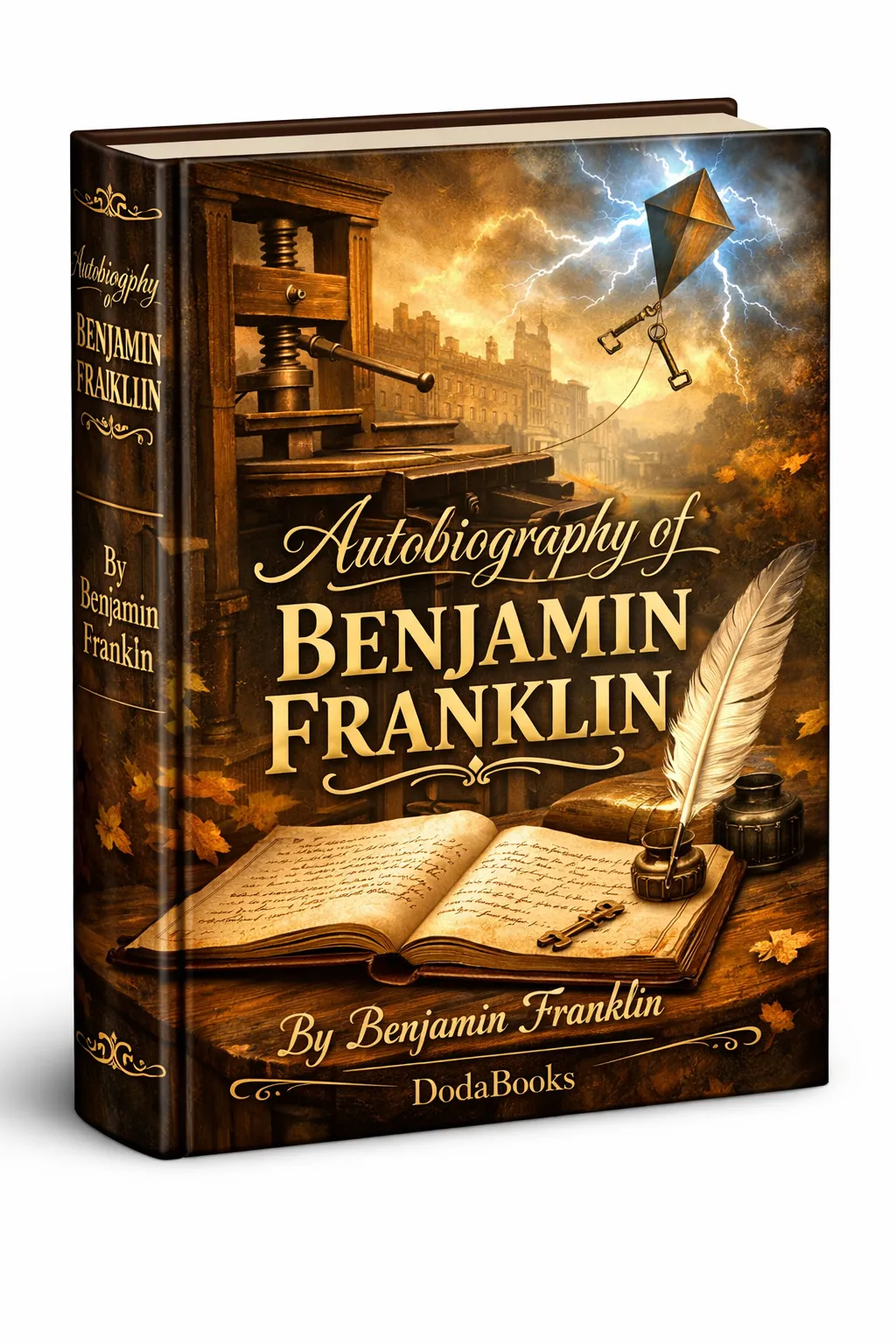
Where to Buy Franklin's Autobiography
A definitive comparative guide to the best print and digital editions — analyzing textual authenticity from the Bigelow manuscript to Lemay-Zall, comparing Dover, Penguin, Oxford, and DodaBooks.
📚 Quick Edition Comparison Matrix
| Edition | Format | Textual Base | Annotations & Extras | Best For | Price Range |
|---|---|---|---|---|---|
| Dover Thrift | Paperback | William Temple Franklin (1818) | Minimal (brief introductory note only) | Budget readers, bulk classroom purchases | $4.00 – $6.00 |
| Penguin Classics | Paperback / Ebook | Yale Edition (Labaree et al.) | Comprehensive introduction, explanatory notes, chronology | General college students and literature enthusiasts | $11.00 – $15.00 |
| Oxford World’s Classics | Paperback / Ebook | Critical composite based on original MS | Excellent scholarly apparatus by Peter Stallybrass | Readers seeking historical and bibliographical context | $12.00 – $16.00 |
| Library of America | Hardcover / Cloth | Lemay & Zall authoritative transcript | Extensive chronology, variant notes, paired with Franklin’s major writings | Collectors, historians, and serious Americanists | $35.00 – $45.00 |
| DodaBooks Enhanced | Universal DRM-free EPUB | Complete 4-part unabridged manuscript | Enhanced typography, inline historical context, full TOC | E-reader users, tablets, Kindle, and mobile reading | Affordable direct download |
The Textual Maze: Why Your Edition’s Source Matters
Unlike many literary classics that were supervised through the press by their authors, Franklin’s Autobiography endured an astonishingly convoluted journey to print:
               THE COMPLEX TEXTUAL TRANSMISSION (1771–1981)
                                     │
           Benjamin Franklin writes Part 1 (1771), Part 2 (1784),
           Part 3 (1788–89), and Part 4 (1789–90).
                                     │
         ┌───────────────────────────┴───────────────────────────┐
         ▼                                                       ▼
1791: French Pirate Edition                             1818: William Temple Franklin
First publication in Paris                              Grandson's official edition;
(translated from a copy of Part 1 only).                Polished Franklin's earthy prose;
Re-translated back into English in 1793.                omitted Part 4 entirely.
         │                                                       │
         └───────────────────────────┬───────────────────────────┘
                                     │
                                     ▼
                      1868: John Bigelow Rediscovery
                      Locates Franklin's original holographic manuscript in France;
                      restores Franklin's original words and publishes Part 4.
                                     │
                                     ▼
               1959–1981: Modern Scholarly Researches
               Yale Edition (Labaree, 1964) & Lemay-Zall Genetic Text (1981)
               Collate Franklin's handwritten revisions, deletions, and marginalia.
1. The 1791 French Mystery and the 1793 Back-Translation
Franklin died in April 1790. In 1791, a French publisher named Jacques Buisson released Mémoires de la vie privée de Benjamin Franklin in Paris. Buisson had obtained an unauthorized copy of Part 1 that Franklin had sent to his French friends Louis-Guillaume Le Veillard and the Duke de la Rochefoucauld. In 1793, two separate London publishers translated this French edition back into English! Many cheap public-domain reprints circulating online today still reproduce this awkward, twice-translated hybrid.
2. The Grandson’s Bowdlerization (1818)
In 1818, Franklin’s grandson and literary executor, William Temple Franklin, published the first “official” English edition. However, Temple Franklin traded the original handwritten manuscript to Le Veillard’s family for a clean clerk’s copy. Worse, Temple Franklin systematically “refined” his grandfather’s vivid 18th-century vernacular—softening blunt statements, cleaning up colloquial humor, and omitting Part 4 completely.
3. John Bigelow’s 1868 Breakthrough
In 1867, American diplomat John Bigelow discovered Franklin’s original holographic manuscript in France. When Bigelow collated it against the 1818 edition, he discovered over 1,200 discrepancies where Temple Franklin had smoothed over Franklin’s natural voice. Bigelow published the first complete four-part text in 1868, restoring Franklin’s authentic words to the American public.
Detailed Reviews of the Top 5 Editions
1. Dover Thrift Editions: The Bare-Bones Budget Pick
Pros:
+ Extremely cheap ($4 to $6)
+ Lightweight and portable for backpacks
+ Clean, legible typeface

Cons:
- Often relies on earlier public-domain texts (William Temple Franklin variants)
- Zero explanatory footnotes or historical context
- Narrow margins and brittle paperback binding
The Dover Thrift edition is a staple of secondary school classrooms for a clear reason: affordability. If you simply need a cheap physical copy to highlight, annotate with a pencil, or keep in a car glove compartment, Dover delivers. However, it offers virtually zero guidance regarding 18th-century political controversies (such as the proprietary dispute with the Penn family), leaving modern readers puzzled by the second half of the book.
2. Penguin Classics: The Best Standard College Edition
Pros:
+ Edited by respected colonial historians (Leonard W. Labaree et al.)
+ Includes comprehensive introduction exploring Franklin's self-fashioning
+ Detailed historical, geographical, and biographical footnotes
+ Includes Franklin's famous "Way to Wealth" essay

Cons:
- Mass-market paperback paper can be relatively thin
- Footnotes placed as endnotes in some older pressings
Penguin Classics offers the most balanced single-volume edition for serious undergraduate students and general readers. Drawing on the definitive Yale University Franklin Papers project, this edition provides clear annotations identifying historical figures (such as James Ralph, Governor Keith, and George Whitefield) and explaining archaic colonial monetary units (such as Pennsylvania pounds vs. British sterling).
3. Oxford World’s Classics: The Best Critical Apparatus
Pros:
+ Superb introduction and notes by Peter Stallybrass
+ Extensive chronology charting Franklin's life alongside transatlantic events
+ Rich bibliography for further academic research
+ Excellent layout and comfortable typographic leading

Cons:
- Slightly higher retail price than Dover or standard paperbacks
Oxford World’s Classics provides an outstanding critical reading experience. The introduction by Peter Stallybrass pays special attention to the material history of printing, Franklin’s trade techniques, and how the physical layout of colonial newspapers shaped Franklin’s prose style. For readers who want to understand Franklin not just as a Founding Father, but as an artisanal craftsman and media entrepreneur, Oxford is unmatched.
4. Library of America (LOA): The Collector’s Definitive Choice
Pros:
+ Based on the authoritative genetic text established by J.A. Leo Lemay and P.M. Zall
+ Smyth-sewn cloth binding with gold foil stamping and ribbon marker
+ Acid-free lightweight archival paper that lays flat in hand
+ Paired with hundreds of pages of Franklin's other essential writings, letters, and bagatelles

Cons:
- Premium price ($35 to $45)
- Larger, heavier volume not suited for pocket carry
For the bibliophile, historian, or home library curator, the Library of America volume (Benjamin Franklin: Autobiography, Poor Richard, & Later Writings) is the gold standard. Edited by leading Franklin scholars J.A. Leo Lemay and P.M. Zall, it presents the absolute closest transcription of Franklin’s manuscript, complete with variant readings and cancelations, alongside the full run of Silence Dogood, Poor Richard’s Almanac, and his Parisian satires.
5. DodaBooks Enhanced Digital Edition: The Premier E-Reading Experience
Pros:
+ Complete, unabridged 4-part text based on the authentic Bigelow/Yale manuscript tradition
+ Beautiful, professional typography (true curly quotes, em-dashes, elegant drop caps)
+ Inline explanatory notes that do not disrupt reading flow
+ 100% DRM-free: read across Kindle, Kobo, Apple Books, and Android e-readers
+ Instant direct digital download

Cons:
- Digital EPUB only (no physical hardcover)
Digital editions of public-domain classics are notoriously plagued by optical character recognition (OCR) errors, garbled tables, broken footnotes, and missing chapters (frequently omitting Part 4 entirely). The DodaBooks Enhanced Edition was specifically handcrafted to solve these issues. Every chapter, footnote, and table—including Franklin’s famous 13 Virtues scorecard and daily schedule—has been meticulously optimized for responsive e-reader displays.
Key Factors to Consider When Buying
                          BUYER'S DECISION FLOWCHART
                                       │
            What is your primary reading format and purpose?
                                       │
         ┌─────────────────────────────┼─────────────────────────────┐
         ▼                             ▼                             ▼
   Digital / E-Reader            Budget Print                Academic / Library
         │                             │                             │
DodaBooks Enhanced EPUB        Dover Thrift Edition          Penguin or Oxford (Paper)
- 100% DRM-free                - Low cost ($4–$6)            - Rigorous footnotes
- Perfect typography           - Great for quick reading     - Historical essays
- Responsive tables - Library of America (Cloth)- Verify Part Four Inclusion: Always verify that your prospective edition contains all four parts. Many lazy reprints only contain Parts 1 through 3, ending in 1748 and cutting off Franklin’s critical diplomatic missions and electrical studies.
- Examine the 13 Virtues Table: Franklin’s daily schedule and moral virtue grid require proper typographic formatting. In shoddy ebook conversions, this grid collapses into illegible ASCII jumbles. High-quality editions format this as a clean, responsive table.
- Footnote Placement: If you are reading for academic coursework, ensure the edition includes explanatory notes. Franklin lived in an 18th-century world of apprenticeship laws, paper currency crises, and British colonial administrative structures that can baffle modern readers without contextual glosses.
- DRM Freedom for Digital Readers: Purchasing ebooks from closed ecosystems locks your library to a single vendor’s device. DodaBooks provides open, standard EPUB files that you own permanently and can transfer to any phone, tablet, or e-reader.
Frequently Asked Questions (FAQ)
Why are there so many different chapter divisions in Franklin's Autobiography?
Franklin did not divide his manuscript into chapters; he wrote in continuous prose across four numbered Parts. In 1818, William Temple Franklin introduced chapter divisions, and subsequent publishers have grouped the text into either 15, 19, or 20 chapters for pedagogical convenience. Reliable editions maintain the overarching 4-part structural division.
Is Franklin's Autobiography free on Project Gutenberg?
Yes, Project Gutenberg provides free plain-text and basic HTML versions of Franklin’s Autobiography. However, these free scans typically use 19th-century public-domain texts that contain outdated typographical errors, lack modern historical introductions, and feature crude ASCII tables for the 13 Virtues scorecard.
Did Benjamin Franklin finish his Autobiography?
No. Franklin composed the manuscript in four separate bursts between 1771 and 1790. He died on April 17, 1790, while writing Part Four, leaving his story in the year 1757. Consequently, the book does not cover the American Revolution, the Declaration of Independence, his famous Parisian embassy, or the Constitutional Convention.
Related Guides & Reading Pathways
- Autobiography of Benjamin Franklin: A Complete Guide — Complete overview of Franklin’s life, cultural influence, and historical importance.
- Part-by-Part Summary & Chapter Breakdown — Detailed structural analysis of Parts 1, 2, 3, and 4.
- The 13 Virtues & Moral Philosophy Analysis — In-depth philosophical critique of Franklin’s moral accounting system and Enlightenment utilitarianism.
- Is Franklin’s Autobiography Hard to Read? Reading Difficulty Guide — Lexile score, historical vocabulary tips, pacing analysis, and classroom study strategies.
🖋️ Own the Definitive Digital Edition
Experience Benjamin Franklin’s immortal life story in the meticulously crafted DodaBooks digital edition. Designed from the ground up for lovers of history and typography:
- 📖 Complete 4-Part Unabridged Text — Restored from the authentic Bigelow manuscript including the rare fourth part
- ✒️ Flawless Digital Typography — Elegant tables for the 13 Virtues, proper em-dashes, and clean section breaks
- 📱 Universal DRM-Free EPUB — Read smoothly on Kindle, Apple Books, Kobo, Android, and PC
- 🔒 Instant Direct Download — No subscriptions, no ads, no restrictive vendor lock-in