Three Sevens: A Detective Story
Perley Poore Sheehan’s Electrifying 1924 Novel of Prison Survival, Cunning Escapes, and Hidden Truths
In the vibrant history of early American crime and mystery fiction, Three Sevens: A Detective Story (1924) by Perley Poore Sheehan stands out as a breathless, innovative hybrid of penitentiary realism, audacious jailbreak mechanics, and intricate detective deduction. Moving far beyond the formulaic drawing-room whodunits of the 1920s, Sheehan delivers a raw, fast-moving narrative steeped in the hardboiled street wisdom and psychological grit of early American pulp literature.
The novel centers on convict Craig—known in the state penitentiary simply as “Number 777”—a brilliant, fiercely independent man serving a ten-year sentence for a crime he insists he did not commit. Trapped inside the grim, crushing monotony of the stone penitentiary and targeted by brutal guards, Craig faces a decade of spiritual death until an ordinary stray cat slips into his solitary punishment cell (“the cooler”), sparking an audacious idea that transforms an impossible escape into a masterclass in puzzle-solving.
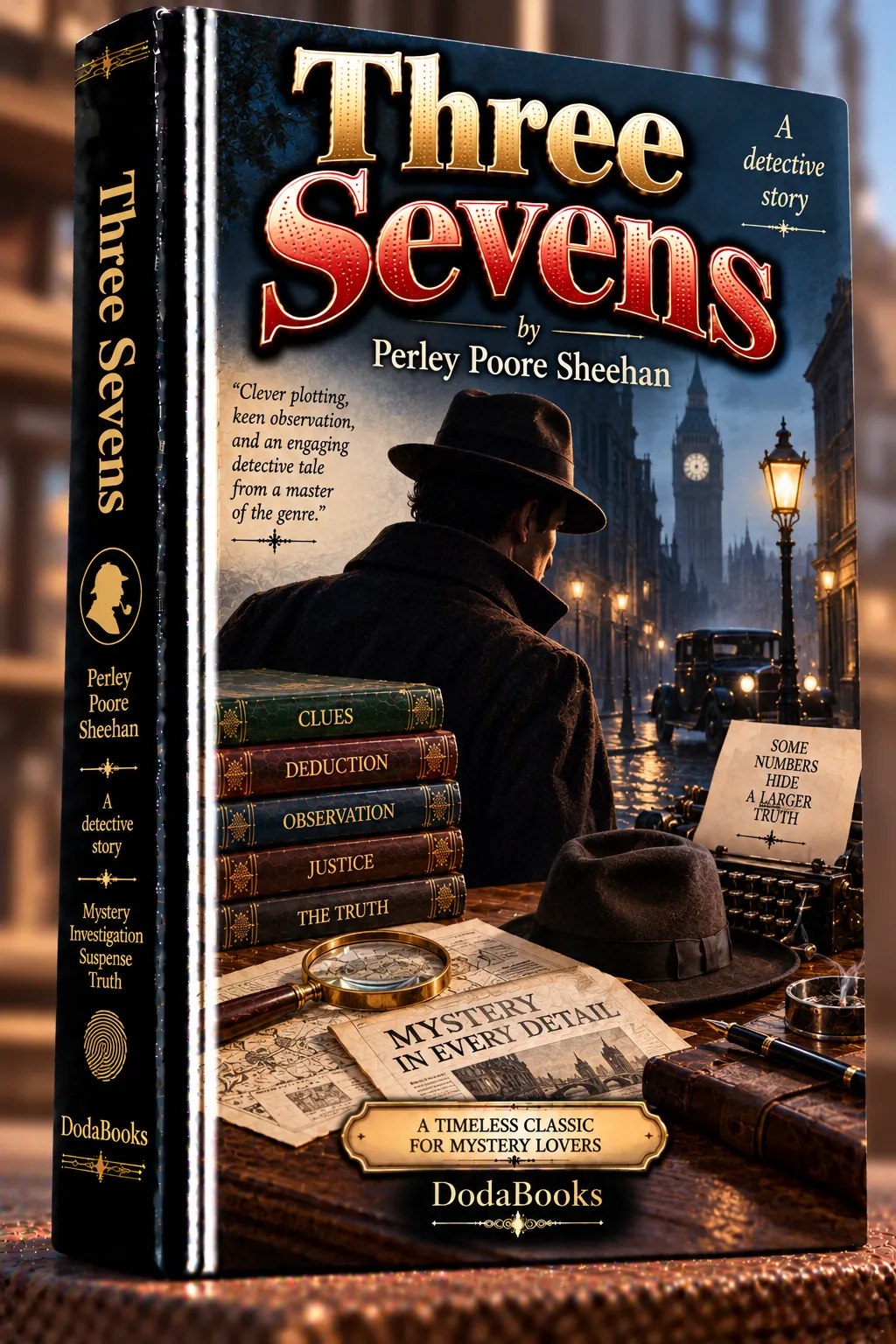
Crack the Prison Walls with Convict 777
Read Perley Poore Sheehan's 1924 mystery classic with historical annotations detailing early 20th-century prison history, pulp magazines, and silent film adaptations.
Get Three Sevens: A Detective StoryPerley Poore Sheehan: The Master of Pulp Momentum
Perley Poore Sheehan (1875–1943) was one of the founding architects of American popular storytelling. Starting as a globe-trotting foreign correspondent for the New York Herald in Paris and London, Sheehan transitioned into fiction during the legendary dawn of the pulp magazine era, publishing prolifically in Argosy, All-Story Weekly, and Detective Story Magazine.
Sheehan possessed an innate talent for cinematic pacing and visual storytelling. Recognizing his dramatic gift, early Hollywood recruited him as a premier scenarist and screenwriter; Sheehan went on to write the screenplays for some of the greatest silent cinema classics in history, including Lon Chaney’s legendary 1923 masterpiece The Hunchback of Notre Dame.
In Three Sevens, Sheehan’s cinematic instincts are on full display. Every chapter ends on an agonizing knife-edge cliffhanger; scenes are staged with intense visual clarity, sharp, punchy dialogue, and an unsparing depiction of the psychological toll of institutional confinement.
Craig's Trajectory of Redemption:
[Solitary Confinement / The Cooler] ➔ [The Cat & The Acoustic Flaw] ➔ [Daring Midnight Wall Escape] ➔ [Underground Detective Hunt] ➔ [Total Exoneration]
Plot Synopsis: The Cat, The Cooler, and the Break
The story opens inside the hellish depths of the state prison’s punishment ward. Craig (Convict 777) has been cast into the pitch-black “cooler” after refusing to bow to the sadism of a corrupt guard captain. Stripped of light, sound, and hope, facing ten more years of solitary degradation, Craig’s mind begins to crack.
Then, through an obscure air grating near the ceiling, a stray black cat slips into the cell. As Craig strokes the animal in the dark, he realizes something astounding: the cat has found a hidden, forgotten architectural passageway connecting the ancient ventilation shafts of the prison to the outer perimeter wall.
Observing the animal’s movements and utilizing a sharp spoon and a thread of wool, Craig begins charting the labyrinth of the prison’s interior infrastructure. What begins as a desperate bid for physical survival evolves into one of the most meticulously planned, thrilling prison breaks in vintage crime fiction:
- Navigating boiling steam pipe conduits in total darkness.
- Circumventing searchlights and perimeter patrol rifles.
- Crossing the torrential river bordering the prison grounds during a midnight thunderstorm.
Once outside the walls, however, the real puzzle begins. Craig cannot simply flee into obscurity; to clear his name and reclaim his life, he must operate as an underground fugitive detective, hunting down the corrupt syndicate that framed him while evading a nationwide police manhunt.
Pioneering Jailbreak Mechanics
A thrilling, step-by-step technical breakdown of prison escape engineering that predates *The Shawshank Redemption* and *Escape from Alcatraz.*
Hardboiled Pulp Atmosphere
Sharp, authentic 1920s street dialogue, corrupt wardens, underworld dens, and razor-sharp detective pacing from a master scenarist.
Double-Edged Mystery Plot
The story transitions seamlessly from a visceral prison survival tale into an intricate criminal conspiracy puzzle with fair-play clues.
Restored Vintage Text
The complete 1924 novel newly restored with historical annotations explaining period criminal slang, prison systems, and silent film history.
The Hollywood Connection: The 1921 Film Adaptation
The gripping power of Sheehan’s story was so immediate that even before its 1924 hardcover book publication, it was adapted into a celebrated 1921 silent film produced by the legendary Jesse D. Hampton, starring Antonio Moreno as Craig. The film was hailed by contemporary critics for its realistic prison sets, intense suspense, and acrobatic escape sequences.
Sheehan understood that the ultimate appeal of the prison break narrative is universal and timeless: it is an allegory for the human spirit refusing to be broken by unjust systems. Craig represents the resilient individual who uses reason, patience, and unwavering moral determination to dismantle the fortress of falsehood built around him.
For readers who relish classic mystery and crime fiction featuring courageous outsiders fighting corrupt institutions, explore our companions to Charles Dickens’ Oliver Twist Vol. 2 Guide and Tobias Smollett’s rogue classic The Adventures of Ferdinand Count Fathom Guide.
Experience the Golden Age of Hardboiled Mystery
Read the definitive digital edition of Three Sevens: A Detective Story on DodaBooks, featuring historical prison notes, author biographies, and flawless digital typography.
Purchase Three Sevens on DodaBooksWhy Read the DodaBooks Annotated Edition of Three Sevens?
Because Sheehan wrote for early 20th-century audiences steeped in vintage slang, period judicial procedures, and 1920s telegraphic communications, modern readers greatly benefit from curated historical context.
The DodaBooks Annotated Edition offers:
- Historical Notes on Early American Prisons: Explaining the contract labor system, solitary “cooler” isolation, and the brutal penal reforms of the 1920s.
- Glossary of Period Underworld Slang: Clarifying authentic Roaring Twenties crime argot like bulls, stool pigeons, yeggmen, the cooler, and frame-up.
- Biographical Retrospective of Perley Poore Sheehan: Chronicling his rise from newspaper reporter to premier Hollywood silent film screenwriter.
- Flawless Formatting for Modern Readers: Clean chapter headers, responsive line spacing, and crisp typography optimized for Kindle, iPad, Kobo, and Android tablets.
The Acoustic Architecture of the Prison Puzzle
A hallmark of Perley Poore Sheehan’s narrative craftsmanship in Three Sevens is his ingenious use of architectural acoustics. In standard prison escape fiction, protagonists often rely on brute physical violence, bribed turnkeys, or outside accomplices. Sheehan’s hero, Craig, relies almost entirely on acoustic observation and scientific deduction.
Confined in the pitch-black solitary punishment cell, Craig cannot see; therefore, his hearing becomes hyper-acute. He begins tapping on the limestone blocks and iron pipe conduits, listening for the frequency of resonance. He learns to identify the distinct acoustic reverberations caused by high-pressure steam valves, underground sewer drainage, and structural ventilation shafts. When the stray cat slips through the ceiling air grating, Craig uses the pitch of the animal’s meows and the scratching of its claws on galvanized tin to calculate the precise angle and distance of the hidden exhaust flues.
Craig's Acoustic Deduction Method:
[Limestone Resonance Tapping] ➔ [Frequency Mapping of Steam Conduits] ➔ [Acoustic Tracking of the Cat] ➔ [Blueprint of the Hidden Passage]
This reliance on sensory intelligence elevates Three Sevens from an ordinary pulp potboiler into a genuine scientific puzzle. Sheehan invites the reader to solve the spatial riddle alongside the protagonist, demonstrating that human reason and patient observation can conquer the most oppressive physical barriers.
The lasting popularity of Three Sevens across both pulp magazines and early silent cinema demonstrates the universal power of the prison redemption narrative. Sheehan masterfully balances the authentic technical realism of penal engineering with the emotional urgency of an innocent man determined to reclaim his identity and justice in the face of insurmountable odds.
Frequently Asked Questions
What is the significance of the title 'Three Sevens'?
The title refers to the prison identification number of the protagonist, Craig, who is designated as Convict Number 777 in the state penitentiary.
Who was Perley Poore Sheehan?
Perley Poore Sheehan was a prominent American pulp author, journalist, and Hollywood screenwriter best known for writing screenplays for silent film masterpieces including Lon Chaney's 1923 The Hunchback of Notre Dame.
Is Three Sevens purely an escape story or a detective mystery?
It is both: the first half of the novel is an intense, technical prison escape thriller, while the second half transforms into a hardboiled detective mystery where the escaped convict must solve the conspiracy that framed him.
Was Three Sevens made into a movie?
Yes. It was adapted into a successful 1921 silent film starring Antonio Moreno, recognized for its dramatic realism and acrobatic prison break sequences.
Where can I download the complete digital edition?
You can purchase and immediately download the DodaBooks annotated edition directly from DodaBooks in EPUB and PDF formats for all modern devices.