Three Sevens Characters & Mystery Archetypes Explained: Craig (Convict 777), The Warden & The Syndicate
When Perley Poore Sheehan published Three Sevens: A Detective Story in 1924, American crime and detective fiction was undergoing a profound evolutionary shift. The genteel Victorian drawing-room puzzle—dominated by aristocratic amateur sleuths and polite country-house murders—was giving way to the visceral energy, institutional cynicism, and urban danger of the early pulp era. Drawing upon his real-world experiences as a globe-trotting newspaper correspondent and a premier Hollywood silent screenwriter, Sheehan populated Three Sevens with characters that bridge nineteenth-century melodrama with the gritty, hardboiled realism that would later define the American noir tradition.
Rather than featuring a brilliant outside detective who solves a puzzle from the safety of an armchair, Three Sevens places its mystery directly onto the shoulders of an innocent man serving ten years of hard labor in a brutal state penitentiary. Every character in the novel—from the sadistic guard captain and the paranoid embezzler to the loyal heroine and a stray black cat—serves a precise narrative and symbolic function in the great conflict between institutional corruption and individual human dignity.
This comprehensive guide analyzes the primary characters, psychological motivations, and dramatic archetypes of Perley Poore Sheehan’s Three Sevens.
| Character Name | Role / Social Standing | Key Traits & Motivations | Central Thematic Archetype |
|---|---|---|---|
| Craig (Convict 777) | Incarcerated Protagonist / Former Assistant Bank Teller | Hyper-observant, morally resilient, skilled in acoustic deduction; driven by the restoration of personal honor. | The Innocent Outlaw / The Thinker as Fugitive |
| Captain Vance | Disciplinary Guard Captain at State Penitentiary | Sadistic, venal, mercenary; secretly in the pay of the bank robbery syndicate to silence Craig. | The Corrupt Institutional Enforcer |
| Mary Leslie | Socialite / Daughter of Bank Director / Craig’s Ally | Unflinching moral courage, independent-minded, loyal; risks reputation to assist an escaped felon. | The Loyal Truth-Seeker / Moral Anchor |
| Stephen Halloway | Former Head Cashier / Syndicate Co-Conspirator | Neurotic, weak-willed, pretentious; terrified of exposure as his ill-gotten wealth crumbles. | The False Accuser / Nouveau-Riche Coward |
| Mr. King | Shadowy Urban Crime Mastermind | Calculating, ruthless, polished; orchestrates white-collar embezzlement through offshore accounts. | The Syndicate Puppeteer |
| District Attorney Matthewson | Municipal Chief Prosecutor | Stern, legally rigid, but fundamentally fair when confronted with undeniable physical evidence. | The Blind System of Law |
| Puck (The Cat) | Stray Black Feline in the Solitary Punishment Ward | Intuitive, agile, fearless; unknowingly provides the acoustic and physical blueprint for Craig’s escape. | The Catalyst of Nature / The Spirit of Liberty |
🎭 In-Depth Character Profiles
1. Craig (Convict Number 777): The Innocent Outlaw & Sensory Sleuth
Craig is the emotional and intellectual heart of Three Sevens. When the novel opens, he has been stripped of his name, his clothes, and his civil rights, reduced to a mere three-digit prison stencil: “777.” Wrongfully convicted of engineering a massive vault burglary at the First National Bank, Craig has endured years of hard labor in the jute mill and stone quarry.
THE PSYCHOLOGICAL ARC OF CRAIG:
┌─────────────────────────────────────────────────────────────────┐
│ 1. THE DEGRADED PRISONER                                        │
│    • Cast into total darkness in "The Cooler"                   │
│    • Refuses to sign false confession despite brutal punishment │
├─────────────────────────────────────────────────────────────────┤
│ 2. THE SENSORY INNOVATOR                                        │
│    • Converts sensory deprivation into hyper-acoustic mapping   │
│    • Observes the stray cat to locate hidden attic air flues    │
├─────────────────────────────────────────────────────────────────┤
│ 3. THE AUDACIOUS ESCAPEE                                        │
│    • Navigates boiling steam pipes and scales perimeter walls   │
│    • Dives 30 feet into swollen midnight river torrents         │
├─────────────────────────────────────────────────────────────────┤
│ 4. THE UNDERGROUND DETECTIVE                                    │
│    • Adopts alias "Jim Clark" in the industrial metropolis       │
│    • Eavesdrops, cracks tumbler safes, and unmasks syndicate    │
└─────────────────────────────────────────────────────────────────┘
What distinguishes Craig from typical action heroes of 1920s pulp literature is his acute intellect and reliance on sensory science. Confined in the pitch-black solitary punishment cell, Craig does not rely on brute physical violence or frantic panic. Instead, he treats his confinement as a geometric and acoustic puzzle. By tapping the mortar seams with an iron buckle and tracking the resonance of heating pipes, he transforms total blindness into a mental radar system.
Craig represents the quintessential American archetype of the “Innocent Outlaw”—a man betrayed by the legal system who must break the formal law in order to vindicate higher moral truth and justice.
2. Captain Vance: The Sadistic Enforcer
Captain Vance, the chief disciplinary officer of the state penitentiary, serves as Craig’s immediate physical antagonist. Vance personifies the deep rot of the early twentieth-century American penal system, where underpaid, autonomous wardens and guards wielded near-total authoritarian power over inmates without judicial oversight.
Key Traits & Dramatic Role:
- Mercenary Cruelty: Vance does not merely enjoy tormenting prisoners; his sadism is monetized. He has accepted a substantial bribe from the urban criminal syndicate to break Craig’s spirit in the “cooler” or provoke him into a physical fight that would justify shooting him “in self-defense.”
- Institutional Shielding: Vance operates behind the legal immunity granted by his uniform. When he visits Craig’s dark cell with a prepared written confession, he acts as an extortionist masquerading as an officer of the peace.
- Physical Climax: When Craig escapes, Vance’s panic exposes his true cowardice. Hired by the syndicate as a hitman to assassinate Craig before the fugitive can speak to the authorities, Vance is ultimately disarmed, outmaneuvered, and dragged directly into the District Attorney’s office, receiving the public disgrace he richly deserves.
3. Mary Leslie: The Fearless Moral Anchor
In many 1920s crime novels, female characters were relegated to decorative damsels in distress waiting to be rescued. Sheehan, however, crafts in Mary Leslie a sharp, courageous, and proactive heroine who serves as Craig’s indispensable outside confederate.
Key Traits & Dramatic Role:
- Moral Independence: The daughter of one of the bank’s founding directors, Mary risks her social standing, family reputation, and personal freedom by openly rejecting the court’s guilty verdict. While high society and the press vilify Craig as a degenerate thief, Mary steadfastly proclaims his integrity.
- Investigative Partner: When Craig establishes his clandestine headquarters in the city after his escape, Mary does not faint or beg him to flee the country. Instead, she provides crucial intelligence regarding Stephen Halloway’s sudden wealth, suspicious financial movements, and private waterfront rendezvous.
- Audacity in the Climax: Mary accompanies Craig into the District Attorney’s residence at midnight, lending her prominent family credibility to the physical evidence Craig has seized from the syndicate’s safe.
4. Stephen Halloway: The Weak-Willed False Accuser
Stephen Halloway, the former head cashier of the First National Bank, represents the moral antithesis of Craig. Whereas Craig possesses internal fortitude that survives solitary confinement, Halloway possesses external wealth and social prestige that mask a spineless, corrupt character.
THE CONTRAST: CRAIG VS. HALLOWAY
┌───────────────────────────────┬───────────────────────────────┐
│ CRAIG (CONVICT 777)           │ STEPHEN HALLOWAY              │
├───────────────────────────────┼───────────────────────────────┤
│ • Penniless and hunted        │ • Wealthy retired cashier     │
│ • Endures physical agony      │ • Pampered in luxury mansion  │
│ • Clear conscience & courage  │ • Paralyzed by neurosis/guilt │
│ • Fights for personal honor   │ • Slaved to the syndicate     │
│ • Master of acoustic reason   │ • Easily manipulated coward   │
└───────────────────────────────┴───────────────────────────────┘
Halloway was the true inside man of the robbery, providing duplicate vault keys and manipulating ledger entries to make Craig appear guilty. However, Halloway is not an evil mastermind; he is an insecure, vanity-driven functionary seduced by the promise of rapid wealth. Once Craig escapes, Halloway unravels into terrified hysteria, drinking heavily, arguing with his underworld handlers, and leaving a trail of behavioral blunders that leads Craig directly to the syndicate’s secret waterfront hideout.
5. Mr. King: The Ghostly Crime Mastermind
Operating entirely in the shadows of the urban financial district, “Mr. King” represents the new breed of white-collar syndicate boss that emerged during the Roaring Twenties.
Unlike the rough street thugs and yeggmen of early dime novels, King:
- Wears tailored three-piece wool suits and smokes expensive imported cigars.
- Operates through shell corporations, corrupt brokerage houses, and transatlantic banking channels.
- Never touches a weapon himself, preferring to contract dirty work to corrupt public officials like Captain Vance.
King’s fatal flaw is his arrogance. Believing that a penniless, ragged escapee from the penitentiary could never outwit his sophisticated network, King underestimates Craig’s tenacity. When Craig eavesdrops on King from the townhouse dumbwaiter and subsequently cracks his private safe, King’s entire financial conspiracy collapses like a house of cards.
6. District Attorney Matthewson & Warden Henderson: The Dual Faces of the State
Perley Poore Sheehan presents a sophisticated, balanced depiction of legal authority through District Attorney Matthewson and Warden Henderson.
- Warden Henderson: Represents the blind, bureaucratic prison administration. He is not necessarily evil like Vance, but he is rigidly dogmatic. He measures his success by prison discipline, wall security, and the output of the jute mills, utterly indifferent to questions of individual inmate innocence.
- District Attorney Matthewson: Represents the potential for judicial redemption. When Craig breaks into Matthewson’s private library holding a gun and the stolen ledgers, the prosecutor’s initial instinct is to treat him as a violent felon. However, as Craig calmly lays out the forensic timeline, the duplicate keys, and the forged ledger entries, Matthewson demonstrates true professional integrity. Recognizing the horrific error of his office, Matthewson immediately initiates executive pardon proceedings rather than protecting his own political career.
7. Puck the Cat: The Feline Catalyst of Freedom
One of the most charming and memorable elements of Three Sevens is the inclusion of Puck, the stray black cat who wanders into Craig’s solitary punishment cell.
PUCK'S THREEFOLD NARRATIVE FUNCTION:
[Emotional Salvation: Restoring Sanity] ➔ [Acoustic Tracer: Mapping Ductwork] ➔ [Symbolic Foil: The Spirit of Uncaged Nature]
Puck serves three vital literary functions:
- Psychological Lifeline: In the sensory deprivation of the cooler, Craig was slipping into auditory hallucinations and despair. Stroking the cat’s soft fur and hearing its rhythmic purr grounds Craig in sensory reality, restoring his emotional balance and determination.
- Acoustic Tracer: The cat unknowingly acts as a structural guide. By watching where the cat climbs and listening to the scratching of its claws on tin exhaust flues, Craig maps out the hidden ventilation corridors that lead into the abandoned prison attic.
- Symbolic Mirror: The cat represents untamed nature flourishing inside an artificial monument of punishment. The prison walls that hold hundreds of grown men cannot keep out a five-pound feline, reminding Craig that freedom is always possible if one finds the hidden paths.
🏛️ Archetypal Dynamics & Social Conflict
The character relationships in Three Sevens mirror the broader social anxieties of 1920s America:
THE NETWORK OF CONFLICT IN THREE SEVENS:
                   [MR. KING] (Syndicate Mastermind)
                       │
       ┌───────────────┴───────────────┐
       ▼                               ▼
[CAPTAIN VANCE]               [STEPHEN HALLOWAY]
(Prison Sadist / Muscle)      (Inside Man / False Accuser)
       │                               │
       │                               │
       └───────────────► ◄─────────────┘
                       │
                 (FRAMED & HUNTED)
                       │
                       ▼
               [CRAIG: CONVICT 777] ◄────── [PUCK THE CAT]
                       │                     (Inspiration & Guide)
       ┌───────────────┴───────────────┐
       ▼                               ▼
 [MARY LESLIE]             [D.A. MATTHEWSON]
 (Loyal Ally / Truth)      (Judicial Integrity / Exoneration)
Through this intricate web of alliances and antagonisms, Sheehan illustrates that true justice does not reside in cold stone fortresses, stamped uniforms, or judicial robes. Justice is an active, precarious pursuit that requires courage, intellectual clarity, and the moral bravery to challenge established power.
❓ Frequently Asked Questions
Why is Craig called 'Number 777' throughout the early chapters?
In the state penitentiary, the administration methodically strips inmates of their names and personal identities, replacing them with institutional numbers. Craig's designation as Convict 777 emphasizes the dehumanizing nature of the penal system, making his eventual reclaiming of his true name a major thematic triumph.
Is Captain Vance an official prison warden or a guard?
Captain Vance is the chief guard captain in charge of internal discipline and the punishment cells ('the cooler'). While Warden Henderson oversees general administrative policy, Vance wields direct physical control over the prisoners and abuses his authority for financial gain.
What role does Mary Leslie play in clearing Craig's name?
Mary Leslie is the daughter of a prominent bank director who refuses to believe the prosecution's case against Craig. Following his escape, she acts as his confidential outside investigator, tracking Stephen Halloway's financial transactions and helping arrange the critical meeting with the District Attorney.
Does the cat survive Craig's escape?
Yes. Puck the cat remains safe in the warm attic and utility spaces of the prison, having served his vital literary and practical purpose of showing Craig the acoustic path to freedom.
How does Three Sevens reflect 1920s detective pulp tropes?
The novel reflects the early hardboiled pulp era through its gritty penitentiary setting, corrupt law enforcers, urban syndicate racketeers, realistic acoustic safe-cracking, and a proactive protagonist who operates outside the conventional boundaries of police law to achieve genuine justice.
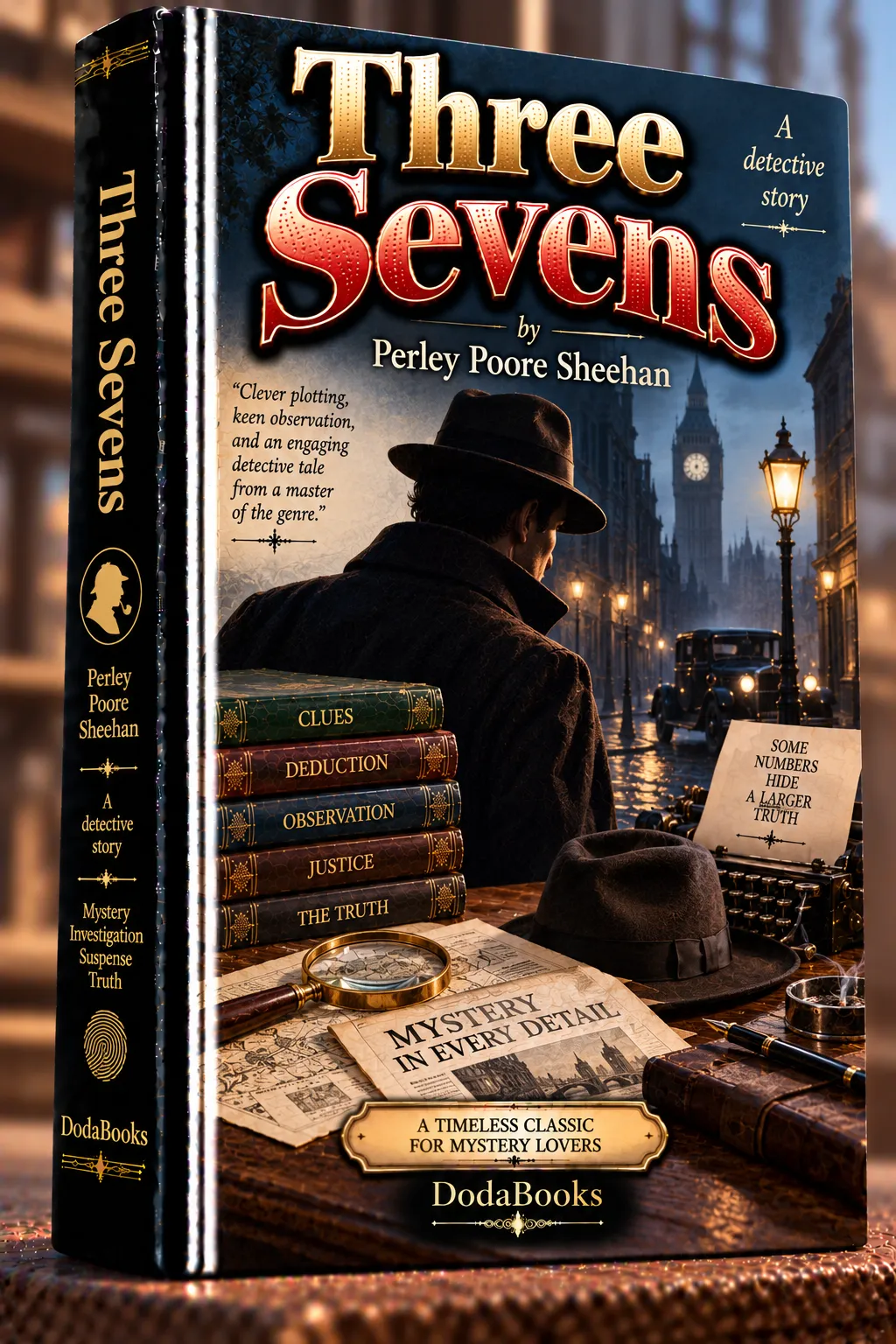
🔍 Explore the Unforgettable Characters of Three Sevens
Step inside the cells of the state penitentiary and the shadowy waterfront dens of the syndicate with the definitive digital edition:
- 🔓 100% DRM-Free — EPUB & PDF formats compatible with Kindle, Apple Books, Kobo, and Android
- 💡 Exhaustive Character Annotations — Explanations for 1920s prison hierarchies, pulp archetypes, and silent cinema
- 📱 Flawless Formatting — Optimized typography designed for comfortable reading across all your screens
- 💰 Affordable & Permanent — Only $2.99; yours to download, keep, and enjoy forever