The Zeppelin’s Passenger: Oppenheim’s Home Front Spy Masterpiece
Known as the 'Prince of Storytellers,' E. Phillips Oppenheim invented the modern international espionage thriller. In *The Zeppelin’s Passenger* (1918), he crafted an electric psychological cat-and-mouse game on the fog-shrouded coast of wartime Norfolk.
At the height of the First World War, as German Zeppelins brought aerial bombardment to the English countryside and paranoia regarding enemy infiltrators swept the British Isles, E. Phillips Oppenheim (1866–1946) stood at the summit of popular fiction. A prolific genius who produced over 150 novels, Oppenheim did more than entertain; he effectively codified the modern spy novel decades before Ian Fleming or John le Carré. Published in 1918 in the closing months of the Great War, The Zeppelin’s Passenger remains one of his most tightly plotted, morally nuanced wartime thrillers.
Rather than relying on mechanical explosions or simplistic jingoism, Oppenheim staged his narrative as an intimate domestic drama in an isolated coastal village. When an enemy Zeppelin quietly drops a polished German agent onto the Norfolk marshes carrying personal letters from captured British prisoners of war in German camps, Oppenheim poses a searing ethical dilemma: what price will a family pay for news of their captive son, and where does personal devotion end and treason begin? Readers exploring our distinguished collection of classic mystery and spy fiction will discover in this novel a masterwork of wartime suspense.
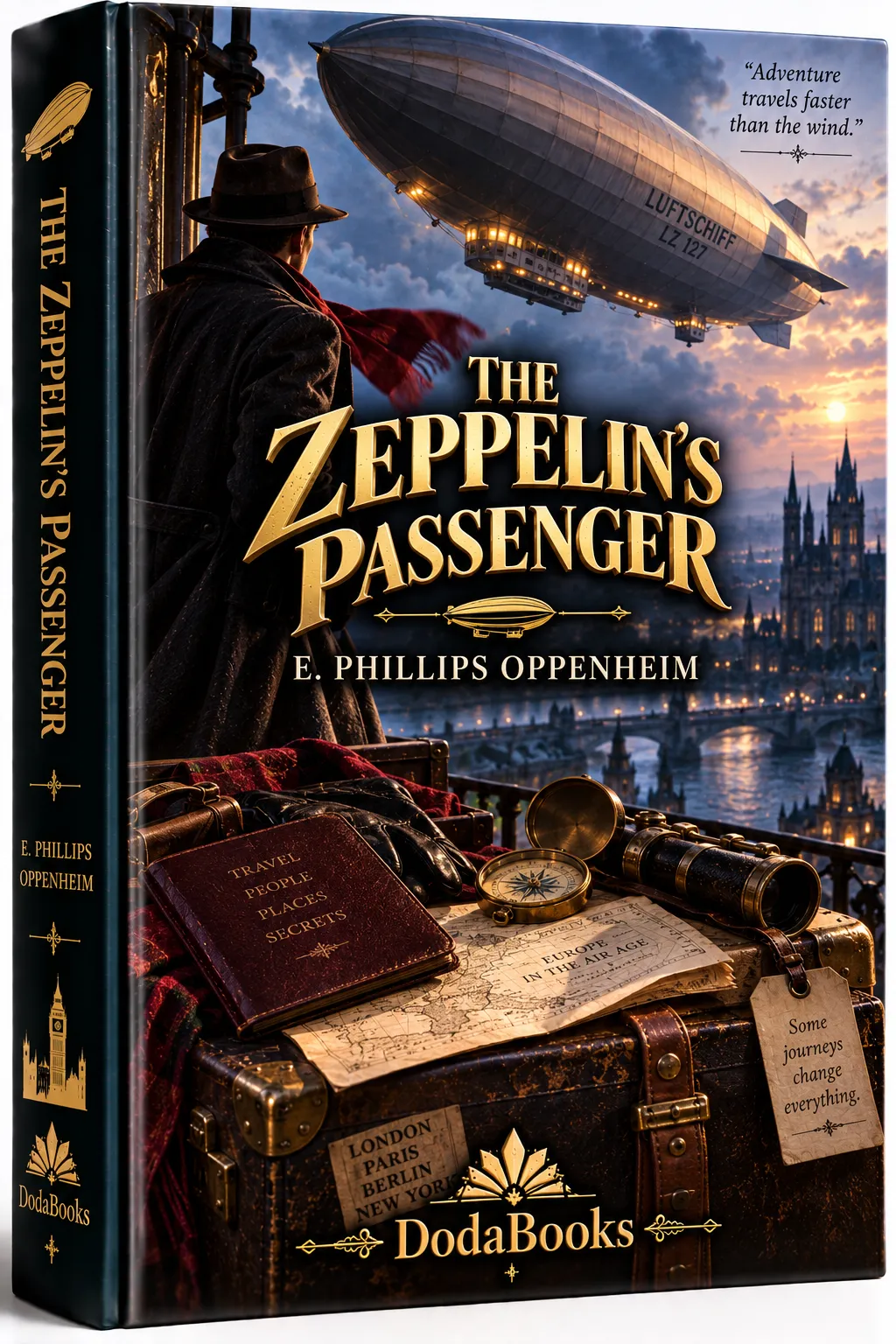
Read the Definitive Annotated Edition
Experience E. Phillips Oppenheim's classic WWI espionage thriller with rich historical commentary on Zeppelin raids, Home Front defense, and British naval intelligence.
Get the Annotated eBookPlot Synopsis: An Intruder on the Norfolk Marshes
The novel opens in the windswept, sleepy coastal hamlet of Dreymarsh on the North Sea coast of Norfolk. There stands the country home of Sir Henry Cranston, a seemingly languid, eccentric English country gentleman who has been rejected for military service on dubious physical grounds, and his beautiful, intensely patriotic wife, Helen Cranston. Helen privately disdains her husband’s apparent indifference to the war effort, comparing his apathy unfavorably with the bravery of her brother, Major Richard Someries, who is languishing in a brutal German prison camp at Ruhleben.
Their quiet life is shattered one stormy evening following a low-flying Zeppelin raid over the coast. A distinguished, charming stranger calling himself Mr. Bertram Hamel appears at their estate.
Hamel presents an extraordinary calling card: intimate personal letters from Helen’s brother Richard and other British officers held captive in Germany. Hamel explains that he was dropped by parachute from the Zeppelin on a secret intelligence mission for the German Empire.
                    THE ESPIONAGE TRIANGLE AT DREYMARSH

       HELEN CRANSTON (Patriotic Wife)              BERTRAM HAMEL (German Agent)
    ┌───────────────────────────────────┐        ┌───────────────────────────────────┐
    │ Desperate for brother's safety    │        │ Charming, highly educated spy     │
    │ Yearns for active war sacrifice   │ ◄────► │ Holds POW letters as blackmail    │
    │ Disdains husband's apparent sloth │        │ Seeks British naval secrets       │
    └─────────────────┬─────────────────┘        └─────────────────┬─────────────────┘
                      │                                            │
                      ▼                                            ▼
           SIR HENRY CRANSTON ────────► Hidden British Intelligence Operative
            (The "Languid" Squire)       A Deadly Game of Double-Cross & Counter-Spycraft
Hamel’s bargain is as seductive as it is treacherous: in exchange for delivering the letters and facilitating Richard’s potential parole or escape, he demands social introduction into Norfolk society and access to local observation posts. As Helen is torn between family loyalty and national duty, Hamel begins to fall deeply in love with her. However, neither the German spy nor Helen suspects the truth: that Sir Henry Cranston’s indolent country squire persona is a brilliant cover, and that he is secretly a high-ranking coordinator for British Naval Intelligence.
The Cast of Characters: Diplomats, Spies, and Patriots
Oppenheim was celebrated for creating polished, cosmopolitan characters who moved with equal ease through Mayfair ballrooms and espionage safe houses:
- Sir Henry Cranston: The unassuming hero. Pretending to be an unpatriotic slacker collecting pottery and shooting game, Cranston is in reality a razor-sharp counter-espionage mastermind who plays the long game against imperial German intelligence.
- Helen Cranston: A passionate, morally conflicted heroine. Helen represents the psychological strain borne by British families during WWI. Her emotional vulnerability makes her susceptible to Hamel’s manipulation, yet her core patriotism remains unyielding.
- Bertram Hamel (Count von Erhenstein): One of Oppenheim’s finest creations. Unlike the brutish “Huns” of wartime propaganda, Hamel is an aristocrat of high culture, personal courage, and refined honor who serves his Fatherland with devotion, while wrestling with his growing romantic love for his enemy’s wife.
- Lord Bransome: An influential British cabinet minister visiting the coast whose loose talk and political connections make him a prime target for Hamel’s intelligence gathering.
- Inspector Henslow: The local Scotland Yard officer whose blundering, conventional police methods provide a sharp contrast to Cranston’s sophisticated psychological spycraft.
Major Themes: Duty, Propaganda, and Secret Warfare
1. The Complexities of Wartime Morality
Published in 1918 before the armistice, The Zeppelin’s Passenger is surprisingly fair-minded in its depiction of the enemy. Oppenheim was a lifelong internationalist who spent decades on the French Riviera; he refused to reduce German officers to caricatures. By presenting Bertram Hamel as a brave, cultured gentleman motivated by genuine love for his country, Oppenheim elevated the story from a cheap propaganda yarn into a profound tragedy of civilized nations torn apart by industrialized slaughter.
2. The Psychology of Cover and Deception
The novel explores the personal cost of maintaining an undercover identity. Sir Henry Cranston endures the cold contempt of his wife, the whispers of his neighbors who hand him white feathers of cowardice, and social ostracism—all to maintain his vital intelligence channel. Oppenheim demonstrates that in modern intelligence work, the hardest sacrifice is not facing physical gunfire, but sacrificing one’s reputation for the sake of the mission.
                      THE PARADOX OF THE PATRIOTIC COVER

          The Public Perception                 The Secret Reality
     ┌───────────────────────────────┐   ┌───────────────────────────────┐
     │ Languid, unpatriotic slacker  │   │ High-level Naval Intelligence │
     │ Rebuked by patriotic wife     │   │ Directing North Sea defenses  │
     │ Ridiculed by county neighbors │   │ Tracking Zeppelin raid routes │
     └───────────────────────────────┘   └───────────────────────────────┘
                     ▲                                   ▲
                     └─────────────────┬─────────────────┘
                                       ▼
                       The Triumph of Counter-Espionage:
                       Cranston's Silent Victory Over Hamel
3. Technology and Modern Total War
The Zeppelin represents the terrifying dawn of modern aerial warfare. Oppenheim accurately captures the psychological dread of the German airships—huge, silent cigar-shaped leviathans drifting through cloud banks over unlit English villages to drop bombs and secret agents. Just as Thomas De Quincey explored the architecture of nightmares and Emma Goldman deconstructed the militarist war machine, Oppenheim documented how modern technology permanently erased the boundary between civilian home front and battlefield.
Comparative Analysis: Oppenheim in the Espionage Canon
To appreciate Oppenheim’s pioneering role in the development of spy fiction, compare The Zeppelin’s Passenger with other classics:
| Work & Author | Setting & Era | Subgenre | Central Conflict |
|---|---|---|---|
| The Zeppelin’s Passenger (E. Phillips Oppenheim) | Norfolk, England (1918) | WWI Spy Thriller | British Naval counter-intelligence vs. German spy |
| The Yellow Crayon (E. Phillips Oppenheim) | London & Europe (1903) | Secret Society Thriller | Mr. Sabin vs. global aristocratic conspiracy |
| The Red Seal (Natalie Sumner Lincoln) | Washington D.C. (1920) | Locked-Room Detective | Poisoned letter, diplomatic murder, forensic search |
| Confessions of an English Opium-Eater (Thomas De Quincey) | Regency London (1821) | Romantic Memoir | Lyrical addiction, sensory phantasmagoria |
Where Oppenheim’s earlier masterpiece The Yellow Crayon dealt with shadowy aristocratic conspiracies manipulating royal crowns before the war, The Zeppelin’s Passenger brought that conspiratorial energy directly into the high-stakes reality of the First World War. And alongside contemporary American political mysteries like Natalie Sumner Lincoln’s The Red Seal, Oppenheim pioneered the use of secret documents, intercepted messages, and forensic deception as the core mechanisms of modern suspense.
Experience the Ultimate WWI Espionage Thriller
Read E. Phillips Oppenheim's classic novel in this definitive annotated edition, featuring historical notes on the German Zeppelin corps, Ruhleben POW camp, and British counter-espionage.
Read The Annotated EditionWhy Oppenheim’s Thrillers Still Grip Readers
E. Phillips Oppenheim earned his title as the “Prince of Storytellers” through sheer narrative craftsmanship. His pacing never falters, his drawing-room dialogues crackle with suppressed menace, and his plots are constructed like Swiss timepieces.
The Zeppelin’s Passenger remains one of the finest fictional records of the English home front during the First World War. It captures the atmosphere of suspicion, blackouts, coastal dread, and intense patriotism that defined the era, while telling an emotionally resonant story of love, honor, and sacrifice that keeps readers guessing until the final revelation.
Frequently Asked Questions
Who was E. Phillips Oppenheim and why was he so influential?
E. Phillips Oppenheim (1866–1946) was an English novelist celebrated as a founding father of the modern spy and international intrigue thriller. Across a career spanning five decades and over 150 novels, he established the conventions of glamorous, globe-trotting secret agents, diplomatic conspiracies, and high-society intrigue that paved the way for Eric Ambler, Graham Greene, and Ian Fleming.
Did German Zeppelins really land spies in England during World War I?
While the premise in the novel is a fictional dramatization, German Zeppelins did conduct extensive night reconnaissance and bombing raids across the eastern coast of England, including Norfolk. The British Secret Service Bureau (the forerunner of MI5 and MI6) was in a constant, high-stakes battle to intercept German agents attempting to infiltrate coastal naval bases.
What was the Ruhleben internment camp mentioned in the book?
Ruhleben was a real civilian internment camp located near Berlin during World War I. Over 5,000 British civilians and merchant seamen who were caught in Germany when war broke out were held there between 1914 and 1918. Letters sent from Ruhleben were heavily censored by German military intelligence, making them ideal plot instruments for Oppenheim's espionage intrigue.
How does the novel portray the role of women in wartime?
Through the character of Helen Cranston, Oppenheim explores the emotional torment and active agency of women on the home front. Rather than being a passive bystander, Helen is confronted with complex political decisions, manages family communications, and actively engages in the moral debates surrounding loyalty, sacrifice, and duty.
What material is included in the DodaBooks annotated edition?
The DodaBooks annotated edition provides comprehensive historical notes on the German airship offensive over Britain, detailed explanations of WWI British Naval Intelligence operations, maps of the Norfolk coastline and wartime naval defenses, and an introductory essay analyzing Oppenheim's foundational contribution to espionage fiction. You can explore and download the definitive annotated edition directly from DodaBooks at https://dodabooks.com/ebook/the-zeppelins-passenger-by-e-phillips-oppenheim/.
Related Classic Espionage and Mystery Studies
Discover further masterworks of espionage, political mysteries, and classic literature: