The Viper of Milan
Marjorie Bowen’s Incandescent 1906 Novel of Machiavellian Cruelty, Visconti Vengeance, and Chivalric Honor in Fourteenth-Century Lombardy
In 1906, a sixteen-year-old London art student named Margaret Gabrielle Vere Campbell, writing under the masculine pseudonym Marjorie Bowen (1885–1952), stunned the international literary world with her debut novel: The Viper of Milan: A Romance of Lombardy. Rejected by eleven publishers who declared its unsparing darkness, psychological cruelty, and absence of conventional sentimentality unfit for the reading public, the novel was finally accepted by Alston Rivers. Upon release, it became an overnight international sensation, hailed as one of the most brilliant, electrifying historical novels written in the twentieth century.
Set against the blood-soaked canvas of fourteenth-century Italy, The Viper of Milan depicts the terrifying reign of Gian Galeazzo Visconti, Duke of Milan—whose heraldic emblem was a giant viper devouring a child (the Biscione). With operatic intensity, macabre splendor, and ferocious psychological insight, Bowen dramatizes the life-and-death struggle between Visconti’s cold, diabolical tyranny and the noble, vengeance-driven Duke of Verona, Mastino della Scala.
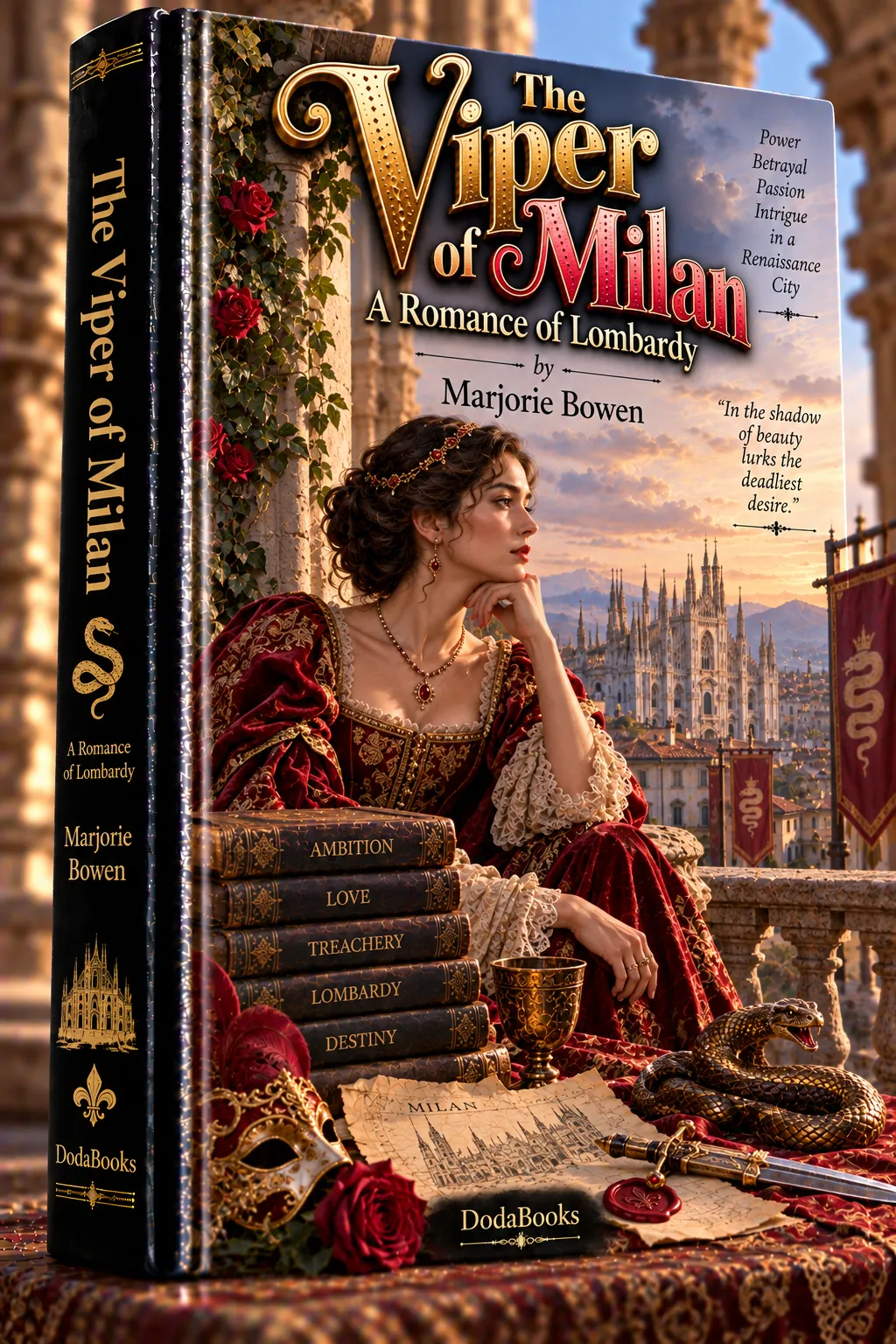
Step into the Court of the Milanese Tyrant
Read Marjorie Bowen's world-famous debut novel in an annotated edition featuring historical commentary on the Visconti dynasty, condottieri warfare, and its profound influence on Graham Greene.
Get The Viper of MilanThe Architect of Ruin: The Monster Gian Galeazzo
At the absolute center of the novel stands Gian Galeazzo Maria Visconti—one of the most compelling and terrifying villains in world literature. Unlike crude fictional brutes, Bowen’s Visconti is an intellectual predator of exquisite refinement. He is a patron of poets and painters, dressed in gold-embroidered velvet, possessing icy composure, feline grace, and a complete, chilling absence of moral conscience.
Visconti operates on pure Machiavellian calculation:
- The Betrayal of Verona: Having lured Mastino della Scala into a false alliance, Visconti sacks Verona, strips Mastino of his dukedom, and holds Mastino’s saintly wife, the Duchess Isotta, captive in the gloomy citadel of Milan.
- The Psychological Torture: Visconti does not merely defeat his enemies; he delights in shattering their minds. He systematically corrupts innocent men, turns loyal friends into traitors through blackmail, and mocks the very concept of divine justice with smiling cynicism.
- The Web of Lombardy: Conquering Pavia, Brescia, and Bergamo, Visconti aims to forge an iron crown over all northern Italy, believing that power is the only objective reality in the universe.
The Literary Catalyst: Why Graham Greene Became a Writer
The enduring historical stature of The Viper of Milan is forever tied to one of the most famous literary tributes of the twentieth century. In his celebrated autobiography A Sort of Life, the legendary British novelist Graham Greene credited reading The Viper of Milan at age fourteen as the single catalyst that made him become a writer:
“It was with The Viper of Milan that I found what I had been searching for: a vision of the world that matched the darkness of human experience. From that moment on, I knew that human nature was not black and white, that evil was an active, breathing presence, and that the only enduring beauty in art came from looking tragedy in the eye without blinking.”
Greene returned to Bowen’s themes throughout his career: the corruption of innocence, the psychological fascination of betrayal, and the belief that earthly virtue rarely triumphs over institutional power without suffering martyrdom. For Greene, as for generations of readers, Bowen had captured the tragic truth of the fallen human heart.
Groundbreaking Debut Novel
Written by a 16-year-old prodigy, this explosive 1906 masterpiece revolutionized historical fiction with its uncompromising gothic realism and psychological depth.
Unrivaled Villain Portrait
Gian Galeazzo Visconti stands as one of the supreme Machiavellian villains in literature—a terrifying synthesis of intellectual aestheticism and moral nihilism.
Lush Renaissance Texture
Opulent descriptions of fourteenth-century Milanese fortresses, velvet ducal robes, poison banquets, and condottieri cavalry battles.
Scholarly Annotations & Critical Essay
Footnotes detailing Visconti history, Italian city-state politics, and Graham Greene's historic tribute to Bowen's artistic genius.
The Atmosphere of Macabre Grandeur
Bowen’s prose style in The Viper of Milan is a tour-de-force of sensory romanticism. Trained as a painter at the Slade School of Fine Art, Bowen visualized every scene with the painterly composition of a canvas by Caravaggio or Titian:
“The torches flared against the damp stone vaults of the Milanese fortress, casting bloody shadows across the floor where Gian Galeazzo sat smiling over his chessboard. Outside, the autumn rain beat relentlessly against the battlements, while from the courtyard below echoed the hollow tramp of the Duke’s German halberdiers.”
She captures the claustrophobic dread of Italian palace life, where a cup of wine might hide poison, where loyal squires are assassinated in dark corridors, and where power is maintained through relentless surveillance. Yet against this dark tapestry, the desperate heroism of Mastino della Scala and the chivalric fidelity of his followers shine with tragic brilliance.
Experience the Electrifying Power of Bowen's Prose
Read the definitive edition of The Viper of Milan formatted for modern e-readers with historical notes, Italian dynastic charts, and Graham Greene's critical commentary.
Get The Viper of MilanHistorical Truth vs. Romantic Legend
While Marjorie Bowen took dramatic liberties with the historical timelines of fourteenth-century Lombardy—compressing events to heighten the tragic confrontation between Milan and Verona—her psychological portrait of the Visconti dynasty was rooted in historical fact.
The Visconti family was renowned across Europe for their cunning, ambition, and ruthlessness. Gian Galeazzo actually overthrew and poisoned his uncle Bernabò Visconti in 1385, commissioned the building of the Duomo of Milan and the Certosa di Pavia, and conquered Padua, Verona, and Pisa. Bowen captures the dual essence of the Italian Renaissance despot: an enlightened patron of the high arts who ruled through calculated terror.
Why The Viper of Milan Has Never Gone Out of Print
Bowen's narrative burns with the unstoppable creative fire of youth. It is a thrilling, breathless masterclass in historical suspense that grips the reader from its opening ambush in the Lombard marshes to its shocking final catastrophe.
Condottieri Warfare, Castle Fortifications, and Fourteenth-Century Italy
A defining strength of Bowen’s historical worldbuilding in The Viper of Milan is her unflinching depiction of late-medieval warfare on the plains of Lombardy. Rather than portraying chivalric warfare as a pageant of polished armor and heraldic romance, Bowen captures the mercenary brutality of the condottieri—freebooting soldiers of fortune who fought not for patriotism, but for gold, plunder, and the highest bidder:
- The Terror of the Free Companies: Bowen documents how bands of English, German, and Italian mercenaries swept across northern Italy, burning vineyards, holding walled towns for ransom, and shifting allegiances in the middle of battle at the nod of a paymaster.
- The Castle of Pavia and Visconti Engineering: The novel provides vivid architectural descriptions of Gian Galeazzo’s great fortified palace at Pavia, with its vast frescoed halls, marble courtyards, and secret passages designed to protect the paranoid duke against poison and assassination.
- The Moral Corruption of Realpolitik: Bowen explores the psychological cost of surviving in a world where treaty oaths are signed only to be broken, where hostaged daughters are starved in dungeon cells, and where every noble house must sleep with daggers beneath their pillows. This pervasive atmosphere of suspicion and moral decay anticipates the dark, fatalistic Jacobean tragedies of John Webster and Cyril Tourneur.
The Annotations in the DodaBooks Edition
The DodaBooks curated edition of The Viper of Milan includes:
- Historical Guide to Fourteenth-Century Lombardy: Background notes on the Della Scala (Scaliger) family of Verona, the Visconti of Milan, and the Gonzaga of Mantua.
- Condottieri Warfare Notes: Explanations of medieval mercenary companies, German landsknechts, and siege tactics.
- Literary Essay on Marjorie Bowen: Chronicling Bowen’s extraordinary career writing over 150 books under multiple pen names (including Joseph Shearing and George Preedy) and her lasting influence on 20th-century literature.
Download the Classic Renaissance Thriller Today
Step into fourteenth-century Lombardy and discover why Marjorie Bowen's masterwork captivated Graham Greene and millions of readers worldwide.
Download the Edition NowFrequently Asked Questions
Who was Marjorie Bowen?
Marjorie Bowen was the pen name of Margaret Gabrielle Vere Campbell (1885–1952), an immensely talented British author who wrote over 150 historical novels, gothic mysteries, and biographies. She wrote her world-famous debut The Viper of Milan when she was only sixteen years old.
Who was the real Gian Galeazzo Visconti?
Gian Galeazzo Visconti (1351–1402) was the first Duke of Milan and one of the most powerful rulers of Renaissance Italy. He founded the Duomo of Milan and the Certosa of Pavia, expanded Milanese rule over most of northern Italy, and was known for his cold diplomatic cunning and ruthlessness.
Why is this book famously linked to Graham Greene?
The legendary British novelist Graham Greene credited reading The Viper of Milan at age fourteen as the event that inspired him to become a writer, praising Bowen's tragic view of human nature and her depiction of the active presence of evil in the world.
What makes Bowen's writing style distinctive?
Trained as an artist at the Slade School of Art, Bowen wrote with extraordinary sensory richness, vivid visual composition, and dramatic, operatic intensity, creating a gothic renaissance atmosphere filled with suspense and psychological tension.
Where can I get the complete digital book?
The complete, annotated digital edition of The Viper of Milan is available for immediate download at DodaBooks at https://dodabooks.com/ebook/the-viper-of-milan-a-romance-of-lombardy-by-marjorie-bowen/.
Related Reading in Our Collection
Readers enthralled by Italian historical conspiracies, Venetian lagoon intrigue, and dramatic vendettas can also dive into Edmund Flagg’s Monte-Cristo’s Daughter Guide, continuing Alexandre Dumas’s legendary revenge saga across revolutionary Venice and Rome.