The Treasure of Pearls
Gustave Aimard’s Pulse-Pounding Romance of California Gold Seekers, Mexican Rancheros, Gulf Pearl Divers, and High-Desert Banditti
In the mid-nineteenth century, while American readers were enthralled by James Fenimore Cooper’s tales of the Eastern wilderness, European audiences turned by the millions to a French literary adventurer whose life was even more extraordinary than his fiction. Gustave Aimard (1818–1883)—celebrated across the continent as “the French Fenimore Cooper”—ran away to sea as a boy, lived for over a decade as a trapper and prospector across the American West, fought in Mexican revolutions, and was adopted into Indigenous nations before returning to Paris to write bestselling adventure epics.
Published in 1863 during the height of international fascination with the Pacific frontier, The Treasure of Pearls: A Romance of Adventures in California represents Aimard at the peak of his storytelling powers. Set in the turbulent aftermath of the 1848 California Gold Rush and the Mexican-American War, the novel weaves together the dangerous marine trade of Gulf pearl divers, the lawless mining camps of the Sierra Nevada, and the proud resistance of Mexican californios into an unforgettable tapestry of greed, honor, and redemption.
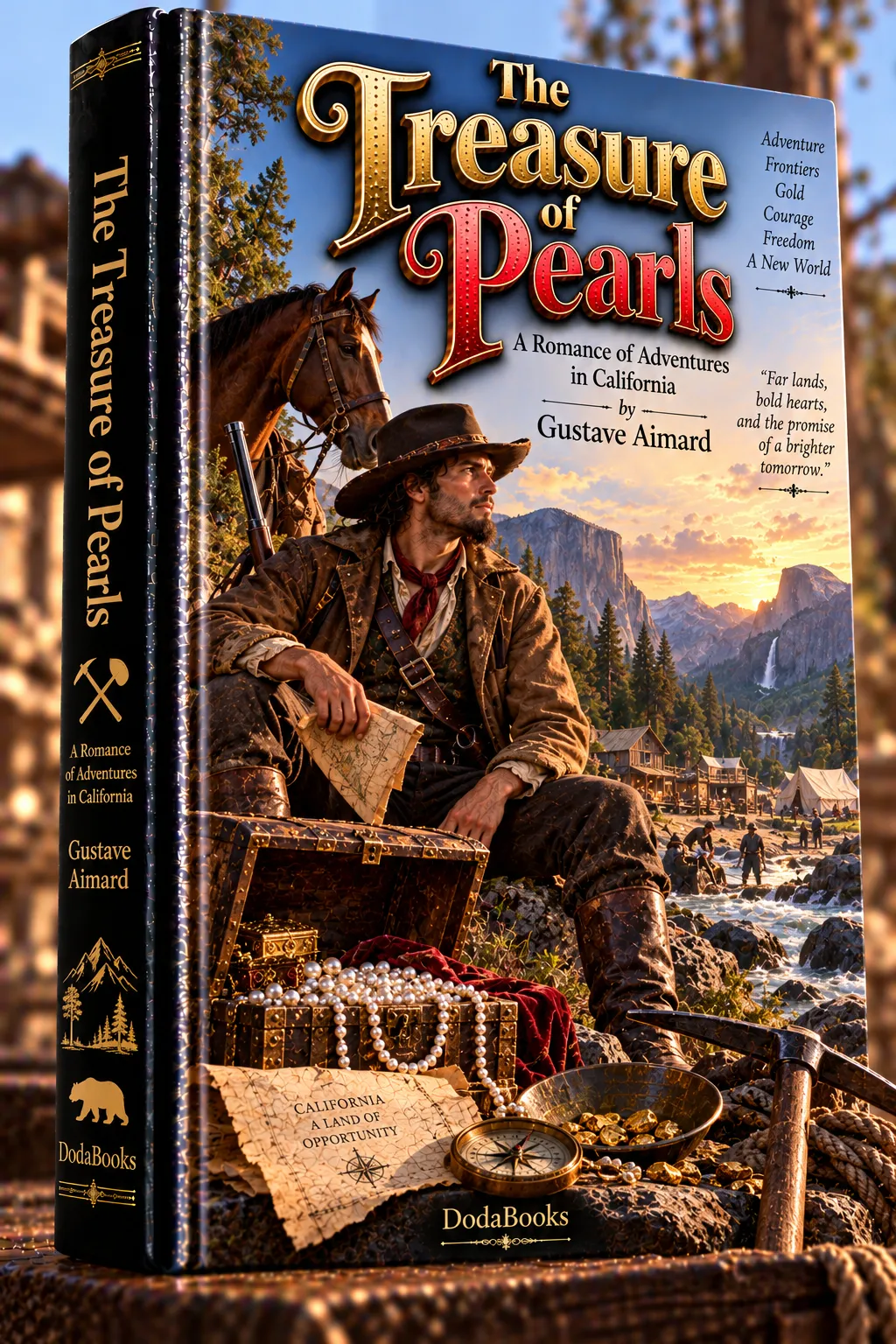
Explore Gold Rush California Through Aimard's Eyes
Read Gustave Aimard's thrilling epic in an annotated edition exploring the Baja pearl trade, 1850s San Francisco vigilante committees, and Mexican frontier history.
Get The Treasure of PearlsThe Double Quest: Ocean Depths and Mountain Gold
Unlike standard American Westerns that focused exclusively on wagon trains or cattle drives, Aimard constructs a brilliant dual narrative linking two very different frontier resource rushes:
- The Pearl Fisheries of the Gulf of California: The narrative opens along the treacherous, shark-infested waters of the Sea of Cortez (Baja California). Here, native and Mexican pearl divers plunge into perilous marine depths to harvest rare black and iridescent pearls for European jewelry cartels. Aimard vividly portrays the brutal exploitation of the divers by unscrupulous merchants and the legends of a fabulous, cursed pearl cache known as the “Treasure of the Virgin.”
- The Gold Fields of Alta California: The action shifts north to the explosive boomtowns and rugged placer mines of the Sierra foothills. As tens of thousands of international fortune seekers—“forty-niners” from France, America, Chile, and China—flood into the territory, gold fever dissolves social order into armed anarchy, vigilantism, and cutthroat land claims.
The Clash of Cultures: Californios, Filibusters, and Outlaws
A remarkable feature of Aimard’s fiction is his profound sympathy for the displaced Spanish-Mexican population of California following the Treaty of Guadalupe Hidalgo (1848). While Anglo-American dime novels frequently stereotyped Mexicans as treacherous banditti, Aimard paints the old Californio ranchero class with aristocratic dignity:
- The Dispossessed Rancheros: Families whose sprawling land grants and cattle herds were stolen by corrupt American land commissioners and aggressive squatters.
- The Gallant Outlaws: Outlaw chieftains modeled on legendary figures like Joaquín Murrieta, who turned to guerrilla warfare not out of wanton cruelty, but to avenge family honor and defend their ancestral lands.
- French Adventurers and Filibusters: Aimard introduces French gold seekers and filibusters—drawing directly upon his own participation in Count Gaston de Raousset-Boulbon’s expedition to Sonora in 1852—providing an authentic, international dimension to the California frontier rarely captured in Anglo literature.
Firsthand Frontier Authenticity
Written by a French adventurer who spent a decade living in the American West, prospecting in mining camps, and fighting in Mexican border wars.
Rare Baja & Gold Rush Setting
A gripping synthesis of Gulf of California pearl diving hazards and Sierra Nevada gold fever, highlighting the multi-ethnic realities of the 1850s.
Sympathetic Californio Portrait
A nuanced historical perspective exploring Mexican ranchero culture, dispossessed land grants, and the legendary guerrilla resistance of early California.
Comprehensive Historical Annotations
Footnotes explaining 1850s mining technology, Spanish maritime terminology, San Francisco vigilante committees, and Aimard's extraordinary biography.
Filibustering Expeditions and Sonora Geopolitics in the 1850s
To fully grasp the political tension that undercurrents The Treasure of Pearls, one must understand the explosive phenomenon of filibustering in post-Gold Rush California. In the 1850s, San Francisco was not merely an American port; it was a hotbed of international military adventurism where private armies assembled to launch unauthorized invasions into northern Mexico, Nicaragua, and Baja California.
Gustave Aimard was directly involved in this turbulent chapter of Pacific history:
- The Raousset-Boulbon Expedition of 1852: Aimard took part in the famous expedition led by the French nobleman Count Gaston de Raousset-Boulbon, who recruited hundreds of French miners in San Francisco to establish an independent mining colony and state in Sonora, Mexico. The expedition ended in armed conflict with Mexican authorities and the execution of the Count.
- The Tragedy of Border Mercenaries: Aimard incorporates this firsthand military experience into The Treasure of Pearls. He portrays the tragic folly of foreign mercenaries who believed they could easily conquer Mexican territory, contrasting their arrogant imperial ambitions with the tenacity and guerrilla skill of local defenders.
- The Transformation of San Francisco: Aimard describes San Francisco during its rawest transformation from a tranquil Mexican village (Yerba Buena) into a frantic, combustible metropolis of wooden shacks, gambling palaces, and sailing ships abandoned in the bay by crews rushing to the gold diggings. This acute sociological observation gives his novel an enduring historical value that transcends standard pulp fiction.
The Lyrical Power of Aimard’s Frontier Prose
Aimard possessed an extraordinary visual imagination, rendering the untamed American landscape with operatic grandeur:
“The sun plunged behind the jagged cordillera like a globe of molten bronze, casting fiery reflections across the silent expanse of the desert. In that twilight hour, when the coyotes began their eerie chorus and the giant cacti stood like phantom sentinels against the violet sky, the frontier spoke its ancient, unforgiving truth.”
From desperate horseback pursuits across alkali flats to knife duels in San Francisco gaming saloons and daring descents into subterranean sea caves, Aimard maintains an exhilarating narrative momentum that keeps readers breathless.
Step into the Wild California of 1850
Read the definitive edition of The Treasure of Pearls formatted for modern digital readers with comprehensive historical annotations and frontier glossaries.
Get The Treasure of PearlsGustave Aimard: The Trapper Who Conquered European Publishing
The biography of Gustave Aimard is one of the great romantic sagas of nineteenth-century letters. Born an illegitimate child in Paris, he was sent to sea as a cabin boy at age nine. Landing in South America, he traveled through Brazil, Chile, and Mexico, eventually spending over ten years across North America as a voyageur, hunter, and frontier guide.
When he returned to France in the 1850s, he channeled his vast wilderness experiences into dozens of novels, including The Trappers of Arkansas and The Prairie Flower, which were translated into more than twelve languages. Aimard understood the physical realities of survival—the scent of woodsmoke, the track of a mustang, the bite of desert thirst—giving his fiction an earthy credibility that set him apart from armchair romancers.
Why Modern Readers Love Aimard's Western Epics
Aimard provides an indispensable international perspective on the American West. He views the frontier not through narrow nationalist myths, but as a sweeping global crossroads where Spanish, French, Indigenous, and Anglo cultures collided in high-stakes drama.
From California Gold to Arizona Cattle Country
Readers captivated by frontier clashes, rugged desert landscapes, and high-stakes survival will also appreciate the classic twentieth-century open-range Westerns that followed Aimard’s pioneering work. Explore our Firebrand Trevison by Charles Alden Seltzer Guide to discover how independent cattlemen fought against predatory railroad syndicates in the rugged Arizona territory. For readers wanting to master the intricate sea language and nautical terminology of Pacific voyages and Gulf sailing, consult Admiral W. H. Smyth’s monumental reference work in The Sailor’s Word-Book Guide. For swashbuckling Mediterranean maritime chases, hidden identities, and high-seas vengeance, explore Edmund Flagg’s Monte-Cristo’s Daughter Guide.
The Annotations in the DodaBooks Edition
The DodaBooks curated edition provides an indispensable reading companion:
- Historical Guide to the California Gold Rush: Detailed notes on placer vs. hydraulic mining, mining camp codes, and San Francisco’s boomtown expansion.
- Baja California Marine Glossary: Explanations of traditional pearl diving equipment, oyster bed ecology, and Gulf navigation.
- Biographical Chronicle of Gustave Aimard: Tracing his incredible real-life adventures across South and North America.
Download the Classic Gold Rush Adventure Today
Experience Gustave Aimard's thrilling epic of California and the Sea of Cortez in an impeccably formatted digital edition.
Download the Edition NowFrequently Asked Questions
Who was Gustave Aimard?
Gustave Aimard (1818–1883) was a famous French novelist and adventurer known as 'the French Fenimore Cooper.' He spent over a decade living as a trapper, miner, and soldier in the American West and Latin America before returning to Paris to write bestselling frontier novels.
What is the setting of The Treasure of Pearls?
The novel is set in the 1850s in the wake of the California Gold Rush, shifting between the pearl-diving fisheries of the Gulf of California (Baja California) and the bustling mining camps and ranches of Alta California.
How does Aimard's portrayal of Mexican Californios differ from American Westerns?
Unlike many 19th-century American dime novels that portrayed Mexicans negatively, Aimard depicts Californio rancheros with great dignity and sympathy, highlighting the injustice of land theft and the tragic cultural displacement following the Mexican-American War.
What makes DodaBooks' edition of this novel special?
The DodaBooks annotated edition features complete historical notes on 1850s California history, explanations of 19th-century Spanish and frontier terminology, and an introductory essay on Aimard's incredible biography.
Where can I get the complete digital book?
The complete digital edition is available for immediate download at DodaBooks at https://dodabooks.com/ebook/the-treasure-of-pearls-a-romance-of-adventures-in-california-by-gustave-aimard/.