The Secret of the Night: Leroux’s Locked-Room Terror in St. Petersburg
Creator of *The Phantom of the Opera* and *The Mystery of the Yellow Room*, Gaston Leroux reached the apex of atmospheric suspense in *The Secret of the Night* (1914), sending his intrepid prodigy Joseph Rouletabille into the frozen heart of imperial Russia.
Renowned in world literature as the architect of the ultimate locked-room mystery (The Mystery of the Yellow Room) and the iconic gothic romance (The Phantom of the Opera), Gaston Leroux (1868–1927) was also a seasoned international investigative journalist. Before turning to fiction, Leroux had reported for Le Matin from the frontlines of the 1905 Russian Revolution, witnessing street barricades, Tsarist military repressions, and the rise of revolutionary nihilism. Published in Paris in 1914 on the eve of World War I, The Secret of the Night (Le Secret de la nuit) fuses Leroux’s forensic detective craft with his intimate firsthand knowledge of pre-revolutionary St. Petersburg.
The novel marks the triumphant return of Joseph Rouletabille, the brilliant young French reporter who solves crimes not through eccentric intuition, but through what he famously terms the “right end of reason” (le bon bout de la raison). Summoned secretly to Russia by the Tsar to protect a crippled military general targeted by a ruthless revolutionary terror cell, Rouletabille finds himself trapped in a snowbound dacha where attempted assassinations occur under impossible, locked-room conditions. Readers exploring our distinguished collection of classic European mystery fiction will discover in Leroux’s Russian novel an electrifying blend of forensic deduction and historical dread.
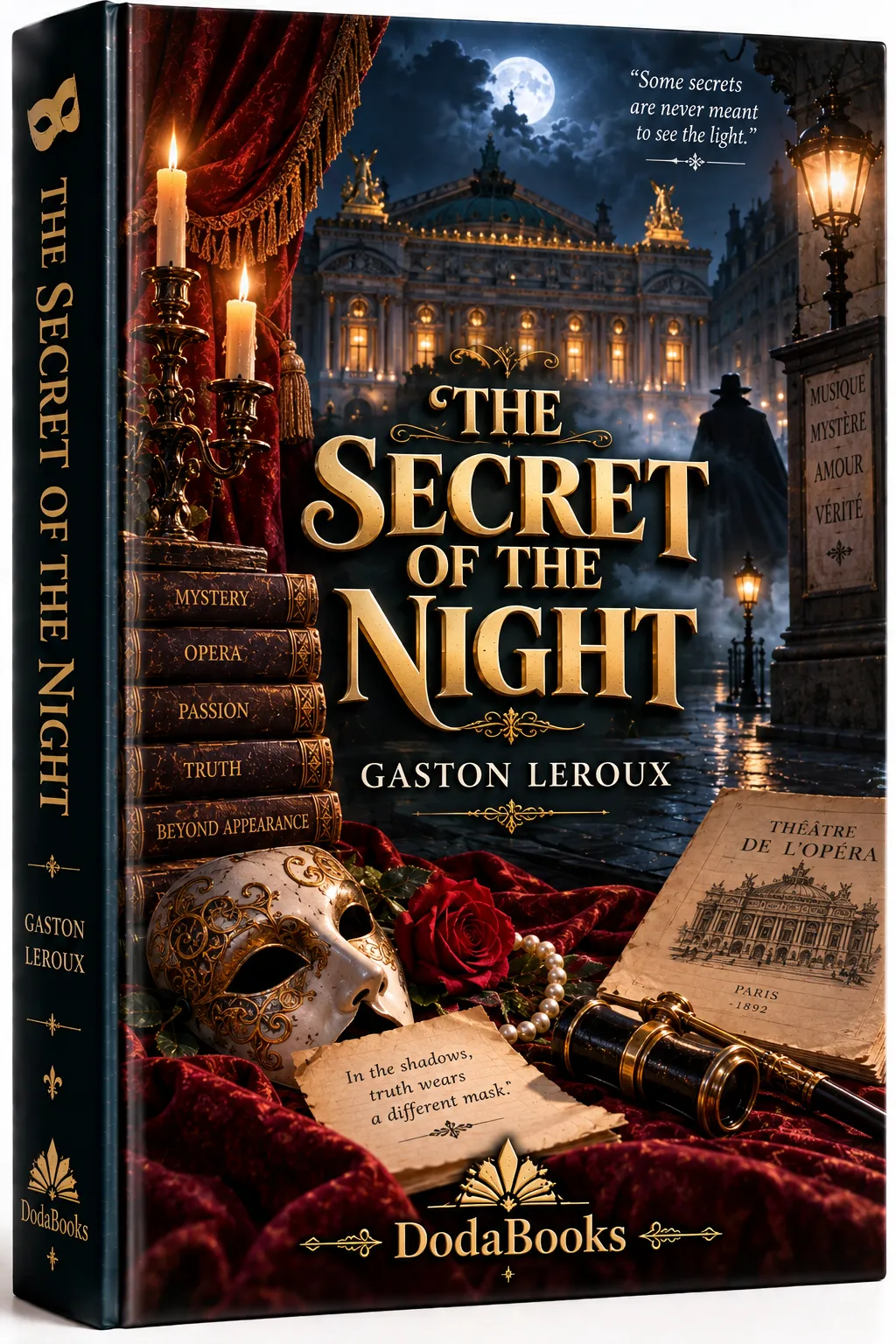
Read the Definitive Annotated Edition
Experience Gaston Leroux's classic Rouletabille mystery with rich historical annotations on pre-revolutionary Russia, St. Petersburg topography, and locked-room puzzle mechanics.
Get the Annotated eBookPlot Breakdown: The Siege of General Trebassof’s Dacha
The narrative unfolds during the tense, paranoid winter of pre-revolutionary St. Petersburg. General Trebassof, a heroic but ruthless Tsarist military commander who brutally suppressed the revolutionary strikes in Moscow, has survived numerous bomb attacks and now lives paralyzed in his legs, confined to a fortified dacha at the Isles outside the capital.
Despite an elite ring of Cossack guards, police informers, and trusted servants watching every entrance, a series of bizarre, lethal attempts on the General’s life continue unabated:
- The Poisoned Vodka: Lethal poison appears mysteriously in Trebassof’s personal decanter despite twenty-four-hour surveillance.
- The Bedroom Bomb: A bomb explodes beneath the General’s armchair inside a bolted, guarded bedchamber, severely wounding him while leaving no trace of how the explosive was introduced.
- The Midnight Phantoms: Every night, mysterious sounds and shadowy figures appear in the locked corridors, terrifying the household.
                    THE RUSSIAN CRUCIBLE OF ROULETABILLE

       THE FORTIFIED DACHA (The Isles)            THE NIHILIST CONSPIRACY
    ┌───────────────────────────────────┐      ┌───────────────────────────────────┐
    │ General Trebassof (Paralyzed hero)│      │ Revolutionary Central Committee   │
    │ Matrena Petrovna (Devoted wife)   │ ◄──► │ Infiltrators in Police & Military │
    │ Natacha (Daughter & prime suspect)│      │ Terror bombs, poison, and daggers │
    │ Cossack guards & police spies     │      │ Vow to execute the "Bloody General│
    └─────────────────┬─────────────────┘      └─────────────────┬─────────────────┘
                      │                                          │
                      ▼                                          ▼
            JOSEPH ROULETABILLE ────────► "The Right End of Reason"
            Young French Reporter-Sleuth   Unmasking the Traitor Inside the Hearth
Desperate to protect her husband, the General’s fiercely devoted wife, Matrena Petrovna, summons Joseph Rouletabille from Paris. Upon arriving in the frozen capital alongside his loyal chronicler, the lawyer Sainclair, Rouletabille quickly discovers that the greatest danger comes not from outside bomb-throwers, but from within the family circle itself. Suspicion centers squarely upon Natacha, the General’s beloved stepdaughter, whose secret nocturnal meetings and revolutionary sympathies point toward high treason.
The Cast of Characters: Tsarist Aristocrats and Nihilist Rebels
Gaston Leroux populated The Secret of the Night with complex, morally ambiguous figures who reflect the tragic fractures of Russian society on the brink of collapse:
- Joseph Rouletabille: The eighteen-year-old French journalistic prodigy. Armed with irrepressible energy, razor-sharp logical deductions, and profound human empathy, Rouletabille refuses to accept superficial circumstantial evidence, choosing to test every hypothesis against the physical laws of nature.
- General Trebassof: The towering symbol of Tsarist military autocracy. Paralyzed, proud, and completely fearless, Trebassof views assassination attempts with aristocratic contempt, loving his vodka, his country, and his daughter with equal ferocity.
- Matrena Petrovna: The General’s formidable wife. Driven half-mad by terror and maternal devotion, Matrena spends sleepless nights patrolling the dacha corridors with a loaded revolver, ready to slaughter anyone who threatens her husband.
- Natacha: The tragic, enigmatic stepdaughter. Torn between filial love for the General and ideological ties to Russian revolutionary idealists who helped her through personal grief, Natacha becomes the psychological crux of the mystery.
- Boris and Annouchka: Fiery young students involved in the revolutionary underground, whose passionate nihilism illustrates the generational rebellion of Russian youth.
- Koupriane: The Prefect of the St. Petersburg Secret Police (the Okhrana), whose brutal, clumsy methods of mass arrests and torture provide a sharp counterpoint to Rouletabille’s intellectual forensic detection.
Core Themes: Logic, Terror, and the Russian Soul
1. “The Right End of Reason” in a World of Madness
Rouletabille’s supreme investigative philosophy is to “take hold of the right end of reason.” In the superstitious, paranoid atmosphere of St. Petersburg—where courtiers whisper of sorcery, phantoms, and inevitable doom—Rouletabille remains a champion of French Cartesian rationalism. He proves that no matter how supernatural an occurrence appears, human crimes are committed by human hands following physical laws.
2. The Tragedy of Pre-Revolutionary Russia
Having lived through the 1905 massacres, Leroux captured the dark, suffocating reality of late imperial Russia with journalistic precision. The novel exposes the mutual cruelty of the Tsarist police state and the underground terror cells. Leroux demonstrates that political violence breeds an escalating cycle of paranoia that destroys family love and poisons innocent lives.
                      ROULETABILLE'S RATIONAL FORENSIC METHOD

          The Apparent Supernatural               The Rational Reality
     ┌───────────────────────────────┐   ┌───────────────────────────────┐
     │ Bombs exploding in locked room│   │ Ingenious mechanical clockwork│
     │ Nocturnal phantoms in hallway │   │ Family conspirator under duress│
     │ Unexplained contact poison    │   │ Chemical delay mechanisms    │
     │ "Mystical Russian doom"       │   │ Systemic political blackmail  │
     └───────────────────────────────┘   └───────────────────────────────┘
                     ▲                                   ▲
                     └─────────────────┬─────────────────┘
                                       ▼
                       The Triumph of Scientific Reason:
                       Rouletabille Rescues Natacha
3. The Locked-Room Mystery in Russian Snows
Leroux was the reigning master of the impossible crime. In The Secret of the Night, he transposes the locked-room puzzle to the snowbound landscape of the Russian winter. Footprints in the snow that vanish into thin air, doors bolted from the inside while death strikes, and poisoned decanters under Cossack guard make the novel a masterclass in classic Golden Age puzzle construction.
Comparative Literary Context
To appreciate Gaston Leroux’s detective brilliance, compare The Secret of the Night with other contemporary mysteries and European classics:
| Work & Author | Setting & Milieu | Subgenre | Central Conflict |
|---|---|---|---|
| The Secret of the Night (Gaston Leroux) | St. Petersburg (1914) | Locked-Room Detective | Rouletabille vs. nihilist assassination plots |
| At the Sign of the Cat and Racket (Honoré de Balzac) | 1810s Paris | French Realism | Bourgeois commerce vs. Bohemian artistic pride |
| The Red Seal (Natalie Sumner Lincoln) | Washington D.C. (1920) | Locked-Room Mystery | Toxic sealing wax, missing diplomatic letters |
| The Ballad of the White Horse (G. K. Chesterton) | Wessex, England (1911) | Epic Historical Poetry | King Alfred vs. Viking invasion at Ethandune |
Where Honoré de Balzac in At the Sign of the Cat and Racket examined the social collisions of post-Napoleonic Paris through quiet domestic realism, Gaston Leroux delivered high-stakes, breathless international suspense. And alongside American Golden Age puzzles like Natalie Sumner Lincoln’s The Red Seal, Leroux proved that the locked-room mystery is at its finest when grounded in forensic toxicology and authentic political tension.
Solve the Russian Locked-Room Mystery
Immerse yourself in Gaston Leroux's thrilling Joseph Rouletabille adventure in this definitive annotated edition, featuring St. Petersburg maps and historical notes on the Okhrana.
Read The Annotated EditionWhy Gaston Leroux Still Thrills Mystery Readers
Gaston Leroux possessed an unmatched genius for atmosphere, combining the dark psychological terror of Edgar Allan Poe with the frantic pacing of modern thrillers. His descriptions of St. Petersburg—sleighs gliding silently over frozen Neva bridges, Cossack cavalry patrols in the blizzard, and candlelit dachas surrounded by wolves and conspirators—remain among the most vivid in adventure literature.
The Secret of the Night is an essential classic for detective fiction aficionados. It showcases Joseph Rouletabille at the peak of his powers, demonstrating why Gaston Leroux remains one of the supreme founding fathers of the modern mystery genre.
Frequently Asked Questions
Who was Joseph Rouletabille and what makes him unique?
Joseph Rouletabille is a fictional eighteen-year-old French investigative journalist created by Gaston Leroux. First appearing in 'The Mystery of the Yellow Room' (1907), Rouletabille became legendary for solving impossible locked-room crimes by relying strictly on 'the right end of reason'—pure logical deduction from physical evidence—rather than the magnifying-glass theatrics of Sherlock Holmes.
What was Gaston Leroux's real-life connection to Russia?
Before becoming a full-time novelist, Gaston Leroux was the chief star foreign correspondent for the Paris daily Le Matin. In 1904 and 1905, he was dispatched to St. Petersburg and Moscow to cover the outbreak of the 1905 Russian Revolution, reporting from the middle of street riots and bombings. His intimate knowledge of Russian political terror and police methods provided the authentic foundation for 'The Secret of the Night.'
Can The Secret of the Night be read independently of earlier Rouletabille books?
Yes. While it is the fourth novel in the Rouletabille series, the story is completely self-contained. The Russian setting, the Trebassof family drama, and the assassination mystery are introduced and resolved entirely within this standalone novel.
What was the historical Okhrana referenced in the book?
The Okhrana was the secret political police department of the Russian Empire under the Tsars. Renowned for its vast network of double agents, provocateurs, and ruthless surveillance, the Okhrana waged a clandestine war against revolutionary socialist and nihilist terror groups throughout the late 19th and early 20th centuries.
What features are included in the DodaBooks annotated edition?
The DodaBooks annotated edition includes comprehensive historical annotations explaining the 1905 Russian revolutionary movement, detailed maps of Imperial St. Petersburg and the Isles, glossaries of Russian cultural and military terms, and an introductory essay exploring Leroux's real-life journalistic exploits in Russia. You can explore and download the definitive annotated edition directly from DodaBooks at https://dodabooks.com/ebook/the-secret-of-the-night-by-gaston-leroux/.
Related Classic European Mystery and Drama Studies
Explore further masterworks of European literature, classic detective fiction, and Renaissance drama: