The Scourge of God Characters Explained: Martin Ashurst, Jean Cavalier & Royal Persecutors
When John Edward Bloundelle-Burton published The Scourge of God: A Romance of Religious Persecution in 1898, late Victorian historical fiction was often dominated by romanticized, sword-clashing adventures that treated the past as a colorful playground. Bloundelle-Burton, however, brought the rigorous discipline of an investigative foreign correspondent to the genre. Rather than inventing a purely fictional kingdom, he grounded The Scourge of God in the harrowing, documented realities of France under King Louis XIV during the bloody War of the Camisards (1702–1704).
The novel’s dramatic brilliance lies in its fusion of authentic historical titans—such as the teenage peasant guerrilla genius Jean Cavalier and the ruthless royal administrator Nicholas de Lamoignon de Bâville—with compelling romantic protagonists like the English cavalier Martin Ashurst and the steadfast Huguenot heiress Sylvie de Rochefeuille. Every figure in the narrative represents a distinct psychological and political response to the crushing weight of absolute state power.
This comprehensive guide analyzes the primary characters, psychological motivations, and dramatic archetypes of John Bloundelle-Burton’s historical masterpiece.
| Character Name | Historical / Fictional Status | Social Role & Function | Central Thematic Archetype |
|---|---|---|---|
| Martin Ashurst | Fictional Protagonist | English Cavalier, Veteran Soldier of Fortune | The Chivalric Outsider / The Man of Honor |
| Jean Cavalier | Real Historical Figure (1681–1740) | Peasant Baker turned Supreme Camisard General | The Inspired Peasant Prophet & Military Genius |
| Nicholas de Lamoignon de Bâville | Real Historical Figure (1648–1724) | Royal Intendant of Languedoc (“King of the South”) | The Cold Bureaucrat of Absolutist Statecraft |
| Sylvie de Rochefeuille | Fictional Heroine | Orphaned Huguenot Noblewoman & Heiress | The Unyielding Conscience / Inviolable Faith |
| Marshal Montrevel | Real Historical Figure (1645–1716) | Marshal of France, Commander of Royal Armies | The Scorched-Earth Military Enforcer |
| Gabriel Nicolas de la Reynie | Real Historical Figure (1625–1709) | Lieutenant-General of Police in Paris | The Master of the Panopticon & Surveillance |
| Major de Malplaquet | Fictional Antagonist | Commander of the Mountain Citadel at Le Vigan | The Mercenary Turnkey & Swashbuckler Foil |
| The Child Prophets of the Cévennes | Historical Phenomena | Young Peasant Visionaries in Mountain Caverns | The Spiritual Voice of Persecuted Conscience |
🎭 In-Depth Character Profiles
1. Martin Ashurst: The Chivalric English Cavalier
Martin Ashurst is the moral and physical anchor of The Scourge of God. A veteran of English regiments that campaigned across Flanders against the armies of Louis XIV, Ashurst is neither a religious fanatic nor a naive idealist. He is an experienced soldier of fortune who has seen the brutality of siege warfare and understands the cruel realities of seventeenth-century geopolitics.
THE HEROIC TRAJECTORY OF MARTIN ASHURST:
┌─────────────────────────────────────────────────────────────┐
│ ⚔️ THE PROFESSIONAL SOLDIER                                 │
│    • Seasoned combat veteran of the Flanders campaigns      │
│    • Masters the English broadsword & continental fencing   │
├─────────────────────────────────────────────────────────────┤
│ 🛡️ THE KNIGHT-ERRANT IN PARIS                                │
│    • Travels under perilous cover to honor a dying pledge   │
│    • Evades La Reynie's secret police and back-alley bravos │
├─────────────────────────────────────────────────────────────┤
│ 🤝 THE ALLY OF THE PERSECUTED                               │
│    • Refuses royal bribes and rejects sectarian cruelty     │
│    • Fights shoulder-to-shoulder with Camisard peasants     │
├─────────────────────────────────────────────────────────────┤
│ ⛵ THE LIBERATOR AT SEA                                     │
│    • Scales the limestone citadel of Le Vigan to free Sylvie│
│    • Guides refugees through salt marshes to British ships  │
└─────────────────────────────────────────────────────────────┘
What distinguishes Ashurst from standard Victorian swashbuckling heroes is his chivalric restraint. Unlike the French courtiers of Versailles who treat loyalty as a commodity to be bought and sold, Ashurst undertakes a lethal mission across hostile foreign territory solely to honor a promise made to an exiled French gentleman dying in a London garret.
When plunged into the mountain war of the Cévennes, Ashurst acts as a voice of temperance: he fights with deadly skill when attacked, but he adamantly opposes the slaughter of prisoners and rejects the savage sectarian reprisals that threaten to dehumanize both royal dragoons and peasant insurgents.
2. Jean Cavalier: The Peasant Prophet & Military Genius
One of the great achievements of Bloundelle-Burton’s novel is his vivid, psychologically nuanced resurrection of Jean Cavalier, the legendary historical leader of the Camisard revolt. At the time of the uprising in 1702, Cavalier was barely twenty-one years old, a former baker’s apprentice from Anduze who possessed neither aristocratic pedigree nor formal military education.
Key Traits & Historical Significance:
- Inspirational Charisma: Cavalier commands unconditional devotion from thousands of rugged mountain peasants, shepherds, and weavers. In Bloundelle-Burton’s pages, he appears not as a cartoon zealot, but as a young man burning with intense spiritual conviction, convinced that God has placed David’s sling in his hands to strike down royal Goliaths.
- Master of Guerrilla Tactics: Cavalier instinctively invents modern guerrilla warfare in the Cévennes. He avoids pitched battles against superior royal cavalry on open plains, instead utilizing mountain mists, hidden cavern storehouses, night marches, and devastating defile ambushes to repeatedly defeat seasoned French marshals.
- Tragic Internal Conflict: Bloundelle-Burton captures the terrible burden of leadership on Cavalier’s young shoulders. He is torn between the mystical ecstasy of the mountain prophets who demand unrelenting holy war and his growing realization that the French Crown’s endless reserves of soldiers will eventually grind the isolated province to ashes.
3. Nicholas de Lamoignon de Bâville: The Administrative Architect of Terror
If Jean Cavalier represents the fiery, untamed passion of popular resistance, Nicholas de Lamoignon de Bâville represents the chilling, detached efficiency of modern state tyranny. As the King’s Intendant in Languedoc for over thirty years, Bâville held absolute autocratic power over life, property, and law in southern France.
THE DIALECTIC OF CONFLICT:
┌───────────────────────────────┬───────────────────────────────┐
│ JEAN CAVALIER (THE RESISTANCE)│ INTENDANT BÂVILLE (THE STATE) │
├───────────────────────────────┼───────────────────────────────┤
│ • 21-year-old peasant baker   │ • Aristocratic Paris lawyer   │
│ • Fights for religious freedom│ • Enforces royal uniformity   │
│ • Guerrilla mountain tactics  │ • Gallows, wheels & fortresses│
│ • Operates from cavern temples│ • Governs from Nîmes palaces  │
│ • Driven by prophetic faith   │ • Driven by bureaucratic order│
└───────────────────────────────┴───────────────────────────────┘
Bâville is terrifying precisely because he is not a mindless sadist. He is an educated, highly disciplined jurist who genuinely believes that religious diversity is a cancer that destroys national unity. In Bloundelle-Burton’s portrayal, Bâville signs death warrants for Protestant pastors and orders the burning of entire cantons with the calm, methodical detachment of a clerk auditing tax ledgers. He embodies the historical “banality of evil”—the civil bureaucrat who treats human conscience as an administrative inconvenience to be stamped out by force.
4. Sylvie de Rochefeuille: The Inviolable Conscience
Sylvie de Rochefeuille is the catalyst and emotional core of Ashurst’s journey. The daughter of a wealthy Huguenot nobleman whose estates were confiscated following the Edict of Fontainebleau, Sylvie is subjected to the full coercive weight of the French Church and State.
Key Traits & Dramatic Role:
- Spiritual Resilience: Transferred from convent to fortress, subjected to solitary confinement on bread and water, and pressured by royal provosts to sign a Catholic conversion, Sylvie refuses to yield. Her refusal is not born of stubborn pride, but of profound, unshakeable personal conscience.
- Active Dignity: In many late nineteenth-century historical romances, captured heroines are passive victims waiting for a handsome knight. Bloundelle-Burton portrays Sylvie as an active participant in her survival: she keeps her wits, maps the guard rotations of Le Vigan from her cell window, and endures the perilous sixty-foot descent down the icy limestone precipice with remarkable physical courage.
- The Ideal of Free Conscience: Sylvie represents the hundreds of thousands of historical French Huguenots who sacrificed wealth, ancestral homes, and country rather than renounce their religious beliefs, transforming her into a living symbol of spiritual liberty.
5. Marshal Montrevel & Major de Malplaquet: The Enforcers of the Sword
Bloundelle-Burton contrasts the high-level royal military leadership with the frontline mercenary enforcers who carried out royal decrees:
- Marshal Louis-Auguste de Montrevel: A veteran marshal of France whose vanity and aristocratic arrogance make him ill-suited for counter-insurgency warfare. Frustrated by Jean Cavalier’s ability to vanish into the mountain gorges, Montrevel resorts to horrific total warfare: burning 466 Protestant villages, slaughtering non-combatants, and instituting a scorched-earth policy that shocks even Catholic observers.
- Major de Malplaquet: The mercenary commander of the citadel of Le Vigan. Malplaquet is a professional swordsman who views religious persecution simply as a lucrative assignment. His arrogance and overconfidence make him vulnerable to Ashurst’s calculated broadsword fencing in the climactic courtyard duel.
6. The Child Prophets of the Cévennes: The Mystical Soul
A historically documented phenomenon that Bloundelle-Burton integrates with haunting dramatic power is the presence of child prophets (les petits prophètes) among the Camisards. Following the destruction of all Protestant churches and the execution or exile of adult pastors, young peasant boys and girls—some as young as eight or ten—began falling into ecstatic trances during midnight mountain conventicles.
In The Scourge of God, these children:
- Speak in flawless classical French (rather than their regional Occitan patois) while in trances, quoting the Book of Revelation.
- Warn the rebel commanders of impending dragoon ambushes with uncanny accuracy.
- Reinforce the apocalyptic belief that King Louis XIV is the biblical “Scourge of God,” sent by heaven to winnow the faithful and prepare the world for divine judgment.
🏛️ Thematic Conflict: Conscience vs. Absolutism
The character web in The Scourge of God illustrates the great political and philosophical struggle of seventeenth-century Europe:
THE NETWORK OF CONFLICT IN THE SCOURGE OF GOD:
             [KING LOUIS XIV & VERSAILLES]
                          │
          ┌───────────────┴───────────────┐
          ▼                               ▼
[INTENDANT BÂVILLE]             [MARSHAL MONTREVEL]
(Bureaucracy & Police)          (Royal Armies & Dragoons)
          │                               │
          └───────────────► ◄─────────────┘
                          │
                  (THE CRUCIBLE)
                          │
                          ▼
            [THE PERSECUTED OF THE CÉVENNES]
                          │
          ┌───────────────┴───────────────┐
          ▼                               ▼
 [JEAN CAVALIER]                 [SYLVIE DE ROCHEFEUILLE]
 (Guerrilla Arms & Faith)        (Passive Moral Conscience)
          ▲                               ▲
          │                               │
          └───────────────┬───────────────┘
                          │
                  (THE PROTECTOR)
                          │
                          ▼
                [MARTIN ASHURST]
         (English Chivalry & Honor)
Through these multifaceted characters, Bloundelle-Burton demonstrates that while despots can demolish stone churches, burn villages, and break bodies upon the wheel, they can never conquer the human spirit when it is anchored in genuine love and unshakeable moral conviction.
❓ Frequently Asked Questions
Was Martin Ashurst a real historical soldier?
No. Martin Ashurst is a fictional creation designed by Bloundelle-Burton to provide an objective, chivalric English outsider's perspective on the French religious wars. However, his military background and experiences reflect real British officers who fought in the War of the Spanish Succession.
What happened to the real Jean Cavalier after the war?
After fighting the royal armies to a standstill, Cavalier negotiated an honorable surrender in 1704 with Marshal Villars. When Louis XIV failed to honor terms guaranteeing religious liberty, Cavalier escaped to England, entered the British Army, rose to the rank of Major-General, and served as Lieutenant-Governor of Jersey until his death in 1740.
Why was Intendant Bâville called the 'King of Languedoc'?
Nicholas de Lamoignon de Bâville ruled the province of Languedoc from 1685 to 1718 with near-total executive, judicial, and financial independence from Paris, directing military campaigns, executing prisoners, and building vast fortresses without requiring prior royal approval.
Did children really act as prophets during the Camisard revolt?
Yes. The 'prophetic movement' of the Cévennes is one of the most thoroughly documented phenomena in religious history. French military reports and church records confirm that hundreds of peasant children fell into visionary trances, reciting scriptures and guiding insurgent troops.
What makes the DodaBooks edition of The Scourge of God unique?
The DodaBooks Annotated Huguenot Edition includes comprehensive historical profiles of all real-world figures, military maps of the Cévennes mountain campaigns, and historical annotations explaining 17th-century French judicial practices.
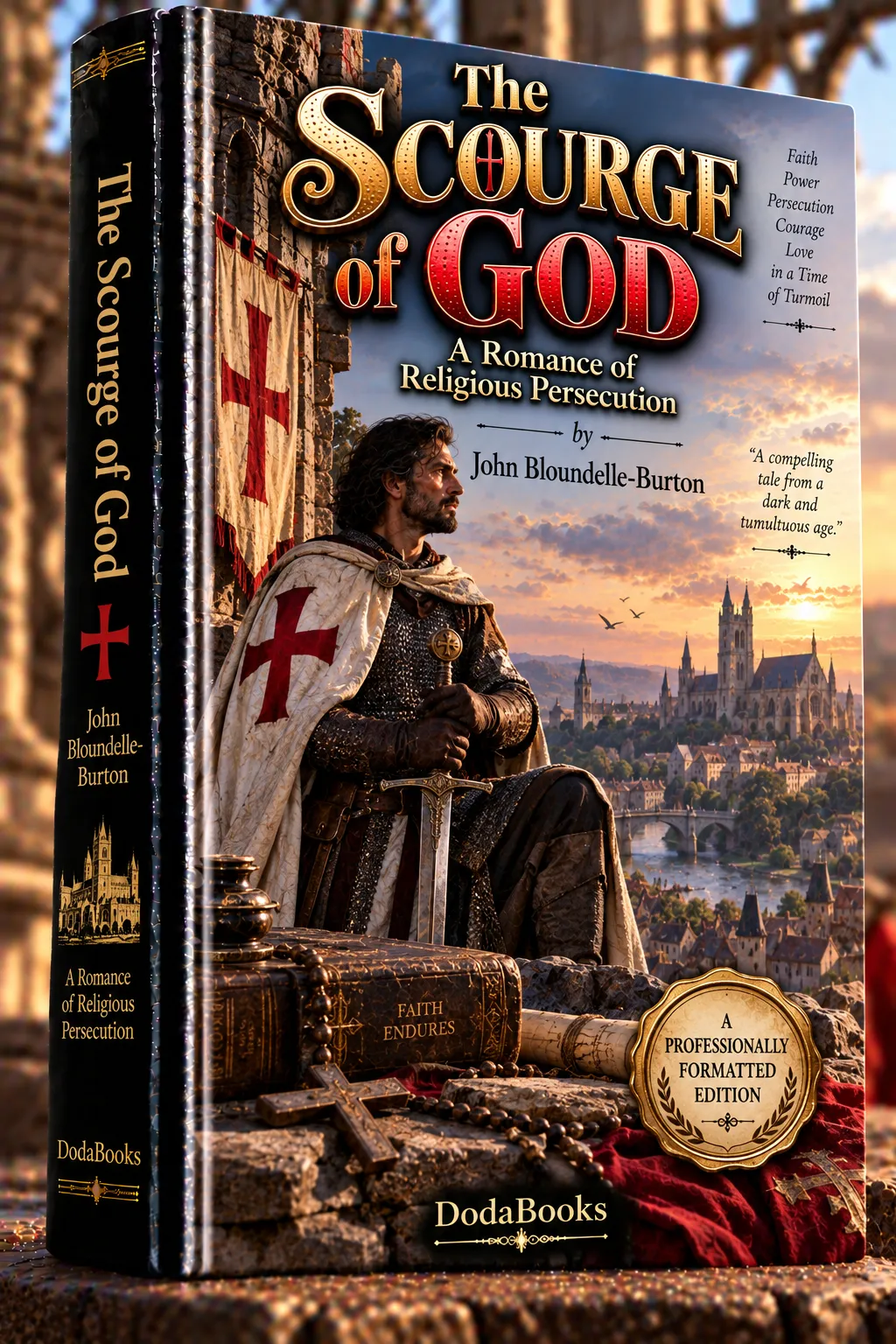
🔍 Explore the Unforgettable Cast of The Scourge of God
Step into the secret mountain caverns of Languedoc and the grand halls of Versailles with the definitive digital edition:
- 🔓 100% DRM-Free — EPUB & PDF formats compatible with Kindle, Apple Books, Kobo, and Android
- 💡 Exhaustive Historical Biographies — Detailed notes on Jean Cavalier, Intendant Bâville, and Louis XIV
- 📱 Designed for Modern Screens — Balanced typography and clean formatting for tablets, e-readers, and phones
- 💰 Affordable & Permanent — Only $2.99; yours to download, keep, and read forever
👉 Buy the Annotated Edition of The Scourge of God at DodaBooks →