The Phantom of the Opera Characters: Full Analysis of Erik, Christine & Raoul
When Gaston Leroux penned The Phantom of the Opera (Le Fantôme de l’Opéra) in 1909–1910, he created one of the most psychologically compelling, tragic, and terrifying triangles in gothic romance. While modern stage and screen adaptations frequently romanticize the central dynamic into a glamorous love triangle, Leroux’s original novel is far darker, richer, and more grotesque.
At the center of Leroux’s narrative is Erik—not a dashing romantic rebel in a sleek half-mask, but a severely disfigured, desperate genius whose entire existence has been poisoned by profound social isolation and physical revulsion. Opposite him stands Christine Daaé, a Swedish soprano paralyzed by childhood grief whose moral bravery ultimately redeems a monster, and Viscount Raoul de Chagny, a brave but emotionally volatile young aristocrat determined to snatch his childhood love from the jaws of a subterranean nightmare.
Guiding them through the shadows is the Persian, a figure almost entirely erased from modern film and musical adaptations, whose historical knowledge of Erik provides the rational forensic key to the entire mystery.
Whether you are preparing a literature essay, comparing the novel to Andrew Lloyd Webber’s stage production, or analyzing gothic antiheroes, this comprehensive guide examines every major character, their psychological motivations, and their thematic functions.
⚡ The Phantom of the Opera Cast: At a Glance
- The Living Corpse & Musical Genius: Erik (The Opera Ghost) — A master architect, acoustician, illusionist, and ventriloquist born with a skull-like face whose monstrous crimes stem from an agonizing starvation for basic human affection.
- The Transcendent Soprano: Christine Daaé — An innocent Swedish singer vulnerable to Erik’s "Angel of Music" deception through grief for her dead father; her moral courage and compassion ultimately save the day.
- The Chivalric Lover: Viscount Raoul de Chagny — Christine’s passionate childhood sweetheart whose aristocratic bravery drives him deep into the deadly catacombs of the Palais Garnier.
- The Forensic Investigator: The Persian (Daroga) — A former police chief from the court of Persia who knows all of Erik’s secret weapons, past atrocities, and architectural mechanisms.
- The Skeptical Directors: Armand Moncharmin & Firmin Richard — Arrogant, penny-pinching opera managers whose refusal to heed the Ghost’s warnings unleashes lethal catastrophe.
🎭 The Central Character Foils & Matrix
Gaston Leroux constructs The Phantom of the Opera through stark symbolic contrasts. Every character serves as a mirror or counterweight to another:
+---------------------------------------------------------------------------------------+
|                    THE CENTRAL CHARACTER FOILS IN THE NOVEL                           |
+---------------------------+---------------------------+-------------------------------+
| THEMATIC SPECTRUM         | EXTREME A                 | EXTREME B                     |
+---------------------------+---------------------------+-------------------------------+
| Physicality & Social Role | Erik (The Living Corpse)  | Raoul de Chagny               |
|                           | Grotesque, outcast,       | Handsome, titled aristocrat,  |
|                           | subterranean, cynical.    | daylight, adored by society.  |
+---------------------------+---------------------------+-------------------------------+
| Vocal Artistry            | Christine Daaé            | Carlotta                      |
|                           | Pure spiritual genius,    | Vain, mechanical, jealous,    |
|                           | humility, divine voice.   | reduced to a croaking toad.   |
+---------------------------+---------------------------+-------------------------------+
| Rationality vs. Mystery   | The Persian               | The Opera Managers            |
|                           | Forensic, experienced,    | Skeptical, ignorant, penny-   |
|                           | respects Erik's lethal art| pinching, blinded by arrogance|
+---------------------------+---------------------------+-------------------------------+
💀 1. Erik: The Phantom of the Opera
Erik is one of the most multi-layered antiheroes in world literature. Unlike cinematic monsters who are supernatural ghouls, Erik is 100% human—a mortal man cursed from birth by horrific congenital deformities.
+-------------------------------------------------------------------------------+
|                           THE LIFE & ODYSSEY OF ERIK                          |
+-------------------+-----------------------------------------------------------+
| PERIOD / REGION   | HISTORICAL EXPERIENCES & DEVELOPED SKILLS                 |
+-------------------+-----------------------------------------------------------+
| Normandy, France  | Born near Rouen; rejected by his mother, who forced him   |
| (Childhood)       | into a mask; runs away to join a carnival sideshow.       |
+-------------------+-----------------------------------------------------------+
| Nizhny Novgorod & | Exhibited as the "Living Corpse"; masters sleight of hand,|
| Central Asia      | ventriloquism, escape artistry, and the Punjab lasso.     |
+-------------------+-----------------------------------------------------------+
| Persia (Mazanderan| Serves as court architect and torturer to the Little Sultana;|
| & Teheran)        | builds secret trapdoors and palaces; marked for execution.|
+-------------------+-----------------------------------------------------------+
| Constantinople    | Constructs mirrored secret rooms for Sultan Abdul Hamid;  |
|                   | escapes assassination attempts by Turkish guards.         |
+-------------------+-----------------------------------------------------------+
| Paris             | Employed by Charles Garnier as a contractor on the Palais |
| (Palais Garnier)  | Garnier; constructs his secret underground lake residence.|
+-------------------+-----------------------------------------------------------+
The Grotesque Reality
In Andrew Lloyd Webber’s stage musical, the Phantom wears a sleek white half-mask covering half of an otherwise handsome face. In Leroux’s novel, Erik’s entire face is a terrifying nightmare:
- The Death’s Head: He has no nose—merely a dark, hollow slit. His eyes are deep black pits that gleam with a yellow phosphorescence in total darkness like cat’s eyes.
- The Living Corpse: His skin is dry, yellow parchment stretched tightly over protruding facial bones. He is emaciated to the point of being a walking skeleton, and his hands are cold and dry as ice.
- The Voice of an Angel: By contrast, God endowed this physical monstrosity with the most divine, flexible, and intoxicating singing voice in human history, alongside world-class ventriloquism that allows him to throw his voice into any corner of an auditorium.
The Psychology of Deprivation
Erik’s monstrous crimes—extortion, the murder of Joseph Buquet, the drop of the seven-ton chandelier, the blinding of prisoners in the mirror chamber—are not born of inherent sadism. They are the desperate, pathological convulsions of a soul that has been violently starved of love from birth:
“You must know that I am made of dust and ash, and that the world has hated me because of my face! If I were loved, I should be as gentle as a lamb! What I want is to live like everybody else—to have a wife to take out on Sundays!”
Erik’s tragedy is that he cannot conceive of love except through compulsion and theatrical terror. He woos Christine first as a celestial spirit (the Angel of Music), and when unmasked, as a captor brandishing death. Yet when Christine kisses his forehead out of pure compassion, Erik’s brittle, violent shell collapses into weeping vulnerability. In that transcendent moment, he chooses her happiness over his own possession, proving that underneath the monster lived a noble soul.
🕊️ 2. Christine Daaé: The Courageous Soprano
Christine Daaé is often misjudged as a passive damsel in distress. In Leroux’s text, she is an emotionally complex, resilient young woman whose moral stamina forms the emotional engine of the novel.
The Trauma of Father Daaé’s Loss
Born in rural Sweden, Christine was the daughter of a brilliant folk fiddler. After her mother died, she traveled with her father, singing peasant ballads while he played. When her father died of illness, Christine’s world shattered.
Her father’s dying promise—that he would send the “Angel of Music” from heaven to guide her—became her psychological lifeline. When Erik’s disembodied voice begins singing to her through the walls of Dressing Room 7, Christine genuinely believes her father’s promise has been fulfilled. Her initial obedience to Erik is not foolishness; it is the manifestation of profound filial love and unresolved grief.
Growth from Submission to Moral Courage
Throughout the narrative, Christine undergoes a remarkable transformation:
- The Unmasking (Chapter 10): When she yields to curiosity and tears off Erik’s mask, she beholds the naked horror of his face. Instead of going mad, she endures his furious tirade, weeps for his agony, and listens to his music.
- The Deception on the Roofs: To protect Raoul from Erik’s vengeance, Christine bravely plays the role of a willing fiancé, slipping away to meet Raoul atop the opera house while knowing that Erik is lurking nearby.
- The Ultimate Sacrifice: In the climactic torture chamber scene, Christine willingly agrees to marry Erik to save Raoul and the Persian from drowning in the subterranean chamber.
- The Redeeming Kiss: When Erik leans toward her, Christine does not flinch or scream. She presses her warm lips to his dry, rotting brow in an act of unconditional human empathy. That single kiss breaks the curse of Erik’s lifelong bitterness and frees them all.
⚔️ 3. Viscount Raoul de Chagny: The Romantic Challenger
Viscount Raoul de Chagny is twenty years old, handsome, high-spirited, and deeply in love. As a naval cadet preparing for an Arctic expedition, Raoul embodies daylight, aristocratic privilege, and conventional Victorian honor.
+-------------------------------------------------------------------------------+
|                       RAOUL DE CHAGNY VS. ERIK                                |
+-----------------------------------+-------------------------------------------+
| RAOUL DE CHAGNY                   | ERIK (THE PHANTOM)                        |
+-----------------------------------+-------------------------------------------+
| - Aristocratic wealth and title   | - Nameless, homeless social outcast       |
| - Youthful physical beauty        | - Repulsive, decaying skeletal visage     |
| - Unconditional romantic devotion | - Dark, possessive, coercive obsession    |
| - Daylight, surface world, society| - Subterranean vaults, midnight, shadows  |
| - Conventional chivalry           | - Scientific genius, lethal illusionism   |
+-----------------------------------+-------------------------------------------+
The Flaws of Youthful Passion
Raoul is not a flawless detective:
- He is hot-headed, impetuous, and prone to wild jealousy. When he hears a man’s voice in Christine’s dressing room, he suspects she has taken a secret lover.
- He struggles to comprehend the surreal, Gothic reality of Christine’s predicament, initially dismissing the Opera Ghost as theatrical nonsense.
- However, his physical courage is unassailable. Armed only with a revolver, he follows the Persian into the dark, rat-infested bowels of the opera house, risking his life without hesitation to save the woman he loves.
🕵️ 4. The Persian (The Daroga): The Voice of Reason
Perhaps the greatest casualty of film and musical adaptations was the reduction or elimination of the Persian. In Gaston Leroux’s novel, the Persian is a towering, essential presence:
Erik’s Nemesis and Witness
- Historical Background: The Persian was once the Daroga (chief of police) at the court of the Shah of Persia in Teheran. When the Shah ordered Erik executed to preserve the architectural secrets of his palaces, the Persian took pity on Erik’s genius and helped him escape, sacrificing his own wealth and political standing.
- The Detective of the Underworld: Exiled to Paris on a modest pension, the Persian lives on the Rue de Rivoli. Recognizing Erik’s hand in the mysterious events at the Palais Garnier, he monitors the opera house, knowing that Erik has constructed an impenetrable fortress beneath the stages.
- Tactical Expertise: It is the Persian who warns Raoul about the lethal Punjab lasso, instructs him to keep his arm raised across his face, and leads him through the secret trapdoors behind Dressing Room 7. Without the Persian, Raoul would have been strangled by Erik within ten minutes of descending into the cellars.
🏛️ 5. Secondary Characters & Theatrical Bureaucracy
+---------------------------------------------------------------------------------------+
|                         SECONDARY ENSEMBLE IN THE NOVEL                               |
+----------------------+--------------------------+-------------------------------------+
| CHARACTER            | THEATRICAL ROLE          | NARRATIVE & SYMBOLIC IMPORTANCE     |
+----------------------+--------------------------+-------------------------------------+
| Count Philippe de    | Raoul's Elder Brother    | Head of the Chagny family; suspects |
| Chagny               |                          | Christine of mercenary ambition; is |
|                      |                          | drowned by Erik in the lake.        |
+----------------------+--------------------------+-------------------------------------+
| Carlotta             | Spanish Prima Donna      | Vain, haughty soprano; Erik curses  |
|                      |                          | her with the croak of a toad.       |
+----------------------+--------------------------+-------------------------------------+
| Madame Giry          | Box-Keeper of Box 5      | Mother of Meg; fiercely loyal to the|
|                      |                          | Ghost because he tips her generously|
+----------------------+--------------------------+-------------------------------------+
| Armand Moncharmin &  | Incoming Co-Directors    | Skeptical, satirical bureaucrats who|
| Firmin Richard       | of Palais Garnier        | treat the Ghost as a joke until the |
|                      |                          | chandelier crashes down.            |
+----------------------+--------------------------+-------------------------------------+
| Joseph Buquet        | Chief Scene-Shifter      | Boasts of seeing the Ghost; found   |
|                      |                          | hanging from the Punjab lasso.      |
+----------------------+--------------------------+-------------------------------------+
| The Rat-Catcher      | Subterranean Vagrant     | Eccentric pipe-player who hunts     |
|                      |                          | millions of rodents in the cellars. |
+----------------------+--------------------------+-------------------------------------+
Armand Moncharmin and Firmin Richard
Leroux uses the two incoming opera managers to satirize the Parisian managerial class. Preoccupied with profit margins, ticket revenues, and social prestige, they view Debienne and Poligny’s warnings about the Ghost as an insulting theatrical prank. When Erik steals 20,000 francs directly from Richard’s pocket using safety-pinned coat trickery, the directors accuse each other of embezzlement, their petty paranoia blinding them to the deadly reality unfolding beneath their feet.
Carlotta
The reigning diva of the Paris Opera, Carlotta is the embodiment of artificial, superficial artistry. Where Christine sings with authentic soul and emotional vulnerability, Carlotta relies on technical grandstanding and vanity. When Erik punishes her pride by throwing his ventriloquized voice into her throat—forcing her to croak like a common toad in the middle of Faust—Leroux stages the symbolic triumph of authentic spiritual art over shallow commercial spectacle.
❓ Frequently Asked Questions (FAQ)
Why does Erik wear a mask in the novel vs. the musical?
In the stage musical, the Phantom wears a stylish white half-mask covering his right cheek and eye, leaving his lips free to sing and kiss. In Gaston Leroux’s novel, Erik’s entire skull is deformed—he lacks a nose, has sunken yellow cat-eyes, and rotting teeth. He wears a full silk mask covering his entire face, and his mother forced him to wear one since he was a young child.
Did Christine Daaé really love Erik?
Christine loved Erik’s voice and pitied his agonizing loneliness, but she was never romantically in love with him. Her true romantic affection belonged exclusively to Raoul de Chagny. However, her compassion for Erik was genuine: she wept for him, listened to his music without disgust, and kissed his brow, granting him the only human dignity he ever experienced.
How did Erik learn his magic and architectural tricks?
After fleeing his abusive home in Normandy, Erik joined a traveling carnival across Russia and Central Asia, mastering ventriloquism, sleight of hand, and illusions. Later, he served as royal architect and torturer for the Shah of Persia and the Sultan of Turkey, designing secret mirrored chambers, acoustic tubes, and trapdoors before working on the construction of the Palais Garnier.
What happens to Raoul and Christine at the end of the novel?
After Erik releases them from his subterranean home, Raoul and Christine board a train to the north and disappear into Scandinavia, living happily under an assumed name away from Paris. Years later, when the Persian announces Erik’s death, Christine sends Erik’s gold ring to be buried with his skeleton.
What was the Punjab Lasso and how does it work?
The Punjab lasso was Erik’s favored assassination weapon, which he learned to wield during his travels in Central Asia and India. It was a noose made of fine catgut cord that Erik hurled silently from the shadows around his victim’s neck, instantly snapping their spinal column. The only defense was to keep one hand raised to chest level to prevent the loop from closing flush against the throat.
📚 Related Articles & Guides
Looking for an overarching analysis of themes, Victorian theater, and Gothic mystery? Explore our master The Phantom of the Opera Novel Guide.
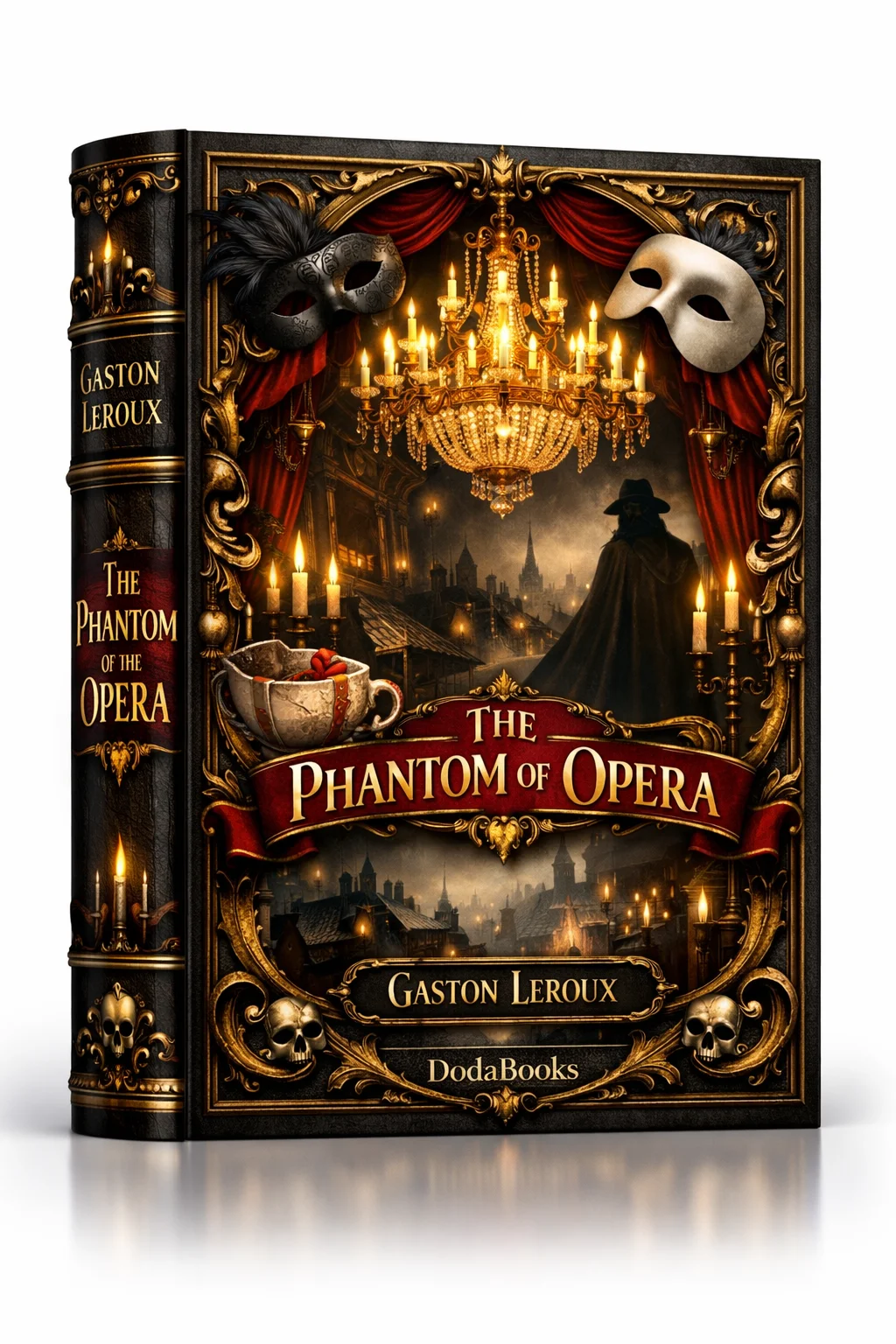
📖 Read the Definitive Annotated Edition of The Phantom of the Opera
Experience Gaston Leroux’s chilling gothic original with complete architectural notes, French opera history, and Parisian commentary:
- ✅ Complete Authoritative 1910 Text — Unabridged English translation with authentic chapter divisions
- 🏛️ Palais Garnier Blueprints & Notes — Understand the real subterranean lake, trapdoors, and fly machinery
- 🎭 French Theatrical Context — Learn about Gounod’s Faust, Meyerbeer’s operas, and Belle Époque society
- 📜 The Persian’s Complete Epilogue — Discover Erik’s backstory in Persia and Constantinople
- 🔒 Universal DRM-Free Formats — Delivered instantly in EPUB, PDF, and AZW3/Kindle formats
Get The Phantom of the Opera Annotated Edition at DodaBooks →