The Mysteries of Udolpho Characters: Emily, Montoni & Valancourt Explained
When Ann Radcliffe published The Mysteries of Udolpho in 1794, she did not merely invent an unforgettable, spine-chilling story; she established the foundational character archetypes that would define Gothic literature for the next two centuries. Every subsequent Gothic romance—from Matthew Lewis’s The Monk and Mary Shelley’s Frankenstein to the Brontë sisters’ Jane Eyre and Wuthering Heights, and even Daphne du Maurier’s Rebecca—traces its creative lineage directly back to Radcliffe’s psychological character gallery.
At the center of Radcliffe’s moral universe is the philosophical tension between Sensibility (emotional sensitivity, artistic responsiveness, and aesthetic empathy) and Reason (prudence, stoicism, and self-control). Her villains are characterized by absolute, unrestrained passions, her heroines must learn to master their overactive imaginations, and her heroes must preserve their integrity against the corrupting temptations of worldly luxury.
This comprehensive character study explores the psychological depths, symbolic significance, and narrative arcs of the major and minor figures in The Mysteries of Udolpho.
| Character | Gothic Archetype | Core Trait & Philosophy | Defining Crisis or Narrative Climax |
|---|---|---|---|
| Emily St. Aubert | The Persecuted Gothic Heroine | Refined sensibility, artistic soul, filial obedience | Overcoming her terror to resist Montoni’s legal extortion and preserve her property |
| Signor Montoni | The Byronic Villain / Condottiere | Cold, brooding, unyielding will, disdain for law | Imprisoning his wife, dueling Morano, and defiantly dying in a Venetian prison |
| Chevalier Valancourt | The Romantic / Sensibility Hero | Passionate lover of nature and poetry; moral vulnerability | Falling into gambling debts in Paris and earning Emily’s forgiveness |
| Madame Cheron (Montoni) | The Vain, Foolish Matron | Narcissistic social climber; materialistic blindness | Realizing Montoni’s savagery too late; repenting on her deathbed at Udolpho |
| Monsieur St. Aubert | The Enlightenment Philosopher | Stoic rationality, pastoral virtue, enlightened father | Deathbed charge demanding Emily burn his private papers unread |
| Signora Laurentini (Sister Agnes) | The Tragic Fallen Femme Fatale | Consumed by uncontrolled, murderous sexual passion | Poisoning the Marchioness de Villeroi; terrifying deathbed confession |
| Count Morano | The Venetian Libertine | Entitled aristocratic arrogance and reckless obsession | Infiltrating Castle Udolpho by night; wounded in a duel with Montoni |
| Ludovico & Annette | Vernacular Loyal Servants | Superstitious peasant folklore balanced by practical courage | Ludovico’s heroic midnight vigil in the haunted chamber and engineered escape |
🌹 Emily St. Aubert: The Evolution of the Gothic Heroine
The Cult of Sensibility vs. Enlightenment Reason
Nineteen-year-old Emily St. Aubert is the quintessential eighteenth-century heroine of Sensibility. Raised in the idyllic pastoral paradise of La Vallée in Gascony, she is educated in botany, classical poetry, lute-playing, and landscape painting. She possesses a nervous system so delicately tuned to beauty and melancholy that a sublime mountain sunset or a mournful tune can bring tears to her eyes.
However, Radcliffe does not present Emily’s sensibility as an unalloyed virtue. Following the philosophical teachings of her father, Monsieur St. Aubert, Emily must fight a continuous internal battle against her own overactive imagination:
- When left alone in the dark, Emily’s imagination immediately transforms ordinary shadows, gusting winds, and creaking doors into supernatural phantoms.
- Her terror when viewing the Black Veil at Udolpho occurs precisely because her heightened sensibility projects the most horrifying possible interpretation onto an unknown sight.
          [ EMILY ST. AUBERT'S MORAL TRIANGLE ]

                     SENSIBILITY
            (Aesthetic & Moral Emotion)
                     /         \
                    /           \
                   /             \
                  v               v
            IMAGINATION <---> RATIONAL FORTITUDE
        (Paralyzing Terror)   (Resistance to Montoni)
Heroic Agency and Moral Courage
Modern readers who assume Gothic heroines are merely passive damsels in distress will be surprised by Emily St. Aubert’s extraordinary resilience. Despite being completely isolated in an Italian mountain fortress, surrounded by armed mercenaries, and subjected to psychological terror by Montoni, Emily consistently refuses to surrender her agency:
- Financial Autonomy: When Montoni threatens her with starvation, solitary confinement, and forced marriage to a brutal mercenary unless she signs over her French estates, Emily stands firm. She recognizes that signing away her property under duress would violate her duty to herself and her family name.
- Moral Principle over Romantic Passion: When she discovers that Valancourt has fallen into Parisian gambling debts and dissipated company, Emily breaks their engagement, demonstrating that she will not compromise her moral standards even for the love of her life.
Ultimately, Emily emerges from Castle Udolpho not broken, but tempered. She masters her superstitious terrors through reason and fortitude, demonstrating that virtuous women can triumph over feudal and patriarchal tyranny.
🗡️ Signor Montoni: The Prototype of the Byronic Villain
The Architecture of Menace
Signor Montoni is Radcliffe’s greatest literary creation. Dark, commanding, enigmatic, and ruthless, Montoni stands as the undisputed archetype of the Gothic villain and the direct forerunner of Lord Byron’s poetic anti-heroes (such as the Giaour, Lara, and Manfred), as well as Emily Brontë’s Heathcliff and Charlotte Brontë’s Mr. Rochester.
Unlike the clumsy, supernatural demons of early pulp romances, Montoni’s terrifying power lies entirely in his psychological impenetrability:
“Montoni was a man whom no danger could intimidate, no emergency confound, and no feeling of humanity soften. His pride was impenetrable, his ambition boundless, and his passions silent, deep, and fatal.”
       [ THE GENEALOGY OF THE GOTHIC VILLAIN ]
+-------------------------------------------------------------+
| Ann Radcliffe's SIGNOR MONTONI (1794)                       |
| (Cold, haughty, aristocratic, mercenary, ruined gambler)    |
+-------------------------------------------------------------+
                               |
                               v
+-------------------------------------------------------------+
| Lord Byron's BYRONIC HEROES (1812–1818)                     |
| (Brooding outlaws, fierce pride, secret guilt)              |
+-------------------------------------------------------------+
                               |
                               v
+-------------------------------------------------------------+
| Emily Brontë's HEATHCLIFF & Charlotte Brontë's ROCHESTER    |
| (Passionate, tormented, brooding domestic captors)          |
+-------------------------------------------------------------+
Motives: Greed, Ruin, and Condottiere Ambition
Montoni is not motivated by sadism for its own sake; he is driven by desperate financial ambition and an insatiable lust for dominance. Having squandered his Venetian patrimony at the gaming tables, he seeks to rehabilitate his fortune by predatory means:
- Marrying Madame Cheron: Conning a vain French widow into marriage to seize her estates in Gascony and Languedoc.
- Selling Emily: Attempting to force Emily into marriage with Count Morano to secure political alliances and cash bounties.
- Condottiere Warfare: Transforming the Castle of Udolpho into a fortified stronghold for bandit mercenaries who plunder mountain travelers and challenge the authority of the Venetian Republic.
What makes Montoni so formidable is his total lack of conscience. When his wife resists signing over her estates, he does not fly into a theatrical rage; he coldly locks her in a freezing tower and watches her sicken and die without a flicker of remorse. Yet even Montoni is denied a glorious melodramatic death: he is eventually captured by the civil authorities of Venice and dies unglamorously in a state prison cell, proving that Radcliffe’s universe is governed by moral justice.
🌿 Chevalier Valancourt: The Fragile Romantic Hero
The Natural Man of Sensibility
Introduced in Volume I roaming the Pyrenees with gun and hunting dog, Chevalier Valancourt represents the idyllic ideal of the Romantic natural youth. He is uncorrupted by court politics or urban materialism, sharing Emily’s spontaneous delight in sublime mountain scenery, Rousseauian simplicity, and lyric poetry.
Unlike Montoni’s cold, calculating malice, Valancourt’s character is defined by passionate emotional transparency. He loves Emily with chivalric purity, seeking her heart rather than her fortune.
       [ VALANCOURT: THE VULNERABILITY OF INNOCENCE ]
+-------------------------------------------------------------+
| Pyrenees Wilderness: Pure, uncorrupted, nature-loving youth |
+-------------------------------------------------------------+
                               |
                               v
+-------------------------------------------------------------+
| The Paris Temptation: Believes Emily is lost forever;       |
| seduced by urban gaming houses and false fashionable friends|
+-------------------------------------------------------------+
                               |
                               v
+-------------------------------------------------------------+
| Moral Fall: Accumulates debts, imprisoned for aiding friend |
+-------------------------------------------------------------+
                               |
                               v
+-------------------------------------------------------------+
| Redemption & Rebirth: Repents, pays debts, restored at      |
| La Vallée alongside Emily                                   |
+-------------------------------------------------------------+
The Seduction of Paris and Moral Regeneration
Valancourt’s narrative arc serves as an eighteenth-century didactic warning about the fragility of unfortified innocence. When separated from Emily and led to believe she has married another man in Italy, Valancourt’s emotional sensibility collapses into despair. Lacking stoic self-discipline, he is drawn into the fashionable dissipation of Parisian gaming houses.
Although gossip exaggerates his crimes into monstrous debauchery, Valancourt’s moral core remains intact: he incurred his debts while trying to rescue a ruined friend from debtor’s prison. When he proves his genuine remorse and achieves financial independence, Emily rewards him with her hand, completing his moral restoration.
🪞 Madame Cheron (Madame Montoni): The Vanity of Ambition
The Anti-Mother of Gothic Romance
Emily’s paternal aunt, Madame Cheron, is Radcliffe’s biting satire on middle-class vanity, materialism, and romantic delusion. Residing in a stylish villa near Toulouse, Madame Cheron judges human worth entirely by external trappings: coaches, liveries, titles, and fashionable gossip.
She treats Emily with spiteful jealousy, constantly belittling her niece’s genuine artistic accomplishments while flaunting her own superficial social status. Her disastrous marriage to Signor Montoni is the direct consequence of her vanity:
- She refuses to investigate Montoni’s real financial standing, completely seduced by his aristocratic bearing and promises of Venetian splendor.
- She cruelly breaks Emily’s engagement to Valancourt because Valancourt lacks a grand title and vast wealth.
+-------------------------------------------------------------+
|              MADAME CHERON'S FATAL DELUSION                 |
|                                                             |
| "She had married for grandeur, and found only servitude;     |
| she had sacrificed her independence, and received in return  |
| contempt and tyranny."                                      |
|                                                             |
| -> Refuses to sign away her French property in Udolpho;     |
|    achieves heroic dignity only in her dying hours!         |
+-------------------------------------------------------------+
Deathbed Redemption
Ironically, the foolish woman who squandered her life in petty vanity discovers unexpected moral heroism in the dungeons of Castle Udolpho. When Montoni orders her to sign over her French lands, Madame Cheron recognizes her fatal error. She stubbornly refuses to capitulate to his threats, choosing imprisonment and death rather than rewarding the tyrant who deceived her. On her deathbed, she reconciles with Emily, begs her forgiveness, and bequeaths her independent fortune directly to her niece.
🕯️ Signora Laurentini di Udolpho (Sister Agnes): The Monster of Passion
The Mirror of Unbridled Emotion
If Emily St. Aubert represents Sensibility tempered by Reason, Signora Laurentini represents what happens when passion destroys all moral restraint.
The original heiress to Castle Udolpho, Laurentini was celebrated for her extraordinary beauty and artistic talents. However, she was possessed by violent, uncontrollable passions:
- When she fell in love with the Marquis de Villeroi, who chose to marry Monsieur St. Aubert’s virtuous sister instead, Laurentini’s love curdled into homicidal jealousy.
- She seduced the Marquis and supplied him with the slow poison used to murder the innocent Marchioness in the bedchamber of Château-le-Blanc.
                  [ LAURENTINI'S DOWNWARD TRAJECTORY ]

               Passionate Heiress of Castle Udolpho
                                |
                                v
             Unrequited Love for Marquis de Villeroi
                                |
                                v
              Adultery & Murder of Marchioness de Villeroi
                                |
                                v
               Abandoned by the Guilt-Stricken Marquis
                                |
                                v
             20 Years of Tormented Penance as Sister Agnes
                                |
                                v
            Terrifying Deathbed Confession to Emily
The Gothic Ghost Made Flesh
For three volumes of the novel, Laurentini exists as an elusive, spectral rumor: the vanished mistress of Castle Udolpho whose mysterious disappearance caused villagers to believe her ghost haunted the battlements.
When Emily finally encounters her in Volume IV at the convent of St. Claire, Laurentini has transformed into the crazed, emaciated nun Sister Agnes. Her horrifying deathbed scene—filled with raving guilt, physical decay, and desperate pleas for divine mercy—provides the novel’s darkest psychological climax. Laurentini’s confession resolves the mystery of St. Aubert’s burnt papers, proving that Emily’s father was completely innocent and cementing Radcliffe’s warning against unbridled sensual passion.
🏰 Supporting Figures: Loyalists and Libertines
Monsieur St. Aubert
Emily’s father is the novel’s intellectual and moral lodestar. A retired philosopher living at La Vallée, he embodies the Enlightenment ideal of stoic self-governance. His death in Volume I leaves Emily physically unprotected, but his philosophical maxims regarding the danger of unregulated sensibility guide her through the terrors of Udolpho.
Count Morano
The wealthy Venetian aristocrat who attempts to claim Emily as his prize. Morano represents the corrupt, dissolute Italian nobility who view women as commodities to be bought and gambled. His daring, midnight raid into Castle Udolpho to abduct Emily leads to a bloody duel with Montoni, underscoring that in Radcliffe’s Gothic world, competing villains often destroy each other.
Monsieur Du Pont
A noble French officer and a former neighbor of St. Aubert who has loved Emily silently from afar. Imprisoned by Montoni in the dungeons of Udolpho, Du Pont is the mysterious musician whose nocturnal lute playing fuels the ghost stories on the ramparts. He plays a vital role in orchestrating Emily’s escape, demonstrating unselfish chivalry by stepping aside once he realizes Emily’s heart belongs to Valancourt.
Ludovico and Annette
Radcliffe balances the solemn horrors of Udolpho with the affectionate comedy and vernacular loyalty of the domestic servants:
- Annette: Emily’s French maid, whose superstitious peasant gossip, breathless ghost stories, and constant chattering provide welcome relief from Gothic gloom.
- Ludovico: The pragmatic, brave Italian servant who volunteers to spend the night alone in the haunted chamber at Château-le-Blanc and engineers Emily’s daring escape from Udolpho.
❓ Frequently Asked Questions
Why is Emily St. Aubert often criticized for fainting so much?
In eighteenth-century literature, fainting (or swooning) was not viewed as weakness; it was considered physical proof of a woman's refined sensibility and moral purity. In an era where outward stoicism was associated with cold, calculating villains like Montoni, a heroine's fainting spells signaled that her nervous system was too innocent and delicate to withstand horrific cruelty or apparent supernatural terror.
How did Montoni die?
Unlike villains in modern horror movies who die in sensational, explosive climaxes, Montoni dies off-stage in a Venetian state prison. After imperial troops capture Castle Udolpho, Montoni is convicted of treason, piracy, and murder by the Senate of Venice. This reflects Ann Radcliffe's Enlightenment conviction that the rule of civil law and justice is ultimately more powerful than feudal tyranny.
Is Sister Agnes related to Emily St. Aubert?
No. Sister Agnes (Signora Laurentini di Udolpho) is not biologically related to Emily. However, she was intimately connected to Emily's family: she seduced the Marquis de Villeroi and poisoned the Marchioness, who was the beloved sister of Emily's father, Monsieur St. Aubert.
What makes Ludovico unique among Gothic servants?
While many eighteenth-century servants were depicted as foolish, superstitious clowns, Ludovico is remarkably rational and brave. He agrees to spend the night inside the terrifying haunted chamber of the late Marchioness with a sword and a book of poetry to debunk supernatural rumors, ultimately proving to be one of the most heroic figures in the novel.
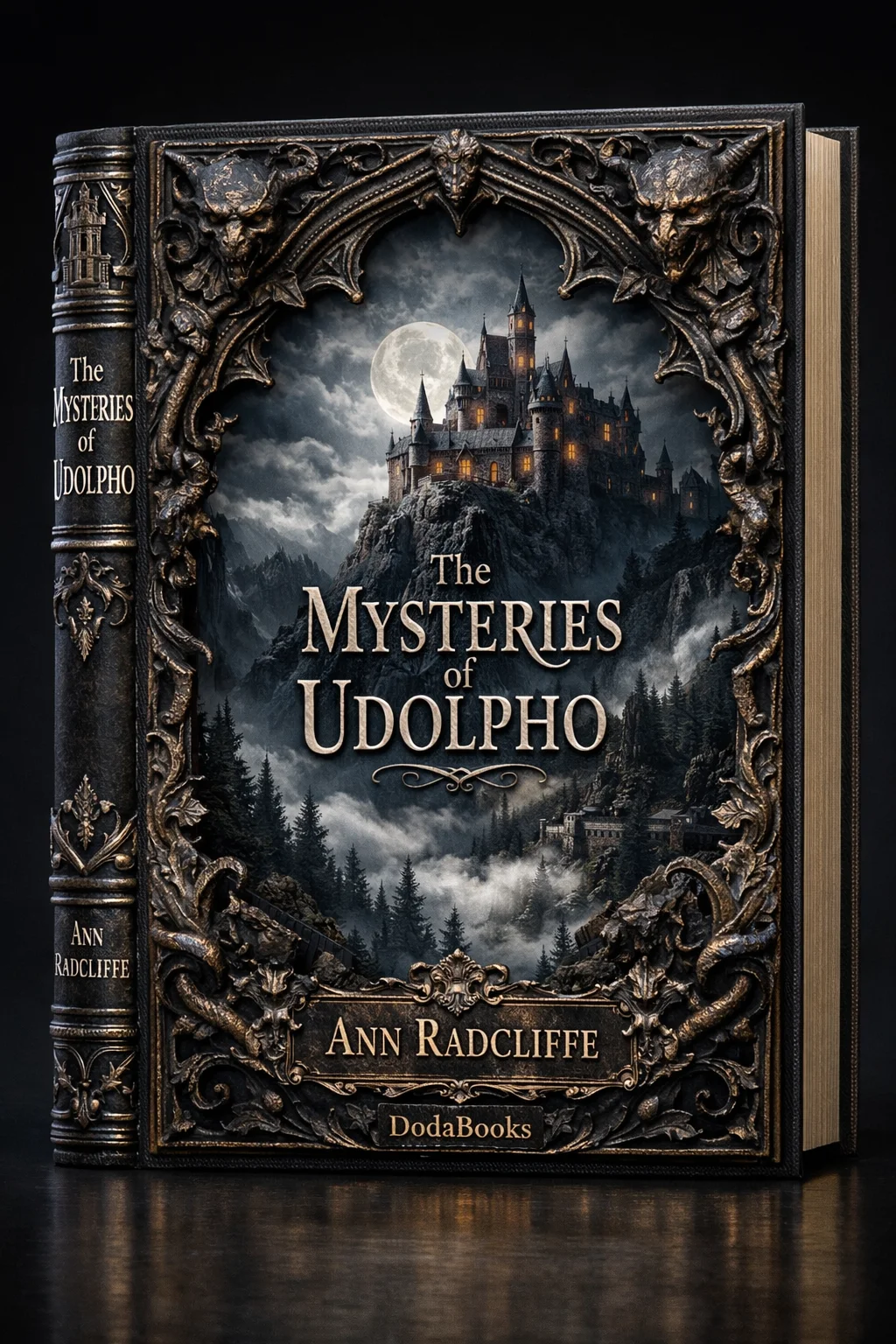
🏰 Read Ann Radcliffe’s Gothic Masterpiece in Full
Discover the complex psychological world of Emily St. Aubert and Signor Montoni with the complete, unabridged digital edition of The Mysteries of Udolpho from DodaBooks:
- 📖 Complete 4-Volume Text — All 58 chapters and original poetry unedited
- 💡 Exhaustive Footnotes — Decodes Gothic tropes, 18th-century aesthetics, and historical allusions
- 📱 Designed for Long Reading — Beautiful typography engineered for Kindle, Kobo, iPad, and Android
- 🔓 100% DRM-Free — Download immediately and keep your file permanently
👉 Get the Annotated Edition of The Mysteries of Udolpho at DodaBooks →