The Memoirs of Admiral Lord Beresford
Admiral Lord Charles Beresford’s Rousing Two-Volume Odyssey Through Wooden Sailing Frigates, Steam Ironclads, Alexandria Gunboats, and Imperial High Politics
In the glorious twilight of the British Empire, just as the dreadnoughts of the Royal Navy were steaming into the North Sea at the outbreak of World War I, one of the most colorful, charismatic, and beloved naval commanders of the Victorian age published his definitive life story. The Memoirs of Admiral Lord Charles Beresford (1846–1919), issued in two sweeping volumes in 1914, offers an incomparable, ringside view of the greatest maritime transformation in human history: the transition of the Royal Navy from wooden sailing three-deckers firing smoothbore cannon to steam-powered, steel-armored ironclads with rotating heavy gun turrets.
Known affectionately throughout Britain as “Charlie B,” Lord Charles Beresford was a figure straight out of adventure fiction. An Anglo-Irish aristocrat, champion steeple-chaser, fearless boxer, and Member of Parliament, he joined the navy as a thirteen-year-old cadet in 1859. Over a fifty-year career, he saved dozens of men from drowning, commanded the gunboat HMS Condor under the flaming batteries of Alexandria in 1882, led the naval brigade on the Nile Expedition to rescue General Gordon, and commanded the Channel and Mediterranean Fleets.
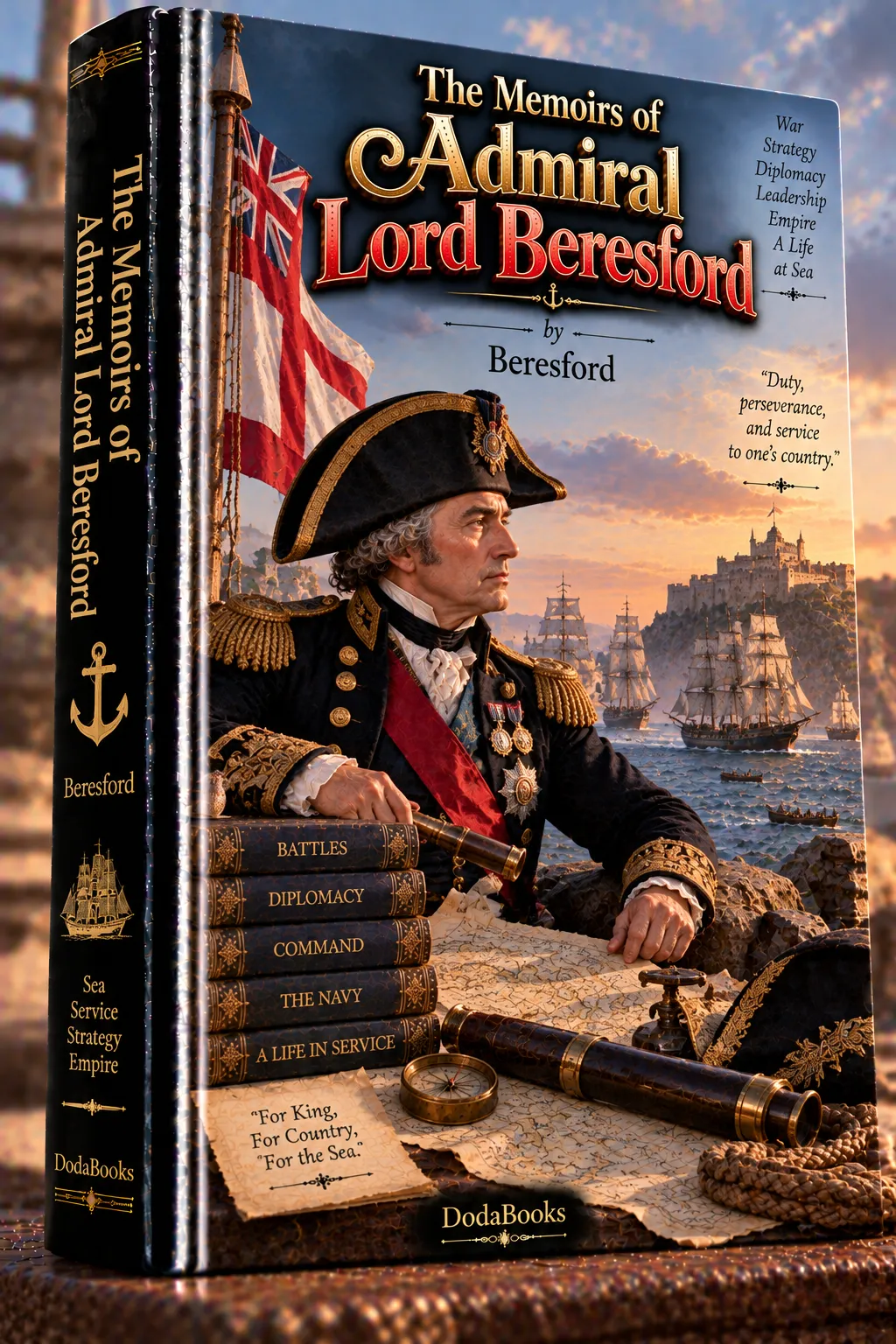
Experience the Golden Age of the Royal Navy
Read Lord Charles Beresford's thrilling autobiography in an annotated edition exploring the 1882 Bombardment of Alexandria, the Nile River Expedition, and the Fisher-Beresford naval feud.
Get Admiral Beresford's MemoirsThe Great Transformation: From Oak and Canvas to Steel and Steam
When Beresford joined the service aboard the 121-gun flagship HMS Marlborough in 1859, the Royal Navy operated almost exactly as it had under Lord Nelson at the Battle of Trafalgar. Midshipmen went aloft in howling gales to reef sails, discipline was maintained with the cat-o’-nine-tails, and ships relied on salt beef, hardtack, and the seasonal trade winds.
Beresford’s memoirs document with unmatched humor and technical insight the turbulent industrial revolution that revolutionized the fleet:
- The End of Masts and Sails: The agonizing reluctance of old-school admirals to surrender tall canvas rigging in favor of coal bunkers and compound steam engines.
- The Muzzle-Loader vs. Breech-Loader Battles: The race between armor plate and heavy naval ordnance, culminating in massive hydraulic barbettes and armored citadels.
- The Modern Sailor: Beresford’s passionate, successful campaign to eliminate brutal corporal punishment, improve sailors’ rations and living quarters, and transform the Royal Navy into a highly educated, technically skilled modern fighting force.
The Defining Hour: “Well Done, Condor!” at Alexandria
The dramatic centerpiece of Beresford’s career occurred on July 11, 1882, during the British bombardment of the coastal fortresses of Alexandria, Egypt. While the massive British battleships engaged the Egyptian forts from offshore, the heavy batteries of Fort Marabout remained untouched, raining devastating plunging fire onto the Allied ironclads.
Commanding the tiny, unarmored wooden gunboat HMS Condor, armed with only three guns, Commander Beresford made an audacious, unauthorized decision. Steaming directly beneath the cliff-face of Fort Marabout, inside the minimum elevation angle of the fortress’s heavy Krupp guns where their fire could not depress enough to strike him, the Condor poured a relentless broadside into the Egyptian gun emplacements at point-blank range, single-handedly silencing the battery.
Watching through his telescope from the flagship, Admiral Sir Beauchamp Seymour hoisted the historic two-flag signal:
“Well Done, Condor!”
The message flashed around the world, turning Beresford into an imperial hero overnight. Following the battle, Beresford was appointed military governor of Alexandria, restoring order to a city ravaged by fire and rioting with brilliant administrative energy.
Firsthand Eyewitness to Naval Evolution
The definitive personal chronicle of the Royal Navy's transition from Nelson-era wooden sailing ships to 20th-century steam turbine dreadnoughts.
Legendary Action at Alexandria & Sudan
Gripping play-by-play accounts of the 1882 bombardment of Fort Marabout and the desperate 1885 Nile River gunboat dash to rescue Gordon at Khartoum.
Behind-the-Scenes Politics & Royalty
Intimate, witty portraits of Queen Victoria, King Edward VII (the Prince of Wales), Gladstone, Disraeli, and high-society London salons.
Comprehensive Historical Annotations
Footnotes explaining Victorian naval architecture, gunnery technology, parliamentary defense debates, and the famous Fisher-Beresford feud.
The Nile Expedition: Rescuing Gordon at Khartoum
In 1884, when General Charles Gordon was surrounded by the forces of the Mahdi in Khartoum, Beresford volunteered for the hazardous relief expedition organized by Lord Wolseley. Commanded to lead the Naval Brigade, Beresford was responsible for transporting troops and supplies up the cataracts of the Nile in whaleboats.
When the Desert Column was ambushed at the desperate Battle of Abu Klea in January 1885, Beresford personally manned the Gardner machine gun in the center of the British square until the weapon jammed, fighting off charging Dervish spearmen hand-to-hand. Later, commanding the river steamer Safieh, he engaged fortified Mahdist river redoubts with a boiler punctured by artillery shot, repairing the engine under point-blank rifle fire to rescue Sir Charles Wilson’s detachment.
Step onto the Quarterdeck with Charlie B
Read Lord Charles Beresford's complete memoirs in an impeccably formatted digital edition with battle maps, naval technical notes, and historical commentary.
Get Admiral Beresford's MemoirsAnglo-American Naval Ties and the Commercial Mission to China
An overlooked dimension of Beresford’s later career documented in the Memoirs is his influential diplomatic mission to China in 1898 on behalf of the Associated Chambers of Commerce. Observing the predatory European imperial powers carving up China into exclusive “spheres of influence,” Beresford published his influential report The Break-Up of China, advocating what became the United States’ historic “Open Door Policy”:
- Advocating Commercial Parity: Beresford argued that free trade and equal commercial access for all nations were essential to preserving Chinese territorial sovereignty and preventing a catastrophic world war among rival imperial powers.
- Naval Fraternity with the United States: Visiting America on his return voyage, Beresford met with President William McKinley and future President Theodore Roosevelt. Beresford was an early, passionate champion of the “Great Rapprochement”—the strategic alliance between Great Britain and the United States, arguing that the two English-speaking democracies shared a common maritime destiny to safeguard international trade routes and democratic peace.
- The Human Touch of Imperial Diplomacy: Beresford’s anecdotes of negotiating with Chinese viceroys like Li Hongzhang, imperial Japanese naval officers, and American business magnates reveal his extraordinary diplomatic tact, combining naval bluntness with aristocratic charm.
The Fisher-Beresford Feud and Naval Reform
In his later years as an Admiral and Member of Parliament, Beresford was at the center of the fierce “Fisher-Beresford controversy” that split the Royal Navy on the eve of the First World War. While Admiral of the Fleet Sir John Fisher (First Sea Lord) championed radical technological modernization—including the all-big-gun Dreadnought, battlecruisers, and submarines—Beresford warned that Fisher’s autocratic methods neglected convoy protection, naval staff organization, and medium cruiser defense for imperial trade routes.
Beresford’s political crusade directly led to the Naval Defence Act of 1889, which established the legendary “Two-Power Standard”—mandating that the Royal Navy must remain stronger than the combined navies of any two rival world powers. His advocacy transformed British national defense policy and ensured maritime supremacy during the Edwardian era.
Why Beresford's Memoirs Are an Irresistible Read
Unlike pompous Victorian military memoirs, Beresford writes with infectious Irish wit, self-deprecating humor, and genuine love for the British bluejacket. From bulldog pets on the bridge to high-stakes parliamentary duels, his pages sparkle with life.
The Annotations in the DodaBooks Edition
The DodaBooks curated edition provides an indispensable reading companion:
- Naval Technology Glossary: Explanations of steam boilers, torpedo boat destroyers, Armstrong rifled guns, and muzzle-loading ironclads.
- Historical Order of Battle: Regimental and naval vessel muster rolls for the 1882 Alexandria action and 1885 Sudan campaign.
- Biographical Notes: Profiles of Victorian admirals, politicians, and colonial governors mentioned throughout Beresford’s career.
Download the Complete Two-Volume Classic Today
Explore the full life story of Britain's most legendary Victorian admiral in an exquisitely formatted digital edition.
Download the Edition NowFrequently Asked Questions
Who was Admiral Lord Charles Beresford?
Admiral Lord Charles Beresford (1846–1919) was a celebrated British naval officer, Member of Parliament, and public figure who served in the Royal Navy from 1859 to 1911, commanding the Channel and Mediterranean Fleets and playing a central role in Victorian defense reform.
What was the 'Well Done, Condor!' incident at Alexandria?
During the British bombardment of Alexandria in 1882, Beresford commanded the tiny gunboat HMS Condor and took it close under the guns of Fort Marabout, successfully silencing the Egyptian battery and earning the famous congratulatory signal 'Well Done, Condor!' from Admiral Seymour.
What was Beresford's role in the Sudan and Nile Expedition?
Beresford commanded the Naval Brigade during the 1884–1885 Gordon Relief Expedition, fighting at the Battle of Abu Klea and commanding the river steamer Safieh to rescue British troops under heavy enemy fire.
What was the famous Fisher-Beresford naval controversy?
It was a bitter public and professional debate in the early 1900s between Admiral 'Jacky' Fisher and Lord Charles Beresford regarding naval policy, ship design (dreadnoughts vs. cruisers), war strategy, and command culture, which deeply divided British naval leadership before WWI.
Where can I get the complete annotated ebook?
The complete digital edition of Beresford's memoirs is available for immediate download at DodaBooks at https://dodabooks.com/ebook/the-memoirs-of-admiral-lord-beresford-by-lord-charles-beresford/.