The Marvellous Land of Snergs
E.A. Wyke-Smith’s Enchanting 1927 Classic That Inspired J.R.R. Tolkien’s Hobbits
In the extensive history of English fantasy fiction, few works hold as curious and delightful a position as Ernest Anthony Wyke-Smith’s 1927 novel, The Marvellous Land of Snergs. Long cherished by rare book collectors and children’s literature scholars, this whimsical tale achieved literary immortality when J.R.R. Tolkien explicitly credited it as a direct creative inspiration for The Hobbit.
Writing in his personal correspondence and reflecting on the origins of Middle-earth, Tolkien remarked that the physical stature, culinary appetites, rustic humor, and hearty goodwill of Hobbits owed an undeniable debt to Wyke-Smith’s pint-sized race of Snergs. For anyone who loves Bilbo Baggins, the Shire, and high-spirited British fairy adventures, reading The Marvellous Land of Snergs feels like discovering the hidden mythological ancestor of modern fantasy.
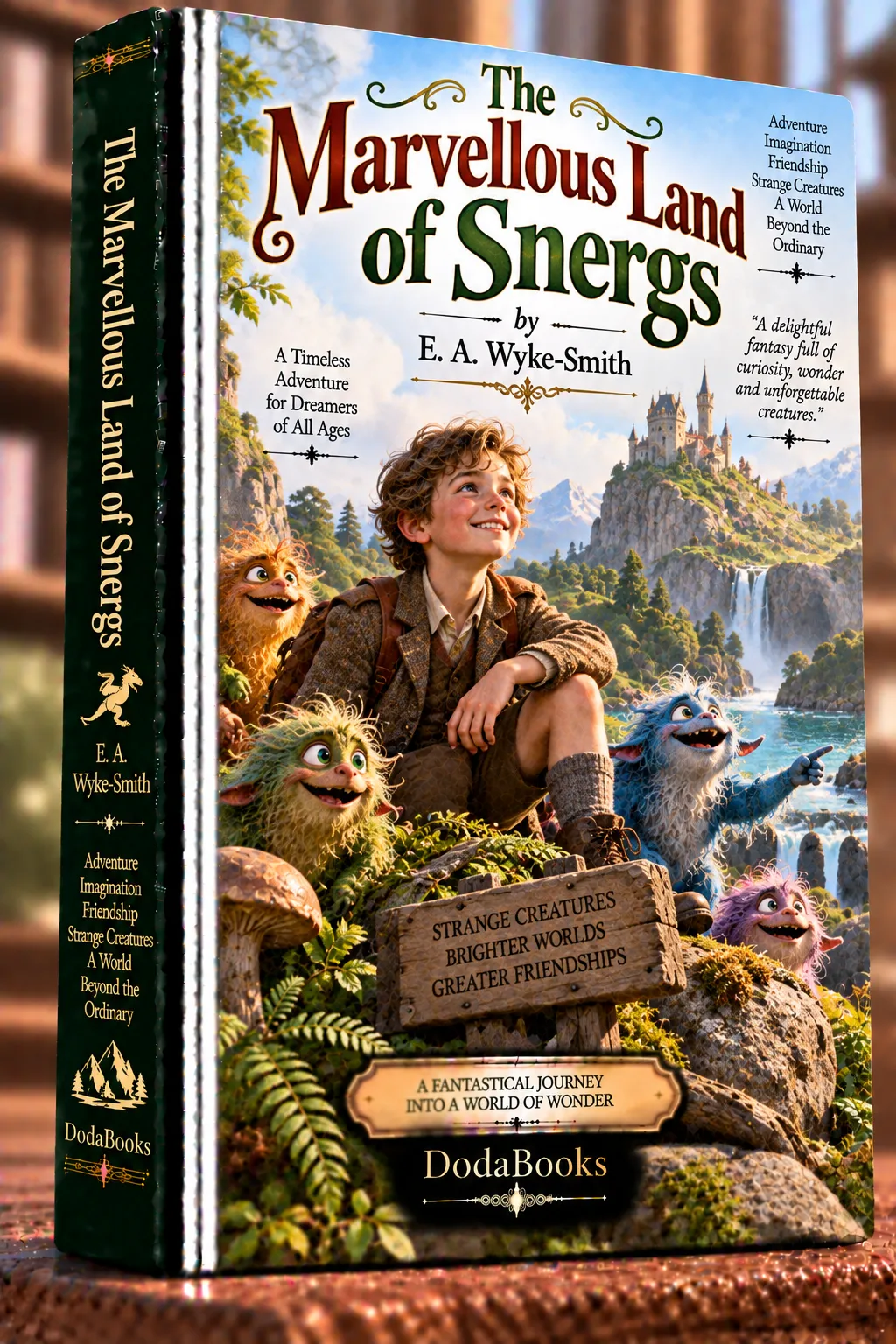
Step Into the Enchanting World That Inspired The Hobbit
Read E.A. Wyke-Smith’s magical 1927 adventure featuring runaway children, kindhearted Snergs, mischievous witches, and the unforgettable Gorbo.
Get The Marvellous Land of SnergsWho Were the Snergs? The Prototype of the Hobbit
Who exactly are the Snergs? Wyke-Smith describes them as a race of diminutive humanoid beings, barely taller than an average human’s knee, with sturdy builds, great round faces, and an irrepressible passion for lavish feasts, communal singing, and festive celebrations. Much like Tolkien’s Hobbits, Snergs are fundamentally gentle, peaceable creatures who dislike unnecessary exertion, cherish comfortable domesticity, and display surprising loyalty and courage when thrust into unforeseen perils.
The central Snerg hero of the tale is Gorbo, a delightfully well-meaning but somewhat clumsy fellow whose penchant for eating large meals and making comical mistakes mirrors the very essence of early Bilbo Baggins. Gorbo’s warm loyalty, easy laughter, and unexpected bravery during moments of crisis set the mold for the unassuming small heroes that would dominate 20th-century fantasy literature.
Tolkien was reading The Marvellous Land of Snergs aloud to his own children in the late 1920s while teaching Anglo-Saxon at Oxford. The joyous imagery of short, round-bellied folk wandering through perilous woods left an indelible impression on the professor’s fertile imagination as he sat down to pen the famous words: “In a hole in the ground there lived a hobbit.”
Lineage of the Diminutive Fantasy Hero:
[E.A. Wyke-Smith's Snergs (1927)] ➔ [Tolkien's Bilbo Baggins (1937)] ➔ [The Inklings & High Fantasy Tradition]
Plot Synopsis: An Escape into the Unknown
The story begins at the “Watkyns Bay” orphanage, run by the benevolent Miss Watkyns on an uncharted island far removed from modern civilization. Two spirited orphans—an English boy named Joe and a Dutch girl named Sylvia—yearn for adventure and run away from the sanctuary of the settlement. Accompanied by Sylvia’s loyal dog Tiger, they venture into the deep, untamed forest that blankets the interior of the island.
Crossing beyond the safety of their familiar borders, they stumble into the magical realm of the Snergs. While the Snergs welcome the young wanderers with open arms and groaning banquet tables, danger lurks on the horizon. The island is also home to:
- Mother Meldrum: A wicked, centuries-old witch living in a sinister cave who specializes in turning unruly creatures into stew.
- Golithos: An enormous, grumpy, and perpetually hungry giant who terrorizes the local inhabitants.
When Joe and Sylvia fall into the clutches of Mother Meldrum and Golithos, it falls upon Gorbo and his Snerg companions to mount a daring, chaotic, and hilarious rescue mission across perilous swamps, cavernous dungeons, and enchanted wilderness.
The Hobbit Connection
Discover the exact character archetypes, festive feasts, and whimsical dialogue patterns that J.R.R. Tolkien adapted for the Shire.
Classic English Wit
Wyke-Smith’s narrative voice sparkles with dry Edwardian humor, satirical asides, and gentle warmth suitable for all ages.
Vintage Illustrations
Includes the original evocative chapter illustrations by George Morrow, capturing the humor and gothic mystery of the Snerg country.
A Forgotten Treasure Revived
Restored from rare 1927 first editions into a pristine, beautifully formatted digital edition for modern e-readers.
The Life of E.A. Wyke-Smith: Adventurer and Storyteller
Ernest Anthony Wyke-Smith (1871–1935) led an extraordinary life that rivaled the adventures in his books. Born in England, he joined the Royal Horse Artillery at a young age before traveling across the globe as a mining engineer. His work took him to the rugged silver mines of Mexico, the frontier mountains of the American West, the gold mines of South Africa, and remote outposts in South America.
These rough-and-ready real-world travels infused his fiction with vivid geographical authenticity and an earthy appreciation for human camaraderie. In his later years, Wyke-Smith turned to writing historical adventure romances and fantastical children’s stories. The Marvellous Land of Snergs represents the pinnacle of his storytelling gift, effortlessly blending the gritty outdoor spirit of a world-traveling engineer with the tender, bedtime warmth of a devoted father.
Readers interested in the evolution of early 20th-century adventure and children’s fiction will also appreciate our in-depth guides to Jules Verne’s A Journey into the Interior of the Earth and L.M. Montgomery’s Anne of Green Gables.
Rediscover the Missing Link of Modern Fantasy
Get the definitive digital edition of The Marvellous Land of Snergs on DodaBooks, fully optimized for your e-reader with George Morrow's vintage illustrations.
Purchase The Marvellous Land of SnergsWhy Modern Readers Should Experience Wyke-Smith’s Classic
While modern high fantasy often leans heavily into grimdark violence and convoluted lore, The Marvellous Land of Snergs provides a refreshing antidote of unadulterated joy, playful magic, and good-hearted camaraderie. It reminds us of a time when fantasy was designed to delight the spirit and spark the imagination without cynicism.
By reading the DodaBooks edition, literary enthusiasts gain:
- Uncut Historical Text: The complete original narrative preserved without abridgment, maintaining Wyke-Smith’s distinctive 1920s voice.
- Historical Introduction & Commentary: Clear contextual notes explaining the book’s direct influence on J.R.R. Tolkien and Oxford’s literary circle.
- Flawless Formatting: High-resolution digital typography, responsive margins, and properly scaled illustrations tailored for Kindle, iPad, Kobo, and Android tablets.
Linguistic Charm and the Oral Storytelling Tradition
What distinguishes The Marvellous Land of Snergs from standard Victorian fairy tales is Wyke-Smith’s conversational, rhythmic prose style. Having honed his tales aloud for an intimate audience of children, Wyke-Smith understood the power of comic repetition, culinary anticipation, and understated irony. The Snergs’ obsession with food—their elaborate descriptions of buttery crumpets, steaming pies, and festive puddings—creates an immediate sensory bridge that delights young imaginations while establishing a cozy, domestic sanctuary in the midst of wilderness danger.
This domesticity serves a vital narrative purpose. In heroic mythologies, danger is often dark and absolute; in Wyke-Smith’s world, danger is an inconvenience that interrupts dinner. This very dynamic became the hallmark of Bilbo Baggins’ psychology in The Hobbit, where thoughts of pocket-handkerchiefs, seed-cakes, and tea kettle whistles sustain the small hero through troll caves and goblin tunnels.
Comparative Literary Framework:
Snergian Feast Culture ➔ Bilbo's Pantry Mentality ➔ The Universal Comfort of the Hearth
Furthermore, Wyke-Smith treats his young protagonists, Joe and Sylvia, with profound psychological respect. They are neither excessively angelic nor irredeemably troublesome; they are curious, stubborn, and courageous children trying to understand their place in a world designed by adults. By placing them alongside Gorbo—an adult who behaves with the innocence and emotional transparency of a child—Wyke-Smith levels the emotional playing field, allowing young readers to feel capable, resourceful, and truly heroic.
Frequently Asked Questions
Did J.R.R. Tolkien openly admit that Snergs inspired Hobbits?
Yes. In a famous letter to his publisher, Tolkien stated that his concept of the Hobbit likely owed an unconscious debt to E.A. Wyke-Smith's The Marvellous Land of Snergs, particularly in their size, eating habits, and domestic temperaments.
What is the reading level of The Marvellous Land of Snergs?
The book is accessible for children ages 8 to 12 as an independent read, and makes a captivating bedtime read-aloud for ages 6 and up. Adult fans of classic fantasy will find it equally charming for its historical significance.
Who are the main villains in the novel?
The primary antagonists are Mother Meldrum, a wicked forest witch who lives in a hidden cave, and Golithos, an irritable, hungry giant who terrorizes the island.
Is The Marvellous Land of Snergs in the public domain?
Yes, the original 1927 text is in the public domain, but the DodaBooks edition features newly restored digital typography, enhanced illustration formatting, and comprehensive historical reading notes.
Where can I get a copy of this classic edition?
You can purchase and immediately download the illustrated edition directly from DodaBooks in EPUB and PDF formats for all modern devices.
Related Articles
Readers who cherish classic children’s escapades, youthful camaraderie, and rustic adventures will also love exploring Edward Stratemeyer’s The Rover Boys on the Farm Guide.