The Love-Story of Aliette Brunton
Gilbert Frankau’s 1922 Blockbuster Novel of High-Society Hypocrisy, Brutal Divorce Laws, and Forbidden Passion
When Gilbert Frankau published The Love-Story of Aliette Brunton in 1922, it became one of the most explosive, talked-about bestsellers of the post-World War I era in Great Britain. Selling hundreds of thousands of copies within months and sparking ferocious debates in newspapers, parliament, and church pulpits, the novel attacked one of the most hypocritical and cruel institutions of British life: Victorian and Edwardian divorce law.
Under archaic English legal statutes inherited from the nineteenth century, an unhappily married woman could not divorce her husband simply for cruelty, neglect, or emotional abandonment. If her husband refused to release her, she was trapped for life. If she dared to leave his roof and live openly with the man she loved, British society branded her an outcast, stripped her of her children, and exposed her to devastating social ostracism.
In The Love-Story of Aliette Brunton, Frankau harnesses the thrilling world of English equestrian foxhunting, high-society London salons, and courtroom legal battles to tell the passionate story of a courageous woman who risks everything to claim her right to happiness.
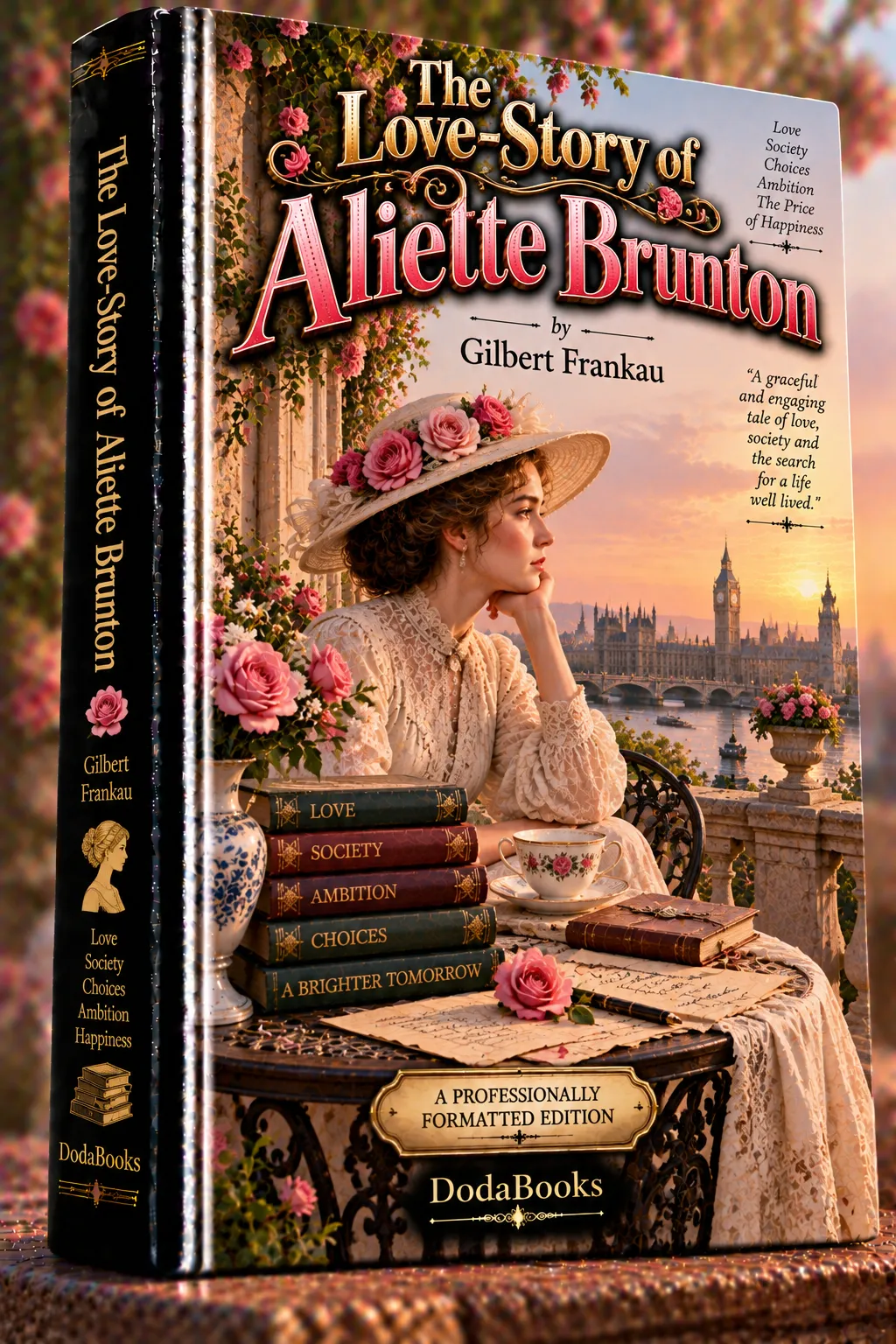
Step into the Glamorous, Scandalous World of Post-WWI Britain
Read Gilbert Frankau's sensational 1922 blockbuster with historical annotations detailing English equestrian hunting culture, archaic divorce statutes, and post-war politics.
Get The Love-Story of Aliette BruntonThe Shires, the Hunt, and the Catalyst
The story opens on a crisp winter morning in the hunting country of Leicestershire. Aliette Brunton is twenty-six years old, beautiful, refined, and an accomplished horsewoman. Yet behind her graceful aristocratic exterior lies a hollow marriage. She is bound to Hector Brunton, a prominent and ambitious London barrister who is cold, vain, and emotionally indifferent, treating Aliette not as a partner, but as an ornamental possession that flatters his career.
On the morning the novel begins, Aliette watches her magnificent chestnut hunter, Miracle, step fresh and gleaming out of his stable box. During the thrilling chaos of that day’s foxhunt across timber fences and muddy pastures, an unexpected fall throws her into the path of Ronald Cavendish.
Cavendish is an honorable, decorated young veteran of the Great War and an up-and-coming barrister himself. In that single, electrifying encounter, both realize with terrifying clarity that the emotion between them is not a casual flirtation, but the defining love of their lives.
Aliette's Battle for Autonomous Life:
[Stifling Marriage in London] ➔ [The Winter Hunt & Meeting Cavendish] ➔ [Hector's Cruel Refusal of Divorce] ➔ [Open Defiance & Social Exile] ➔ [Sensational Courtroom Climax]
The Cruelty of the Law: Hector’s Vengeance
When Aliette honestly confronts Hector, asking for a quiet, civilized separation, she encounters the full, malicious spite of the patriarchal legal system. Hector refuses. Armed with British divorce law, he knows that by simply withholding his consent, he can legally chain Aliette to him forever.
Rather than submitting to a lifetime of living a lie, Aliette and Cavendish make an unprecedented and daring decision: they choose to live together openly as husband and wife in an idyllic cottage in the country, defying the pious judgment of London polite society.
The consequences are immediate and devastating:
- Former society hostesses cut Aliette dead in public streets.
- Cavendish’s legal career is targeted for destruction by legal syndicates who view his “illicit” liaison as a professional scandal.
- Hector Brunton plots ruthless revenge, biding his time to use his legal genius to humiliate the lovers in a sensational public trial.
Anatomy of British Divorce Law
A gripping, accurate critique of early 20th-century English divorce acts, exposing the double standards imposed upon women.
Exquisite Equestrian Realism
Masterful, sensory descriptions of English foxhunting, steeplechases, horse breeding, and the physical thrill of cross-country jumping.
Post-WWI High Society
Vivid portraits of London clubs, country house weekends, and the shifting moral attitudes of the 'Lost Generation' after 1918.
Annotated Legal Companion
Footnotes explaining British court procedures, barrister etiquette at the Inns of Court, and the Matrimonial Causes Acts.
Gilbert Frankau: The Chronicler of Modern Passions
Gilbert Frankau (1884–1952) was one of the most dynamic literary figures of his generation. The son of popular novelist Frank Danby (Julia Frankau), Gilbert served as an artillery officer and poet in the British Army during World War I, surviving the battlefields of Loos and Ypres.
His wartime experiences gave him a profound hatred of hypocrisy and pretense. In The Love-Story of Aliette Brunton, Frankau writes with the passionate urgency of a man who understands that life is too fragile and fleeting to be sacrificed to outdated Victorian conventions. The novel became so culturally influential that legal historians cite it as one of the key popular catalysts that softened British public opposition to the landmark Matrimonial Causes Act of 1923, which finally granted women equal grounds for divorce.
To explore other classic novels confronting female independence, marital rebellion, and social judgment, read our guides to H.G. Wells’ Ann Veronica Guide and Henrik Ibsen’s pioneering drama in A Doll’s House Guide.
Rediscover the Novel That Shook British Society
Read the definitive digital edition of The Love-Story of Aliette Brunton on DodaBooks, complete with historical legal notes, equestrian glossaries, and crisp digital typography.
Purchase Aliette Brunton on DodaBooksWhy Read the DodaBooks Annotated Edition of Aliette Brunton?
Because Frankau’s narrative weaves intricate details of English legal practice at the Inns of Court and specialized foxhunting terminology, modern readers benefit tremendously from contextual notes.
The DodaBooks Annotated Edition provides:
- Historical Guide to English Divorce Laws: Detailing the 1857 and 1923 Matrimonial Causes Acts and the legal inequality faced by women.
- Glossary of Equestrian and Hunting Terms: Explaining the Shires, covert, brush, point-to-point, fences, and timber.
- London Legal Topography Notes: Explaining the Temple, Lincoln’s Inn, Old Bailey, and King’s Counsel procedures.
- Flawless Formatting Across All Devices: Elegant chapter headings, responsive line spacing, and clean typography tailored for Kindle, iPad, Kobo, and smartphones.
Post-War Disillusionment and the Revolt Against Hypocrisy
To fully comprehend the sensational impact of The Love-Story of Aliette Brunton in 1922, one must understand the psychological landscape of post-World War I Great Britain. The Great War had decimated an entire generation of young men, stripping away the sanctimonious moral certainties of the Victorian era. Young men and women who had witnessed the carnage of the Western Front returned home with an intense, burning disgust for the Victorian elders who preached traditional morality while orchestrating slaughter.
Ronald Cavendish and Aliette Brunton embody this post-war generational revolt. Having looked death in the face, they have no patience for empty social appearances or legal fictions that sacrifice living human souls to dead conventions. When Hector Brunton weaponizes the divorce courts to persecute them, he is not merely defending his personal honor; he represents the dying gasp of Victorian authoritarianism trying to reassert control over a modern world that has outgrown it.
Frankau's Cultural Paradigm Shift:
[Victorian Legal Moralism] vs. [The Lost Generation's Craving for Authenticity] ➔ [The Inevitable Modernization of British Society]
Frankau’s narrative throbs with this generational friction. His characters speak with the frank, unvarnished emotional honesty of modern people who demand that human institutions serve human joy, rather than the other way around.
Gilbert Frankau’s The Love-Story of Aliette Brunton is far more than a vintage bestseller; it is an invaluable cultural mirror of an empire in transition. In its passionate defense of emotional authenticity over legal hypocrisy, the novel gave voice to a traumatized generation determined to build a freer, more honest world.
Frequently Asked Questions
Why did The Love-Story of Aliette Brunton cause such a scandal in 1922?
The novel openly challenged British divorce laws and social morality by depicting a married aristocratic woman who unrepentantly leaves her cold husband to live with her lover, exposing the cruelty of the legal system.
Did this novel influence real-life legal reform in Britain?
Yes. Legal historians credit Frankau's bestselling novel with galvanizing public support for the Matrimonial Causes Act of 1923, which finally gave British women equal rights to petition for divorce.
Who was Gilbert Frankau?
Gilbert Frankau was a popular British novelist, poet, and WWI artillery officer known for his socially acute bestsellers examining post-war British society, politics, and romance.
Was the book adapted for the cinema?
Yes. The novel was adapted into a major British silent film in 1927, celebrated for its dramatic courtroom scenes and thrilling foxhunting sequences.
Where can I download the complete digital edition?
You can purchase and immediately download the DodaBooks annotated edition directly from the DodaBooks online bookstore for all modern e-reading devices.