The Love Letters of Henry VIII to Anne Boleyn
Seventeen Passionate, Agonizing Royal Missives that Precipitated the Break with Rome, Redefined the English Monarchy, and Changed the Course of World History
Preserved for nearly five centuries in the secret archives of the Vatican Library in Rome, seventeen short handwritten letters survive from one of the most fateful, obsessive courtships in human history. Written between 1527 and 1528 by King Henry VIII to the maid-of-honor Anne Boleyn, The Love Letters of Henry VIII to Anne Boleyn; With Notes provides an astonishing, unmediated window into the private heart of England’s most formidable monarch.
Unlike formal state dispatches drafted by Latin secretaries, these letters were penned directly in Henry’s own hand—alternating between French and English—revealing an impatient, passionately vulnerable sovereign pleading for the affections of a young woman who refused to become merely his royal mistress. In their intimate expressions of yearning, courtly adoration, and political anxiety, these letters represent the spark that ignited the English Reformation, tore England away from the Roman Catholic Church, and altered the religious and constitutional destiny of the Western world.
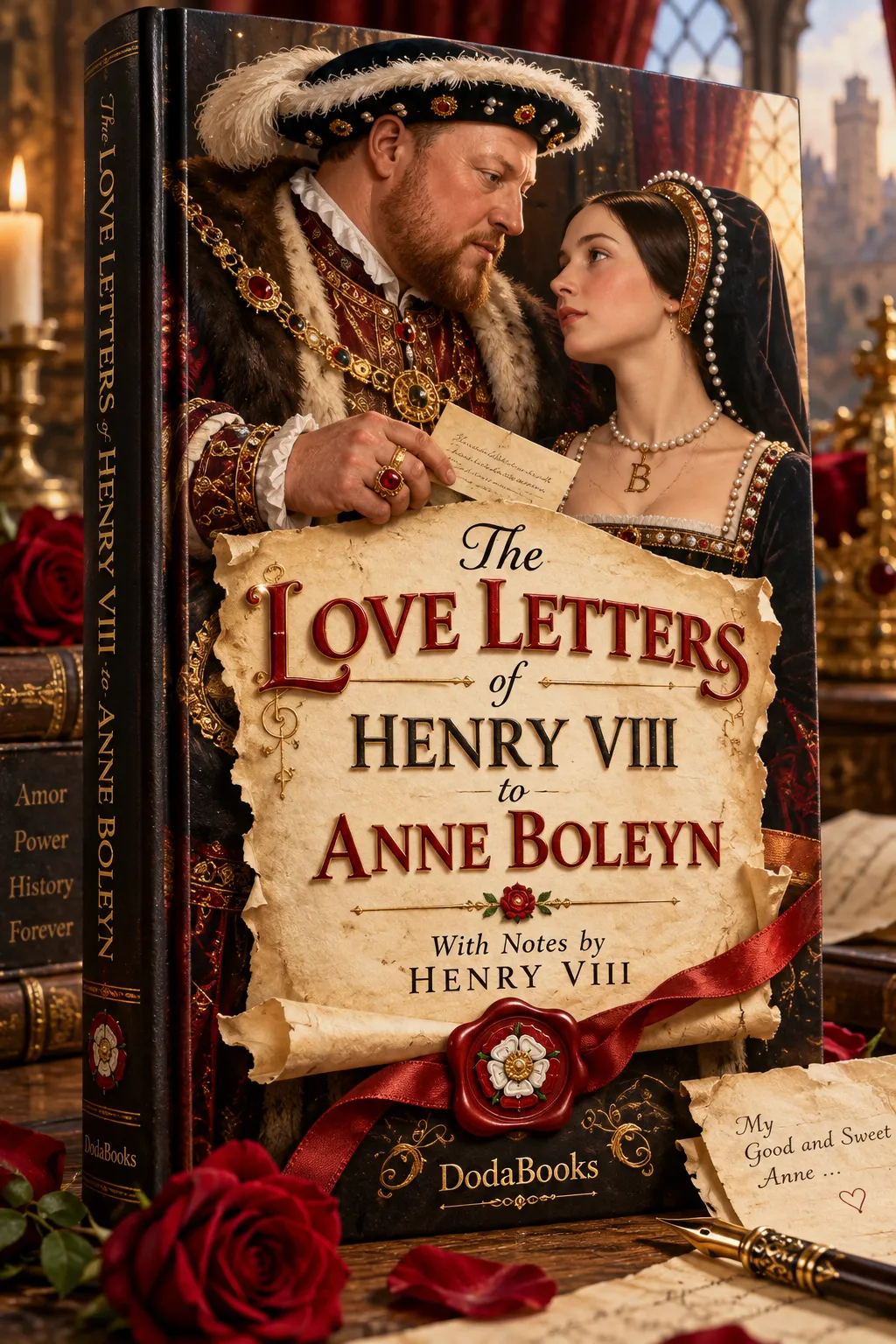
Step Inside the Secret Heart of the Tudor Court
Read the complete seventeen love letters written by King Henry VIII to Anne Boleyn, enriched with extensive historical commentary on the 'King's Great Matter' and the English Reformation.
Get Henry VIII's Love LettersThe Psychology of Royal Obsession: Henry as Pleading Suitor
History routinely remembers Henry VIII as the bloated, tyrannical monarch who executed two wives, dissolved the monasteries, and sent his greatest statesmen to the scaffold. Yet in these private letters, we encounter a radically different Henry: an ardent thirty-six-year-old renaissance prince navigating the agonizing protocols of courtly love (fin’amor).
Anne Boleyn, educated in the sophisticated courts of Margaret of Austria and Queen Claude of France, was unlike any woman Henry had ever known. Refusing to yield her virginity to the King without the crown of Queen, Anne held the sovereign at bay for nearly six years:
- The Agony of Absence: Henry writes with desperate longing during Anne’s retreats to Hever Castle in Kent, complaining that an absence of a single week feels like an eternity of torment.
- The Language of Chivalric Submission: Henry signs his letters with miniature love tokens, drawing hearts around Anne’s initials (AB), and offering to become her “humble servant and loyal vassal”—a remarkable posture of submission for an absolute Renaissance monarch.
- The Royal Buck: Henry accompanies his letters with lavish gifts, including freshly slaughtered stags from his royal parks, assuring Anne that he killed the buck with his own crossbow in her honor.
“My mistress and friend, my heart and I put ourselves into your hands, begging you to recommend us to your good grace and that your affection toward us may not be diminished by absence. For this would be to augment our pain, which would be a great pity, since absence has already caused enough pain.”
How the Letters Arrived in the Vatican Archives
One of the great historical mysteries surrounding these letters is how they ended up in the possession of the Pope. Composed in England, the seventeen letters were stolen from Anne Boleyn’s private apartments in 1528 and secretly smuggled across the Alps to Rome:
- Espionage at the English Court: Historians believe the letters were intercepted by agents working for Cardinal Thomas Wolsey’s papal rivals or spies loyal to Queen Catherine of Aragon and her nephew, Holy Roman Emperor Charles V.
- Evidence for the Papal Trial: The Vatican preserved the letters as explosive evidence in the “King’s Great Matter.” Papal lawyers used them to prove that Henry’s theological request for the annulment of his marriage to Catherine of Aragon (citing Leviticus) was not motivated by legitimate religious conscience, but by an unbridled, adulterous passion for Anne Boleyn.
- Centuries in Secret Vaults: Kept under lock and key in the Vatican for centuries, the letters were first published during the eighteenth and nineteenth centuries, offering the world an unprecedented glimpse into the private genesis of the Church of England.
Unfiltered Historical Primary Source
The authentic, verbatim text of all seventeen letters written in King Henry VIII's own hand to Anne Boleyn during their secret courtship (1527–1528).
The Catalyst of the Reformation
The exact documentary correspondence that prompted Henry to sever ties with the Pope, declare royal supremacy, and alter European religious history.
Courtly Love & Tudor Etiquette
Fascinating insights into 16th-century courtly love conventions, French epistolary phrasing, royal hunting rituals, and intimate royal tokens.
Comprehensive Scholarly Annotations
Extensive historical footnotes explaining Tudor court politics, Cardinal Wolsey's downfall, the sweating sickness epidemic, and Anne Boleyn's tragic fate.
The Sweating Sickness Crisis: Terror in the Tudor Court
One of the most dramatic letters in the collection was written during the terrifying outbreak of the “sweating sickness” (sudor anglicus) in the summer of 1528. This mysterious, deadly epidemic struck with horrific speed, killing healthy victims within a matter of hours.
When Anne contracted the illness at Hever Castle, Henry was gripped by panic:
- He sent his second-best royal physician, Dr. William Butts, riding through the night to Kent with instructions to spare no expense or medication.
- He confessed in his letters that he would gladly suffer half the illness himself if it could relieve her pain.
- He wrestled with religious dread, fearing that the epidemic was a manifestation of divine wrath punishing his sinful desires.
This vulnerability humanizes Henry, showing a man whose immense power was completely helpless in the face of medieval pestilence.
Experience the Passion that Shook an Empire
Read Henry VIII's letters with complete scholarly apparatus, translations from Old French, and historical context explaining the transformation of England.
Get Henry VIII's Letters on DodaBooksThe Tragic Epilogue: From Adoration to the Scaffold
Reading these letters today is an intensely poignant, chilling experience because of what the modern reader knows that Henry and Anne did not:
- The impassioned courtship documented in these letters culminated in Anne’s glorious coronation as Queen of England in Westminster Abbey in June 1533.
- Anne gave birth to the future Queen Elizabeth I, who would become England’s greatest monarch.
- Yet less than three years after their marriage, when Anne failed to produce a surviving male heir and clashed with Henry’s chief minister Thomas Cromwell, the very same king who wrote these letters of eternal devotion signed her death warrant. On May 19, 1536, Anne Boleyn was beheaded by a French swordsman on Tower Green.
The contrast between Henry’s youthful vows of eternal fidelity—“written with the hand of him which desireth as much to be yours as you do wish to have him”—and the cold tragedy of the Tower of London makes this correspondence one of the most haunting documents in human literature.
Why These Letters Remain Essential for History Lovers
No historical novel or cinematic drama can match the raw, intimate power of reading Henry VIII's words directly as he wrote them in late-night palace bedchambers, wrestling with love, faith, and the destiny of a kingdom.
Companion Reading: The Fall of Henry’s Fifth Queen
The terrifying pattern of royal adoration turning to fatal betrayal repeated itself five years later with Henry’s fifth wife, Katharine Howard. To explore the tragic climax of Tudor court politics and Katharine’s martyrdom through brilliant modern literary fiction, read our comprehensive The Fifth Queen Crowned Guide analyzing Ford Madox Ford’s masterpiece of Tudor psychological realism.
The Annotations in the DodaBooks Edition
The DodaBooks curated edition of The Love Letters of Henry VIII to Anne Boleyn provides:
- Parallel Translations: Clear modern English translations alongside original Tudor English and Middle French phrases.
- Chronological Sequence Analysis: Notes dating each letter based on royal itineraries, hunting excursions, and diplomatic dispatches to Rome.
- Biographical Register: Profiles of key court figures mentioned, including Cardinal Wolsey, Thomas Cranmer, and the Duke of Norfolk.
Download the Historic Letters Today
Discover the letters that changed the course of European history in an impeccably curated and annotated digital edition.
Download the Edition NowFrequently Asked Questions
How many love letters survive from Henry VIII to Anne Boleyn?
Seventeen letters survive in King Henry VIII's own handwriting, composed between 1527 and 1528 during the height of their courtship. They are preserved in the Vatican Library in Rome.
Why are these letters in the Vatican Library instead of England?
The letters were intercepted or stolen in England in 1528 and sent to Rome by papal agents or supporters of Queen Catherine of Aragon, where they were used as legal evidence to demonstrate that Henry's divorce request was driven by romantic infatuation rather than theological scruple.
What language were the letters written in?
The letters were written partly in Tudor English and partly in French, which was the prestigious international language of courtly romance and diplomacy in early 16th-century European courts.
How did these letters impact world history?
Anne's refusal to become Henry's mistress forced the King to seek an annulment from Catherine of Aragon. When Pope Clement VII refused, Henry broke with Rome, declared himself Supreme Head of the Church of England, and initiated the English Reformation.
Where can I get the complete annotated ebook?
The complete digital edition of the letters with extensive historical notes is available for immediate download at DodaBooks at https://dodabooks.com/ebook/the-love-letters-of-henry-viii-to-anne-boleyn-with-notes-by-henry-viii-king-of-england/.