The Hill of Venus
Nathan Gallizier’s Sinuous, Operatic Tale of Hohenstaufen Splendor, Guelph vs. Ghibelline Warfare, Monastic Vows, and Sacred vs. Profane Passion
In the glittering, intellectually turbulent world of thirteenth-century Italy, two titanic civilizational forces collided for mastery over Western Christendom: the ascetic, dogmatic authority of the Roman Catholic Papacy and the enlightened, multicultural imperial court of Emperor Frederick II of Hohenstaufen (Stupor Mundi—“The Wonder of the World”). In The Hill of Venus (1913), the master of sensory American medievalism, Nathan Gallizier (1866–1925), crafted his most philosophically ambitious and dramatically compelling historical romance.
Drawing its title from the ancient Germanic-Italian legend of the Venusberg—the enchanted subterranean realm where Tannhäuser was ensnared by the goddess of love, caught between sensual ecstasy and eternal damnation—Gallizier transposes this mythic archetype into the volcanic political realities of northern Italy. It is a story of monastic vows tested by earthly beauty, broadsword battles beneath the shadow of Mount Vesuvius and the Apennines, and the eternal struggle between spiritual renunciation and the irresistible claims of the living heart.
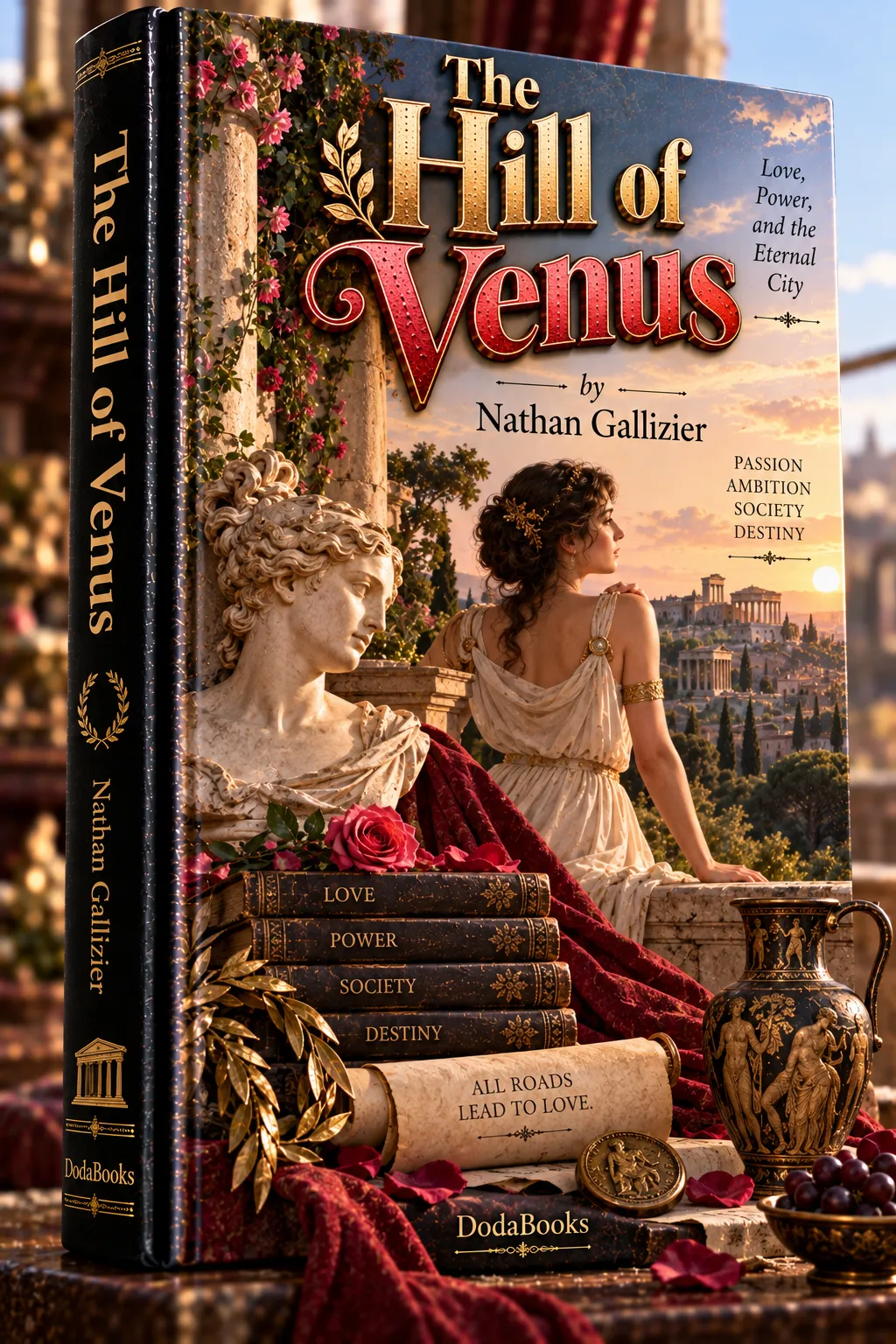
Step into the Golden Age of Hohenstaufen Italy
Read Nathan Gallizier's sumptuous romance in an annotated edition exploring the court of Frederick II, Guelph and Ghibelline factionalism, and medieval Italian monasticism.
Get The Hill of VenusThe Agony of Brother Francesco: Between the Cloister and the World
The emotional engine of The Hill of Venus is the spiritual torment of its protagonist, Francesco Villani, a young nobleman who, in a moment of youthful grief and filial obedience, has taken solemn monastic vows in the austere Cistercian abbey of Chiaravalle:
- The Dying Father’s Bequest: On his deathbed, Francesco’s father confesses a terrible family secret: an ancient feud and a broken marriage contract with the noble house of the Ghibelline warlord Count of Montefiore. He releases Francesco from his vows in conscience, charging him to ride into the world and restore the family’s honor.
- The Enchantment of Iolanthe: Leaving the monastery gates on his mission, Francesco encounters Iolanthe of Montefiore—a maiden of dazzling beauty and fiery independent spirit. In an instant, the cold stone cell, the Latin chants, and the monastic cowl dissolve before the incandescent reality of human love.
- The Accusation of Sacrilege: To the fanatical papal inquisitors and conservative churchmen, Francesco is a fugitive monk who has committed mortal sacrilege by renouncing his cowl. His love for Iolanthe is branded a demonic snare—the forbidden “Hill of Venus” that leads straight to perdition.
The Imperial Splendor of Frederick II’s Court
Where The Hill of Venus achieves true historical grandeur is in Gallizier’s dazzling reconstruction of the court of Frederick II. Unlike standard medieval romances that depict the Middle Ages as dark, filthy, and ignorant, Gallizier captures the luminous, multilingual renaissance that flourished under the Hohenstaufen emperor in Palermo and Naples:
- The Confluence of East and West: Frederick’s court is depicted as an intellectual crossroads where Christian knights, Arab mathematicians, Jewish translators, and Provençal troubadours conversed in peace under the emperor’s enlightened patronage.
- The Falconry Treatises and Natural Sciences: Gallizier weaves in authentic historical details from Frederick’s famous treatise De Arte Venandi cum Avibus (On the Art of Hunting with Birds), contrasting the emperor’s empirical scientific curiosity with the dogmatic superstitions of his enemies.
- The War of the Factions: The narrative thunders with the brutal reality of the Guelph and Ghibelline wars, detailing armored cavalry charges across river fords, mountain fortress sieges, and the bitter vendettas that tore Italian city-states apart for generations.
Luminous 13th-Century Setting
A richly researched historical portrait of Hohenstaufen Italy, contrasting the intellectual brilliance of Frederick II with feudal Papal orthodoxy.
Profound Spiritual & Moral Conflict
A moving psychological study of an ascetic monk torn between solemn ecclesiastical vows and the sacred reality of human romantic passion.
Opulent Color-Saturated Prose
Gallizier's signature sensory style, bringing medieval castles, cypress-lined Apennine mountain passes, and papal courts to vivid life.
Scholarly Explanatory Footnotes
Detailed notes explaining medieval canon law, Cistercian monastic rules, Guelph-Ghibelline factionalism, and the Tannhäuser legend.
The Tannhäuser Theme in Mediterranean Colors
By framing Francesco’s dilemma through the Germanic motif of the Hill of Venus, Gallizier creates a fascinating bridge between Northern European romantic myth and Mediterranean classical history. To the ascetic medieval church, female beauty and the sensory arts were dangerous illusions manufactured by pagan demons lurking in ancient ruins.
Gallizier demonstrates the psychological cruelty of this worldview:
“To tell a man that the beauty God made to gladden the earth is a snare of Satan; that to love a noble woman is to forfeit heaven—that is not piety, but the blasphemy of small souls who fear the sun because their eyes have grown blind in dungeons.”
Francesco’s spiritual triumph comes not from crawling back into a dark monastic tomb, but from discovering that genuine holiness resides in courage, justice, and self-sacrificing love within the active human world.
Experience the Passion of 13th-Century Italy
Read Nathan Gallizier's dramatic masterpiece in an exquisitely formatted digital edition with historical introductions, dynastic charts, and explanatory glossaries.
Get The Hill of VenusThe Troubadour Lyric and the Sicilian School of Poetry
An essential cultural layer in The Hill of Venus that enriches Gallizier’s historical canvas is his recreation of the Sicilian School of Poetry (Scuola Siciliana), founded under the personal patronage of Emperor Frederick II. Prior to the thirteenth century, vernacular romantic lyric poetry in Europe was almost exclusively composed in the Provençal Occitan language of Southern France.
Under Frederick II, court notaries and chancellors—most famously Giacomo da Lentini (credited with inventing the sonnet)—began writing passionate love lyrics in the literary Sicilian vernacular:
- The Ideal of Courtly Devotion: In the novel, Francesco’s transformation from an austere Latin-chanting monk into an ardent knight is mirrored by his discovery of vernacular poetry. The cold abstractions of scholastic theology give way to the delicate, sensory vocabulary of the Italian sonnet.
- The Philosophy of Natural Beauty: Frederick’s poets did not view nature as fallen and corrupt; they praised the song of the nightingale, the scent of the orange grove, and the radiance of a woman’s eyes as direct manifestations of divine benevolence.
- Troubadour Chivalry vs. Inquisitorial Fanaticism: Gallizier brilliantly dramatizes this aesthetic rebellion. To the Dominican inquisitors, vernacular love poetry was a dangerous heresy that seduced souls away from thoughts of death and judgment. To Frederick’s court, poetry was the highest exercise of civilized human nobility.
Gallizier’s Place in American Historical Romance
Writing alongside contemporaries like Marion Crawford and Rafael Sabatini, Nathan Gallizier occupied a unique niche in early twentieth-century American publishing. While many authors produced superficial costume dramas, Gallizier was an erudite antiquarian who read medieval chronicles in Latin, Italian, and German.
His descriptions of medieval armaments—hauberks of chainmail, Great helms, crossbow quarrels, and heraldic crests—are flawless in their historical accuracy. Yet his scholarship never bogs down the narrative; it serves as rich, vibrant soil from which an unforgettable romantic tragedy blossoms.
Why The Hill of Venus Still Resonates Today
The core dilemma of Gallizier's novel—the struggle to reconcile institutional dogma with personal moral conscience and authentic love—is universal and timeless. It is historical romance at its most majestic and thoughtful.
The Annotations in the DodaBooks Edition
The DodaBooks curated edition provides an indispensable reading companion:
- Historical Guide to Emperor Frederick II: Explanations of his conflicts with Pope Gregory IX and Innocent IV, his Sicilian constitutions, and his multicultural administration.
- Topographical Map of Thirteenth-Century Lombardy & Campania: Identifying castles, monasteries, and pilgrimage routes featured in the novel.
- Ecclesiastical Glossary: Defining Cistercian monastic ranks, papal interdicts, and medieval canon law doctrines.
Download the Classic Italian Romance Today
Step onto the blood-soaked battlefields and marble courtyards of medieval Italy in Nathan Gallizier's masterpiece.
Download the Edition NowFrequently Asked Questions
Who was Nathan Gallizier?
Nathan Gallizier (1866–1925) was an American novelist and historian of Italian and German heritage, famous for his richly researched, dramatic historical romances set in medieval Rome, Lombardy, and the Italian Renaissance.
What is the historical backdrop of The Hill of Venus?
The novel is set in 13th-century Italy during the epic struggle between Holy Roman Emperor Frederick II (Hohenstaufen) and the Papacy, against the backdrop of the fierce Guelph and Ghibelline civil wars.
What is the meaning behind the title 'The Hill of Venus'?
The title refers to the medieval legend of the Venusberg (Hill of Venus), where knights were seduced into an enchanted realm of sensual love. In the novel, it serves as a metaphor for the hero's struggle between ascetic monastic vows and earthly romantic passion.
How does this book connect to Gallizier's other Italian novels?
The Hill of Venus forms part of Gallizier's celebrated Italian cycle, which also includes Under the Witches' Moon (10th-century Rome), The Court of Lucifer (Renaissance Borgias), and The Sorceress of Rome.
Where can I purchase the complete annotated ebook?
The complete digital edition is available for immediate download at DodaBooks at https://dodabooks.com/ebook/the-hill-of-venus-by-nathan-gallizier/.