The First of the English: A Novel
Archibald Clavering Gunter’s Swashbuckling 1895 Tale of Sea Dogs, Spanish Galleons, and the Low Countries
In the golden era of popular American adventure fiction at the end of the nineteenth century, few authors could rival the narrative kinetic energy and sheer theatrical flair of Archibald Clavering Gunter (1847–1907). An English-born civil engineer, mining assayer, and Broadway playwright who turned to historical romances, Gunter achieved worldwide fame with blockbusters like Mr. Barnes of New York.
In his 1895 maritime adventure The First of the English: A Novel, Gunter turned his dramatic gifts to the most heroic and perilous moment in English naval history: the titanic showdown between Queen Elizabeth I’s privateers and the mighty naval empire of King Philip II of Spain.
Set in the turbulent waters of the English Channel and the foggy estuaries of the Low Countries (the Netherlands) during the Dutch Revolt, the novel follows a young, audacious Elizabethan sea captain—barely twenty-five years old—who shakes the salt spray from his tarpaulin coat and steers his darkened ship directly into hostile Spanish waters on a mission that will decide the fate of Protestant Europe.
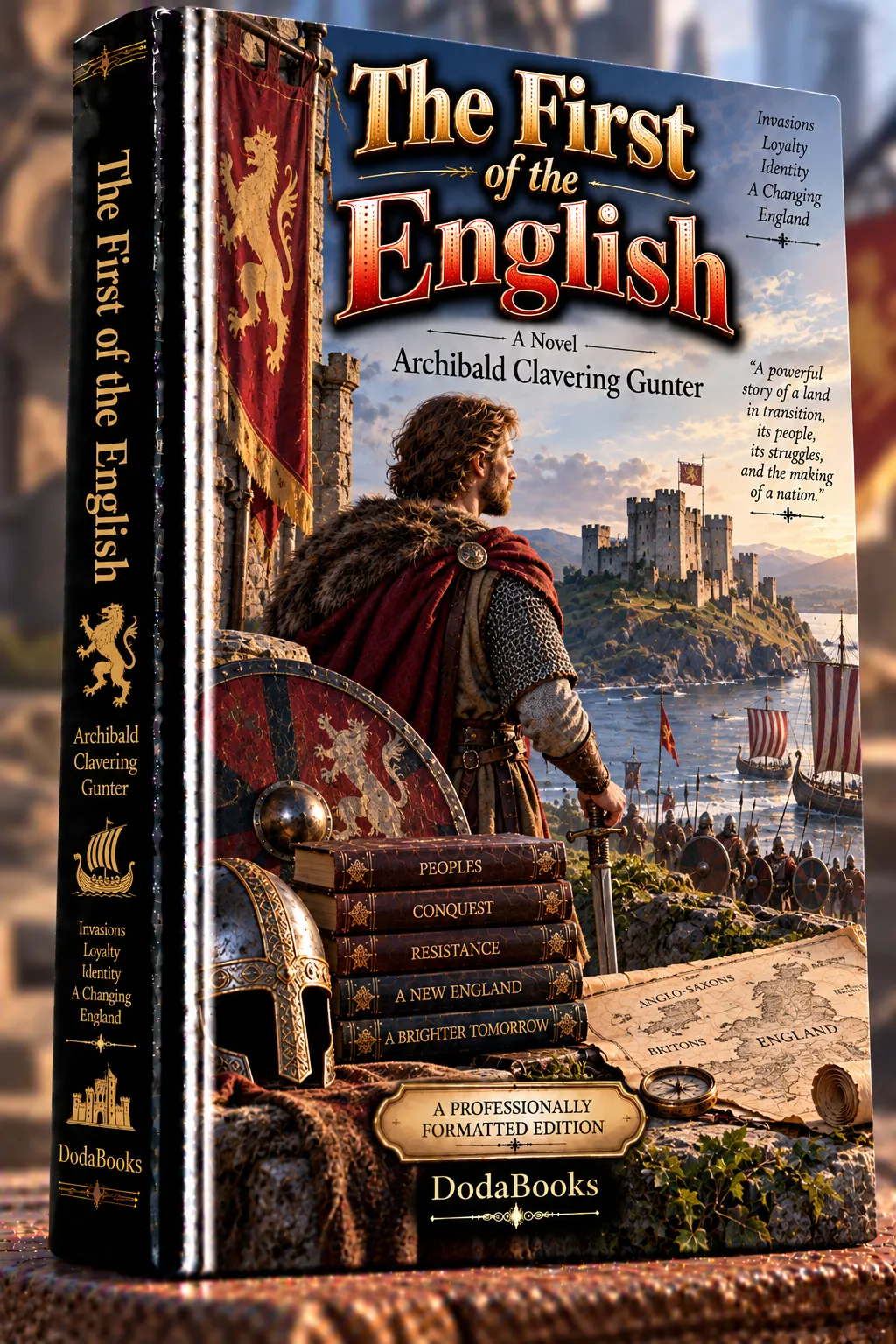
Board the War Galleons of Elizabethan England
Read Archibald Clavering Gunter's 1895 maritime swashbuckler with historical annotations detailing Elizabethan privateering, the Spanish Armada, and Dutch coastal warfare.
Get The First of the EnglishThe passionate origins of Tudor court power and the English Reformation are laid bare in King Henry VIII’s love letters to Anne Boleyn.
The Elizabethan Privateers: The “Sea Dogs”
To appreciate the world Gunter depicts, one must understand the perilous geopolitical reality of England in 1588. A tiny island kingdom of barely four million people, England faced the colossal global superpower of the Spanish Empire, enriched by the silver mines of Peru and backed by the dreaded Spanish infantry tercios.
Queen Elizabeth I could not afford to maintain a massive permanent standing royal navy. Instead, she relied upon her legendary “Sea Dogs”—men like Sir Francis Drake, John Hawkins, and Walter Raleigh—daring privateers who sailed armed merchantmen, combining commercial trading with ruthless naval warfare.
Gunter’s protagonist, young Captain Guy Chester, embodies the spirit of these early English mariners:
- Fearless navigators who learned their seamanship on the freezing North Sea and the stormy Atlantic.
- Men driven by fierce national pride, loyalty to the Virgin Queen, and an insatiable appetite for Spanish gold doubloons.
- Tactical innovators who discarded the ancient Mediterranean tactic of ramming and boarding, pioneering long-range broadside cannon fire from nimble, fast-sailing galleons.
Chester's High-Seas Peril Trajectory:
[Darkened Privateer in the Channel] ➔ [Spanish Infiltration at Antwerp] ➔ [Naval Cannon Fire in the Shallows] ➔ [Dutch Beggars of the Sea Alliance] ➔ [Triumphant Return]
Plot Synopsis: Infiltration, Espionage, and Cannon Fire
The story begins in the treacherous shallows off the coast of Flanders. The Duke of Parma, Spain’s greatest general, is gathering a veteran army of thirty thousand troops, preparing to board flat-bottomed transport barges and cross the English Channel under the protection of the approaching Spanish Armada.
Captain Chester is dispatched on a clandestine mission of supreme peril: he must slip through the Spanish naval blockade into the occupied city of Antwerp to rescue an English intelligence courier carrying Parma’s secret troop deployment maps, while disrupting the construction of the invasion barges.
What follows is classic Gunter melodrama at its finest:
- Disguising himself as a Spanish naval officer, Chester infiltrates the palace of the Spanish Governor, engaging in a battle of wits with court spies.
- A passionate, high-stakes romance develops with a spirited noblewoman whose family is secretly allied with William of Orange and the Dutch resistance (“The Sea Beggars”).
- A thrilling nocturnal escape across the flooded dykes of Holland under heavy harquebus fire.
- A climactic, thunderous sea battle where Chester’s agile English vessel takes on a towering Spanish war galleass, raking its tiered oar decks with culverin cannon fire.
Authentic Elizabethan Naval Action
Vivid, technically accurate depictions of 16th-century naval artillery, rigging, cutlass boarding actions, and Channel navigation.
The Dutch Revolt History
Fascinating historical background on the Sea Beggars (*Watergeuzen*) and the Dutch war of liberation against the Spanish Inquisition.
Broadway-Caliber Dialogue
Written by a veteran playwright, featuring crackling banter, rapid dramatic turns, and charismatic heroes.
Annotated Historical Apparatus
Footnotes explaining 16th-century naval weaponry (culverins, sakers, demi-cannons), currency, and political alliances.
The Title Explained: “The First of the English”
Why did Gunter title the novel The First of the English? In Gunter’s historical vision, the Elizabethan era marked the psychological moment when the modern English character was forged. Prior to the reign of Elizabeth I, England was an insular European kingdom focused primarily on dynastic wars in France.
It was the Elizabethan Sea Dogs who first looked outward to the world’s oceans, creating a culture of global navigation, commercial audacity, and maritime liberty. By calling his hero “The First of the English,” Gunter is celebrating the archetype of the independent, self-reliant seaman whose courage transformed an underdog island into a global maritime power.
To explore other rich sea narratives of courage, maritime discipline, and naval drama, explore our companions to Herman Melville’s Moby-Dick: Analysis Decoded and the raw maritime realism of Blow the Man Down Guide.
Set Sail with the Great Elizabethan Sea Dog
Read the definitive digital edition of The First of the English on DodaBooks, complete with 16th-century naval battle maps, weapons glossaries, and crisp digital typography.
Purchase The First of the English on DodaBooksWhy Read the DodaBooks Annotated Edition of The First of the English?
Because Gunter incorporates authentic 16th-century naval architecture, Elizabethan nautical jargon, and complex Dutch geography, modern readers greatly benefit from curated historical guidance.
The DodaBooks Annotated Edition delivers:
- Naval Weapons & Artillery Glossaries: Explaining culverins, basilisk cannons, harquebuses, matchlocks, and grapnels.
- Historical Maps of the 1588 Armada Campaign: Tracing the Duke of Parma’s staging grounds at Dunkirk and Antwerp and the Channel fleet movements.
- Biographical Directory of Historical Figures: Detailing Queen Elizabeth I, King Philip II, the Duke of Parma, and Lord Howard of Effingham.
- Flawless Formatting Across All Devices: Pristine chapter divisions, clear dialogue formatting, and legible typography optimized for Kindle, iPad, Kobo, and smartphones.
The Technology of 16th-Century Maritime Supremacy
A distinguishing feature of Archibald Clavering Gunter’s maritime fiction is his meticulous attention to sixteenth-century naval engineering. The victory of the English Sea Dogs over the Spanish Armada was not merely a triumph of raw courage or favorable weather; it was a technological and tactical revolution in naval warfare.
Under the direction of Sir John Hawkins, English shipwrights developed the revolutionary “race-built” galleon. These ships lowered the high, castle-like fore and aft towers of traditional Spanish galleons, creating sleek, flush-decked vessels with a vastly superior length-to-beam ratio. As Captain Guy Chester demonstrates throughout the novel’s sea battles, these race-built ships could sail closer to the wind, outmaneuver the lumbering Spanish leviathans, and deliver devastating broadsides of heavy culverin fire from safe standoff distances.
The Tactical Naval Shift of 1588:
Traditional Spanish Tower Galleon (Boarding & Soldiers) vs. English Race-Built Galleon (Speed & Heavy Broadside Artillery)
Gunter captures this tactical clash with electric precision. Readers feel the deck roll beneath Chester’s sea boots, hear the deafening roar of black powder, and witness the birth of modern naval artillery tactics that would secure British control of the seas for the next three centuries.
Archibald Clavering Gunter’s The First of the English remains a thrilling masterpiece of maritime adventure storytelling. With its crackling dialogue, relentless tempo, and authentic Elizabethan naval tactics, it brings the glorious, perilous dawn of English naval mastery roaring to life for modern readers.
Frequently Asked Questions
What historical event forms the background of The First of the English?
The novel is set during 1588 during the build-up to the Spanish Armada, when King Philip II of Spain attempted to conquer England and overthrow Queen Elizabeth I.
Who was author Archibald Clavering Gunter?
Archibald Clavering Gunter (1847–1907) was an English-born American civil engineer, mining assayer, playwright, and novelist who became one of the bestselling adventure writers of the 1890s.
What were the 'Sea Beggars' mentioned in the novel?
The Sea Beggars (Watergeuzen in Dutch) were daring Calvinist Dutch privateers and rebels who waged guerrilla naval warfare against Spanish rule in the Low Countries during the Eighty Years' War.
Is the novel suitable for fans of classic swashbucklers?
Yes. Fans of Rafael Sabatini (Captain Blood), Alexandre Dumas, and C.S. Forester (Horatio Hornblower) will love Gunter's fast pacing, swordplay, and authentic naval tactics.
Where can I purchase and download the annotated digital edition?
The complete digital edition is available directly from DodaBooks in EPUB and PDF formats for all modern e-reading devices.