The Dangerous Game
William Le Queux’s 1913 Classic of Mediterranean Intrigue, Coded Telegrams, and Pre-WWI Secret Agents
Before Ian Fleming introduced James Bond or John le Carré mapped the shadowy corridors of the Cold War, William Tufnell Le Queux (1864–1927) was the unchallenged monarch of international espionage fiction. A flamboyant Anglo-French journalist, globetrotting foreign correspondent, and self-professed unofficial operative for the British secret service, Le Queux essentially invented the modern spy thriller.
Published in 1913 on the eve of the First World War, The Dangerous Game captures the electrifying tension of a Europe poised on the brink of catastrophe. Set amidst the sun-drenched verandas of Mediterranean luxury hotels, smoke-filled diplomatic clubs in Corfu, and shadowy Balkan frontiers, the novel tells the story of an unassuming English novelist who accidentally intercepts a coded commercial cable about dried currants—only to discover that he has stumbled into a lethal international conspiracy threatening the peace of the world.
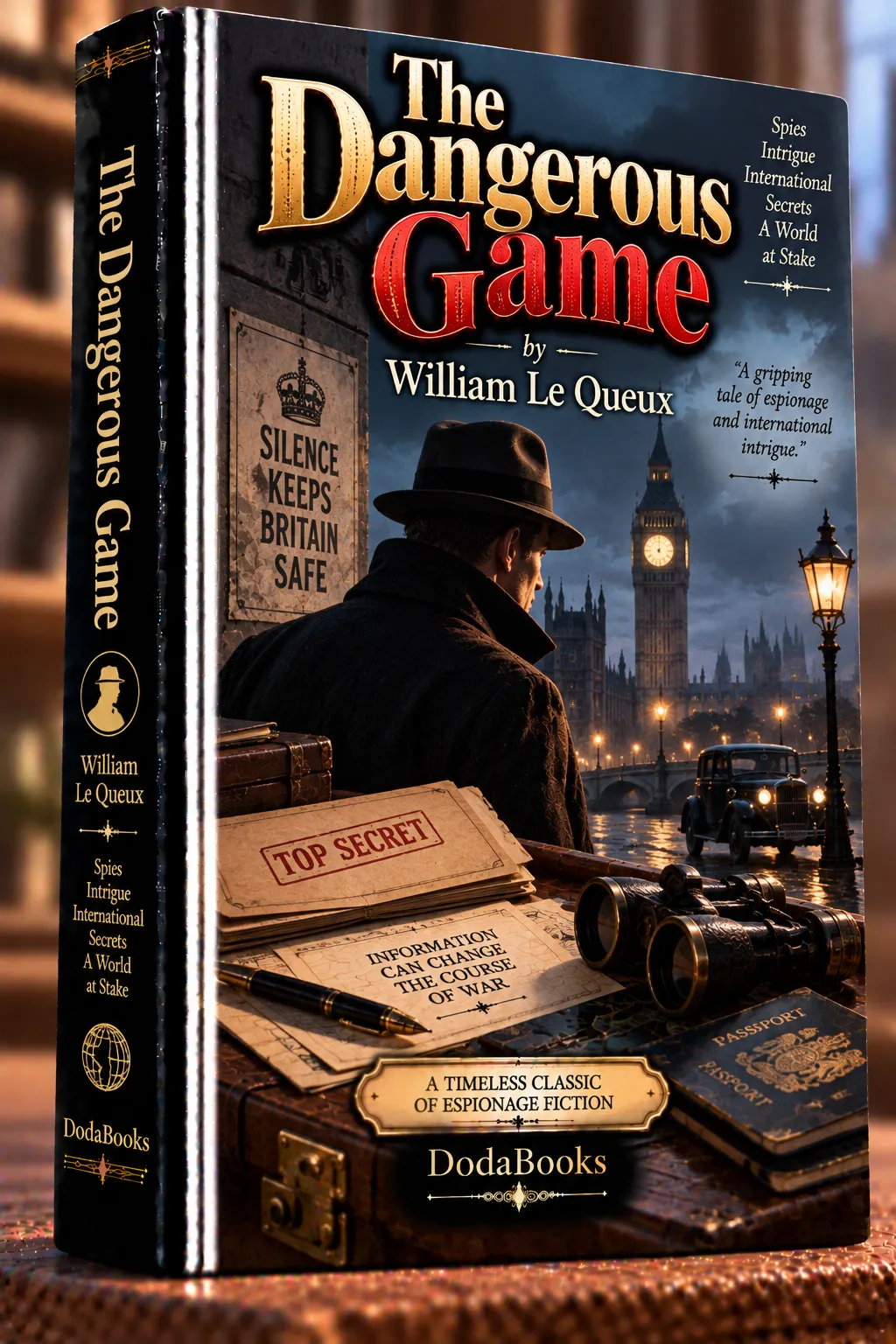
Step into the Glamorous, Deadly World of Edwardian Spies
Read William Le Queux's 1913 spy classic with historical annotations explaining the Balkan Wars, pre-WWI naval alliances, cipher telegrams, and European diplomatic intrigue.
Get The Dangerous GameThis intricate web of domestic deception and hidden crime echoes the brilliant plotting of Fergus Hume’s detective classic.
The Architect of the Invasion and Espionage Thriller
To understand the immense cultural footprint of William Le Queux, one must appreciate the geopolitical anxieties of late Edwardian Britain. As imperial Germany expanded its High Seas Fleet and the crumbling Ottoman Empire sparked volatile conflicts across the Balkans, the British public was consumed by fears of clandestine foreign spies infiltrating London society.
Le Queux tapped directly into these collective phobias. His serialized thrillers (such as The Great War in England in 1897 and The Invasion of 1910) were so wildly popular and alarmist that British War Secretary Lord Haldane partially credited Le Queux’s novels with galvanizing the political momentum that created MI5 and MI6 in 1909.
In The Dangerous Game, Le Queux steps away from domestic invasion scenarios to craft an elegant, sophisticated tale of Mediterranean counter-intelligence. The novel showcases his intimate knowledge of Continental high society, diplomatic courier networks, and the shadowy underworld of Austro-Hungarian, Russian, and Italian secret services competing for naval dominance across the Adriatic Sea.
Le Queux's Espionage Blueprint:
[Languid Mediterranean Resort] ➔ [Accidental Intercepted Telegram] ➔ [Coded Commercial Ciphers] ➔ [Assassination Plots] ➔ [Continental Catastrophe Averted]
Plot Overview: The Secret Cable of Corfu
The narrative opens on the tranquil Greek island of Corfu, where wealthy cosmopolitan travelers gather at the Grand Hotel to escape the winter chill. Among them is our narrator, an English writer seeking rest. His curiosity is piqued by an enigmatic, stout Englishman named Bellingham, who spends his afternoons smoking Turkish cigarettes and receiving innocuous commercial telegrams regarding Greek currant exports.
When Bellingham suddenly drops dead under deeply suspicious circumstances, the narrator recovers one of the discarded telegraph ribbons. Enlisting the aid of a charming Italian noblewoman whose loyalties remain tantalizingly ambiguous, he discovers that the commercial jargon conceals a sophisticated book cipher:
- “Forty tons of currants” refers to heavy naval guns being covertly shipped to a clandestine submarine base.
- “Market prices fluctuating” signals the impending assassination of a key Balkan prince designed to ignite a pan-European war.
Suddenly transformed from a detached bystander into a hunted target, the protagonist is swept into a desperate chase across the Mediterranean, dodging Austrian secret police, ruthless assassins, and seductive double agents across Athens, Trieste, and Vienna.
Pre-WWI Geopolitical Realism
A gripping time-capsule of 1913 Mediterranean and Balkan powder-keg tensions published just twelve months before the outbreak of World War I.
Vintage Code-Breaking
Detailed depictions of historical Edwardian telegraphy, substitution ciphers, and diplomatic courier security protocols.
Glamorous European Settings
Atmospheric descriptions of Corfu, Venetian palaces, Viennese cafes, and Adriatic steamer voyages rendered with firsthand authentic flair.
Historical Annotations
Explanatory notes clarifying period diplomatic treaties, Balkan border disputes, and Le Queux's fascinating ties to early British intelligence.
The Dangerous Game and the Birth of Secret Service Mythology
What makes The Dangerous Game extraordinarily compelling for modern readers is its depiction of early intelligence tradecraft. Long before satellite surveillance or cyber intelligence, spying was entirely physical and social:
- The Art of the Social Masquerade: Spies operated not in sewer tunnels, but in casino gaming rooms and embassy ballrooms, using aristocratic charm to extract military secrets.
- The Ambiguity of the Femme Fatale: The novel’s female lead embodies the early prototype of the sophisticated international agent whose true allegiance remains a mystery until the final chapter.
- The Vulnerability of Commercial Telegraphy: Le Queux brilliantly demonstrates how international commercial cables served as the primary battleground of pre-war espionage.
To explore how classic European mystery and detective fiction developed alongside early 20th-century geopolitical intrigue, compare this novel with our companions to Helen Vardon’s Confession Guide and The Memoirs of Sherlock Holmes Guide.
Experience the Original Master of Spy Fiction
Read the definitive digital edition of The Dangerous Game on DodaBooks. Complete with diplomatic maps, historical glossaries, and pristine digital typesetting.
Purchase The Dangerous Game on DodaBooksWhy Read the DodaBooks Annotated Edition of The Dangerous Game?
While Le Queux’s narrative pacing is relentlessly exciting, his numerous references to 1913 Balkan frontier treaties, obsolete European railway connections, and pre-war naval pacts can baffle unguided readers.
The DodaBooks Annotated Edition provides:
- Historical Notes on the Balkan Wars of 1912–1913: Contextualizing the real-world powder keg that served as the backdrop for Le Queux’s fictional conspiracy.
- Glossary of Edwardian Diplomatic & Telegraphic Terms: Explaining book ciphers, diplomatic couriers, neutral shipping declarations, and cable relay stations.
- Biographical Introduction to William Le Queux: Detailing his friendship with Lord Northcliffe and his eccentric claims of operating undercover for British intelligence.
- Flawless Formatting Across All Devices: Designed with elegant typography, clear dialogue spacing, and distraction-free footnote popups across Kindle, iPad, Kobo, and smartphones.
The Geopolitical Chessboard: The Adriatic as Strategic Chokepoint
To understand why William Le Queux set The Dangerous Game in the Mediterranean and the Adriatic Sea, one must understand the naval arms race preceding 1914. While history remembers the Dreadnought race in the North Sea between Great Britain and Imperial Germany, the Mediterranean was an equally volatile tinderbox. The Austro-Hungarian Empire, backed by German capital, was feverishly constructing naval bases along the Dalmatian coast, while Italy—nominally an ally in the Triple Alliance—eyed those same Adriatic waters with intense suspicion and territorial ambition.
Le Queux understood that small islands like Corfu were not merely idyllic holiday resorts for European royalty; they were vital listening posts where submarine movements could be tracked and wireless signals intercepted. By weaving commercial telegraph cables into his plot, Le Queux was highlighting a very real vulnerability of the British Empire: the reliance on submarine telegraph cables that could be severed or tapped by hostile powers in the first hours of war.
Pre-WWI Mediterranean Strategic Matrix:
[Austrian Adriatic Naval Ambition] + [Italian Irredentism] + [Balkan Frontier Volatility] ➔ [The Inevitability of Continental Conflagration]
This meticulous attention to geopolitical reality transforms The Dangerous Game from a lightweight escape yarn into an invaluable cultural artifact. It captures the authentic nervous energy of the late Edwardian ruling class, who sensed that their golden afternoon of peace, luxury steamers, and grand hotels was about to be obliterated by modern mechanized warfare.
The enduring brilliance of William Le Queux’s fiction lies in its marriage of urgent geopolitical warning and high-stakes cinematic adventure. In The Dangerous Game, readers receive not merely an entertaining mystery, but a vital historical window into the secret diplomacy and intelligence tradecraft that defined the final months of peace before the catastrophic outbreak of the Great War.
For an earlier, exhilarating maritime adventure of Elizabethan Sea Dogs taking on the Spanish Armada, read our companion to The First of the English Guide.
For an unflinching, authentic firsthand chronicle of the Western Front and the Irish Guards, explore Valentine Williams’ The Adventures of an Ensign Guide.
Frequently Asked Questions
Who was William Le Queux and why is he historically important?
William Le Queux was an Anglo-French journalist and novelist whose sensational thrillers in the 1890s and 1900s pioneered the modern spy thriller and invasion genre, heavily influencing the founding of Britain's MI5 and MI6.
What is the significance of the year 1913 in the novel?
Published in 1913, the novel appeared just months before the assassination of Archduke Franz Ferdinand ignited World War I. Its depiction of secret Balkan plots to trigger a European war proved remarkably prophetic.
What is the 'dangerous game' referred to in the title?
The 'dangerous game' refers to the deadly, high-stakes sport of international espionage played by secret agents, diplomats, and military intelligence officers across the Mediterranean and Balkans.
How does William Le Queux compare to later spy novelists like Ian Fleming?
Le Queux established the core elements Fleming later popularized: exotic Mediterranean luxury locations, glamorous high-stakes casinos, dangerous foreign operatives, coded communications, and charming British gentlemen thrown into lethal perils.
Where can I download the complete annotated edition?
You can purchase and immediately download the DodaBooks annotated edition directly from the DodaBooks online bookstore for all modern e-reading devices.