The Count of Monte Cristo Characters: Edmond Dantès, Aliases & Villains Explained
Few literary figures have captivated readers as powerfully as Edmond Dantès, the tragic sailor who endures fourteen years in the black dungeons of the Château d’If, inherits a mythic island treasure, and returns to Paris as an omniscient, godlike avenger.
Yet Alexandre Dumas’s 1844 epic The Count of Monte Cristo is far more than a one-man show. Dumas and his collaborator Auguste Maquet constructed a colossal tapestry of over fifty interconnected characters, each representing a distinct moral, psychological, and social facet of 19th-century post-Napoleonic France.
At its core, the novel is an anatomy of the seven deadly sins played out across three social strata: the cold commercial greed of the banking bourgeoisie (Danglars), the murderous ambition of the state judicial apparatus (Gérard de Villefort), and the militaristic treason and sexual jealousy of the old aristocracy (Fernand Mondego). Opposing them is Dantès and his loyal disciples, navigating the narrow line between righteous justice and demonic obsession.
This comprehensive guide breaks down Edmond Dantès’s four distinct personas, analyzes his beloved mentor Abbé Faria, examines the psychology of his lost love Mercédès, details the three mortal conspirators, and maps out the character relationships that drive this monumental story.
⚡ The Count of Monte Cristo: Key Characters at a Glance
- Edmond Dantès: The heroic, naive sailor from Marseille whose wrongful imprisonment transforms him into an aristocratic, cold avenger operating under four distinct aliases (The Count, Abbé Busoni, Lord Wilmore, and Sinbad the Sailor).
- Abbé Faria: The saintly, brilliant Italian priest imprisoned in the Château d'If who educates Dantès in science, languages, and strategy, bequeathing him the Spada fortune.
- Mercédès Herrera (Countess de Morcerf): Dantès's Catalan fiancée whose enduring love survives twenty-four years of separation, and the only person in Paris who immediately recognizes Edmond.
- Baron Danglars: The envious purser turned ultra-wealthy Parisian banker whose god is money and whose downfall is financial ruination and starvation.
- Fernand Mondego (Count de Morcerf): The Catalan rival who marries Mercédès through deceit, builds a fake military reputation through treason, and ends his life in suicide.
- Gérard de Villefort: The ambitious Crown Prosecutor who buries Dantès alive to protect his own political reputation, ultimately destroyed by poison and madness.
- Haydée: The Greek princess sold into slavery by Fernand who becomes the Count's ward and, ultimately, his redeemer and lover.
📊 Comprehensive Character Dynamics & Motivations Matrix
+--------------------------------------------------------------------------------------------------------------------+
|                                THE COUNT OF MONTE CRISTO CHARACTER DYNAMICS & FOILS                               |
+----------------------+-----------------------+-----------------------------+---------------------------------------+
| CHARACTER            | SOCIAL IDENTITY       | PRIMARY MOTIVATION          | FATAL FLAW / MORAL OUTCOME            |
+----------------------+-----------------------+-----------------------------+---------------------------------------+
| Edmond Dantès        | Sailor / The Count    | Divine justice & complete   | Hubris: believed himself an angel of  |
|                      | of Monte Cristo       | retribution for 14 wasted yr| God until innocent Édouard dies       |
+----------------------+-----------------------+-----------------------------+---------------------------------------+
| Abbé Faria           | Imprisoned Italian    | Universal knowledge, truth, | Tragic frailty: physical body fails   |
|                      | priest and scholar    | and freedom for his student | just before the tunnel is completed   |
+----------------------+-----------------------+-----------------------------+---------------------------------------+
| Mercédès Herrera     | Catalan maiden /      | Maternal devotion & silent  | Compromise: married Fernand out of    |
|                      | Countess de Morcerf   | grief for her lost Edmond   | despair; renounces wealth for poverty |
+----------------------+-----------------------+-----------------------------+---------------------------------------+
| Baron Danglars       | Purser turned Baron   | Pure financial accumulation | Avarice: would sacrifice daughter and |
|                      | & multimillionaire    | and social dominance        | country for gold; left penniless      |
+----------------------+-----------------------+-----------------------------+---------------------------------------+
| Fernand Mondego      | Fisherman turned      | Possessing Mercédès &       | Treachery: betrayed Ali Pasha for cash|
|                      | Peer of France        | attaining military glory    | shoots himself when exposed to public |
+----------------------+-----------------------+-----------------------------+---------------------------------------+
| Gérard de Villefort  | Royalist Crown        | Judicial power, reputation, | Ruthless ambition: buried his infant; |
|                      | Prosecutor of Paris   | and political survival      | driven into violent madness           |
+----------------------+-----------------------+-----------------------------+---------------------------------------+
| Haydée               | Greek Princess /      | Justice for her father Ali  | Pure devotion: rescues the Count      |
|                      | The Count's ward     | Pasha & love for Dantès     | from despair through unconditional love|
+----------------------+-----------------------+-----------------------------+---------------------------------------+
| Maximilian Morrel    | Honorable French      | Martial duty, family honor, | Despair: willing to die for love;     |
|                      | army captain          | and love for Valentine      | rewarded as Dantès's spiritual heir   |
+----------------------+-----------------------+-----------------------------+---------------------------------------+
🎭 Edmond Dantès and the Four Personas
The transformation of Edmond Dantès is one of the greatest character arcs in world literature. He begins as a bright, optimistic, nineteen-year-old sailor who believes in the inherent goodness of God and humanity.
Fourteen years of torture in the Château d’If burn away his innocence, leaving behind a creature of sheer will. Believing that Providence has selected him to reward the virtuous and punish the wicked, Dantès constructs four separate personas to move through different levels of 19th-century European society:
+-----------------------------------------------------------------------------------------------+
|                             THE FOUR PERSONAS OF EDMOND DANTÈS                                 |
+--------------------------+-----------------------+--------------------------------------------+
| PERSONA                  | SOCIAL SPHERE         | PURPOSE & FUNCTION IN THE CONSPIRACY       |
+--------------------------+-----------------------+--------------------------------------------+
| The Count of Monte Cristo| Parisian High Society | The pale, mysterious, omniscient nobleman  |
|                          | & Aristocratic Salons | who dazzles society and manipulates rivals |
+--------------------------+-----------------------+--------------------------------------------+
| Abbé Busoni              | Religious & Judicial  | An Italian Catholic priest who hears death-|
|                          | Circles; Criminals    | bed confessions and extracts legal secrets |
+--------------------------+-----------------------+--------------------------------------------+
| Lord Wilmore             | Financial Houses &    | An eccentric, reclusive English peer who   |
|                          | Foreign Diplomacy     | acts as Dantès's rival and secret benefactor |
+--------------------------+-----------------------+--------------------------------------------+
| Sinbad the Sailor        | Mediterranean Docks   | A legendary oriental corsair who rewards   |
|                          | & Smugglers           | Pierre Morrel and operates beyond the law  |
+--------------------------+-----------------------+--------------------------------------------+
1. The Count of Monte Cristo
The primary persona is an aristocratic specter. Dumas describes him with marble-pale skin (the result of fourteen years deprived of sunlight), dark, piercing eyes that seem to read the innermost secrets of human souls, and cold, effortless courtliness. He sleeps two hours a night, carries poisoned emerald pastilles, speaks half a dozen languages fluently, and spends millions with casual contempt. To Parisian society, he is a figure out of Lord Byron’s gothic poems—vampiric, glamorous, and terrifying.
2. Abbé Busoni
When Edmond needs to extract confessions, examine prison archives, or question the guilty without exciting suspicion, he dons the cassock of an Italian Catholic priest. As Abbé Busoni, he presents himself as a man of holy justice, extracting Gaspard Caderousse’s full confession in exchange for a diamond and appearing in the death chamber of criminals.
3. Lord Wilmore
To throw French police and suspicious enemies off his scent, Edmond invents Lord Wilmore, an eccentric, generous, but stiff English aristocrat. Wilmore claims to be a mortal enemy of the Count of Monte Cristo, describing the Count as a dangerous adventurer. This brilliant psychological feint prevents his enemies from realizing that the benefactor rescuing their victims and the avenger destroying their houses are the exact same man.
4. Sinbad the Sailor
In the Mediterranean, Dantès adopts the guise of Sinbad the Sailor, living in a subterranean palace on Monte Cristo adorned with oriental silks, Turkish pipes, and marble fountains. Under this persona, he delivers the red purse and the replica Pharaon to save Pierre Morrel from suicide.
🏛️ Abbé Faria: The Architect of the Avenger
Without Abbé Faria, Edmond Dantès would have died as an illiterate skeleton in the dungeons of the Château d’If.
Faria is the novel’s spiritual, intellectual, and moral anchor:
- The Polymath Scholar: A former secretary to Cardinal Spada, Faria has spent his life mastering ancient history, political philosophy, modern languages, and physical sciences. In his stone cell, he invents his own ink from lamp-soot and wine, manufactures paper from his linen shirts, and pens a philosophical treatise with a pen carved from a fishbone.
- The Deductive Detective: In Chapter 17, Faria listens to Dantès’s story of his arrest and, using pure Socratic reasoning, reconstructs the conspiracy of Danglars, Fernand, and Villefort. When Dantès erupts with a bloodthirsty vow of vengeance, Faria weeps, realizing with horror: “Alas! I have instilled into your heart a passion that was not there before.”
- The True Father: Faria loves Edmond as his own son, imparting not only the secret of the twenty-million-franc Spada treasure, but the moral nobility of his spirit. Faria represents pure intellect dedicated to liberation, standing in contrast to the Count’s later perversion of that intellect for destruction.
💔 Mercédès Herrera: The Tragedy of Incomplete Love
Mercédès is the emotional tragedy of the novel. When nineteen-year-old Edmond is arrested, Mercédès is plunged into suicidal grief. For eighteen months, she weeps at the rocky promontory overlooking the sea, waiting for her sailor to return.
- The Fatal Compromise: When all evidence confirms Edmond’s death and Fernand Mondego threatens to take his own life in despair, Mercédès yields and marries Fernand. While she becomes Countess de Morcerf, she never ceases to mourn her lost love.
- The Immediate Recognition: In Chapter 70, when the Count visits the Morcerf mansion, Mercédès alone among all of Paris recognizes Edmond Dantès the moment she lays eyes on him. She sees the ghost of her youth in his eyes.
- The Maternal Intercession: The emotional zenith of the novel occurs in Chapter 89, when Mercédès comes alone to the Count’s home at midnight. Throwing herself at his feet, she calls him “Edmond” and pleads for the life of her son Albert. Dantès, who has prepared for twenty-four years to kill the son of his enemy, melts before her tears, choosing his own death in the duel to preserve her son.
- The Renunciation: When Albert learns of his father’s treason, Mercédès and Albert abandon the Morcerf fortune, mansion, and title, leaving Paris with only the modest dowry of 3,000 francs that Edmond had buried in his father’s garden in 1815.
🐍 The Three Mortal Conspirators Analyzed
The three men who destroy Edmond Dantès embody the three corrupting forces of mid-19th-century Europe:
1. Baron Danglars: The Avarice of Capital
Danglars is the architect of the crime. Cold, emotionless, and mathematically brilliant, he feels no personal hatred toward Edmond; he simply cannot bear to see a nineteen-year-old promoted above him.
- The Evolution: Danglars rises from ship purser to the wealthiest private banker in France, financing national loans and European wars. He treats human lives—including his wife and daughter Eugénie—purely as financial entries in a ledger.
- The Poetic Retribution: Dantès attacks Danglars through the only thing he loves: money. By manipulating the Spanish telegraph, calling in unlimited credit, and promoting the fraudulent Cavalcanti marriage, the Count drains Danglars’s liquidity. When Danglars flees to Rome with stolen hospital funds, Luigi Vampa starves him, charging 100,000 francs per meal until Danglars is completely destitute.
2. Fernand Mondego (Count de Morcerf): Treason & False Honor
Fernand is the brute force of the conspiracy. A fiery, passionate Catalan fisherman, he wants Mercédès at any cost.
- The False Hero: Unable to win Mercédès through merit, he mails Danglars’s letter. He enlists in the French army, rising through opportunism, but achieves his millions through unspeakable treason: in Greece, he betrays Ali Pasha of Janina to the Ottoman Turks for a bribe, murders Ali Pasha, and sells Ali Pasha’s wife and four-year-old daughter Haydée into sex slavery.
- The Poetic Retribution: The Count exposes Fernand’s treason before the Chamber of Peers through Haydée’s firsthand testimony. When Albert and Mercédès walk away from him in disgust, Fernand’s carefully fabricated identity as an honorable nobleman evaporates. When the Count reveals he is Edmond Dantès, Fernand shoots himself in the temple.
3. Gérard de Villefort: The Corruption of the Law
Villefort is the most chilling of the villains because he operates under the sacred mantle of the law.
- The Ambitious Prosecutor: Villefort knows Dantès is innocent, but destroys him because the letter Dantès carries is addressed to Villefort’s Bonapartist father, Noirtier. To preserve his royalist career, Villefort buries Edmond alive in a dungeon without trial.
- The Secret Sin: Villefort maintains an image of incorruptible, icy moral severity, yet he fathered an illegitimate child with Madame Danglars and buried the newborn baby alive in a garden box.
- The Poetic Retribution: The Count introduces Villefort’s surviving illegitimate son (the sociopathic criminal Benedetto) into high society, who exposes Villefort in open court. Simultaneously, the poisonings in Villefort’s home culminate in his wife murdering their innocent nine-year-old son Édouard. Villefort collapses into complete, violent insanity.
🕊️ Haydée and Maximilian: The Path to Redemption
If the three conspirators represent the abyss of vengeance, Haydée and Maximilian Morrel represent Dantès’s salvation.
- Maximilian Morrel: The noble, fearless soldier who loves Valentine de Villefort. Maximilian is the living embodiment of his father Pierre Morrel’s virtue. When Valentine is seemingly poisoned, Maximilian is ready to die of grief. By saving Valentine and uniting the young lovers, Dantès redeems his own lost youth.
- Haydée: Far from a passive submissive slave, Haydée is an active agent of justice who confronts Morcerf in the Chamber of Peers. Furthermore, Haydée is the only person who can heal Dantès’s frozen, blackened heart. Her love is unconditional: she loves the Count not for his wealth or power, but because he gave her freedom, dignity, and care. In sailing away with Haydée, Dantès chooses life over the endless graveyard of revenge.
❓ Frequently Asked Questions
Why does Mercédès marry Fernand if she loved Edmond?
Mercédès waited for Edmond for eighteen months in profound grief. In 1816, all evidence suggested Edmond had died in prison or been executed. Fernand was her cousin, was drafted into the army, and threatened to commit suicide if she refused him. Alone in the world with no family, Mercédès succumbed to despair and accepted his proposal, though she never stopped loving Edmond.
Did Abbé Faria know the full extent of the Spada treasure?
Yes! Faria was the secretary to the last Count Spada and discovered the secret will by holding a burned fragment of parchment near a candle flame, revealing invisible sympathetic ink. The treasure consisted of two million Roman crowns in gold ingots, ancient coins, and precious jewels hidden in the caves of Monte Cristo.
Who was Benedetto, and why was he important to the revenge?
Benedetto was the illegitimate son of Gérard de Villefort and Madame Danglars. Villefort tried to bury him alive as a newborn in a garden in Auteuil. He was rescued by Bertuccio, grew up into a vicious criminal, and was introduced into Paris society by the Count as “Prince Andrea Cavalcanti” to expose Villefort’s hypocrisy and ruin Danglars’s daughter.
Why does the Count spare Danglars's life at the end?
After the death of innocent nine-year-old Édouard de Villefort, the Count was shattered by remorse, realizing that his vengeance had exceeded divine limits. When he sees Danglars starving in the Roman catacombs, Dantès pardons him, feeding him and allowing him to keep a modest 50,000 francs to live out his days as a broken man.
Where can I find an unabridged edition of The Count of Monte Cristo?
To experience all 117 chapters and the complete character arcs without Victorian censorship or missing subplots, explore the DodaBooks Edition, featuring complete unabridged text and clean, DRM-free formatting.
📚 Related Articles
Interested in more classic psychological mysteries and multi-character epics? Check out our The Moonstone Characters Explained or our The Woman in White Characters Explained.
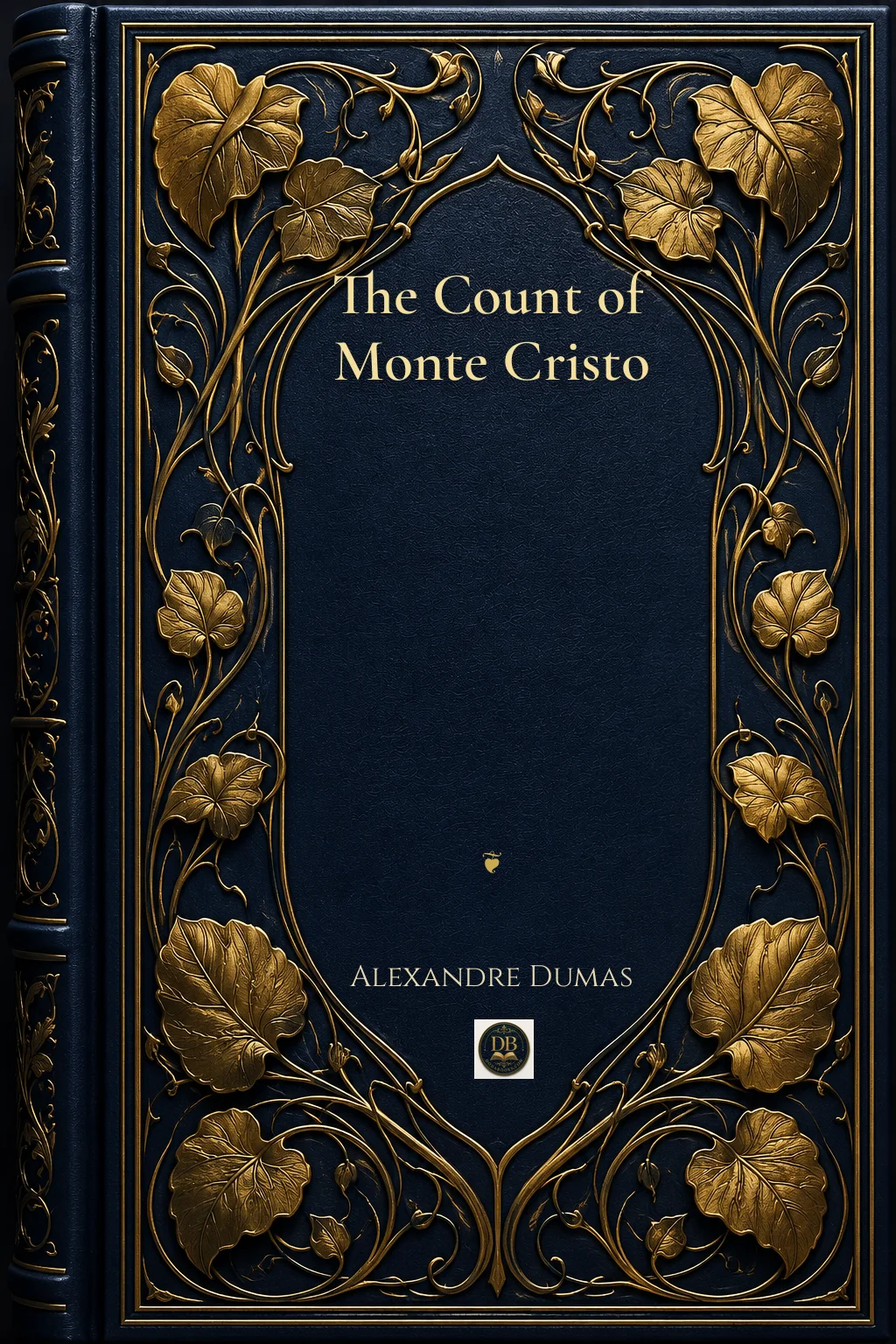
⚓ Experience Dumas’s Complete Epic in Unabridged Splendor
Read the story that defined revenge, betrayal, and redemption in an authoritative, distraction-free edition:
- ✅ Complete, unabridged 117-chapter text across all seven dramatic movements
- 🏛️ French political & historical context illuminated — understand the Hundred Days and Restoration
- 🗂️ Passage-specific annotation cards decoding the aliases, finances, and classical references
- 🔒 DRM-free EPUB format — readable on any Kindle, Kobo, iPad, or mobile device
- 📥 Instant digital download delivered directly after checkout