The Brothers Karamazov Characters: Dmitri, Ivan, Alyosha & Smerdyakov Explained
When Fyodor Dostoevsky wrote The Brothers Karamazov between 1878 and 1880, he created an unforgettable gallery of characters that functioned simultaneously as vivid psychological portraits and profound metaphysical archetypes. Through the dysfunctional Karamazov family, Dostoevsky staged a monumental debate on the nature of the human soul, dividing the human psyche across four brothers: the sensual passion of Dmitri, the cold rational intellect of Ivan, the radiant spiritual faith of Alyosha, and the bitter, nihilistic malice of Smerdyakov.
Presiding over this divided brotherhood is their monstrous, lecherous father, Fyodor Pavlovich, whose biological vitality and cynical buffoonery curse all four sons with what Dostoevsky termed the “Karamazov force”—an earth-bound, violent thirst for life that can drag a soul down into the abyss of depravity or propel it upward toward spiritual transfiguration.
This comprehensive character guide examines every major figure in The Brothers Karamazov, exploring their philosophical significance, internal contradictions, psychological dynamics, and ultimate spiritual fates.
| Character | Role / Archetype | Dominant Faculty | Philosophical Dilemma & Core Trait | Ultimate Destiny |
|---|---|---|---|---|
| Dmitri Karamazov (Mitya) | Eldest Brother / The Passionate Sinner | Sensuality / The Heart | Torn between the ideal of the Madonna and the ideal of Sodom; stormy honor | Wrongfully convicted of parricide; accepts suffering; plans escape to America |
| Ivan Karamazov (Vanya) | Middle Brother / The Tragic Rationalist | Intellect / The Mind | Euclidean reason rejects God’s world over the suffering of children; “Everything is permitted” | Collapses into brain fever and schizophrenia after confronting the Devil |
| Alyosha Karamazov (Alexey) | Youngest Brother / The Spiritual Hero | Faith / The Soul | Radiant Christian love; carries Zosima’s mandate into the secular world | Rises from spiritual doubt; unites schoolboys around Ilusha’s grave |
| Pavel Smerdyakov | Illegitimate Brother / The Nihilistic Shadow | Spite / The Corrupted Will | Illegitimate servant and cook; takes Ivan’s logic literally to murder Fyodor | Murders Fyodor; confesses to Ivan; hangs himself on the eve of the trial |
| Fyodor Pavlovich Karamazov | The Patriarch / The Vulgar Buffoon | Greed & Lust | Cynical, self-absorbed sensualist; weaponizes buffoonery to humiliate others | Bludgeoned to death in his locked bedroom by Smerdyakov |
| Elder Zosima | Spiritual Mentor / The Russian Monk | Active Love & Grace | Teaches universal responsibility: “Each of us is responsible for all and everything” | Dies early; body decomposes; appears in Alyosha’s mystical vision of Cana |
| Grushenka (Agrafena Svetlova) | The Temptress / Redeemed Magdalene | Pride & Vitality | Proud provincial courtesan; pursued by father and son; reborn through love for Mitya | Redeemed through mutual love with Dmitri; vows to follow him to Siberia |
| Katerina Ivanovna (Katya) | Aristocratic Heroine / The Proud Martyr | Pride & Will | Tormented by noble “lacerations”; loves her own pride more than she loves Mitya | Betrays Dmitri in court out of hatred and despair; reconciles in hospital |
🌪️ Dmitri Fyodorovich Karamazov (Mitya): The Passionate Sinner
                  [THE PSYCHOLOGICAL BATTLEFIELD OF DMITRI]
                                      │
        ┌─────────────────────────────┴─────────────────────────────┐
        ▼                                                           ▼
[THE IDEAL OF THE MADONNA]                                  [THE IDEAL OF SODOM]
- High aesthetic sensitivity                                - Wild drunken brawls & debauchery
- Noble chivalry toward Katerina                            - Visceral sexual obsession with Grushenka
- Yearning for moral redemption                             - Violent rage against his father
- "Glory to God in the highest!"                            - The 3,000-ruble theft
1. The Battlefield of the Heart
Dmitri (28), the eldest son, is a volcano of raw physical and emotional vitality. A former army officer, he lives entirely in the present moment, swept away by grand romantic impulses, spontaneous generosity, and reckless debauchery.
Dmitri delivers the novel’s most famous definition of the human condition:
“Beauty is a terrible and awful thing! It is terrible because it has not been fathomed, for God has given us only riddles. Here the boundaries meet and all contradictions exist side by side… The awful thing is that beauty is mysterious as well as terrible. God and the devil are fighting there, and the battlefield is the heart of man.”
Dmitri possesses an innate moral nobility, yet he is constantly dragged into the mud by his uncontrollable impulses. He is engaged to the noble Katerina Ivanovna, yet he falls into an all-consuming, humiliating sexual obsession with Grushenka.
2. The Tragedy of the 3,000 Rubles
Dmitri’s tragedy is triggered by financial and moral dishonor:
- Entrusted with 3,000 rubles by Katerina to post to Moscow, Dmitri squanders half of it on a wild spree with Grushenka at the village of Mokroye.
- Ashamed of being a thief, Dmitri sews the remaining 1,500 rubles into a cloth amulet worn around his neck, determined to repay Katerina before killing himself.
- When Fyodor Pavlovich is murdered and Dmitri spends this hidden 1,500 rubles during his second orgy at Mokroye, the authorities naturally assume the money came from his father’s stolen envelope, sealing his legal doom.
3. Spiritual Resurrection Through Suffering
Although Dmitri did not kill his father, he acknowledges his moral guilt: he wished his father dead and struck the faithful servant Grigory with a brass pestle. When sentenced to twenty years in Siberia, Dmitri accepts his fate not with despair, but with spiritual joy:
“I accept the torture of accusation and my public shame, I want to suffer and by suffering I shall purify myself! For we are all responsible for all!”
❄️ Ivan Fyodorovich Karamazov (Vanya): The Tragic Rationalist
                  [THE INTELLECTUAL TRAP OF IVAN KARAMAZOV]
                                      │
        ┌─────────────────────────────┴─────────────────────────────┐
        ▼                                                           ▼
[EUCLIDEAN RATIONALISM]                                     [THE NIHILISTIC CONCLUSION]
- Refuses to accept innocent suffering                      - "If God does not exist,
- "Rebellion": returning the ticket                           everything is permitted"
- The Grand Inquisitor parable                              - Smerdyakov executes his logic
- Human freedom is an impossible burden                     - Descent into madness & Devil
1. Euclidean Logic and the Rebellion
Twenty-four-year-old Ivan is the intellectual titan of the novel. Aloof, sarcastic, and intensely private, Ivan represents the Europeanized Russian intelligentsia that embraced Western rationalism and atheistic humanism.
In Book V, “Pro and Contra,” Ivan delivers the most devastating critique of religious faith in literature:
- He does not reject God; he rejects God’s creation.
- Citing horrific newspaper accounts of sadistic violence inflicted on innocent children, Ivan argues that no future cosmic harmony, heavenly paradise, or divine forgiveness can ever compensate for the tears of a single tortured child.
- With profound moral indignation, Ivan declares: “I most respectfully return Him the ticket.”
2. “The Grand Inquisitor”
Ivan’s intellectual masterpiece is his prose poem The Grand Inquisitor. In sixteenth-century Seville, the Grand Inquisitor confronts Christ, arguing that true human freedom is a terrifying curse that causes endless bloodshed and despair:
- Christ demanded that men follow Him freely out of faith, but humanity is too weak, cowardly, and depraved for such freedom.
- The Roman Church has corrected Christ’s work by offering mankind what it truly craves: Miracle, Mystery, and Authority, giving them bread and taking away the unbearable burden of their free conscience.
- When Christ answers this savage critique with a silent kiss of love, Ivan reveals his own inner conflict: his mind is committed to cold logic, but his soul longs for transcendent love.
3. The Collapse into Madness
Ivan’s philosophical formula—“If God does not exist, everything is permitted”—becomes his undoing. When Smerdyakov confesses to murdering Fyodor, he proves that he was merely Ivan’s disciple:
“You killed him, Ivan Fyodorovich… You are the real murderer, and I was only your minion.”
Horrified by the realization that his abstract intellectual theory produced a literal, blood-soaked parricide, Ivan’s mind shatters. In Book XI, he hallucinates a conversation with The Devil, depicted not as a glorious Miltonic Lucifer, but as a shabby, vulgar, aging parasite who mocks Ivan’s intellectual vanities. Ivan ends the novel unconscious, stricken with severe brain fever.
🕊️ Alexey Fyodorovich Karamazov (Alyosha): The Radiant Disciple
                 [ALYOSHA'S JOURNEY: FROM MONK TO APOSTLE]
                                    │
       ┌────────────────────────────┴────────────────────────────┐
       ▼                                                         ▼
[THE MONASTIC RETREAT]                                    [THE SECULAR MISSION]
- Novice under Elder Zosima                               - Sent into the town to minister
- Devastated by Zosima's decomposing corpse               - Transforms Kolya & schoolboys
- Mystical vision of Cana of Galilee                      - Preaches resurrection at the stone
1. The Cherub in the World
Twenty-year-old Alyosha is Dostoevsky’s explicit hero. Far from being a naive, simple-minded saint, Alyosha carries the same passionate “Karamazov blood” as his brothers, but his nature is transfigured by deep, unassuming love for humanity:
“He was simply an early lover of humanity, and that he embraced the monastic life was only because at the time it struck him, so to say, as the ideal escape for his soul from the darkness of worldly wickedness.”
Alyosha is the only person who moves freely between all opposing camps—visiting his corrupt father, comforting the tortured Dmitri, debating the brilliant Ivan, and tending to the destitute Snegiryov family. He listens without judgment, absorbing the sins and griefs of others like a spiritual sponge.
2. The Crisis and the Miracle of Cana
Alyosha’s spiritual crisis occurs in Book VII. When Elder Zosima dies and his corpse immediately begins to decompose and smell, the monks proclaim that Zosima was corrupt. Broken-hearted that nature did not grant a miracle to his beloved teacher, Alyosha nearly succumbs to cynicism, visiting Grushenka with the spiteful seminarian Rakitin.
However, when Grushenka treats Alyosha with reverence upon hearing of Zosima’s death, Alyosha’s faith is miraculously renewed. Returning to the monastery, he falls asleep beside Zosima’s coffin and dreams of Cana of Galilee, seeing Christ turning water into wine and celebrating with Zosima:
“He fell on the earth a weak youth, but he rose up a resolute champion, and he knew and felt it suddenly, in the very moment of his ecstasy.”
3. The Apostle to the Children
Obeying Zosima’s command to live in the world, Alyosha devotes himself to the town schoolboys, befriending the proud young leader Kolya Krasotkin and comforting the dying Ilusha. The novel ends not with courtroom drama or philosophical debate, but with Alyosha standing beside a country stone, inspiring twelve young boys to remember love, practice kindness, and believe in the resurrection of the dead.
🐍 Pavel Fyodorovich Smerdyakov: The Nihilistic Shadow
                 [THE CORRUPTED REFLECTION: SMERDYAKOV]
                                   │
      ┌────────────────────────────┼────────────────────────────┐
      ▼                            ▼                            ▼
[ORIGINS IN SQUALOR]         [COLD SERVITUDE]             [THE FATAL EXECUTION]
- Son of Stinking Lizaveta   - Epileptic cook & lackey    - Takes Ivan's ideas literally
- Born in a bathhouse        - Disdains Russia & culture  - Bludgeons Fyodor with paperweight
- Raised without affection   - Vanity, pomade, & guitar   - Hangs himself in despair
1. The Unacknowledged Son
Pavel Smerdyakov is the fourth, illegitimate Karamazov brother. Born to “Stinking Lizaveta,” a mentally impaired, mute holy fool who died in childbirth in Fyodor Pavlovich’s bathhouse, Smerdyakov was raised in the kitchen by the servant Grigory:
- As a child, Smerdyakov showed disturbing cruelty, hanging stray cats and holding mock funerals for them.
- As an adult, he is sullen, conceited, fastidious, and pathologically vain, dressing in French pomade, playing the guitar, and openly expressing contempt for peasant Russia.
2. The Instrument of Murder
Smerdyakov is the dark shadow of Ivan. Incapable of generating original philosophical ideas himself, he latching onto Ivan’s atheistic theories like a parasite:
- Smerdyakov feigns an epileptic seizure to provide himself with an airtight alibi on the night of the murder.
- Using Dmitri’s secret signals, he lures Fyodor to the door and murders him in cold blood.
- When Ivan confronts him, Smerdyakov expresses genuine shock that Ivan is horrified: Smerdyakov believed they had an unspoken criminal partnership. Realizing that Ivan holds him in supreme contempt and that he is spiritually damned, Smerdyakov hands the stolen money to Ivan and hangs himself with a rope.
🐷 Fyodor Pavlovich Karamazov: The Buffoon Patriarch
Fyodor Pavlovich (55) is one of the most grotesque fathers in world literature:
- He is physically repulsive: flabby skin, sensual pouches beneath his little pig-like eyes, decayed teeth, and a pointed Adam’s apple resembling a vulture.
- He is a moral nihilist who uses buffoonery as a psychological weapon: by playing the shameless clown and insulting everyone around him, he preempts their judgment and excuses his own boundless selfishness.
- His rivalry with his own son Dmitri over the courtesan Grushenka demonstrates the utter degradation of fatherhood. He treats his children not as human beings, but as financial obstacles to his own sexual indulgence.
💃 The Women: Grushenka and Katerina Ivanovna
Dostoevsky’s female protagonists are locked in a psychological duel that mirrors the spiritual conflicts of the brothers:
                  ┌─────────────────────────────────────────┐
                  │       THE PSYCHOLOGICAL DUEL OF WOMEN   │
                  └────────────────────┬────────────────────┘
                                       │
         ┌─────────────────────────────┴─────────────────────────────┐
         ▼                                                           ▼
[GRUSHENKA (AGRAFENA SVETLOVA)]                             [KATERINA IVANOVNA (KATYA)]
- Sensual, instinctive, proud                               - Aristocratic, intellectual, proud
- Seduces father and son for power                          - Plays the noble martyr to Dmitri
- Reborn through Alyosha's compassion                       - Lacerates herself and Ivan through guilt
- Devotes her soul completely to Mitya                      - Betrays Dmitri in court to protect Ivan
1. Grushenka (Agrafena Alexandrovna)
Slighted and abandoned by a Polish officer at seventeen, Grushenka hardened her heart and became the kept mistress of the wealthy merchant Samsonov, using her breathtaking beauty to manipulate men:
- She plays a cruel game of cat-and-mouse with Fyodor Pavlovich and Dmitri, enjoying her power over their lives.
- Her spiritual turning point occurs when Alyosha treats her not as a shameful harlot, but as an honorable sister.
- At Mokroye, she rejects her past, forgives her Polish seducer, and gives her whole soul to Dmitri, promising to follow him into the frozen depths of Siberia.
2. Katerina Ivanovna (Katya)
Katerina represents the pathology of aristocratic pride, which Dostoevsky terms laceration (nadryv):
- Rescued from family bankruptcy by Dmitri’s loan of 4,500 rubles, Katya vows to remain eternally faithful to him, not out of true love, but out of a perverse desire to play the noble, self-sacrificing martyr.
- She genuinely loves Ivan, yet she tortures both Ivan and herself by clinging to her betrothal to Dmitri.
- In the courtroom, her wounded pride erupts: terrified that Ivan will be implicated, she produces Dmitri’s drunken letter, deliberately sending the man she promised to save to the Siberian mines.
❓ Frequently Asked Questions
Why did Father Zosima bow to Dmitri Karamazov in Book II?
Elder Zosima possessed profound spiritual intuition. He recognized the volcanic, chaotic passions warring inside Dmitri and foresaw the immense, tragic suffering and wrongful accusation that awaited him. Zosima bowed to the ground not to Dmitri's vices, but to the purifying spiritual martyrdom he was destined to undergo.
Is Ivan Karamazov an atheist or a believer?
Ivan is a tragic agnostic rationalist. He does not deny the existence of God; rather, he refuses to accept the justice of God's moral order because of the unmerited suffering of innocent children. His mind demands rational, empirical proof that faith cannot provide, leading him to spiritual despair and madness.
What does Smerdyakov's name mean in Russian?
Smerdyakov's name is derived from the Russian verb smerdet (смердеть), meaning "to stink" or "to emit a foul odor." His surname references his mother, "Stinking Lizaveta," and symbolizes the moral rot, hidden malice, and spiritual stench of his character.
How does Alyosha Karamazov differ from Prince Myshkin in The Idiot?
While Prince Myshkin in The Idiot is an innocent, Christ-like holy fool who is destroyed by the corrupt secular world, Alyosha Karamazov is practical, psychologically grounded, and possesses the strong "Karamazov earth-force." Alyosha is trained by Zosima to survive in the world, actively fight evil, and guide others toward redemption.
📖 Discover the Greatest Characters in World Literature
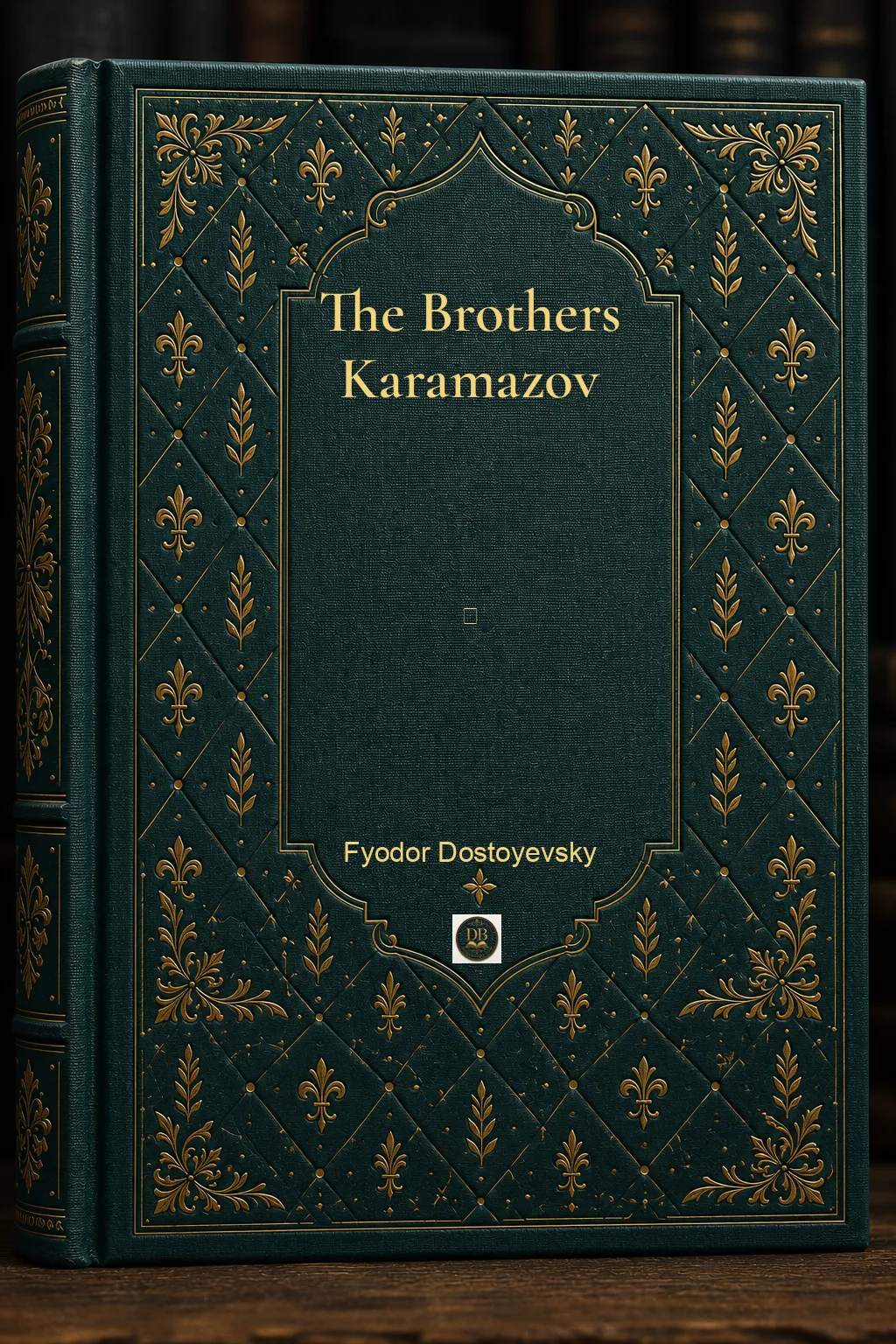
Explore the full psychological depth of Dostoevsky’s immortal masterpiece. The DodaBooks Edition of The Brothers Karamazov features:
- ✅ Complete Unabridged Text — All 12 books and the moving epilogue
- ✒️ Smart Typographic Design — Optimized for marathon reading on e-readers
- 📜 Full Book & Chapter Navigation — Jump seamlessly between all 96 chapters
- 🔒 100% DRM-Free Ownership — Yours forever across Kindle, Kobo, iPad, and Android
- 📥 Instant EPUB Delivery — Download your digital copy immediately