The Belle of Bowling Green
Amelia E. Barr’s 1904 Masterpiece of Manhattan Society, Privateer Battles, and Divided Loyalties in the War of 1812
Before skyscrapers of steel and glass transformed lower Manhattan into a labyrinth of financial canyons, Bowling Green was the serene, tree-shaded epicenter of New York patrician life. Here, where the waters of the Hudson and East Rivers converge at the Battery, stood the stately red-brick mansions of the Knickerbocker aristocracy—the Livingstons, the Kennedys, the Jays, the Van Hornes, and the De Peysters. Dutch traditions of domestic comfort, afternoon tea, and family honor coexisted with the bustling commerce of a young, ambitious American republic.
In The Belle of Bowling Green (1904), Amelia E. Barr (1831–1919) captures this vanished world with extraordinary sensory charm, architectural fidelity, and dramatic emotional power. Set during the tense, patriotic crucible of the War of 1812, the novel tells the story of an enchanting young Dutch-American heiress caught between family allegiance, wartime commercial blockades, and a passionate love that defies political borders.
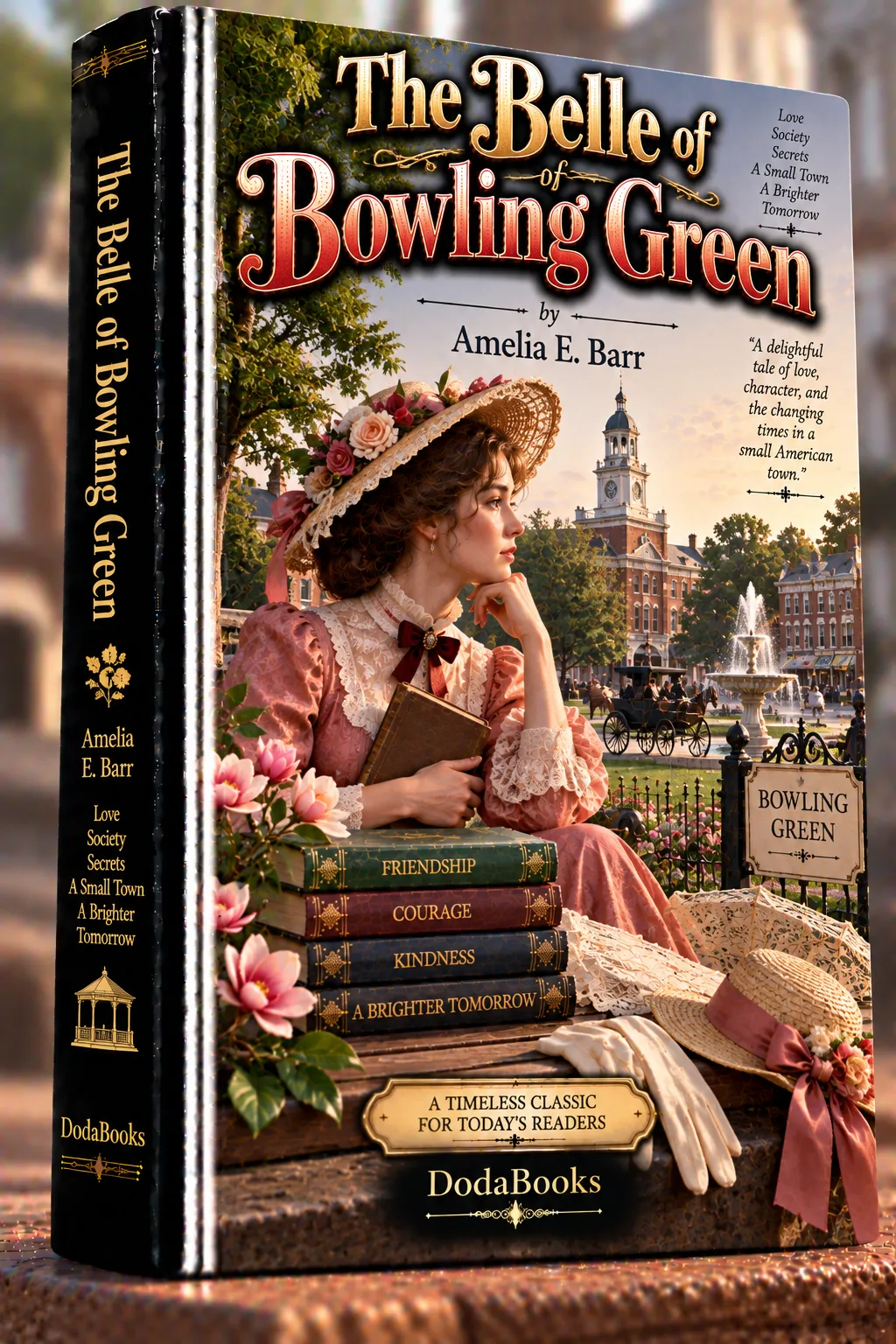
Step onto the Cobblestones of Federal-Era Manhattan
Read Amelia E. Barr's captivating historical novel with annotations detailing early 19th-century New York topography, Knickerbocker customs, and War of 1812 privateering.
Get The Belle of Bowling GreenThis intricate exploration of social convention and romantic autonomy offers a compelling contrast to Onoto Watanna’s Meiji court romance.
The World of Knickerbocker High Society
Amelia E. Barr was celebrated throughout the late nineteenth century as the foremost chronicler of old New York domestic life. Having lived in Manhattan for decades and immersed herself in municipal colonial archives, Barr possessed an intimate, affectionate knowledge of Federal-era social customs that rivaled Washington Irving.
The novel introduces us to Philippa Sappho, the universally admired “Belle of Bowling Green.” Philippa is not a frivolous coquette; she is the educated, dignified daughter of a wealthy Dutch merchant house whose family roots stretch back to the days of New Amsterdam:
- The Sappho drawing room features Delft tiles, carved mahogany sideboards, and heavy silver tea services brought over from Holland.
- Social life revolves around church bells at Trinity Church, leisurely evening promenades along the Battery ramparts to watch the harbor sunsets, and elegant private assemblies at the City Hotel.
- Beneath this placid exterior, however, tensions are boiling: Great Britain’s Royal Navy has imposed a suffocating naval blockade on New York harbor, British warships are seizing American merchant vessels, and war clouds are gathering over the Atlantic.
Federal Manhattan Social Geography:
[Bowling Green Mansions] ➔ [The Battery Promenade] ➔ [Trinity Church & Wall Street] ➔ [East River Shipyards & Privateers]
The War of 1812: Privateers and Divided Hearts
When war is officially declared in the summer of 1812, the peaceful rhythm of Bowling Green is shattered. The young men of Manhattan do not merely enlist in infantry regiments; they invest their fortunes in swift, copper-bottomed privateers—heavily armed civilian schooners designed to slip past British blockading frigates and raid British merchant fleets in the West Indies.
Philippa finds her heart divided between two worlds:
- Leonard Gordon: An ardent, fiery young American naval officer and privateer commander who represents the bold, democratic future of the United States.
- Lord George Gordon: A chivalrous British officer connected by ancient kinship to her family, caught on the opposing side of the imperial conflict.
Barr portrays the wartime agony of Manhattan with poignant realism: the food shortages caused by the British naval blockade, the thrilling return of battered privateers slipping into Sandy Hook under cover of midnight fog with captured prizes, and the anguish of women waiting on the Battery battery walls for news of loved ones facing naval broadsides at sea.
Federal-Era New York Topography
A living, historically exact recreation of Manhattan before 1820: Bowling Green, Wall Street, the Battery promenade, and Old Slip.
The Privateer War at Sea
Thrilling, authentic accounts of American privateering schooners, blockade running off Sandy Hook, and naval gunnery tactics.
Dutch Knickerbocker Heritage
Rich cultural details of Dutch-American domestic customs, holiday traditions, parlor etiquette, and ancestral family loyalty.
Annotated Historical Apparatus
Footnotes explaining historical figures (Mayor DeWitt Clinton, Captain James Lawrence), trade tariffs, and the Treaty of Ghent.
The Domestic History of Early America
What elevates The Belle of Bowling Green above ordinary historical romances is Barr’s acute understanding of domestic history. While male historians of her era focused exclusively on presidential speeches and battlefield troop maneuvers, Barr understood that a nation’s history is equally forged in the parlor, the dining room, and the marketplace.
She shows how the women of old New York organized hospital relief for wounded sailors, managed international trading businesses when husbands were captured at sea, and preserved family honor through financial panics. Her heroine, Philippa, demonstrates that true republican virtue is not an abstract theory, but a daily practice of moral courage, loyalty, and emotional steadfastness.
To explore how other great classic works explored early American society, enterprise, and identity, explore our companions to The Autobiography of Benjamin Franklin Guide and Oliver Optic’s Gilded Age satire in Three Millions Guide.
Immerse Yourself in the Splendor of Old Manhattan
Read the definitive digital edition of The Belle of Bowling Green on DodaBooks, featuring historical maps of Federal-era New York, Dutch cultural glossaries, and crisp digital typography.
Purchase The Belle of Bowling Green on DodaBooksWhy Read the DodaBooks Annotated Edition of The Belle of Bowling Green?
Because Barr writes with a rich palette of 19th-century Dutch-American expressions, archaic maritime terms, and defunct New York street names, modern readers greatly benefit from historical context.
The DodaBooks Annotated Edition provides:
- Maps of Old Manhattan (circa 1812): Pinpointing Bowling Green, the Battery ramparts, Pearl Street, Broad Street, and the East River slips.
- Glossary of Dutch-American Cultural Terms: Explaining Knickerbockers, domines, crullers, stoops, and guilders.
- Historical Companion to the War of 1812: Chronicling the naval battles of the USS Constitution, the privateering prize courts, and the British blockade.
- Flawless Formatting Across All Devices: Designed with elegant margins, balanced chapter headers, and clean typography optimized for Kindle, iPad, Kobo, and smartphones.
The Commercial Dilemma of the War of 1812
A fascinating historical layer of The Belle of Bowling Green is Barr’s detailed exploration of New York’s commercial ambivalence toward the War of 1812. Unlike the southern and western states, which ardently pushed for war against Britain, New York’s merchant elite was deeply divided. Decades of lucrative trade with Liverpool and London had created strong economic and personal bonds between Manhattan and Great Britain.
Barr portrays this merchant psychology with sharp fidelity. While shipyard owners and privateer crews prospered from prize captures, conservative Dutch importers watched their warehouses sit empty, their ships trapped behind British blockades. Barr uses this commercial tension to mirror Philippa’s inner emotional conflict: the struggle between older, conservative loyalties to peace and ancestry, and the turbulent, patriotic birth of an independent American national consciousness.
Manhattan's Wartime Dialectic:
[Conservative Anglo-Dutch Commercial Ties] vs. [Fiery Democratic American Patriotism] ➔ [The Crucible of 1812] ➔ [A Unified National Identity]
By grounding her romance in the real, conflicting economic interests of the Federal era, Barr avoids shallow nostalgia. She presents old New York not as a static museum diorama, but as a dynamic, living community wrestling with its destiny.
The enduring brilliance of Amelia E. Barr’s historical writing lies in her unique ability to bring Federal-era New York to life with living, breathing emotional vitality. In The Belle of Bowling Green, readers receive not merely a romantic tale of wartime trials, but an irreplaceable portrait of Manhattan’s Knickerbocker heritage, privateering courage, and the forging of an independent American spirit.
Frequently Asked Questions
Where is Bowling Green located in New York City?
Bowling Green is a public park located at the southern tip of Broadway in Lower Manhattan. In the early 19th century, it was the most fashionable residential neighborhood in New York, lined with mansions of patrician families.
What role does the War of 1812 play in the novel?
The War of 1812 provides the central dramatic tension, imposing a British naval blockade on New York, sending local young men out on dangerous privateer ships, and forcing characters to choose between personal love and patriotic duty.
Who was author Amelia E. Barr?
Amelia E. Barr (1831–1919) was a British-born American author who became one of the most beloved and prolific novelists of the late 19th and early 20th centuries, celebrated for her richly detailed historical romances of old New York, Scotland, and England.
What is a 'privateer' as described in the story?
A privateer was a privately owned armed merchant ship authorized by a government (via 'Letters of Marque') to attack and capture enemy commercial shipping during wartime, with profits divided among the ship's owners and crew.
Where can I purchase and download the annotated digital edition?
The complete digital edition is available directly from DodaBooks in EPUB and PDF formats for all modern e-reading devices.