The Air Pirate
Guy Thorne’s Prophetic 1919 Thriller of Giant Transatlantic Flying Boats, Ruthless Aerial Buccaneers, High-Altitude Dogfights, and Advanced Aeronautical Warfare
In 1919, in the immediate wake of the Great War, the world stood on the threshold of the modern aviation age. With thousands of surplus military aircraft crowding airfields and daring aviators like Alcock and Brown completing the first non-stop transatlantic flight, the human imagination looked upward into the skies with a mixture of wonder and dread. Capturing this technological turning point with prophetic vision, the bestselling British novelist and journalist Guy Thorne—the pen name of Cyril Arthur Edward Ranger Gull (1876–1923)—published The Air Pirate.
Far from being a conventional detective story, The Air Pirate is a landmark work of early speculative techno-thriller fiction. It envisions a near future where international commerce has taken to the air via luxurious multi-engine passenger flying boats, only for this civilized skyway to be terrorized by a mysterious, technologically advanced aerial warlord who preys upon transatlantic airliners from a hidden oceanic fortress.
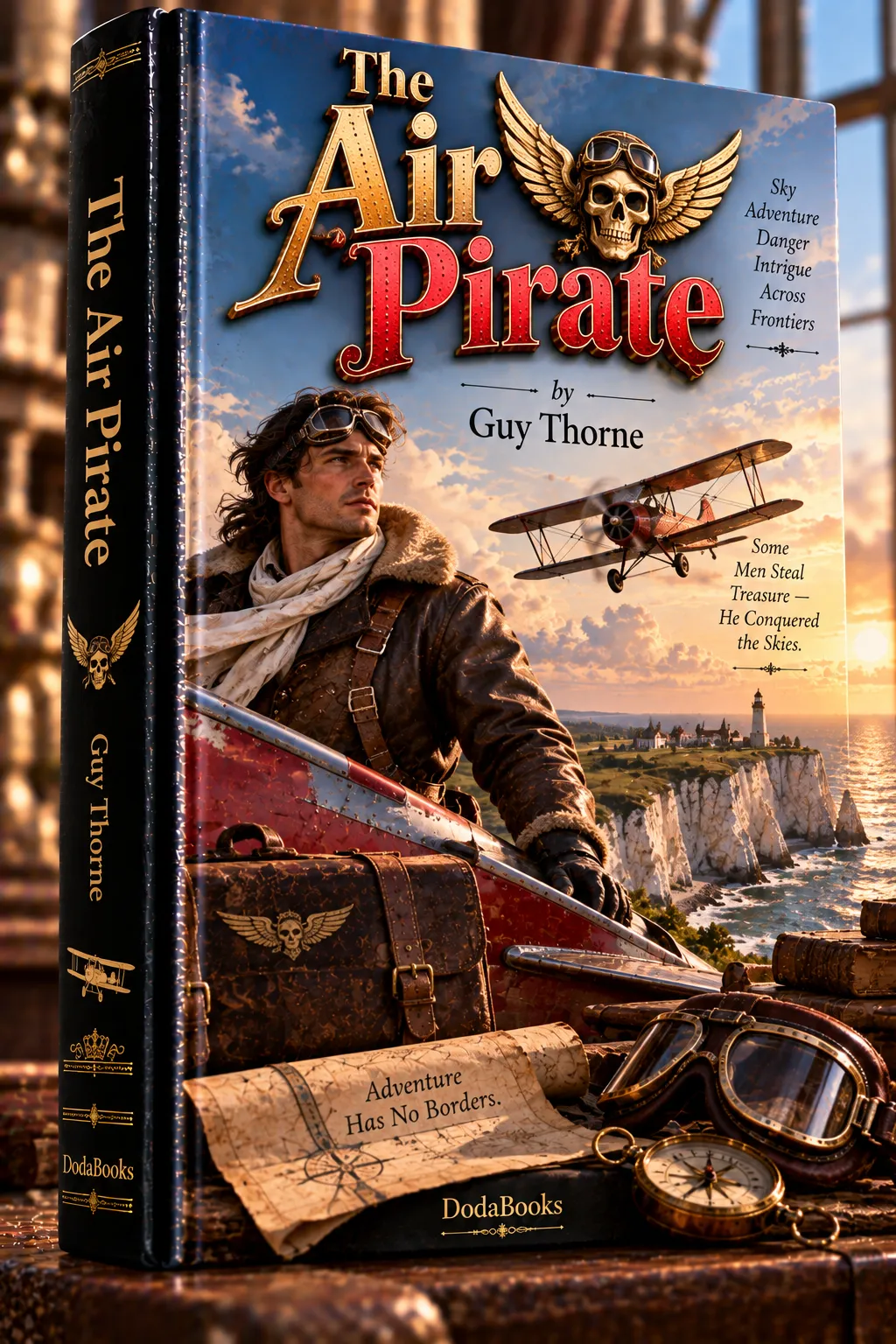
Take to the Skies in Guy Thorne's Prophetic Thriller
Read Guy Thorne's classic aviation thriller in an annotated edition exploring post-WWI aeronautical innovations, flying boat technology, and early aerial combat tactics.
Get The Air PirateThe Terror of the Atlantic Skyways
The premise of The Air Pirate is electrifying. Over the stormy waters of the North Atlantic, regular commercial aviation lines connecting London and New York are suddenly disrupted by a series of horrifying, inexplicable disappearances:
- The Disappearing Air Liners: Giant passenger planes carrying wealthy travelers and gold bullion vanish without sending radio distress signals, leaving no floating wreckage or survivors on the sea.
- The Black Aeroplane: Rumors spread through European chancelleries of a monstrous, pitch-black triplane capable of unprecedented speeds and climbing altitudes far above ordinary commercial aircraft. Armed with high-powered silent engines and quick-firing aerial cannons, the craft strikes from the clouds like a bird of prey.
- The Air Pirate’s Identity: The mastermind behind the terror is an embittered, brilliant aeronautical engineer whose genius has been rejected by conventional society, now operating from a concealed sea base in the fog-bound Azores to wage private war upon international capitalism.
Prophetic Technology: The Birth of the Techno-Thriller
What makes The Air Pirate so fascinating to modern science fiction and aviation historians is Thorne’s remarkably accurate technological foresight. Writing at a time when commercial aviation was in its absolute infancy, Thorne anticipated key engineering breakthroughs:
- Giant Multimotor Flying Boats: Long before the famous Pan American “Clipper” flying boats of the 1930s, Thorne designed mammoth twin-hulled amphibious aircraft equipped with sleeping berths, promenade decks, and multi-engine redundancies.
- Pressurized Cabins and Oxygen Systems: Thorne recognized that the future of aerial combat and long-distance transport lay in the high-altitude stratosphere, detailing oxygen apparatus and heated flight suits necessary to survive at twenty thousand feet.
- Airborne Radio Direction Finding: The novel features early electronic navigation and radio-triangulation systems used by the newly formed “Aerial Police” to hunt down the pirate’s secret radio transmissions across the ocean.
“The sky is no longer a silent wilderness of clouds; it is a battleground where the destiny of empires will be won or lost at two hundred miles an hour among the stars.”
Landmark 1919 Techno-Thriller
One of the earliest speculative novels to explore commercial aviation, aerial piracy, and high-altitude warfare written immediately after the First World War.
Prophetic Aeronautical Vision
Anticipates long-range transatlantic passenger flying boats, high-altitude oxygen apparatus, radio navigation, and multi-engine combat bombers.
Electrifying Pulp Action
Daring parachute escapes, machine-gun dogfights above thunderstorm clouds, secret island hideouts, and Scotland Yard undercover operations.
Historical & Technical Annotations
Detailed notes explaining early aviation history, Sopwith and Handley Page bombers, post-WWI aviation laws, and Guy Thorne's prolific literary career.
The Aerial Police: Law Enforcement in the Third Dimension
To counter the menace of the black raider, the British Air Ministry and Scotland Yard establish an elite, experimental paramilitary force: the Aerial Police. Commanded by veteran Royal Air Force fighter aces who survived combat over the Western Front, the Aerial Police must adapt military dogfighting tactics to civilian law enforcement.
Thorne explores the legal and psychological challenges of policing the skies. In the three-dimensional expanse of the upper atmosphere, national borders become meaningless; traditional naval blockades cannot contain a raider who can dive from the clouds at two miles a minute; and a single hit to a fuel tank means certain death for passengers and crew alike. The climax of the novel—a desperate aerial duel fought above the thunderheads of an Atlantic gale—is a masterpiece of early aviation suspense.
Experience the Thrill of the Open Sky
Read Guy Thorne's visionary novel in an annotated edition featuring historical commentary on early aviation, flying boats, and the birth of techno-thriller fiction.
Get The Air PirateAerial Piracy in the Atlantic: The Azores Flying Base
A compelling narrative element in The Air Pirate is Thorne’s atmospheric choice of the Azores archipelago as the secret oceanic stronghold of the aerial corsair. Situated halfway between Europe and North America, the volcanic islands of the Azores served as the real-world refueling stop for the historic transatlantic flight of the American Curtiss NC-4 flying boat in May 1919:
- The Volcanic Caldera Lair: Thorne imagines a hidden subterranean hangar carved directly into an extinct volcanic crater on an uninhabited rocky islet, accessible only from the air or through submerged sea caves.
- Submarine Collaboration: The pirate’s operation does not exist in isolation; Thorne links the black aircraft to supply submarines that smuggle fuel, high-explosive aerial bombs, and spare engine parts across international waters, foreshadowing modern maritime-aerial criminal networks.
- The Psychological Toll of High-Altitude Warfare: The novel portrays the physical and mental exhaustion suffered by early pilots operating in open cockpits at freezing sub-zero temperatures. Thorne describes the disorienting vertigo of flying through dense Atlantic cloud banks without modern gyroscopic instruments, where an aviator’s life depended entirely on compass heading, altimeter reading, and instinct.
Guy Thorne: Master of the Sensational Speculative Novel
Guy Thorne (Cyril Ranger Gull) was one of the most prolific and commercially successful popular authors of the Edwardian and Georgian eras. Educated at Oxford, he gained international fame in 1903 with his blockbuster religious novel When It Was Dark, which sold hundreds of thousands of copies worldwide.
With The Air Pirate, Thorne brought his formidable journalistic energy and flair for the sensational into the burgeoning genre of aviation romance. He belongs to the noble lineage of early British speculative fiction writers—alongside H. G. Wells (The War in the Air), George Griffith, and William Le Queux—who understood that technological progress would inevitably transform human warfare and society.
Why Aviation Fans and Sci-Fi Lovers Cherish The Air Pirate
Guy Thorne's novel captures the raw, unfiltered romantic excitement of the dawn of flight. It is a thrilling, nostalgic journey back to a time when aviation was an untamed frontier of heroic daring, scientific invention, and high-altitude danger.
The Annotations in the DodaBooks Edition
The DodaBooks curated edition provides an indispensable reading companion:
- Historical Guide to Early Aviation (1914–1920): Explanations of pioneering aircraft, including the Curtiss NC-4 flying boats, Vickers Vimy, and Handley Page V/1500.
- Aeronautical Glossary: Definitions of early flight terminology (struts, empennage, ailerons, rotary engines, altimeters).
- Biographical Overview of Guy Thorne: Tracing his colorful life as an Oxford bohemian, journalist, and bestselling speculative novelist.
Download the Classic Aviation Thriller Today
Take flight in the golden age of aviation with Guy Thorne's prophetic 1919 masterpiece.
Download the Edition NowFrequently Asked Questions
Who was Guy Thorne?
Guy Thorne was the most famous pen name of Cyril Arthur Edward Ranger Gull (1876–1923), a bestselling British novelist and journalist who wrote numerous sensational, speculative, and mystery novels, most notably When It Was Dark and The Air Pirate.
What makes The Air Pirate historically significant in science fiction?
Published in 1919 immediately after WWI, it was one of the earliest novels to predict commercial transatlantic passenger aviation and explore the concept of high-altitude aerial piracy, anticipating modern techno-thrillers by decades.
What technologies does Thorne anticipate in the novel?
Thorne anticipated large multi-engine commercial flying boats with passenger amenities, pressurized cabins, oxygen breathing apparatus for high-altitude combat, and radio direction finding for aerial navigation.
How does the novel depict post-WWI aviation culture?
It captures the postwar excitement and technological surplus of 1919, featuring demobilized RAF fighter aces who join the newly formed 'Aerial Police' to protect civilian air lanes from rogue warlords.
Where can I get the complete annotated ebook?
The complete digital edition is available for immediate download at DodaBooks at https://dodabooks.com/ebook/the-air-pirate-by-guy-thorne/.