The Adventures of Sherlock Holmes Summary: All 12 Stories Explained
When Arthur Conan Doyle began publishing monthly short stories featuring Sherlock Holmes in The Strand Magazine in July 1891, he transformed detective fiction from a niche literary curiosity into a global phenomenon. Collected and published in book form in 1892 as The Adventures of Sherlock Holmes, these twelve stories established the enduring archetype of the brilliant, eccentric consulting detective and his loyal chronicler, Dr. John H. Watson.
Unlike long Victorian serial novels that meandered through subplots, Doyle’s twelve Adventures are masterclasses in tight, suspenseful plotting, memorable deduction, and atmospheric depictions of gaslit Victorian London. From the aristocratic scandals of European royalty to bizarre rural blackmail schemes, Holmes uses razor-sharp observation, forensic science, and cold logic to illuminate the darkest corners of human nature.
Whether you are preparing a paper on detective literature, revisiting the original stories after watching modern adaptations, or reading Doyle’s work for the first time, this comprehensive guide provides an exhaustive case-by-case summary of all twelve stories in the collection.
⚡ The Adventures of Sherlock Holmes at a Glance
- Author: Sir Arthur Conan Doyle (illustrated by Sidney Paget in The Strand Magazine)
- Publication Year: October 1892 (serialized July 1891 – June 1892)
- Setting: 221B Baker Street, Victorian London, and rural English country estates
- Core Formula: Client consultation at Baker Street, forensic examination of physical evidence, deduction based on trivial details, resolution through undercover disguise or trap
- Famous Milestones: Introduction of Irene Adler ("The Woman"), the bizarre riddle of the Red-Headed League, and the deadly terror of the speckled band
🔍 Case 1: “A Scandal in Bohemia”
The opening story of the collection is legendary for introducing the only woman who ever outwitted the great detective: the American opera singer Irene Adler.
The Problem
A masked, gigantic German nobleman visits 221B Baker Street, introducing himself as Count von Kramm. Holmes instantly pierces his disguise, identifying him as Wilhelm Gottsreich Sigismond von Ormstein, the hereditary King of Bohemia. The King is betrothed to a Scandinavian princess, but his upcoming royal wedding is threatened with ruin: five years earlier, he had a passionate affair with Irene Adler, who possesses a compromising photograph of the two together and threatens to send it to the bride’s family. The King has hired burglars, searched Adler’s luggage, and diverted her mail, but cannot locate the picture.
The Investigation & Resolution
Disguising himself as a drunken, out-of-work groom, Holmes infiltrates Adler’s neighborhood in St. John’s Wood, gaining the confidence of local stable hands. When Adler suddenly rushes to a church to marry English lawyer Godfrey Norton, Holmes is pulled in from the street to serve as the legal witness to their marriage.
That evening, Holmes stages an ingenious diversion. Disguised as an elderly, injured clergyman, he feigns being beaten in a street brawl outside Adler’s villa. Adler has him carried into her sitting room to recover. On Holmes’s signal, Watson throws a plumber’s smoke rocket through the open window and screams “Fire!” As Holmes anticipated, in moments of panic, people instinctively rush to save what they value most: Adler dashes to a secret sliding panel behind a bell-pull.
Knowing the location of the photograph, Holmes departs, planning to return the following morning with the King. However, as Holmes walks through the midnight London streets, a slender youth in an ulster coat passes by and murmurs, “Good-night, Mister Sherlock Holmes.”
The next morning, Holmes and the King arrive at the villa to find Adler gone. In the secret panel, they find only a photograph of Adler alone and a brilliant letter addressed to Holmes. She reveals that she recognized the disguised detective, trailed him to Baker Street in male attire, and realized she was being trapped. Having married an honorable man she loves, she promises never to use the photograph against the King, keeping it only to protect herself from royal retaliation.
The King declares Irene Adler to be on his level of royalty, while Holmes—who had previously scoffed at female intellect—forever after refers to her with profound respect simply as “the woman.”
🔴 Case 2: “The Red-Headed League”
One of Doyle’s most celebrated and humorous mysteries, combining an absurd premise with a deadly serious criminal conspiracy.
The Problem
Jabez Wilson, an elderly, stout, flaming red-haired London pawnbroker, visits Holmes with a bizarre tale. Months earlier, his energetic young assistant, Vincent Spaulding, urged him to apply for a lucrative vacancy in the “Red-Headed League”—a supposed charitable trust founded by an eccentric American millionaire to provide comfortable pensions for pure-blooded red-headed men. Wilson was hired for four pounds a week to sit in an empty office for four hours a day copying out the Encyclopaedia Britannica under strict penalty of forfeiture if he left the room.
That very morning, after eight weeks of copying, Wilson arrived at the office to find a cardboard placard pinned to the door stating: “THE RED-HEADED LEAGUE IS DISSOLVED. October 9, 1890.” Wilson wants Holmes to investigate what happened.
The Deduction & The Trap
Holmes and Watson burst into laughter at the ridiculous story, but Holmes immediately recognizes sinister tradecraft. Interviewing Wilson, Holmes notes that the assistant Spaulding accepted the job at half-pay, had an ear pierced, and spent all his free time in Wilson’s cellar “developing photographs.”
Holmes visits Wilson’s pawnshop in Saxe-Coburg Square. He taps his walking stick against the pavement outside and asks Spaulding for directions, specifically inspecting the assistant’s trousers: the knees are stained with dirt and heavily worn from digging. Holmes rounds the corner and inspects the buildings behind the shop: a branch of the City and Suburban Bank.
Holmes deduces that the entire Red-Headed League was an elaborate ruse designed to keep Wilson away from his shop for four hours every day while Spaulding dug a subterranean tunnel from the cellar directly into the bank’s subterranean bullion vault. That night, Holmes, Watson, Inspector Jones of Scotland Yard, and the bank director Mr. Merryweather hide inside the bank cellar amidst 30,000 gold French Napoleons.
At midnight, a stone in the floor lifts, and Vincent Spaulding emerges—revealed as John Clay, an aristocratic murderer and one of the most dangerous master criminals in England. Holmes pins Clay, foiling the multi-million-pound heist.
👰 Case 3: “A Case of Identity”
A quiet, domestic tragedy highlighting how Victorian legal and financial structures left women vulnerable to domestic exploitation.
The Problem
Mary Sutherland, a nearsighted young London woman with an independent income of £100 a year from her uncle’s estate, seeks Holmes’s help. Despite the fierce opposition of her much younger stepfather, Mr. James Windibank, Sutherland attended a gasfitters’ ball, where she fell in love with a shy, reserved gentleman named Hosmer Angel. Angel wore tinted glasses, spoke only in a whispered voice, and corresponded solely in typed letters.
The couple agreed to marry. On the morning of the wedding, Angel seated Sutherland and her mother in a four-wheeler cab, stepped into a second cab behind them, and vanished into thin air before reaching the church.
The Resolution
Holmes solves the entire puzzle without leaving his armchair. He notices that all of Hosmer Angel’s letters were typewritten—including the signature—and notes that Angel only appeared when the stepfather Windibank was traveling abroad on business.
Holmes summons Windibank to Baker Street and accuses him of the crime. Windibank was impersonating Hosmer Angel in tinted glasses and a false beard. Because Sutherland’s independent income passed to her family as long as she remained unmarried at home, Windibank courted his stepdaughter under a false identity, extracted a romantic vow of lifelong faithfulness, and staged the abandonment so that she would remain single forever, preserving her money for his household.
Because Windibank’s despicable cruelty broke no legal statute, Holmes cannot arrest him, but warns the terrified coward that he will end up on the gallows someday.
🌾 Case 4: “The Boscombe Valley Mystery”
A classic murder mystery set in rural Herefordshire featuring the tragic history of the Australian gold rush.
The Problem
Charles McCarthy, an abusive tenant farmer, is found bludgeoned to death near the edge of Boscombe Pool. His son, James McCarthy, was seen arguing violently with his father moments before the killing, was found standing over the corpse with a bloodstained gun, and cannot explain his father’s dying words: “a cooee” and something about “a rat.” Inspector Lestrade of Scotland Yard arrests James, considering the case open-and-shut.
The Deduction & Resolution
Holmes travels to the scene and examines the trampled earth around Boscombe Pool. Through footprints, cigar ash, and broken branches, Holmes reconstructs the true killer: a tall, left-handed man with a limp who smoked Indian cigars and carried a blunt heavy cloak.
Holmes confronts John Turner, a wealthy local landowner whose daughter James McCarthy loved. Turner breaks down in tears and confesses: thirty years earlier in Australia, Turner had been the leader of the notorious “Black Jack of Ballarat” gang that robbed gold convoys. McCarthy had been the wagon driver Turner spared.
When Turner returned to England to live a respectable life, McCarthy tracked him down and blackmailed him for decades, demanding that Turner’s daughter marry James. When Turner overheard McCarthy bullying James at the pool, Turner struck McCarthy down with a stone.
Sympathizing with Turner’s terminal illness, Holmes preserves Turner’s confession in secret and presents enough alternative forensic evidence at the trial to secure James McCarthy’s total acquittal.
🍊 Case 5: “The Five Orange Pips”
One of Holmes’s darkest and most tragic cases, involving the Ku Klux Klan and historical terrorism.
The Problem
John Openshaw, a terrified young man from Sussex, visits Baker Street during an autumn gale. He recounts that his uncle, Elias Openshaw, was a former Confederate colonel who returned from America with a mysterious brass box. In 1883, Elias received a letter from Pondicherry, India, containing five dried orange pips and the letters “K.K.K.” Shortly after, Elias committed suicide in a drunken frenzy.
In 1885, John’s father received a similar letter marked from Dundee and died under suspicious circumstances after falling down a chalk pit. Now, John has received a third letter from London demanding that he put “the papers” on the sundial.
The Tragedy
Holmes realizes the brass box contains the secret membership and incriminating operational records of the American Ku Klux Klan, which Elias had stolen when the organization collapsed. Holmes urges John to return home immediately, place the papers on the sundial, and remain strictly indoors.
Tragically, John is murdered that very evening: his body is found floating in the Thames near Waterloo Bridge, ruled an accidental drowning by police. Furious at his failure to protect his client, Holmes tracks the postmarks of the three letters to an American barque named the Lone Star. Holmes deduces the identity of the captain, James Calhoun, and his accomplices. Holmes mails five orange pips to Savannah, Georgia, to intercept Calhoun. However, divine justice intervenes: the Lone Star is caught in a violent Atlantic gale and sinks with all hands lost.
🎭 Case 6: “The Man with the Twisted Lip”
A brilliant psychological tale exploring Victorian class disguise and urban double lives.
The Problem
Watson encounters Holmes in disguise inside an East End opium den while retrieving an acquaintance. Holmes is investigating the disappearance of Neville St. Clair, a respectable, wealthy gentleman living in a country villa in Kent. St. Clair’s wife caught a glimpse of her husband in the upper window of an opium den, but when police raided the room, St. Clair had vanished.
Police found only his bloodstained clothes weighted with pennies thrown into the Thames, and arrested Hugh Boone, a grotesque, disfigured beggar with a twisted lip who occupied the room.
The Deduction
Holmes spends an entire night smoking shag tobacco in Baker Street, wrapped in a dressing gown atop five pillows. At dawn, the solution hits him. Taking a sponge and a bowl of water, Holmes and Watson visit the Bow Street police cells.
Holmes washes the grimy face of the sleeping beggar Hugh Boone. The grotesque scar and twisted lip peel away, revealing Neville St. Clair!
St. Clair confesses that years earlier, while working as an undercover journalist, he discovered that begging as a disfigured cripple in the City of London was astronomically more lucrative than any middle-class career (earning him over £700 a year). Ashamed to tell his wife, he maintained his double life for years until his wife accidentally spotted him through the window. Because no murder occurred, police agree to suppress the scandal if St. Clair permanently retires his beggar persona.
💎 Case 7: “The Adventure of the Blue Carbuncle”
A delightful Christmas mystery revolving around a priceless gem and a lost Christmas dinner.
The Problem
On Christmas morning, commissionaire Peterson brings Holmes a battered felt hat and a fat Christmas goose dropped in a street scuffle by an unknown gentleman. When Peterson’s wife dresses the goose for cooking, she discovers an astonishing object lodged inside the bird’s crop: the Blue Carbuncle, a legendary, priceless gemstone stolen days earlier from the Countess of Morcar’s suite at the Hotel Cosmopolitan. A poor plumber, John Horner, has been framed and arrested for the robbery.
The Investigation & Forgiveness
Holmes traces the history of the goose through London’s commercial markets: from the Alpha Inn to Covent Garden market dealer Mr. Breckinridge, and finally to Mrs. Oakshott in Brixton. At the market, Holmes catches James Ryder, the head attendant at the Hotel Cosmopolitan, who was desperately trying to locate that specific goose.
Holmes brings Ryder to Baker Street, where Ryder breaks down in tears. Ryder and his accomplice (the Countess’s maid) stole the gem, framed the plumber, and hid the jewel by forcing it down the throat of one of his sister’s geese. However, Ryder confused his marked goose with another identical bird in the flock, accidentally selling the jewel-bearing goose to a dealer.
Because it is the Christmas season, Horner will be exonerated, and sending the sniveling Ryder to prison would only turn him into a hardened criminal, Holmes shows mercy and allows Ryder to flee the country: “I suppose that I am commuting a felony, but it is just possible that I am saving a soul.”
🐍 Case 8: “The Adventure of the Speckled Band”
Universally regarded as the most terrifying and suspenseful case in the entire Holmes canon.
The Problem
Helen Stoner, a terrified young woman dressed in black, arrives at 221B Baker Street at dawn. She lives at Stoke Moran with her violent, eccentric stepfather, Dr. Grimesby Roylott, the impoverished heir of an ancient Saxon family who spent years in India. Two years earlier, Helen’s twin sister, Julia, died under mysterious circumstances just weeks before her wedding. Julia’s dying words were: “The speckled band!”
Now, Helen is engaged to be married. Dr. Roylott has forced her to move into Julia’s former bedroom under the pretense of home repairs. The previous night, lying awake in the dark room, Helen heard the same low, sinister whistle that Julia had described before her death.
The Investigation & The Midnight Trap
Holmes inspects the bedroom at Stoke Moran and discovers three bizarre architectural anomalies:
- A fake bell-rope hanging down to the bed that is not connected to any wire.
- A ventilator opening between Helen’s room and Dr. Roylott’s adjoining bedroom instead of the outside air.
- A bed that is clamped securely to the floor so it cannot be moved.
Inside Roylott’s room, Holmes finds an iron safe, a saucer of milk, and a dog whip tied into a loop. Holmes deduces the horrific plot: Roylott was using Helen’s deceased mother’s inheritance, which would be drastically reduced if the daughters married.
That night, Holmes and Watson sit in complete darkness inside Helen’s bedroom. At three in the morning, a faint hissing sound echoes from the ventilator. Holmes strikes a match and furiously lashes the bell-rope with his cane.
Moments later, a blood-curdling shriek of agony rings out from the adjoining room. Rushing in, Holmes and Watson find Dr. Roylott dead in his chair, with a yellow-and-brown speckled band wrapped around his brow: a swamp adder, the deadliest venomous snake in India. Holmes had driven the snake back through the ventilator, where it turned upon its cruel master.
🪓 Case 9: “The Adventure of the Engineer’s Thumb”
A dark, atmospheric thriller featuring industrial counterfeiters and a brutal physical mutilation.
The Problem
Victor Hatherley, an ambitious hydraulic engineer, is brought to Dr. Watson’s surgery with his thumb severed at the root by a heavy cleaver. Hatherley recounts that he was hired at midnight for fifty guineas by a mysterious German named Colonel Lysander Stark. Stark blindfolded Hatherley and drove him in a carriage with frosted windows to a secluded country mansion to inspect a malfunctioning hydraulic press supposedly used to compress fuller’s earth.
The Escape & Investigation
Examining the press, Hatherley notices an oily, metallic crust on the floor, realizing the press is actually used to stamp counterfeit silver half-crown coins. Realizing the engineer has discovered his secret, Colonel Stark locks Hatherley inside the chamber and engages the hydraulic press to crush him to death.
Hatherley manages to kick out a wooden ceiling panel, escapes into an upstairs corridor, and drops from a window. Colonel Stark hacks off Hatherley’s thumb with a cleaver as he dangles from the sill. Hatherley faints in the bushes and wakes up near a railway station.
Holmes deduces that the frosted carriage traveled only in circles to confuse Hatherley, tracking the criminal counterfeiters to a country house near Reading. When police arrive, they find the house on fire: Hatherley’s dropped lantern had ignited the coining materials. The counterfeiters escaped with their bullion, but their multi-million-pound operation is permanently broken.
👑 Case 10: “The Adventure of the Noble Bachelor”
A high-society satire mocking aristocratic Victorian arrogance and American independence.
The Problem
Lord Robert St. Simon, the proud, aristocratic son of the Duke of Balmoral, marries Hatty Doran, the vivacious daughter of a fabulously wealthy American mining millionaire from California. During the wedding breakfast, the bride behaves erratically and disappears into the street, leaving her bridal gown floating in the Serpentine. Scotland Yard suspects Lord Robert’s former mistress, a French dancer named Flora Millar, of foul play.
The Deduction & Resolution
Holmes solves the puzzle by examining the bill from a high-end London hotel discovered in the pocket of the discarded wedding dress.
Holmes traces Hatty to a private hotel and introduces Lord Robert to Hatty and her real husband, Francis Hay Moulton. Francis was Hatty’s childhood sweetheart in the mining camps of the American West. When Francis was captured and reported killed by Apache raiders, Hatty eventually agreed to marry Lord Robert.
However, during the wedding ceremony, Hatty looked into the pews and saw Francis standing alive! He had dropped his glove, and she had slipped him a note during the service. Because they were already legally married in America, her English marriage was null and void. Holmes gently rebukes Lord Robert for his aristocratic snobbery when Lord Robert refuses to sit at the same table with an honest American working man.
👑 Case 11: “The Adventure of the Beryl Coronet”
A domestic drama of honor, theft, and false accusations within the British aristocracy.
The Problem
Alexander Holder, senior partner of the prestigious banking firm Holder & Stevenson, takes temporary possession of the Beryl Coronet—one of the British Empire’s most valuable national treasures—as collateral for a £50,000 loan to a high-ranking royal personage. Holder locks the coronet in his private bureau at his country home in Streatham.
At two in the morning, Holder is awakened by a noise and catches his dissolute son, Arthur, holding the twisted coronet with three beryls snapped off and missing. Arthur refuses to explain himself, and Holder has him arrested, devastated by his son’s apparent dishonor.
The Investigation & Resolution
Holmes inspects the snowy grounds of the estate and analyzes the physical strength required to twist the gold coronet: it is physically impossible for a human to snap the coronet quietly with their hands.
Holmes deduces the true criminal: Holder’s beloved niece, Mary, was secretly infatuated with Sir George Burnwell, a notorious rogue. Mary stole the coronet from the bureau and passed it through the window to Burnwell.
Arthur, returning from his gambling debts, saw Mary passing the coronet, pursued Burnwell into the snow in his bare feet, and wrestled the treasure back. In the struggle, three beryls snapped off in Burnwell’s hand. Arthur refused to confess to protect Mary’s honor. Holmes tracks Burnwell, buys back the three missing beryls for £3,000, and clears Arthur’s name while the guilty niece flees with her scoundrel lover.
🌳 Case 12: “The Adventure of the Copper Beeches”
A gothic rural mystery of imprisonment, disguise, and a ravenous mastiff.
The Problem
Violet Hunter, a spirited, independent young governess, consults Holmes regarding an eccentric job offer. Jephro Rucastle, a wealthy gentleman living at The Copper Beeches in Hampshire, offers her an extraordinary salary of £120 a year on strange conditions: she must cut her luxurious chestnut hair short, wear a specific electric-blue dress, and sit in a drawing room with her back to the window laughing at funny stories. Unsettled, Hunter accepts with the condition that she can summon Holmes if danger arises.
Weeks later, Hunter wires Holmes: she has discovered a padlocked, shuttered wing of the house, and someone is roaming the grounds at night with a giant, starved mastiff.
The Climax
Holmes and Watson travel to Hampshire. Holmes deduces the sinister puzzle: Rucastle has a grown daughter, Alice, from a previous marriage who inherited a substantial fortune from her mother. To prevent Alice from marrying her fiancé Mr. Fowler and claiming her money, Rucastle locked her in the shuttered wing.
Hunter was hired as an exact physical double to sit in the window wearing Alice’s clothes, tricking the fiancé into believing Alice was happy and had forgotten him.
When Holmes breaks into the locked wing, they find Alice gone—Fowler had rescued her through the roof with the help of a ladder. Hearing the intruders, Rucastle rushes to release the starved mastiff to kill them, but the ravenous beast turns on Rucastle, tearing out his throat before Watson shoots it. Alice marries her fiancé, Rucastle survives as a broken invalid, and Violet Hunter becomes the successful head of a private school.
📊 Summary Matrix: All 12 Adventures of Sherlock Holmes
| Case Title | Nature of Crime | Client / Target | Key Clue / Deductive Method | Culprit / Resolution |
|---|---|---|---|---|
| A Scandal in Bohemia | Royal Blackmail | King of Bohemia | Fake fire alarm reveals secret sliding panel | Irene Adler (Holmes outwitted) |
| The Red-Headed League | Bank Robbery | Jabez Wilson | Worn trouser knees & bank cellar sound | John Clay / “Vincent Spaulding” |
| A Case of Identity | Domestic Fraud | Mary Sutherland | Identical typewritten signatures | Stepfather James Windibank |
| Boscombe Valley Mystery | Murder | James McCarthy | Left-handed footprints & Ballarat slang | John Turner (Black Jack of Ballarat) |
| The Five Orange Pips | K.K.K. Terrorism | John Openshaw | Postmarks of letters from sailing ships | Captain James Calhoun (Lone Star) |
| The Man with the Twisted Lip | Disappearance / Fraud | Neville St. Clair | Washing sponge removes beggar makeup | Neville St. Clair (“Hugh Boone”) |
| The Blue Carbuncle | Jewel Theft | Countess of Morcar | Tracing goose breed through London markets | James Ryder (hotel attendant) |
| The Speckled Band | Attempted Murder | Helen Stoner | Clamped bed, fake bell-rope, ventilator | Dr. Grimesby Roylott (swamp adder) |
| The Engineer’s Thumb | Counterfeiting | Victor Hatherley | Circular carriage route & burned coining ash | Colonel Lysander Stark |
| The Noble Bachelor | Missing Bride | Lord Robert St. Simon | Hotel bill in discarded wedding dress | Francis Hay Moulton (1st husband) |
| The Beryl Coronet | Jewel Theft | Alexander Holder | Footprints in snow & metal tensile strength | Sir George Burnwell & niece Mary |
| The Copper Beeches | False Imprisonment | Violet Hunter | Cut hair, electric-blue dress, locked wing | Jephro Rucastle |
Experience the complete 12 cases with original Victorian notes. The DodaBooks Annotated Edition includes full historical glossaries, London street maps, and forensic breakdowns for every story.
Get the Annotated Edition at DodaBooks❓ Frequently Asked Questions
Do I need to read the novels before The Adventures of Sherlock Holmes?
No. While A Study in Scarlet (1887) and The Sign of the Four (1890) introduced Holmes and Watson, The Adventures of Sherlock Holmes is where Conan Doyle perfected the episodic short-story format. Each case is completely self-contained, making this collection the ideal entry point into the Sherlockian canon.
Does Professor Moriarty appear in The Adventures of Sherlock Holmes?
No. Professor James Moriarty does not appear in The Adventures of Sherlock Holmes. Moriarty is introduced later in the second collection, The Memoirs of Sherlock Holmes (specifically in "The Final Problem"), as Doyle sought a master criminal capable of killing Holmes at the Reichenbach Falls.
Who illustrates the original Strand Magazine stories?
Sidney Paget was the brilliant English illustrator whose drawings in The Strand Magazine established the iconic physical image of Sherlock Holmes—giving him his deerstalker hat, Inverness cape, curved pipe, and razor-sharp profile. Doyle’s text rarely mentioned the deerstalker; Paget invented that visual trademark.
Why did Irene Adler make such an impression on Sherlock Holmes?
Irene Adler is the only woman—and one of very few human beings—ever to anticipate Holmes's tactics, see through his disguises, and cleanly outmaneuver him. Holmes respected her superior intellect and independence, keeping her photograph as his sole payment from the King of Bohemia.
Which story in the collection is considered the best?
In 1927, Arthur Conan Doyle himself published a list of his personal twelve favorite Holmes stories: he ranked "The Adventure of the Speckled Band" as his absolute #1 favorite, followed by "The Red-Headed League" at #2 and "A Scandal in Bohemia" at #5.
📚 Related Reading Guides
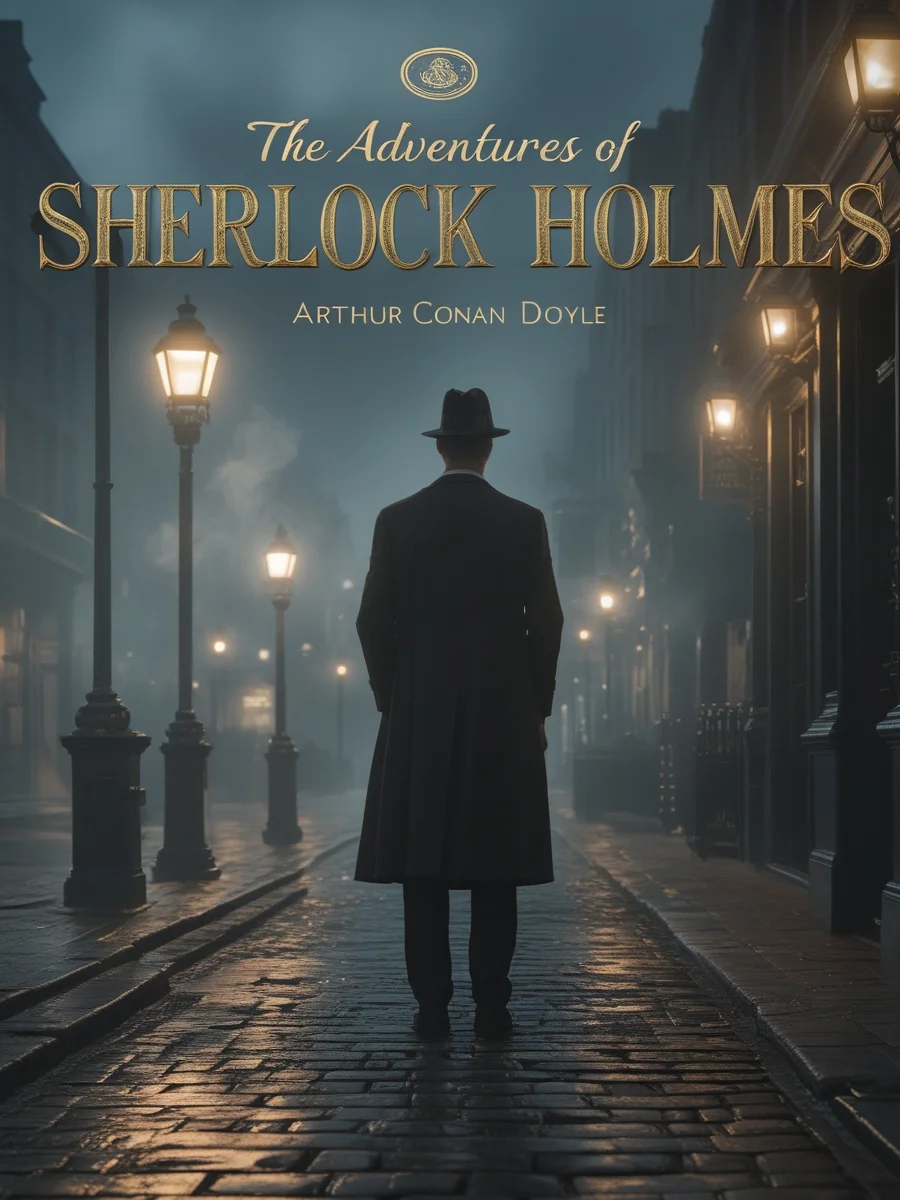
The Game is Afoot: Read With Total Clarity
Read all 12 classic cases in the definitive DodaBooks Annotated Edition:
- Complete text of all 12 original 1892 short stories
- Explanatory notes for Victorian currency, hansom cabs, and 1890s London geography
- Full breakdown of Holmes's forensic science and deduction methods
- Instant digital delivery compatible with Kindle, Apple Books, Kobo, and Android