Some Jewish Witnesses For Christ
Rev. Aaron Bernstein’s Monumental 1909 Biographical Compendium Chronicling Hundreds of Jewish Scholars, Physicians, Philosophers, and Church Leaders Across Eighteen Centuries
In 1909, the Operative Jewish Converts’ Institution in London published an extraordinary work of historical scholarship that remains an indispensable reference text for church historians, theologians, and scholars of Jewish history: Some Jewish Witnesses For Christ. Compiled over decades by the erudite linguist, biblical scholar, and missionary Rev. Aaron Bernstein (1841–1922), this monumental volume recovered and documented the biographies of hundreds of Jewish men and women who embraced the Christian faith across eighteen centuries.
Far from being a narrow proselytizing tract, Bernstein’s work is a vast, scholarly biographical encyclopedia. Moving systematically through the patristic era, the Middle Ages, the Reformation, and the nineteenth-century European Haskalah (Jewish Enlightenment), Bernstein assembled detailed historical portraits of prominent rabbis, physicians to European monarchs, Hebrew lexicographers, university professors, composers, and Anglican bishops whose Jewish heritage formed a foundational part of their intellectual and spiritual contributions.
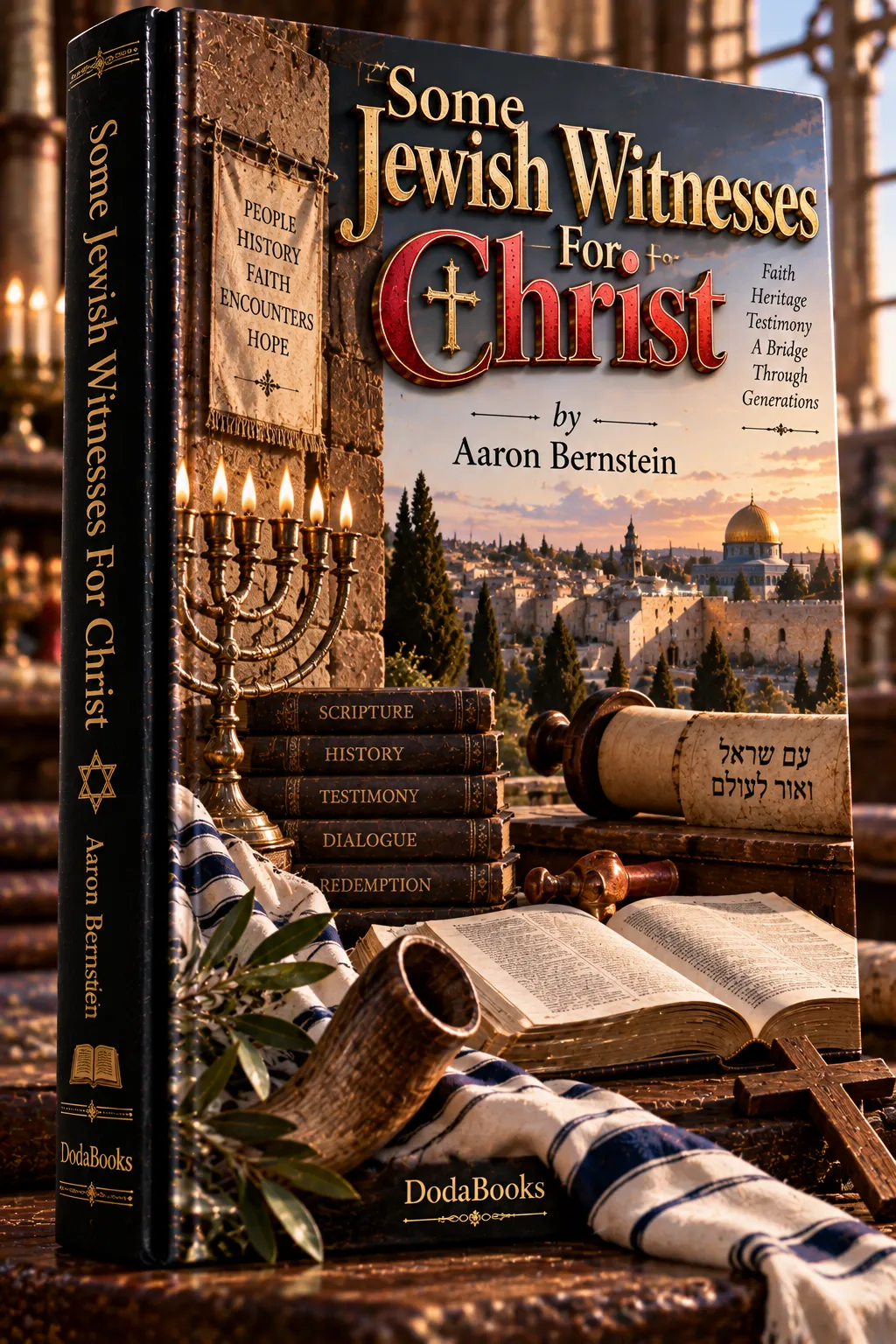
Explore Eighteen Centuries of Intellectual Heritage
Read Rev. Aaron Bernstein's exhaustive biographical compendium in an annotated edition featuring rabbinic cross-references, historical bibliographies, and ecclesiastical indices.
Get Jewish Witnesses For ChristThe Breadth of Bernstein’s Biographical Canvas
What makes Bernstein’s compendium unique is its sheer intellectual and geographical breadth. Drawing directly upon Hebrew, Latin, German, French, and English primary sources, Bernstein rescued from obscurity individuals who played monumental roles in European civilization:
1. Medieval and Renaissance Scholars
- Petrus Alphonsi (Moses Sephardi, 1062–1110): Physician to King Alfonso VI of Castile and later to King Henry I of England, whose Dialogi contra Judaeos and Disciplina Clericalis introduced Arabic astronomy, mathematics, and eastern fables into medieval European literature.
- Pablo de Santa Maria (Paul of Burgos, 1351–1435): Former Chief Rabbi of Burgos and Talmudic scholar who became Bishop of Burgos and Lord Chancellor of Castile, leaving profound exegetical commentaries on the Hebrew scriptures.
- Immanuel Tremellius (1510–1580): Renaissance Hebraist who taught at Cambridge and Heidelberg, translating the Bible into classical Latin directly from original Hebrew and Syriac manuscripts, widely used by John Milton and the translators of the King James Bible.
2. Modern Theologians, Scientists, and Cultural Leaders
- August Neander (David Mendel, 1789–1850): The renowned German church historian and University of Berlin professor whose multi-volume history revolutionized the study of early Christianity and deeply influenced European Protestant theology.
- Felix Mendelssohn Bartholdy (1809–1847): The supreme Romantic composer whose sacred choral masterpieces (Elijah, St. Paul) fused Johann Sebastian Bach’s Protestant counterpoint with Hebrew prophetic grandeur.
- Michael Solomon Alexander (1799–1845): Former dayyan (rabbinic judge) in Plymouth, England, who was consecrated in Westminster Abbey as the first Anglican Bishop in Jerusalem in 1841.
The Intellectual Bridge: Preserving Hebrew Heritage within Christianity
A central theme uniting Bernstein’s biographies is the fierce pride these scholars maintained in their Hebrew identity. Rather than assimilating into generic European culture and discarding their Jewish roots, the figures profiled in Some Jewish Witnesses For Christ viewed their faith as the organic, prophetic fulfillment of the Hebrew Bible:
“The Hebrew Christian does not renounce his heritage; he discovers in the Messiah the crown and culmination of the covenants made with Abraham, Moses, and David. To confess Christ is not to become a Gentile, but to enter into the fullness of the prophetic promise.”
Bernstein demonstrates how Jewish converts provided the Western Church with its deepest understanding of original Hebrew linguistics, rabbinic commentaries (Rashi, Ibn Ezra, Maimonides), and biblical archaeology. In an era when European Christendom was frequently marred by ignorance of Jewish culture, these Hebrew Christian scholars served as indispensable intellectual bridges between the synagogue and the cathedral.
Exhaustive Primary Documentation
Hundreds of documented biographies spanning 1800 years, compiled from Hebrew manuscripts, European state papers, and university registers.
Intellectual History of Europe
Explores how Jewish scholars shaped medieval European medicine, Renaissance Bible translations, German university theology, and classical music.
The 19th-Century London Context
Documents the flourishing of the Hebrew Christian movement in Victorian Britain, including the founding of the Jerusalem Bishopric.
Comprehensive Academic Indices
Extensive cross-references by historical century, country of origin, profession, and theological contribution.
The Haskalah, the Berlin Salons, and the 19th-Century Assimilation Crisis
A critical historical movement thoroughly examined in Bernstein’s compendium is the Haskalah (the Jewish Enlightenment) of late eighteenth- and early nineteenth-century Germany. Sparked by philosopher Moses Mendelssohn in Berlin, the movement encouraged Jews to adopt European languages, secular sciences, and modern cultural forms:
- The Romantic Intellectual Crisis: Following Mendelssohn’s death, many of his children and leading salon intellectual figures—including Dorothea Schlegel (née Mendelssohn), Rahel Varnhagen, and Henrietta Herz—converted to Christianity. Bernstein analyzes this wave with remarkable sociological nuance: showing that while some conversions were driven by pragmatic desires to escape discriminatory laws barring Jews from university professorships and state offices, many were deeply sincere philosophical reckonings with Christian romanticism and German idealism.
- The Hebrew Christian Movement in Britain: Bernstein contrasts the German assimilation experience with the distinct institutional environment of Victorian Britain. In London, Hebrew Christians founded their own mutual aid societies, schools, and publications (such as The Hebrew Christian Witness), asserting their right to maintain communal solidarity and celebrate their Jewish heritage openly within the Church of England.
- The Philological Contributions: Bernstein highlights how Hebrew scholars like Christian David Ginsburg produced landmark scholarly editions of the Masorah (the traditional transmission of the Hebrew biblical text), proving that Jewish converts remained the supreme guardians of authentic Hebrew textual tradition in European scholarship.
Aaron Bernstein: The Scholar Behind the Compendium
Rev. Aaron Bernstein was himself an extraordinary figure. Born to an orthodox Jewish family in Poland in 1841, he received an extensive Talmudic education in yeshivot before embracing Christianity. Relocating to Great Britain, he was ordained in the Church of England, mastered over a dozen ancient and modern languages, and served as a missionary and scholar for the London Society for Promoting Christianity Amongst the Jews.
Bernstein traveled extensively across Eastern Europe, Germany, and the Ottoman Empire, interviewing families, examining parish registers, and compiling oral histories. His scholarly integrity ensured that he recorded both the triumphs and the bitter personal controversies faced by Jewish converts, who were frequently ostracized by their families while simultaneously facing lingering social prejudice from Christian establishments.
Study the Definitive Biographical Archive
Read Aaron Bernstein's complete 1909 compendium in an impeccably formatted digital edition with alphabetical surname indices and theological annotations.
Get Jewish Witnesses For ChristWhy Bernstein’s Work Remains Crucial for Modern Scholars
In contemporary academic discussions of Jewish-Christian relations, messianic Judaism, and nineteenth-century intellectual history, Some Jewish Witnesses For Christ remains a foundational primary source. It challenges the simplistic assumption that Jewish converts were merely marginal figures or passive assimilators, demonstrating that they were dynamic, highly influential contributors to the religious and cultural life of Western civilization.
The Invaluable Reference for Church Historians
Whether tracing the linguistic roots of Renaissance Bible translations or researching the personal spiritual journeys of Europe's greatest scholars, Bernstein's compendium provides an unmatched treasure trove of verifiable historical evidence.
The Annotations in the DodaBooks Edition
The DodaBooks curated edition provides:
- Alphabetical Biographical Directory: Enabling instant lookup of hundreds of historical names across all volumes.
- Rabbinic & Theological Glossaries: Explaining terms such as Targum, Talmud, Shema, Dayyan, and Haskalah.
- Historical Overview of the London Jews Society: Documenting the 19th-century missionary and philanthropic institutions that published the original work.
Download the Monumental Biographical Treasury
Discover the rich, complex history of Jewish Christian scholars across the centuries in an expertly formatted digital edition.
Download the Edition NowFrequently Asked Questions
Who was Rev. Aaron Bernstein?
Rev. Aaron Bernstein (1841–1922) was a Polish-born Jewish Christian scholar, linguist, and Anglican clergyman who dedicated his life to researching and documenting the history of Jewish converts to Christianity across European history.
What is the scope of Some Jewish Witnesses For Christ?
Published in 1909, the work is a comprehensive biographical encyclopedia documenting hundreds of Jewish converts across 1800 years of church history, including medieval doctors, Renaissance Bible scholars, university professors, composers, and bishops.
Which famous historical figures are profiled in the book?
Notable figures include medieval scholar Petrus Alphonsi, Renaissance Bible translator Immanuel Tremellius, church historian August Neander, composer Felix Mendelssohn, and Bishop Michael Solomon Alexander of Jerusalem.
Why is this book valuable for modern researchers?
It preserves rare primary source documentation, epitaphs, and personal letters from European archives that are difficult to locate elsewhere, making it an indispensable resource for genealogists, church historians, and scholars of Jewish history.
Where can I purchase the complete annotated ebook?
The complete digital edition of Bernstein's masterwork is available for immediate download at DodaBooks at https://dodabooks.com/ebook/some-jewish-witnesses-for-christ-by-aaron-bernstein/.