Sherlock Holmes Characters: Holmes, Watson, Irene Adler & Scotland Yard
More than a century after Arthur Conan Doyle first introduced them, Sherlock Holmes and Dr. John H. Watson remain the most famous partnership in world literature. Their names are synonymous with deduction, loyalty, and the fog-drenched streets of Victorian London.
Yet, reducing Holmes to a cold calculating machine and Watson to a bumbling sidekick does a profound disservice to Doyle’s psychological craftsmanship. In the original stories, Holmes is a passionate, bohemian eccentric driven by an artistic craving for mental stimulation, while Watson is a courageous, decorated war veteran and skilled physician whose emotional warmth and moral integrity humanize the great detective.
Whether you are studying detective fiction, analyzing character dynamics for a class, or exploring the original Victorian stories, this comprehensive guide breaks down the core figures of the Sherlockian universe, their relationships, and their literary significance.
⚡ Sherlock Holmes Character Guide: At a Glance
- The Consulting Detective: Sherlock Holmes — The world’s only private consulting detective, combining forensic observation, chemistry, and rigorous inductive logic with a deeply bohemian lifestyle.
- The Loyal Boswell: Dr. John H. Watson — Afghan War veteran, practicing physician, and literary chronicler whose empathy and conventional morality provide the essential bridge between Holmes and humanity.
- "The Woman": Irene Adler — The American opera singer whose quick wit, daring disguise, and independent spirit make her the only adversary ever to completely outmaneuver Holmes.
- The Official Police: Inspector G. Lestrade — The bulldog of Scotland Yard; conventional, dogmatic, and unimaginative, yet humble enough to seek Holmes’s aid when baffled.
- The Domestic Foundation: Mrs. Hudson — The long-suffering landlady of 221B Baker Street whose motherly tolerance holds Holmes’s chaotic household together.
🎻 1. Sherlock Holmes: The Scientific Bohemian
Sherlock Holmes created an entirely new professional category: the world’s first and only “consulting detective.” When private detectives and Scotland Yard reach a dead end, they consult Holmes.
The Science of Deduction
Holmes’s deductive method rests on three pillars: meticulous observation, exhaustive specialized knowledge, and rigorous logic:
“It is a capital mistake to theorize before one has data. Insensibly one begins to twist facts to suit theories, instead of theories to suit facts.”
“You see, but you do not observe. The distinction is clear.”
While others look at a client and see a man with an umbrella, Holmes sees the splash of red clay on his trouser cuff, the wear on his boot heels, the calluses on his index finger, and the tobacco ash on his lapel—instantly reconstructing his trade, his recent travels, and his financial distress.
+-------------------------------------------------------------------------------+
|                    THE DUAL NATURE OF SHERLOCK HOLMES                         |
+------------------------------------+------------------------------------------+
| THE CALCULATING INTELLECT          | THE PASSIONATE BOHEMIAN                  |
+------------------------------------+------------------------------------------+
| - Cold, unemotional, objective     | - Chain-smokes black shag tobacco        |
| - Forensic chemist and anatomist   | - Improvises wildly on his Stradivarius  |
| - Monomaniacal focus on evidence   | - Uses 7% cocaine solution to escape     |
| - Total indifference to romance    |   the agony of mental boredom            |
| - Disdains social pleasantries     | - Fires pistol shots into his wall to    |
|                                    |   carve Queen Victoria's monogram "V.R." |
+------------------------------------+------------------------------------------+
The Bohemian Ascetic
Despite his icy public demeanor, Holmes is not a robot. He is a creative artist whose medium happens to be crime. When deprived of intellectual problems, he sinks into profound depression, pacing the floor of 221B Baker Street like an untamed panther or turning to a seven-percent solution of cocaine to stimulate his hyperactive brain.
He plays the violin with astonishing virtuosity, is an expert bare-knuckle boxer and single-stick fencer, and possesses an extraordinary talent for theatrical disguises—transforming himself effortlessly into an opium addict, an elderly clergyman, or an illiterate groom.
🩺 2. Dr. John H. Watson: The Essential Counterweight
In countless 20th-century film adaptations, Dr. Watson was portrayed as an elderly, buffoonish comic relief who sputtered in confusion. In Conan Doyle’s original text, nothing could be further from the truth.
The Decorated Veteran and Doctor
Dr. Watson is an educated physician and an experienced military officer who served as an assistant surgeon in the British Army during the bloody Second Anglo-Afghan War. Wounded by a Jezail bullet at the Battle of Maiwand and nearly killed by enteric fever, Watson is physically brave, calm under gunfire, and an expert shot with his service revolver.
The Literary Chronicler (The Modern Boswell)
Watson’s most vital role is as the narrator and chronicler of Holmes’s cases. Holmes frequently criticizes Watson for romanticizing his scientific methods:
“You have degraded what should have been a course of lectures into a series of tales… You attempt to give color and life to each of them instead of confining yourself to the severe reasoning from cause to effect.”
Yet without Watson’s literary warmth, Holmes’s cases would be dry forensic reports. Watson serves as the reader’s surrogate: he asks the questions we want to ask, feels the terror and empathy we feel, and marvels at the deductions we missed.
The Moral Anchor
Watson is the beating heart of Baker Street. He keeps Holmes anchored to humanity, repeatedly warning him against his drug habit and gently reminding the detective of human decency when Holmes’s cold curiosity threatens to disregard a client’s grief. Holmes deeply loves and relies on Watson, confessing in “The Adventure of the Devil’s Foot”: “It would have been a poor day for me if you had been hurt, Watson.”
👑 3. Irene Adler: “The Woman”
Introduced in “A Scandal in Bohemia,” Irene Adler appears in only a single story in the entire canon, yet her impact on the mythos is monumental.
Subverting Victorian Gender Roles
In late-Victorian literature, women in detective stories were almost universally depicted as helpless damsels in distress, seductive femmes fatales, or passive victims. Irene Adler shatters every convention:
- Intellectual Superiority: She does not panic when Holmes stages a fire in her home. Instead, she realizes she has been tricked, deduces that the disguised clergyman is Sherlock Holmes, dons male attire, trails Holmes back to Baker Street, and bids him goodnight under his own windows.
- Moral Independence: When the King of Bohemia treats her as a disposable mistress, she preserves the incriminating photograph not for money or revenge, but as a protective shield against royal arrogance.
- Holmes’s Lifelong Respect: Holmes keeps her photograph as his only fee from the case. As Watson famously notes:
“To Sherlock Holmes she is always the woman. I have seldom heard him mention her under any other name. In his eyes she eclipses and predominates the whole of her sex.”
👮 4. Inspector G. Lestrade & Scotland Yard
Inspector G. Lestrade is the face of official British law enforcement. Described by Watson as a “little sallow, rat-faced, dark-eyed fellow,” Lestrade embodies the practical strengths and rigid limitations of Scotland Yard:
The Foil to Scientific Detection
- Lestrade’s Strengths: Tenacious, energetic, brave, and deeply familiar with London’s criminal underworld. He works tirelessly within the confines of established legal bureaucracy.
- Lestrade’s Flaws: Completely lacking in imagination, blind to subtle physical clues, and constantly jumping to obvious conclusions that frame innocent suspects (such as James McCarthy in “The Boscombe Valley Mystery” or John Horner in “The Blue Carbuncle”).
- The Mutual Respect: While Holmes frequently mocks Scotland Yard’s unimaginative bungling, Lestrade gradually develops genuine reverence for Holmes. In The Return of Sherlock Holmes, Lestrade tells Holmes: “We’re not jealous of you at Scotland Yard. No, sir, we are very proud of you; and there’s not a man, from the oldest inspector to the youngest constable, who wouldn’t be glad to shake your hand.” Holmes is visibly moved to tears by the tribute.
☕ 5. The 221B Baker Street Domestic World
                     +---------------------------------------+
                     |         221B BAKER STREET             |
                     |  (The Sanctum of Reason & Comfort)    |
                     +-------------------+-------------------+
                                         |
         +-------------------------------+-------------------------------+
         |                               |                               |
         v                               v                               v
+----------------------+        +----------------------+        +----------------------+
|    SHERLOCK HOLMES   |        |   MRS. MARTHA HUDSON |        |  DR. JOHN H. WATSON  |
|  (The Mind / Logic)  |        | (Domestic Anchor)    |        | (The Soul / Chronicler)|
|                      |        |                      |        |                      |
| - Consulting genius  |        | - Landlady           |        | - Medical doctor     |
| - Violin & chemistry |        | - Tolerates clutter, |        | - Afghan war veteran |
| - Bohemian ascetic   |        |   bullets & chemicals|        | - Emotional moralist |
+----------+-----------+        +----------------------+        +----------+-----------+
           |                                                               |
           +-------------------------------+-------------------------------+
                                           |
                                           v
                        +-------------------------------------+
                        |          OUTSIDE SOCIETY            |
                        | - Inspector Lestrade (The Law)      |
                        | - Irene Adler ("The Woman")         |
                        | - Mycroft Holmes (The British Gov.) |
                        | - Baker Street Irregulars (Street)  |
                        +-------------------------------------+
Mrs. Martha Hudson
Mrs. Hudson is the quintessential Victorian landlady whose maternal patience makes Holmes’s lifestyle possible. As Watson observes, Holmes was the worst tenant in London: he kept chemical retorts boiling on tables, kept cigars in the coal-scuttle and tobacco in the toe of a Persian slipper, pinned correspondence to the wooden mantelpiece with a jackknife, and conducted target practice with a revolver inside the sitting room. Yet Mrs. Hudson revered Holmes and protected his privacy with fierce loyalty.
Mycroft Holmes (The Broader Mythos)
Sherlock’s elder brother Mycroft possesses deductive powers even greater than Sherlock’s, but lacks Sherlock’s physical energy and ambition. A founder of the silent Diogenes Club, Mycroft serves as the living computer of the British government: “The conclusions of every department are passed to him, and he is the central exchange, the clearinghouse which makes the balance.”
📊 Holmes vs. Watson: The Dynamic Balance
| Trait | Sherlock Holmes | Dr. John H. Watson |
|---|---|---|
| Guiding Principle | Cold, dispassionate intellect and logic | Warm empathy, moral chivalry, and duty |
| Social Demeanor | Aloof, sarcastic, indifferent to social decorum | Courteous, conventional, respectful Victorian gentleman |
| Physical Habits | Sporadic; alternating between manic work and lethargy | Disciplined; professional doctor and army officer |
| Relationship to Emotion | Suppresses emotion as a flaw that clouds judgment | Values emotion, love, romance, and spiritual faith |
| Role in the Stories | The Master Problem Solver | The Chronicler, Investigator, and Moral Mirror |
Explore Arthur Conan Doyle's original characters with Victorian notes. The DodaBooks Annotated Edition includes character sketches, historical timelines, and forensic annotations for all 12 stories.
Get the Annotated Edition at DodaBooks❓ Frequently Asked Questions
Did Sherlock Holmes and Dr. Watson ever have a falling out?
No. While Holmes occasionally teases Watson about his romantic style of writing, and Watson occasionally scolds Holmes for his dangerous cocaine use and emotional coldness, their mutual devotion is absolute. When Watson marries Mary Morstan in The Sign of the Four, they remain inseparable partners in crime detection.
Why did Sherlock Holmes use cocaine?
In the late 19th century, cocaine was legal and widely used as an over-the-counter medicine. Holmes used a seven-percent solution intravenously when he had no active criminal case, explaining to Watson that his hyperactive brain could not tolerate the unbearable agony of mental idleness. Watson eventually cured Holmes of the habit.
Does Sherlock Holmes ever say "Elementary, my dear Watson"?
No! In the original 56 short stories and 4 novels written by Arthur Conan Doyle, Holmes says "Elementary" and he says "My dear Watson," but he never combines the two into the exact phrase "Elementary, my dear Watson." The phrase was popularized later by theatrical actor William Gillette and the 1930s radio shows and Basil Rathbone films.
Was Dr. Watson wounded in the leg or the shoulder?
This is the most famous continuity error in the Sherlockian canon. In A Study in Scarlet (1887), Watson states he was struck in the shoulder by a Jezail bullet. In The Sign of the Four (1890), Watson complains of his leg aching from his Jezail wound. Sherlockian scholars jokingly call this Watson's "wandering bullet," though Doyle simply forgot what he wrote earlier.
Did Sherlock Holmes ever fall in love with Irene Adler?
Not romantically. As Watson explicitly states in "A Scandal in Bohemia," Holmes was incapable of romantic love, viewing passion as an emotional flaw that would corrupt his delicate deductive reasoning. His feeling for Irene Adler was one of supreme intellectual admiration and deep respect.
📚 Related Reading Guides
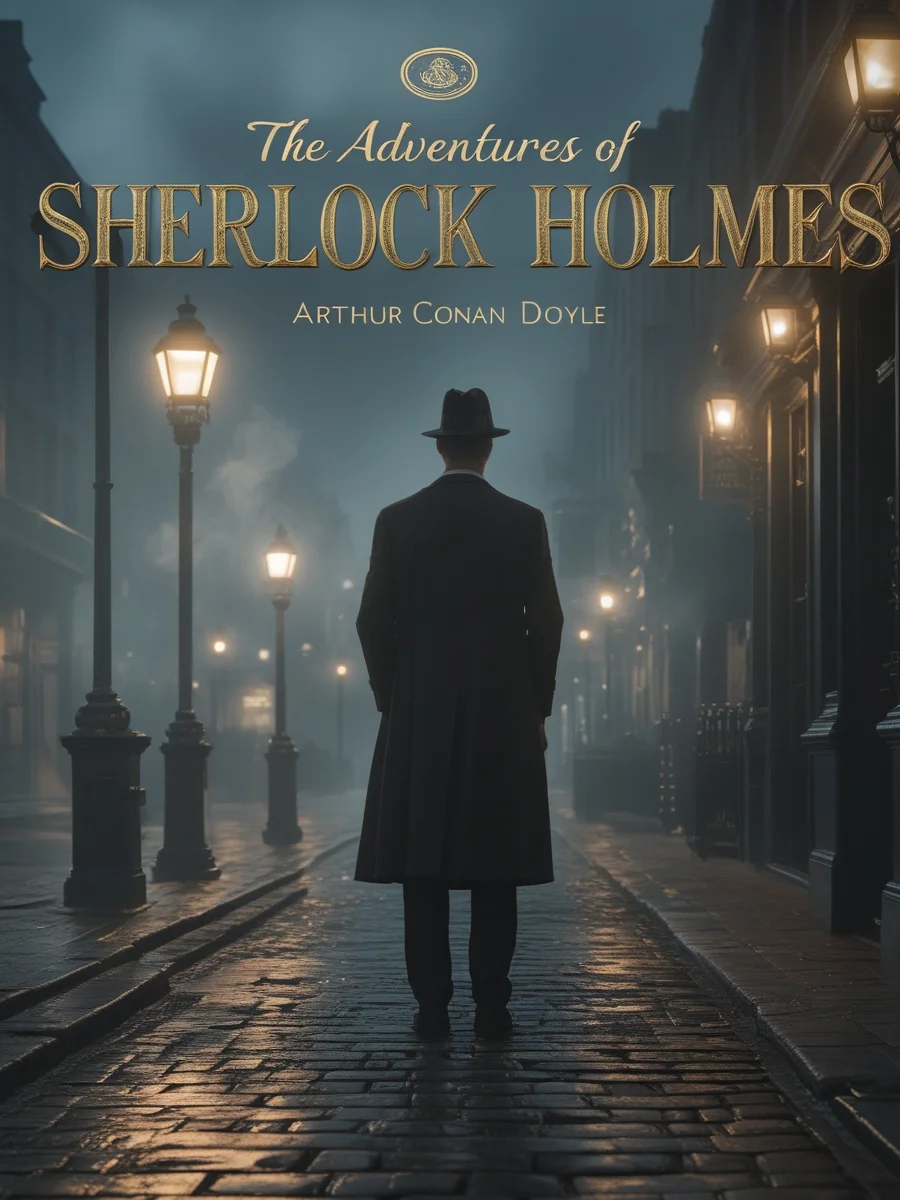
Read Doyle's Iconic Duo with Expert Clarity
Read The Adventures of Sherlock Holmes with comprehensive character profiles and Victorian forensic notes:
- Complete, authentic text of all 12 original 1892 short stories
- Explanatory notes detailing 1890s medicine, army history, and police procedures
- Character analysis cards exploring Holmes, Watson, and Irene Adler
- Instant digital delivery compatible with Kindle, Apple Books, Kobo, and Android