Sense and Sensibility Summary by Chapter: Complete 50-Chapter Breakdown
Published in 1811 under the modest pseudonym “A Lady,” Jane Austen’s Sense and Sensibility marked the debut of one of the greatest novelists in the English language. Originally drafted in the mid-1790s as an epistolary work titled Elinor and Marianne, the novel developed into a profound, ironic, and psychologically acute examination of two sisters navigating the rigid social and economic realities of Regency England.
Set against the picturesque backdrops of Sussex, Devonshire, and metropolitan London, the narrative explores the delicate balance between sense (prudence, self-control, and social responsibility, embodied by nineteen-year-old Elinor Dashwood) and sensibility (passion, emotional spontaneity, and romantic idealism, embodied by seventeen-year-old Marianne Dashwood). When their father’s death leaves them economically vulnerable, both sisters face deep romantic heartbreaks that test their contrasting philosophies of life.
This comprehensive chapter-by-chapter summary provides an exhaustive breakdown of all fifty chapters of Sense and Sensibility, organized into five thematic narrative acts, detailing plot turns, societal satire, and character trajectories.
| Narrative Act | Chapters | Key Locations | Major Dramatic Developments |
|---|---|---|---|
| Act 1: Eviction & Departure | Chapters 1–8 | Norland Park (Sussex) & Barton Cottage (Devon) | Death of Mr. Dashwood; John and Fanny’s greed; Elinor’s quiet bond with Edward; move to Barton |
| Act 2: The Devon Romance | Chapters 9–17 | Barton Cottage & Barton Park | Marianne rescues by Willoughby; intense courtship; Brandon’s silent devotion; Willoughby leaves |
| Act 3: Confidences & Secrets | Chapters 18–25 | Barton Cottage | Edward visits; arrival of the Steele sisters; Lucy reveals her 4-year secret engagement to Edward |
| Act 4: London & Betrayal | Chapters 26–36 | London (Berkeley Street) | Season in town; Willoughby’s cruel rejection letter; Brandon reveals Eliza’s seduction; Edward disowned |
| Act 5: Crisis & Matrimony | Chapters 37–50 | London, Cleveland (Somerset) & Delaford | Marianne’s life-threatening fever; Willoughby’s confession; Lucy marries Robert; dual weddings |
🏛️ Act 1: The Eviction from Norland (Chapters 1–8)
Chapter 1: The Death of Mr. Henry Dashwood
The Dashwood family has long been settled at Norland Park in Sussex. Upon the death of the family patriarch, the estate passes to Mr. Henry Dashwood for his life, and subsequently to his son from a previous marriage, John Dashwood. Henry Dashwood’s second wife, Mrs. Dashwood, and her three daughters—Elinor (19), Marianne (17), and Margaret (13)—are left with a meager jointure of £10,000, yielding a modest interest income of barely £500 a year. On his deathbed, Henry Dashwood extracts a solemn promise from his wealthy son John to provide generously for his stepmother and half-sisters.
Chapter 2: The Art of Greed
In one of the most celebrated comedic scenes in English literature, John Dashwood discusses fulfilling his deathbed promise with his vain, selfish wife, Fanny Dashwood. John initially considers giving his sisters £1,000 each. Step by step, Fanny subtly manipulates John’s natural avarice:
- She argues that giving away £3,000 would impoverish their own infant son.
- She reduces the proposed gift to £500 each, then to an occasional £50 annuity.
- Finally, Fanny convinces John that giving them money would be an insult; they will need nothing more than occasional gifts of fish and game from Norland and assistance in moving their furniture. John completely convinces himself that he has fulfilled his filial duty.
Chapter 3: The Arrival of Edward Ferrars
Mrs. Dashwood, wounded by Fanny’s cold arrogance, longs to leave Norland, but Elinor’s practical prudence prevents an impetuous move until an affordable residence can be found. Fanny’s brother, Edward Ferrars, arrives for an extended stay at Norland. Edward is a quiet, unassuming, and deeply moral young man who lacks the dashing swagger of high society. While Mrs. Dashwood and Marianne find Edward somewhat reserved and deficient in artistic passion, Elinor appreciates his sound understanding, gentle humor, and upright character.
Chapter 4: Contrasting Philosophies of Love
Elinor and Marianne discuss Edward. Marianne laments that Edward’s eyes lack the fire of romantic genius and that he reads Cowper’s poetry without proper emotional ecstasy. Elinor defends him, admitting she feels a high esteem and regard for him. Marianne is shocked by Elinor’s calm moderation:
“Esteem him! Like him! Cold-hearted Elinor! Use those words again, and I shall leave the room this moment.” However, Elinor confesses that while their mutual affection is evident, Edward appears restrained by some mysterious, unspoken anxiety, and his mother, the formidable Mrs. Ferrars, demands that he marry a woman of immense wealth.
Chapters 5–8: The Move to Barton Cottage
Mrs. Dashwood receives an offer from her distant kinsman, Sir John Middleton, to lease Barton Cottage in Devonshire on extremely generous terms. The Dashwoods pack their belongings, bid a painful farewell to Norland, and journey west.
- Barton Cottage is modest, snug, and surrounded by wild, romantic hills that delight Marianne.
- Sir John Middleton of Barton Park is jovial, hospitable, and obsessed with entertaining company, while his elegant wife, Lady Middleton, is cold, formal, and devoted exclusively to spoiling her children.
- At Barton Park, the Dashwoods are introduced to Mrs. Jennings, Lady Middleton’s good-humored, vulgar, and matchmaking mother, and Colonel Brandon, a quiet, melancholy bachelor of thirty-five who wears a flannel waistcoat and listens to Marianne play the pianoforte with silent reverence.
🌧️ Act 2: The Romance of Barton (Chapters 9–17)
                 [THE TWO SUITORS OF MARIANNE DASHWOOD]
                                   │
      ┌────────────────────────────┴────────────────────────────┐
      ▼                                                         ▼
[COLONONEL BRANDON (35)]                                  [JOHN WILLOUGHBY (25)]
- Silent, grave, mature                                   - Dashing, spirited, artistic
- Experienced tragic love (Eliza)                         - Selfish, financially reckless
- Valued for steady integrity                             - Valued for theatrical charm
- Dismissed by Marianne as "too old"                      - Marianne's romantic ideal
Chapters 9–10: The Fall in the Rain
While walking across the steep downs above Barton during a sudden rainstorm, Marianne twists her ankle and falls. A handsome young gentleman carrying a shotgun and accompanied by two pointers suddenly appears over the ridge. He gallantly lifts Marianne in his arms and carries her down the hill into Barton Cottage:
- The rescuer is John Willoughby of Allenham Court, a dashing twenty-five-year-old gentleman visiting his wealthy elderly relative, Mrs. Smith.
- Willoughby possesses magnetic charm, striking looks, and an impetuous personality that matches Marianne’s romantic ideals to perfection.
- Willoughby visits daily. He sings duets with Marianne, praises her favorite poets, and openly scorns social convention, causing Marianne to fall headlong in love.
Chapters 11–13: The Fast-Paced Courtship
Elinor watches the unfolding courtship with deep anxiety. Marianne and Willoughby display their mutual adoration without the slightest reserve, violating social decorum by whispering together in company and taking unchaperoned carriage rides.
- Willoughby takes Marianne on a private excursion to view Allenham Court, the estate he expects to inherit, mortifying Elinor by entering the private home while Mrs. Smith is absent.
- Willoughby attempts to gift Marianne a spirited thoroughbred mare named Queen Mab; Elinor gently forces Marianne to refuse the gift because their mother cannot afford the expense of keeping a horse or groom.
Chapters 14–15: The Abrupt Departure
A planned pleasure excursion to Whitwell, the estate of Colonel Brandon’s brother-in-law, is shattered on the morning of the party when Colonel Brandon receives an urgent letter from London. Visibly distraught, Brandon announces he must leave immediately on private business, refusing to disclose his destination. Mrs. Jennings gossips that Brandon has gone to visit a secret natural daughter.
The following day, Elinor enters the cottage parlor to find Marianne sobbing violently. Willoughby emerges, visibly pale and stammering. He announces that his benefactress, Mrs. Smith, has sent him to London on urgent business, and he cannot say when he will return. Marianne is inconsolable, refusing to eat or sleep and wandering across the rainy hills, nourishing her sorrow with melancholy music. Elinor suspects that despite their intense intimacy, Willoughby and Marianne were never formally engaged.
Chapters 16–17: Marianne’s Grief
Marianne indulges her sorrow without restraint, believing that suppressing her grief would be an act of betrayal against true love. She refuses to engage in social life. Meanwhile, Mrs. Dashwood remains convinced that Willoughby is bound by honor and will return to claim Marianne as soon as his financial affairs are settled.
🤫 Act 3: Deceptions & Confidences (Chapters 18–25)
       [THE CLASH OF SECRETS: ELINOR VS. MARIANNE]
                            │
      ┌─────────────────────┴─────────────────────┐
      ▼                                           ▼
[ELINOR'S SUFFERING]                       [MARIANNE'S SUFFERING]
- Borne in absolute secrecy                - Displayed publicly to all
- Shields family from pain                 - Demands universal sympathy
- Bound by honor to Lucy Steele            - Rejects social restraint
Chapters 18–19: Edward’s Uncomfortable Visit
Edward Ferrars arrives unexpectedly at Barton Cottage for a week’s visit. While the Dashwoods welcome him warmly, Edward appears depressed, distracted, and uncomfortable.
- Marianne notices that Edward wears a ring enclosing a lock of hair. When questioned, Edward claims it is his sister Fanny’s hair, but Elinor recognizes that the hair is darker than Fanny’s, though she assumes it belongs to herself.
- Edward avoids discussing his future profession, expressing deep reluctance to enter politics or high society as his mother wishes, preferring the quiet life of an ordained country clergyman.
Chapters 20–21: The Arrival of the Steele Sisters
Sir John Middleton brings two new guests to Barton Park: Anne and Lucy Steele, distant cousins of Mrs. Jennings.
- Anne is foolish, vulgar, and obsessed with finding “beaux.”
- Lucy Steele (22) is pretty, clever, uneducated, and deeply ambitious. Beneath a façade of deferential humility, Lucy possesses a shrewd, calculating instinct for self-advancement.
Chapters 22–24: Lucy Steele’s Revelation
In Chapter 22, while walking alone with Elinor, Lucy Steele deliberately steers the conversation toward the Ferrars family. Pretending to seek confidential advice from a friend, Lucy drops an emotional bombshell:
“I have been secretly engaged to Mr. Edward Ferrars for upwards of four years!”
Lucy reveals full details: they met while Edward was studying with her uncle in Plymouth. Because Edward is entirely dependent on his imperious mother, the engagement has been kept secret. To verify her claim, Lucy shows Elinor a miniature portrait of Edward and points to the ring Edward wears, revealing that the lock of hair inside belongs to Lucy herself.
Elinor is crushed by the revelation, experiencing agonizing grief. Yet her extraordinary self-control shines:
- Elinor realizes Edward no longer loves Lucy; his youthful promise was made in immaturity, and he now feels trapped by honor.
- Despite her personal anguish, Elinor never reveals her own love for Edward, nor does she betray Lucy’s secret to Marianne or her mother. She suffers in complete, heroic isolation, determined to preserve family peace.
💔 Act 4: The London Season & The Heartbreaks (Chapters 26–36)
Chapters 26–28: The Journey to London
In January, Mrs. Jennings invites Elinor and Marianne to spend the winter season at her grand townhouse in London. Marianne accepts eagerly, convinced she will be reunited with Willoughby. Upon arriving in town:
- Marianne immediately posts an urgent, private letter to Willoughby.
- Days pass without a reply. Every knock at the door causes Marianne to tremble with anticipation, while Willoughby remains conspicuously absent.
- Colonel Brandon visits regularly, observing Marianne’s nervous decline with compassionate sorrow.
Chapter 29: The Ball at the Assembly Rooms
At a crowded London evening party, the sisters spot Willoughby across the ballroom escorting an elegantly dressed, haughty woman:
- Marianne rushes toward him, crying out his name: “Willoughby! Good God! Will you not shake hands with me?”
- Willoughby turns cold and formal. He barely bows, mutters a few clipped polite phrases, and deliberately turns his back on her, returning to his companion.
- Marianne collapses into hysterics and is carried home in complete emotional collapse.
Chapter 30: The Fatal Letter
The following morning, a messenger delivers a letter from Willoughby containing Marianne’s returned letters and the lock of hair she had given him. The letter is cruel, formal, and devastating:
“My affections have long been engaged elsewhere… I have ever esteemed your family, but I am at a loss to know how any conduct of mine could have led you to imagine an affection which I never felt.”
Marianne is plunged into suicidal despair. Mrs. Jennings reveals that Willoughby is engaged to Miss Sophia Grey, an heiress with a massive fortune of £50,000, having squandered his own estate through extravagant gambling and debts.
                  ┌─────────────────────────────────────────┐
                  │    THE REVELATION OF WILLOUGHBY'S PAST  │
                  └────────────────────┬────────────────────┘
                                       │
         ┌─────────────────────────────┼─────────────────────────────┐
         ▼                             ▼                             ▼
┌───────────────────┐        ┌───────────────────┐         ┌───────────────────┐
│ The First Eliza   │        │ The Second Eliza  │         │ The Abandonment   │
│ Brandon's youthful│        │ Daughter of Eliza;│         │ Willoughby seduces│
│ tragic love;      │        │ seduced & left    │         │ & impregnates her;│
│ forced into misery│        │ pregnant by       │         │ discarded in a    │
│ & early death     │        │ Willoughby at 16  │         │ London lodging    │
└───────────────────┘        └───────────────────┘         └───────────────────┘
Chapter 31: Colonel Brandon’s Tragic History
To comfort Elinor and ease Marianne’s shame, Colonel Brandon confides his deepest personal tragedy to Elinor:
- In his youth, Brandon loved his cousin Eliza, but his tyrannical father forced her to marry his older brother for money. The marriage was miserable; Eliza was driven to divorce, poverty, and consumption, dying in a debtor’s hospital in Brandon’s arms.
- Brandon adopted her illegitimate toddler, Eliza Williams.
- The preceding summer, the young Eliza (now sixteen) vanished from her boarding school. Brandon’s sudden departure from the Barton picnic was prompted by a letter revealing that Willoughby had seduced young Eliza, impregnated her, and abandoned her penniless in a London lodging.
- When Mrs. Smith discovered Willoughby’s scandalous conduct, she disowned him, forcing the debt-ridden profligate to marry Miss Grey for money.
Chapters 32–36: Edward Disowned
Lucy Steele arrives in London. When Edward’s secret engagement to Lucy is accidentally exposed by her foolish sister Anne, Mrs. Ferrars flies into an uncontrollable rage:
- Mrs. Ferrars demands Edward renounce Lucy and marry an heiress.
- Edward, bound by his strict moral code of honor, refuses to abandon Lucy.
- Mrs. Ferrars disinherits Edward completely, transferring the entire family fortune and estate to his vain, foppish younger brother, Robert Ferrars.
- Hearing of Edward’s honorable poverty, Colonel Brandon steps forward: he offers Edward the living of the parish of Delaford (£200 a year), enabling Edward to take holy orders and marry. Elinor is forced to act as the messenger delivering Brandon’s living to the man she loves.
🌸 Act 5: Crisis, Confession, and Double Wedding (Chapters 37–50)
Chapters 37–42: The Crisis at Cleveland
In April, the sisters leave London to return to Devonshire, stopping at Cleveland, the Somerset estate of Mr. and Mrs. Palmer (Mrs. Jennings’ other daughter).
- Marianne, overwhelmed by grief and memories of Willoughby’s nearby family home, wanders for hours through wet grass and twilight rain.
- She catches a severe cold, which rapidly develops into a violent, putrid fever.
- For days, Marianne hovers between life and death. The local apothecary fears for her life. Colonel Brandon volunteers to ride through the night to Devonshire to bring Mrs. Dashwood to her dying daughter’s bedside.
Chapters 43–44: Willoughby’s Midnight Confession
On a stormy night, while Elinor keeps watch over Marianne, a carriage rattles up the drive. Elinor rushes down to the parlor expecting her mother, only to be confronted by a wild, disheveled John Willoughby:
- Hearing of Marianne’s mortal illness, Willoughby drove furiously through the night, terrified she would die before he could beg for forgiveness.
- In a passionate confession, Willoughby reveals that he genuinely loved Marianne and loved her still. He explains that his cruel London letter was dictated word for word by his jealous, wealthy wife Sophia.
- While Elinor cannot absolve his selfishness, she pities his lifelong punishment: trapped in an loveless marriage with a woman he despises, haunted perpetually by the memory of the angel he discarded.
       [THE CLIMAX: PARALLEL RESOLUTIONS]
                        │
 1. [MARIANNE'S RECOVERY] ──► Fever breaks; renounces unchecked sensibility
                        │
 2. [LUCY'S TREACHERY]    ──► Drops disowned Edward; seduces wealthy Robert
                        │
 3. [EDWARD'S RETURN]     ──► Arrives at Barton Cottage; reveals he is FREE
                        │
 4. [ELINOR'S TEARS]      ──► First public breakdown of joy; accepts Edward
                        │
 5. [BRANDON'S REWARD]    ──► Marianne marries Brandon; Delaford double home
Chapters 45–48: The Liberation of Edward
Marianne’s fever breaks; she survives. Returning to Barton Cottage, Marianne acknowledges the folly of her unrestrained sensibility, observing that her selfish indulgence in grief nearly killed her and caused immense pain to her devoted sister.
Suddenly, news reaches Barton from London: Lucy Steele has married Mr. Ferrars! The Dashwoods assume Edward is irrevocably lost. Days later, Edward Ferrars rides up to Barton Cottage, pale and hesitant. During an awkward conversation, Elinor politely inquires after “Mrs. Edward Ferrars.” Edward looks astonished:
“Perhaps you mean my brother? Mrs. Robert Ferrars? My brother Robert has married Lucy Steele!”
Lucy, realizing that Robert was now the wealthy heir, had shamelessly abandoned the disowned Edward to seduce his foolish, vain younger brother. Edward is completely, honorably free!
Chapters 49–50: The Double Marriage
Upon hearing that Edward is free, Elinor’s legendary self-control shatters in an uncontrollable flood of tears of joyous relief. Edward confesses his undying love for Elinor, begging forgiveness for his past blindness. Mrs. Ferrars eventually reconciles with Edward, granting him a modest reconciliation settlement of £10,000.
- Elinor and Edward are married in the autumn and take up residence at the tranquil parsonage of Delaford.
- Over the following two years, Marianne discovers the true value of Colonel Brandon’s steadfast devotion. Her romantic illusions give way to mature, genuine love.
- Marianne and Colonel Brandon are married, settling at Delaford House, just across the grounds from Elinor’s parsonage.
- The novel closes with the two sisters living in joyful, lifelong communion, their contrasting qualities of sense and sensibility harmoniously reconciled.
❓ Frequently Asked Questions
Why did John Dashwood break his promise to his dying father?
John Dashwood was easily manipulated by his greedy, calculating wife Fanny. Through a masterpiece of rationalization in Chapter 2, Fanny convinced John that giving £3,000 to his half-sisters would impoverish their own son, gradually reducing the gift to zero and arguing that the women would be happier living on a modest budget.
Why did Edward Ferrars stay engaged to Lucy Steele if he did not love her?
Edward was bound by the strict code of gentlemanly honor in Regency England. Having proposed to Lucy in his youth, he believed that breaking the promise unilaterally would ruin Lucy's reputation and destroy his own moral integrity, even after his mother disinherited him for refusing to break the engagement.
Does Marianne genuinely fall in love with Colonel Brandon at the end?
Yes. While Marianne initially dismissed Brandon because of his age and lack of flamboyant romanticism, his unwavering loyalty, generosity, and rescue of her family during her illness win her deepest affection. Austen explicitly states that Marianne's heart became entirely devoted to Brandon.
What is the symbolic meaning of Marianne's fever at Cleveland?
Marianne's life-threatening fever is the physical manifestation of unchecked "sensibility." Her refusal to protect herself from the rain, combined with her indulgence in sorrow, nearly kills her. Surviving the fever represents a symbolic rebirth: she sheds her immature romantic illusions and embraces Elinor's mature prudence.
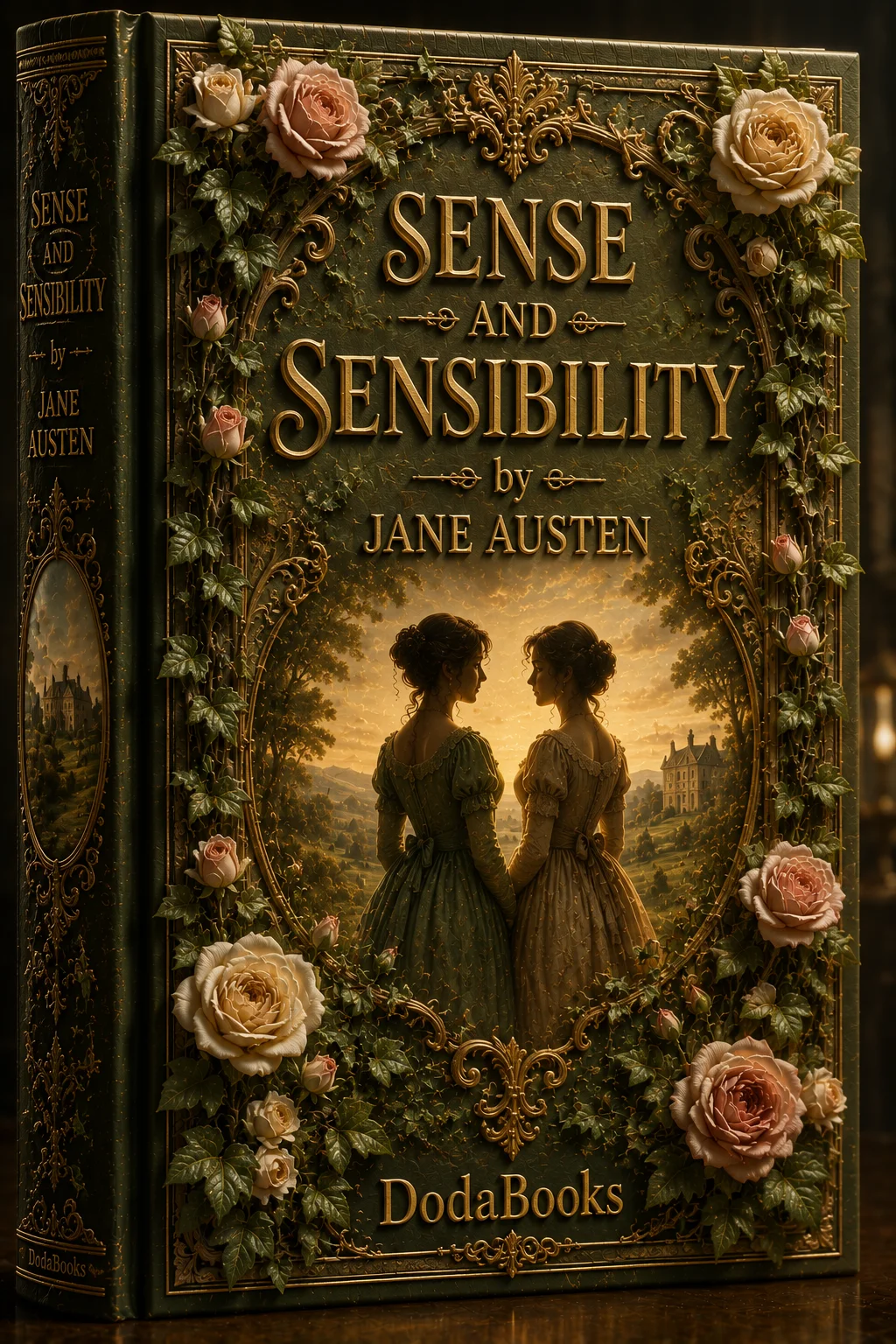
💕 Experience Jane Austen’s First Masterpiece in Full
Read the definitive unabridged edition of Sense and Sensibility. The DodaBooks Edition delivers:
- ✅ Complete 1811 Unabridged Text — All 50 chapters preserved in authentic Regency prose
- ✒️ Smart Typographic Design — Beautiful font hierarchy, curly quotes, and responsive margins
- 📜 Full Table of Contents — Effortlessly navigate between Norland, Barton, London, and Delaford
- 🔒 100% DRM-Free Ownership — Yours forever across Kindle, Kobo, iPad, and Android
- 📥 Instant EPUB Delivery — Download your digital copy immediately