Sense and Sensibility Characters: Elinor, Marianne, Willoughby & Brandon Explained
When Jane Austen published Sense and Sensibility in 1811, she established a revolutionary paradigm for psychological realism in English fiction. Unlike earlier eighteenth-century sentimental novels that divided humanity into saintly paragons and irredeemable villains, Austen created complex, breathing human beings shaped by economic anxiety, family duty, social vanity, and conflicting emotional impulses.
At the epicenter of the novel are the Dashwood sisters: nineteen-year-old Elinor, who governs her actions by “sense” (prudence, emotional fortitude, and social responsibility), and seventeen-year-old Marianne, who lives entirely by “sensibility” (unfiltered passion, romantic idealism, and spontaneous feeling). Surrounding them is an unforgettable cast of suitors, scheming social climbers, and self-deluded relatives who reflect the mercenary realities of Regency England.
This comprehensive character guide examines every major figure in Sense and Sensibility, analyzing their psychological motivations, moral development, romantic trajectories, and narrative functions within Austen’s brilliant comedy of manners.
| Character | Role / Archetype | Defining Traits & Moral Philosophy | Crucial Romantic & Plot Trajectory |
|---|---|---|---|
| Elinor Dashwood | Protagonist / The Voice of Sense | 19 years old; practical, prudent, emotionally disciplined, deeply empathetic | Carries the secret of Edward’s engagement in silence; marries Edward at Delaford |
| Marianne Dashwood | Protagonist / The Spirit of Sensibility | 17 years old; passionate, artistic, impatient, scorner of social convention | Crushed by Willoughby’s abandonment; survives fever; matures to marry Brandon |
| John Willoughby | Antagonist-Lover / Romantic Danger | 25 years old; handsome, charismatic, artistic, financially reckless, selfish | Seduces Marianne but marries Miss Grey for £50,000; doomed to perpetual regret |
| Colonel Brandon | The True Gentleman / Quiet Hero | 35 years old; grave, honorable, melancholy, patient, generous | Endures tragic past with Eliza; silently courts Marianne; marries her as master of Delaford |
| Edward Ferrars | The Honorable Captive / Quiet Hero | Kind, unassuming, morally upright, lacking aristocratic ambition | Bound to secret engagement with Lucy Steele; disowned; marries Elinor when freed |
| Lucy Steele | Social Parasite / Shrewd Schemer | Pretty, illiterate, cunning, obsequious, opportunistic | Torments Elinor with secret engagement; abandons disinherited Edward to marry Robert |
| Fanny Dashwood | Comic Monster / Aristocratic Greed | Vain, cold, manipulating, pathologically avaricious | Convinces John Dashwood to break his deathbed promise; rules Norland through cruelty |
| Mrs. Jennings | Well-Meaning Gossip / Good Heart | Vulgar, talkative, wealthy widow obsessed with matchmaking | Provides generous hospitality in London; genuinely comforts Marianne in crisis |
⚖️ Elinor Dashwood: The Heroine of Sense
                  [THE PSYCHOLOGICAL PROFILE OF ELINOR DASHWOOD]
                                        │
        ┌───────────────────────────────┼───────────────────────────────┐
        ▼                               ▼                               ▼
[PRACTICAL PRUDENCE]             [EMOTIONAL RESTRAINT]           [DEEP CAPACITY FOR LOVE]
- Manages family finances        - Suffers in heroic silence     - Deeply devoted to Edward
- Guides impetuous mother        - Shields sister from distress  - Breaks down only when
- Maintains social grace         - Respects Lucy's confidence      joy is finally assured
1. The Burden of Self-Command
Elinor Dashwood is nineteen years old when the novel opens, yet she functions as the effective head of the Dashwood family. Possessing a sound judgment and an acute understanding of human nature, she is the only member of her household who understands the practical limitations of living on an income of £500 a year:
“Elinor, this eldest daughter, whose advice was so effectual, possessed a strength of understanding, and coolness of judgment, which qualified her, though only nineteen, to be the counsellor of her mother… She had an excellent heart;—her disposition was affectionate, and her feelings were strong; but she knew how to govern them.”
In modern popular culture, “sense” is often misconstrued as coldness or lack of feeling. Austen explicitly refutes this: Elinor’s feelings are as deep and tender as Marianne’s, but she recognizes that indulging private emotion without social restraint harms others. When Marianne falls into grief, the entire household is disrupted; when Elinor suffers, she ensures that her family remains peaceful and protected.
2. The Heroism of Silence: The Lucy Steele Secret
Elinor’s moral fortitude is tested most severely in Chapter 22, when Lucy Steele confides her four-year secret engagement to Edward Ferrars.
- Lucy deliberately selects Elinor as her confidante to neutralize her as a rival, torturing Elinor under the guise of seeking friendly counsel.
- Despite experiencing visceral agony, Elinor never reveals her distress to Lucy, nor does she break Lucy’s confidence by warning her mother or Marianne.
- For four agonizing months, Elinor carries this devastating secret alone, proving that true dignity consists of bearing unmerited suffering without demanding that the world share in the misery.
🥀 Marianne Dashwood: The Avatar of Sensibility
               [THE EVOLUTION OF MARIANNE DASHWOOD]
                                │
     ┌──────────────────────────┴──────────────────────────┐
     ▼                                                     ▼
[UNRESTRICTED SENSIBILITY]                      [MATURE RECONCILIATION]
- Love at first sight                           - Discovers the value of Brandon
- Despises moderation and age                   - Acknowledges past selfishness
- Nourishes grief with music                    - Combines passion with judgment
- Near-fatal illness at Cleveland               - Devoted wife and mistress of Delaford
1. The Cult of Romantic Passion
Seventeen-year-old Marianne is the embodiment of late eighteenth-century Romanticism. She reads Cowper and Walter Scott, plays the pianoforte with expressive theatricality, and judges human character entirely by aesthetic standards:
- A gentleman who does not read poetry with emotional ecstasy is dismissed as deficient in soul.
- Anyone over thirty years of age—such as Colonel Brandon—is considered an elderly invalid who should concern himself only with flannel waistcoats and grave-digging.
- She passionately believes that a human being can love only once in a lifetime, rejecting second attachments as vulgar and mercenary.
2. The Danger of Sensibility
Marianne’s tragedy is that her romantic philosophy breeds egotism and cruelty. In her obsession with authentic feeling, she treats polite social conventions with open contempt:
- She ignores kind-hearted neighbors like Mrs. Jennings and Sir John Middleton, scorning their friendly conversation because they lack artistic refinement.
- When Willoughby abandons her, she refuses to eat, sleep, or converse, declaring that attempting to master her sorrow would be a betrayal of true love.
- Her reckless indulgence culminates in her near-fatal fever at Cleveland, where her deliberate refusal to protect herself from the damp evening air nearly costs her her life.
3. The Catharsis and Transformation
Marianne’s near-death experience serves as a profound moral awakening. When she learns of Elinor’s long, heroic endurance of the Lucy Steele secret, Marianne is struck with deep remorse:
“I saw that my own feelings had prepared my own sufferings… I saw in my own behavior, since the beginning of our acquaintance with him, nothing but a series of imprudence towards myself, and want of kindness to others. I saw that I had been unjust, sullen, and peevish.”
Marianne does not abandon feeling; rather, she learns that passion must be anchored by moral principle and compassion for others.
💔 The Three Suitors: A Study in Masculine Character
                  ┌─────────────────────────────────────────┐
                  │    THE THREE SUITORS OF SENSE & SENSIBILITY│
                  └────────────────────┬────────────────────┘
                                       │
         ┌─────────────────────────────┼─────────────────────────────┐
         ▼                             ▼                             ▼
┌───────────────────┐        ┌───────────────────┐         ┌───────────────────┐
│ JOHN WILLOUGHBY   │        │ EDWARD FERRARS    │         │ COLONEL BRANDON   │
│ - Dashing & toxic │        │ - Quiet & captive │         │ - Steady & heroic │
│ - Sensibility     │        │ - Moral integrity │         │ - Tragic past,    │
│   without honor   │        │ - Trapped by youth│           deep generosity   │
│ - Sacrifices love │        │ - Disowned for    │         │ - The true union  │
│   for money (£50k)│          honor's sake      │           of sense & feeling│
└───────────────────┘        └───────────────────┘         └───────────────────┘
1. John Willoughby: The Tragedy of Sensibility Without Principle
Willoughby is one of the most compelling and toxic figures in Regency romance. When he carries the injured Marianne down the hillside in Chapter 9, he appears as the literal embodiment of a romantic fairytale prince: handsome, energetic, charming, and sharing Marianne’s artistic passions.
Yet Willoughby represents the supreme danger of sensibility divorced from moral integrity:
- He lives far beyond his income, accumulating staggering gambling and horse-breeding debts in London.
- He seduces the sixteen-year-old orphan Eliza Williams, impregnates her, and abandons her in a London lodging.
- When disowned by his wealthy aunt Mrs. Smith, he cold-bloodedly abandons Marianne to marry the wealthy, vicious Miss Sophia Grey for her £50,000 fortune.
- In Chapter 44, his desperate midnight ride to Cleveland reveals that he genuinely loved Marianne; his punishment is not death, but a lifetime of cold luxury tied to an arrogant wife he despises.
2. Colonel Brandon: The True Hero of Sensibility
Colonel Brandon (35) is the moral center of the novel. Grave, silent, and physically worn from years of military service in the East Indies, he is initially invisible to Marianne’s youthful romantic gaze:
- Brandon has loved with profound, tragic intensity. His youthful adoration for his cousin Eliza—who was forced into a loveless marriage with his older brother, divorced, and died in a debtor’s hospital—demonstrates that Brandon’s sensibility is deeper than Willoughby’s shallow theatrics.
- Brandon’s generosity is boundless: he supports Eliza’s illegitimate daughter, provides Edward Ferrars with a parish living at Delaford when Edward is disinherited, and rides through a stormy night to fetch Mrs. Dashwood to Marianne’s bedside.
- Brandon wins Marianne not through theatrical seduction, but through consistent, unselfish devotion.
3. Edward Ferrars: The Captive of Honor
Edward Ferrars is the quietest and most misunderstood suitor in Austen’s canon. Gentle, educated, and completely lacking worldly ambition, he desires nothing more than a quiet country rectory:
- At twenty-three, Edward is trapped by a foolish engagement made at nineteen with Lucy Steele.
- Although he no longer loves Lucy and is deeply in love with Elinor, Edward refuses to break his word because Regency gentlemanly honor dictates that a man cannot unilaterally abandon a lady.
- When his mother threatens to disinherit him, Edward stands firm. He willingly accepts poverty and family exile rather than violate his conscience, proving that quiet moral courage is far superior to aristocratic swagger.
🐍 The Mercenary World: The Predators and Parasites
Austen surrounds her heroines with characters who treat human relationships strictly as financial transactions.
       [THE MERCENARY NETWORK OF REGENCY SOCIETY]
                           │
      ┌────────────────────┴────────────────────┐
      ▼                                         ▼
[THE ARISTOCRATIC TYRANTS]             [THE CLIMBING PARASITES]
- Fanny Dashwood & Mrs. Ferrars        - Lucy Steele & Anne Steele
- Wealth used as a weapon              - Flattery and deception
- Primogeniture and entitlement        - Mercenary survival through marriage
1. Lucy Steele: The Masterclass in Cunning
Lucy Steele is one of Austen’s most brilliant social satires:
- Lacking formal education, family connections, or money, Lucy operates through calculated sycophancy.
- She flatters Lady Middleton’s spoiled children, flatters Mrs. Ferrars, and uses sweet, deferential language to disguise her ruthless opportunism.
- The ultimate proof of her mercenary genius occurs when Edward is disowned: without a moment’s hesitation, Lucy drops Edward and seduces his vain younger brother Robert Ferrars, securing the very fortune and carriage she had plotted for from the beginning.
2. John and Fanny Dashwood: The Rationalization of Greed
John and Fanny Dashwood represent the absolute moral bankruptcy of aristocratic entitlement:
- Fanny Dashwood is Austen’s sharpest portrait of unadulterated selfishness. In Chapter 2, she systematically breaks down her husband’s deathbed promise, convincing him that keeping £3,000 in their own pockets is an act of parental duty.
- John Dashwood is weak, pompous, and completely dominated by his wife. He measures human worth entirely in acreage, carriages, and income, genuinely believing that his sisters can live splendidly in Devonshire on next to nothing.
🍷 The Comic Chorus: Mrs. Jennings and Sir John Middleton
To contrast with the cold cruelty of Norland and the scheming greed of Lucy Steele, Austen introduces the warm-hearted comedy of Barton Park:
- Mrs. Jennings: Loud, vulgar, and obsessed with matchmaking and romantic gossip, Mrs. Jennings is initially mortifying to Marianne’s delicate sensibilities. Yet when crisis strikes in London and Cleveland, Mrs. Jennings proves to be a woman of boundless kindness, nursing Marianne with motherly tenderness and offering unconditional emotional support. Austen reminds us that genuine warmth often lives in loud, imperfect people.
- Sir John Middleton: A jovial country gentleman whose entire happiness consists of gathering large crowds around his dinner table, organizing impromptu dances, and teasing young ladies about their sweethearts. While intellectually shallow, his generosity to the impoverished Dashwoods is real and unwavering.
❓ Frequently Asked Questions
Why does Marianne marry Colonel Brandon instead of staying single?
Marianne marries Colonel Brandon because she undergoes genuine moral growth. After surviving her near-fatal fever and witnessing Brandon's unselfish rescue of her family, she realizes that true love is built on character, respect, and steadfast loyalty rather than flamboyant romantic posturing.
Is Elinor Dashwood emotionally cold?
No. Austen makes it clear that Elinor feels things with extraordinary intensity. However, Elinor possesses self-command: she controls her emotions so she does not burden her vulnerable mother and sisters. Her emotional breakdown in Chapter 48—weeping uncontrollably with relief upon learning Edward is free—proves how deeply she loves.
How does Lucy Steele manage to marry Robert Ferrars?
When Mrs. Ferrars disinherits Edward and gives the entire family estate to Robert Ferrars, Lucy realizes that Edward is penniless while Robert is now the wealthy heir. Lucy uses her flattery and manipulative charms on the vain, foolish Robert, successfully convincing him to elope with her.
What happened to Willoughby at the end of the novel?
Willoughby married the wealthy heiress Sophia Grey to clear his gambling debts, but his marriage is miserable and loveless. While he continues to hunt, breed horses, and live luxuriously, Austen notes that he is haunted for the rest of his life by the knowledge that he threw away true happiness with Marianne for money.
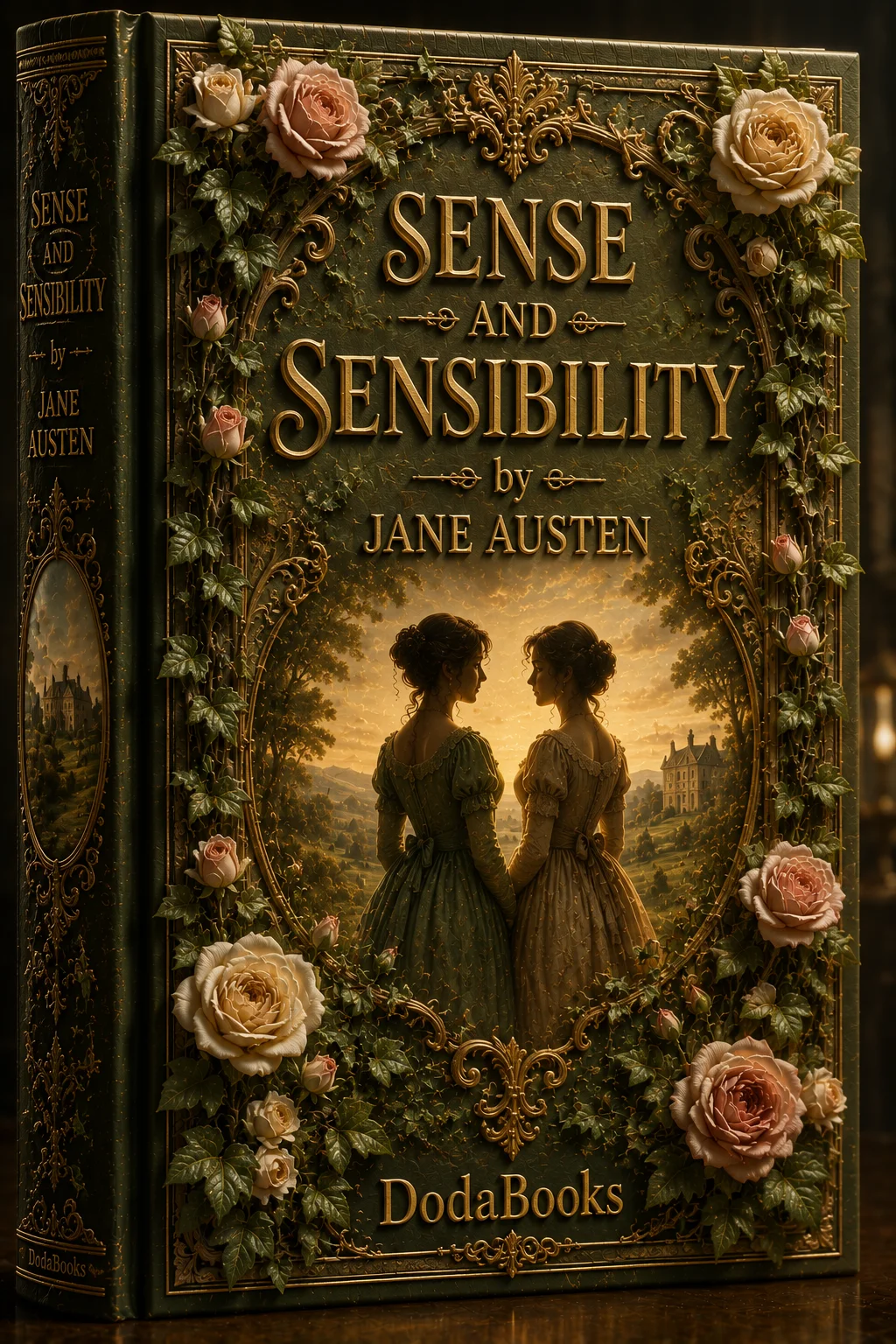
💕 Discover Austen’s Unforgettable Characters in Full
Read the classic novel that introduced Elinor, Marianne, Willoughby, and Colonel Brandon to the world. The DodaBooks Edition of Sense and Sensibility features:
- ✅ Complete Unabridged 1811 Text — All 50 chapters in authentic Regency prose
- ✒️ Smart Typographic Design — Designed for effortless, distraction-free reading
- 📜 Full Chapter Navigation — Jump seamlessly across Norland, Barton, and London
- 🔒 100% DRM-Free Freedom — Read across Kindle, Kobo, iPad, and Android forever
- 📥 Instant EPUB Delivery — Download your digital copy immediately